Latest Life Sciences News
Actinogen Clears Its Debt With $10.8M Tax Rebate Ahead of Key Alzheimer’s Results
Invex Launches $10M Raise to Buy MS Drug Developer Rekover With No Cash Paid
Nanollose Completes Stage 1 Pilot Equipment Orders as Perth Premises Talks Progress
CSL Picks Interim CEO Gordon Naylor as Next Chair as Brian McNamee Retires
Percheron Clears Drug Supply Hurdle, Readying Leukaemia Trial Material for the US
INOVIQ CEO Leearne Hinch Steps Down, Chairman Becomes Interim Executive Chair
Amplia Lands $4.78M Non-Dilutive Cash to Keep Pancreatic Cancer Trials Moving
Biotech ETF Chart
Life Sciences Analysis
Anthropic’s IPO Delay Is a Repositioning Play, Not a Retreat
Where AI Scientific Discovery Creates Value and Where It Doesn’t
How to Find Small-Cap Biotech Targets Before the Premium Lands
Novo Has 90% of the Oral GLP-1 Market. Why Is It Down 60%?
ARC Group Commits US$15M to Cloudbreak Pharma Eyecare Pipeline
Why BTK Inhibitor Resistance Opens a Door for Off-the-Shelf CAR-T
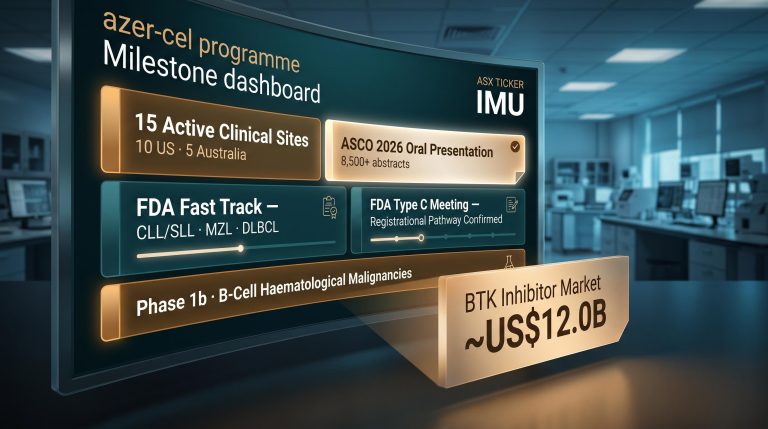
Weighing Azer-cel’s ASCO 2026 Data Against the Lymphoma Gap
Why Intel Is Betting on Vertical Silicon Over Commodity CPUs
Life Sciences Guides & Education
Why Your Immune System Doesn’t Attack You, and What Noxopharm Is Testing
How the Pharmaceutical Reformulation Model Changes Your Analysis
What a Broken Antibiotic Pipeline Means for ASX Biotech Stocks
How to Read ASX Biotech Stocks With No Earnings to Analyse
How to Read Clinical Milestones in ASX Biotech Stocks
Discover More in the Biotechnology Hub
Go to Hub
Radiopharm Secures $8M Advance Against FY26 R&D Tax Incentive
Actinogen Clears Its Debt With $10.8M Tax Rebate Ahead of Key Alzheimer’s Results
Invex Launches $10M Raise to Buy MS Drug Developer Rekover With No Cash Paid
Nanollose Completes Stage 1 Pilot Equipment Orders as Perth Premises Talks Progress
CSL Picks Interim CEO Gordon Naylor as Next Chair as Brian McNamee Retires
Immutep Cancer Combo Keeps Sarcoma Patients Well and Cuts Fatigue After Surgery
Percheron Clears Drug Supply Hurdle, Readying Leukaemia Trial Material for the US
Dimerix Gets New Human Data Backing Its Kidney Drug Target Ahead of Phase 3 Result
Proteomics International Takes Blood Tests Nationwide Through Healius From 26 October
Featured ASX Life Sciences Announcements
Imugene Ltd Reports First Complete Response in Azer Cel BTKi Cohort
Video
Algorae Pharmaceuticals Ltd Named Launch Partner in Sovereign AI Initiative
Video
Entropy Neurodynamics Clears Safety Hurdle as Experts Back 60 Minute IV Therapy
Genetic Signatures Details $5M Cost Cut and Three-Phase Path to Profitability
Video
Imugene’s Azer-cel Earns FDA Fast Track for Two Blood Cancers After 100% ORR
Video
Entropy Neurodynamics Completes Dosing for Six Patients in Phase 2 BED Trial
Video
4DMedical Eyes $2.5B Pulmonary Market With Contrast-Free Imaging Tech
Video
Entropy Neurodynamics Completes Cohort 1 Dosing in Phase 2 BED Trial
Imugene’s Azer-cel Earns Rare Oral Slot at ASCO From 8,500+ Submissions
Video
Latest ASX Life Sciences Videos
Biopharma Stocks: Pipeline News, Clinical Data and Investment Insights
The biopharma stocks universe spans early-stage drug developers to large-cap pharmaceutical companies with diversified pipelines, making sector knowledge critical for managing investment risk. StockWire X covers clinical trial results, licensing deals, merger activity, and capital markets events that move biopharma valuations. Key themes include immunology, oncology, rare disease therapeutics, and gene therapy. Understanding drug commercialisation timelines, patent cliffs, and regulatory pathways is essential for building a defensible position in this sector. Our coverage includes analyst commentary, earnings breakdowns, and sector fund flows to give investors a complete picture of where biopharma capital is moving.
Frequently Asked Questions
What is the difference between biopharma stocks and traditional pharma stocks?
Biopharma stocks are shares in companies developing biologically-derived medicines, including monoclonal antibodies, cell and gene therapies, and RNA-based drugs. Traditional pharma companies typically develop small-molecule chemical drugs. Biopharma products generally have higher manufacturing complexity, stronger IP protection from biosimilar competition, and different clinical development pathways than traditional chemical pharmaceuticals.
Which biopharma stocks have the biggest upside potential?
Biopharma stocks with the biggest upside potential typically have late-stage clinical assets in large disease markets, strong IP protection, and the potential for US or global commercial launch. Binary risk is highest in Phase 2 and Phase 3 trials. Companies with multiple pipeline assets reduce single-asset dependency. StockWire X covers biopharma stocks with pipeline analysis to help investors identify high-potential opportunities.
What are cheap biopharma stocks and are they worth investing in?
Cheap biopharma stocks, those trading at low valuations relative to pipeline value, often reflect investor scepticism about clinical success probability or commercial potential. Identifying genuinely undervalued biopharma requires detailed pipeline assessment rather than simple screening on price multiples. StockWire X covers ASX and global biopharma stocks to help investors evaluate the risk-reward in different parts of the sector.
What is the difference between a biotech and a biopharma company as an investment?
Biotechnology companies are typically earlier-stage, discovery-focused businesses developing novel biological therapies, often with limited revenue and a pipeline-dependent valuation. Biopharma companies are generally more mature businesses with at least one approved product generating revenue alongside an active development pipeline. Pure biotechs carry higher binary risk from clinical outcomes but offer significant upside if development succeeds. Established biopharma companies offer more stable revenue but may face patent cliff risks.
How are royalty streams from out-licensed drug programmes valued in biopharma?
When biopharma companies out-license drug candidates to larger partners in exchange for milestone payments and royalties on future sales, those royalty streams become a component of company value. Royalty streams are valued by discounting expected future royalty payments at a rate that reflects the risk of the underlying drug achieving its commercial potential. Companies with multiple out-licensed assets can generate substantial royalty portfolio value alongside internal development programmes.
Breaking ASX Alerts Direct to Your Inbox
Join +20,000 subscribers receiving alerts.
Join thousands of investors who rely on StockWire X for timely, accurate market intelligence.
- Breaking ASX announcements delivered within minutes
- Alerts delivered with expert analysis
- Optional text alert for subscribers
- No spam policy, unsubscribe any time