Why Tuesday’s Stock Market Breadth Was the Strongest Since April
Oct 21, 2026





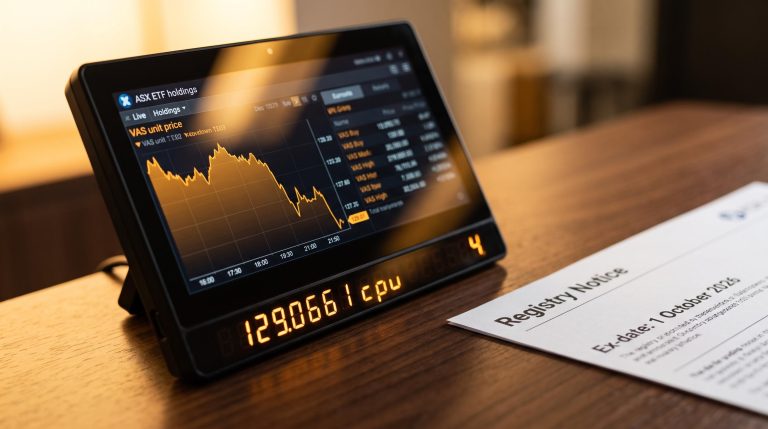
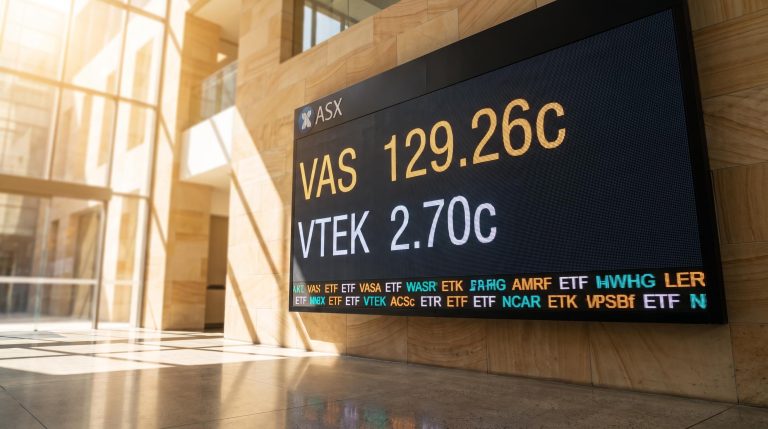

























The best index funds consistently deliver competitive returns at minimal cost, with evidence across decades and markets showing that passive strategies outperform the majority of active managers after fees. The core value proposition, low cost, daily liquidity, transparent holdings, and market-rate returns, makes index funds the foundation of most financial planning recommendations globally. Investors selecting between index fund options should compare total expense ratios, tracking error against the benchmark index, index methodology, and the distributional characteristics of different structures. The ASX index fund market has grown significantly, with broad-market, sector, and international options available at increasingly competitive costs. StockWire X covers index fund market developments, new product launches, performance data, and the strategic case for passive investing in different market environments.
The best index funds for Australian investors depend on the desired market exposure. For domestic equities, Vanguard Australian Shares Index (VAS), iShares Core S&P/ASX 200 ETF (IOZ), and SPDR S&P/ASX 200 Fund (STW) are widely held. For international exposure, IWLD, VGS, and BGBL provide diversified global equity access. For bonds, VAF and IAF offer diversified Australian fixed income. Low expense ratios and minimal tracking error are the primary selection criteria.
Starting passive investing with index funds involves selecting a brokerage platform, determining your asset allocation based on investment goals and risk tolerance, selecting appropriate index funds for each allocation, and setting up regular contribution and rebalancing disciplines. Most financial planners recommend starting with broad market equity and bond index funds before adding more specific exposures. Regular contributions regardless of market conditions (dollar-cost averaging) support long-term return compounding.
Vanguard index funds are passive investment products offered by Vanguard, one of the world's largest and most respected fund managers. In Australia, Vanguard offers a range of ETFs and unlisted index funds covering Australian and international equities, bonds, and multi-asset strategies. Vanguard is popular because of its investor-owned structure (which aligns incentives with fund holders), consistently low expense ratios, and its pioneering role in popularising index investing globally.
Investors can buy index funds through brokerage accounts, retirement accounts, or investment platforms. Index funds are available as mutual funds or exchange-traded funds (ETFs), with ETFs trading on stock exchanges like individual shares. To invest, an investor selects a fund tracking a specific index, such as a global index fund or S&P 500 ETF, and purchases units through their broker. The ease of access and low cost has contributed to the rapid growth of passive investing.
Whether to buy index funds depends on market conditions, investment goals, and risk tolerance. Index funds offer broad diversification and are commonly used as a core portfolio holding, particularly for long-term investors. However, in certain market environments, such as periods of high concentration in a few large stocks, passive exposure may increase risk. Monitoring index fund trends, market valuations, and economic conditions can help investors decide how to position index fund allocations within their portfolios.