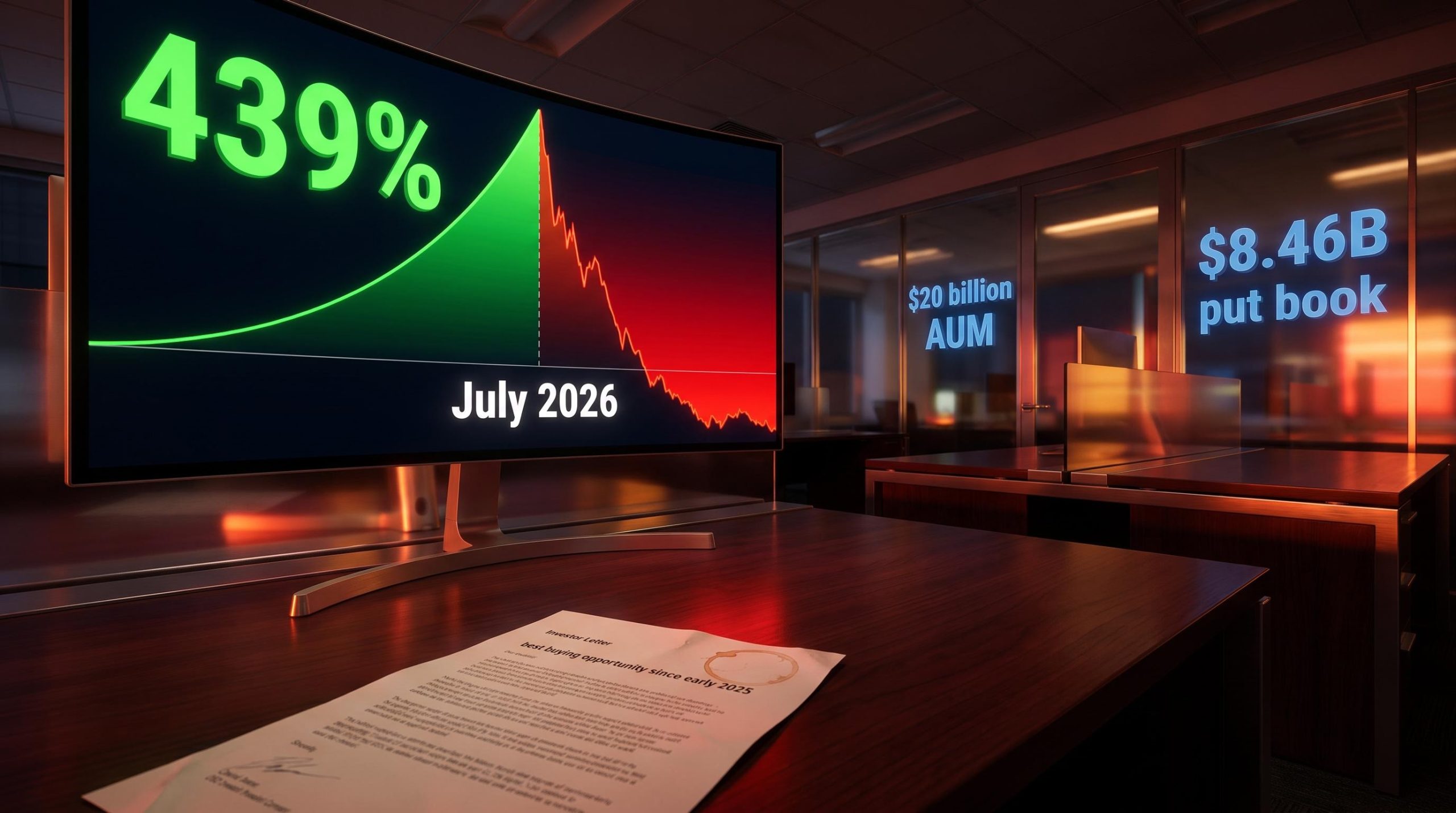
Situational Awareness LP, Leopold Aschenbrenner’s AI-focused hedge fund, was up 439% after fees through June 2026. By 24 July, the fund was raising emergency capital from its own investors.
The reversal matters beyond one manager’s performance. AI infrastructure was the dominant institutional trade of the first half of 2026, and Situational Awareness LP was its highest-profile, highest-conviction expression. What happened to the fund in July is not an isolated drawdown; it is a live stress test of the entire leveraged AI infrastructure thesis, playing out in real time across the same names dozens of other funds hold.
Here is how the 439% gain was built, how the July rout unwound it, and what the mechanics of that reversal reveal about concentrated AI exposure heading into August.
From OpenAI dismissal to a $20 billion AI macro bet
Aschenbrenner left OpenAI following his dismissal in April 2024. Within months, he launched Situational Awareness LP with a thesis centred on three pillars of the AI build-out:
- Power and energy infrastructure
- Data centres and compute capacity
- Bitcoin miners and high-throughput compute plays
The fund was not built as a diversified allocation vehicle. It was built as a concentrated directional bet on AI infrastructure spending, paired with large hedges against the semiconductor names many other funds were buying outright.
Power availability and cooling density represent the most structurally durable binding constraints on AI deployment in 2026, with multi-year grid interconnection delays making these bottlenecks structural rather than cyclical features of the infrastructure build-out.
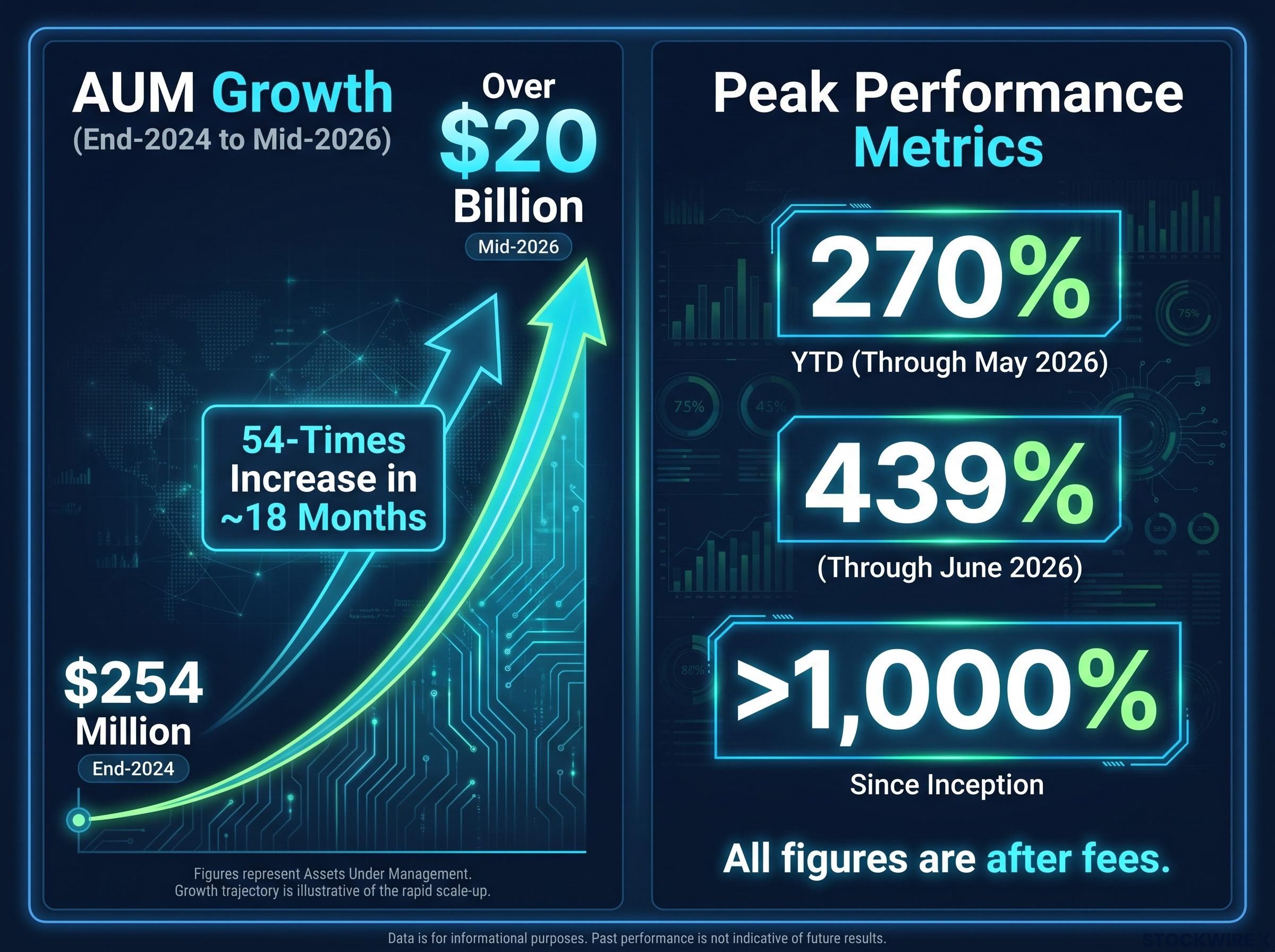
Situational Awareness LP grew from approximately $254 million in assets under management at end-2024 to over $20 billion by mid-2026, a roughly 54-times increase in disclosed assets in approximately eighteen months.
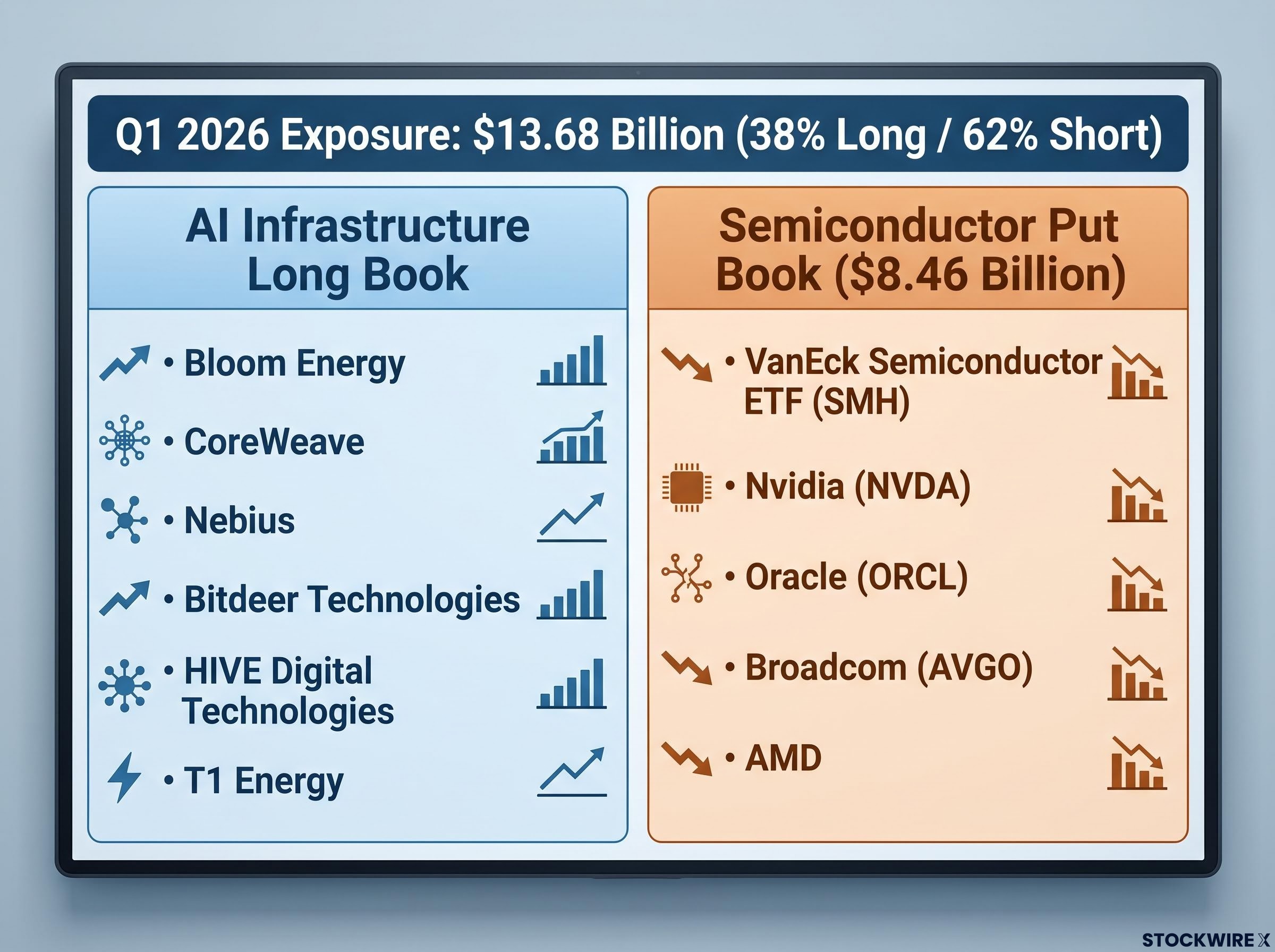
That trajectory tells you institutional capital did not just tolerate the concentrated thesis; it endorsed it at scale. Jane Street was cited as one capital source. First-quarter 2026 13F filings disclosed total notional exposure of approximately $13.68 billion, with the disclosed U.S. equity portfolio net short (approximately 38% long, 62% short by notional exposure). The speed and size of that capital accumulation is why the July reversal carries implications well beyond one fund’s performance.
When big ASX news breaks, our subscribers know first
How a 439% gain was built: the infrastructure long book and the semiconductor short book
The fund’s returns came from a two-sided portfolio, not a single directional bet. On one side sat long positions in AI infrastructure names. On the other sat a large put book against the semiconductor and AI-chip sector.
| Long book positions | Put book positions |
|---|---|
| Bloom Energy | VanEck Semiconductor ETF (SMH) |
| CoreWeave | Nvidia (NVDA) |
| Nebius | Oracle (ORCL) |
| Bitdeer Technologies | Broadcom (AVGO) |
| HIVE Digital Technologies | AMD |
Q1 2026 filings also revealed new and expanded positions:
- T1 Energy: Q1 filings showed the fund initiated a fresh stake worth approximately $43.9 million
- HIVE Digital Technologies: around 3.39 million shares were added to the portfolio
- Bitdeer Technologies: the fund’s existing holding was grown by roughly 92.4%
The performance of the fund through June 2026 amounted to approximately 439% after fees. Year-to-date through May 2026, the fund was up approximately 270% after fees, with since-inception returns exceeding 1,000% after fees, according to people cited by the Wall Street Journal.
The $8.46 billion put book is the structural detail that separates this fund from a simple AI bull bet. Even at peak performance, Aschenbrenner was hedging against the very semiconductor names many peers were buying outright. That complexity is what made the returns possible. It is also what made the July unwind dangerous: both sides of the trade were linked to AI sentiment, meaning a sector-wide shift pressured gains from multiple directions simultaneously.
A Morningstar-identified 18-24 month capex-to-revenue lag in semiconductor valuations was already a known structural risk by May 2026, meaning the put book Aschenbrenner held against names like Nvidia, AMD, and Broadcom was positioned against a sector where revenue validation was materially behind the capital commitments priced into equities.
What concentration risk actually looks like: the fund’s structure as a case study
Concentration risk is the exposure that results when a portfolio’s positions are clustered in a single theme, sector, or trade. When those positions move together, there is no diversification buffer to absorb losses. The same focused exposure that produced the 439% gain left the portfolio acutely sensitive when AI-infrastructure valuations compressed across the sector at the same time.
Leverage, meaning borrowed capital used to amplify the size of trades, compounds the problem. The fund borrowed through prime brokers to scale its positions beyond its equity base. When asset prices fall, the fund’s equity shrinks, and brokers demand additional collateral to maintain existing leverage. That demand can force selling into a declining market, accelerating the very drawdown causing the pressure.
Semiconductor and AI names likely back a significant share of leveraged positions market-wide, meaning a valuation shock in those names compresses the collateral securing margin loans and triggers calls in exactly the stocks already under pressure, creating a forced-selling feedback loop that amplifies the initial move rather than absorbing it.
Barclays head of U.S. equity strategy Venu Krishna identified three primary concerns driving the broader AI selloff:
- Uncertainty around the financing of AI infrastructure projects
- Corporate capital expenditure growth putting pressure on margins
- Deteriorating free cash flow at large-cap technology companies
Those three pressures were structural features of AI infrastructure investing in mid-2026, not idiosyncratic bad luck. Any fund with similar positioning faced the same headwinds simultaneously, which is why the repricing was so correlated.
When prime brokers call: the mechanics of a forced unwind
When a leveraged fund’s positions fall, prime brokers demand collateral top-ups to cover expanded risk. If the fund cannot post additional capital, it must sell assets to reduce exposure. Goldman Sachs and JPMorgan Chase sent margin calls to hedge funds carrying heavily concentrated AI positions, requiring those funds to post additional collateral against their existing leverage. This was a market-wide dynamic, not confirmed as specific to Situational Awareness LP, but directly relevant to any fund with comparable leverage and concentration.
Hedgeweek margin call reporting from late July confirmed Goldman Sachs and JPMorgan Chase were issuing collateral demands across hedge funds carrying concentrated AI positions, a market-wide dynamic that amplified selling pressure well beyond any single fund’s internal risk management decisions.
July 2026: how the rout hit the specific positions
The structural risks described above materialised in specific price action across the fund’s disclosed holdings during July:
- Oracle and AMD: declined approximately 20% each
- Nebius, Bloom Energy, and SanDisk: experienced larger drops during the period
- CoreWeave: cited among the long positions that fell sharply
- Asian markets: particularly weak, amplifying losses across the fund’s global AI exposure
In his 24 July investor letter, Aschenbrenner acknowledged the damage directly.
The fund “was unable to avoid the market shock,” with Asia particularly impacted.
The capital-raising response that followed tells you the drawdown was severe enough to force operational action. The Financial Times reported that the fund reached out to existing investors and lending counterparties seeking new capital, with certain limited partners given the option to take on direct ownership of portfolio assets.
That last detail is the one to focus on. Offering investors direct ownership of live positions signals the fund needed liquidity quickly enough to transfer assets rather than wait for a standard capital call cycle. It is a more acute stress indicator than a conventional fundraise.
Aschenbrenner’s response: August funding window and the Anthropic IPO catalyst
The 24 July letter did not read like a concession. Aschenbrenner characterised the selloff as potentially the best entry point since the early months of 2025.
He described the drawdown as the “best buying opportunity since early 2025.”
A new funding window was announced for 1 August 2026, inviting existing investors to add capital. Aschenbrenner named a prospective Anthropic initial public offering (an IPO is when a private company lists its shares on a public exchange for the first time) in the second half of 2026 as the key sector catalyst, contending it had the potential to revive enthusiasm for AI sentiment and infrastructure spending more broadly.
No date has been set for any Anthropic listing, and its capacity to lift AI infrastructure equities broadly is not a certainty. The $20 billion AUM figure was recorded prior to the July selloff, and the fund’s current net asset value has not been confirmed publicly.
Opening a new funding window one week after acknowledging the fund could not avoid the market shock tells you Aschenbrenner is betting on his own thesis at the moment of maximum drawdown. Whether that is a high-conviction act or a necessity to maintain leverage is a question readers should hold without resolving prematurely; both interpretations remain live.
What the July rout changes, and what it does not
The technological trajectory of AI infrastructure remains broadly bullish in the fund’s own framing and in wider consensus. What July tested was not the macro thesis but the equity and derivative structures used to express it. It is entirely possible for the AI infrastructure build-out to proceed as forecast while the instruments tracking it continue to experience violent repricing driven by leverage, valuation compression, and sentiment reversal.
Hyperscaler capital expenditure reaching $725 billion in combined 2026 guidance provided the demand signal that made infrastructure spending feel structurally guaranteed; the same concentration of spending that validated the bull thesis also meant any revision to those forecasts would reprice infrastructure names simultaneously across the sector.
The fund now faces a structural challenge: securing enough capital and runway for its thesis to play out, while persuading investors that July was a cyclical shake-out rather than a structural break.
Three headwinds identified by Barclays remain unresolved:
- Uncertainty surrounding the financing of AI infrastructure projects
- Expanding corporate capital expenditure budgets compressing margins
- Free cash flow strain at major large-cap technology companies
The 439% cumulative gain through June and the undisclosed July drawdown sit side by side. Whether the August funding window attracts fresh capital or falls short will be the next meaningful data point on institutional confidence in leveraged AI infrastructure as a viable investment structure. That response will tell you more than any single month’s performance about how the market now prices the gap between a thesis it believes and an exposure structure it may no longer trust.
This article is for informational purposes only and should not be considered financial advice. Investors should conduct their own research and consult with financial professionals before making investment decisions. Past performance does not guarantee future results. Financial projections are subject to market conditions and various risk factors.
—