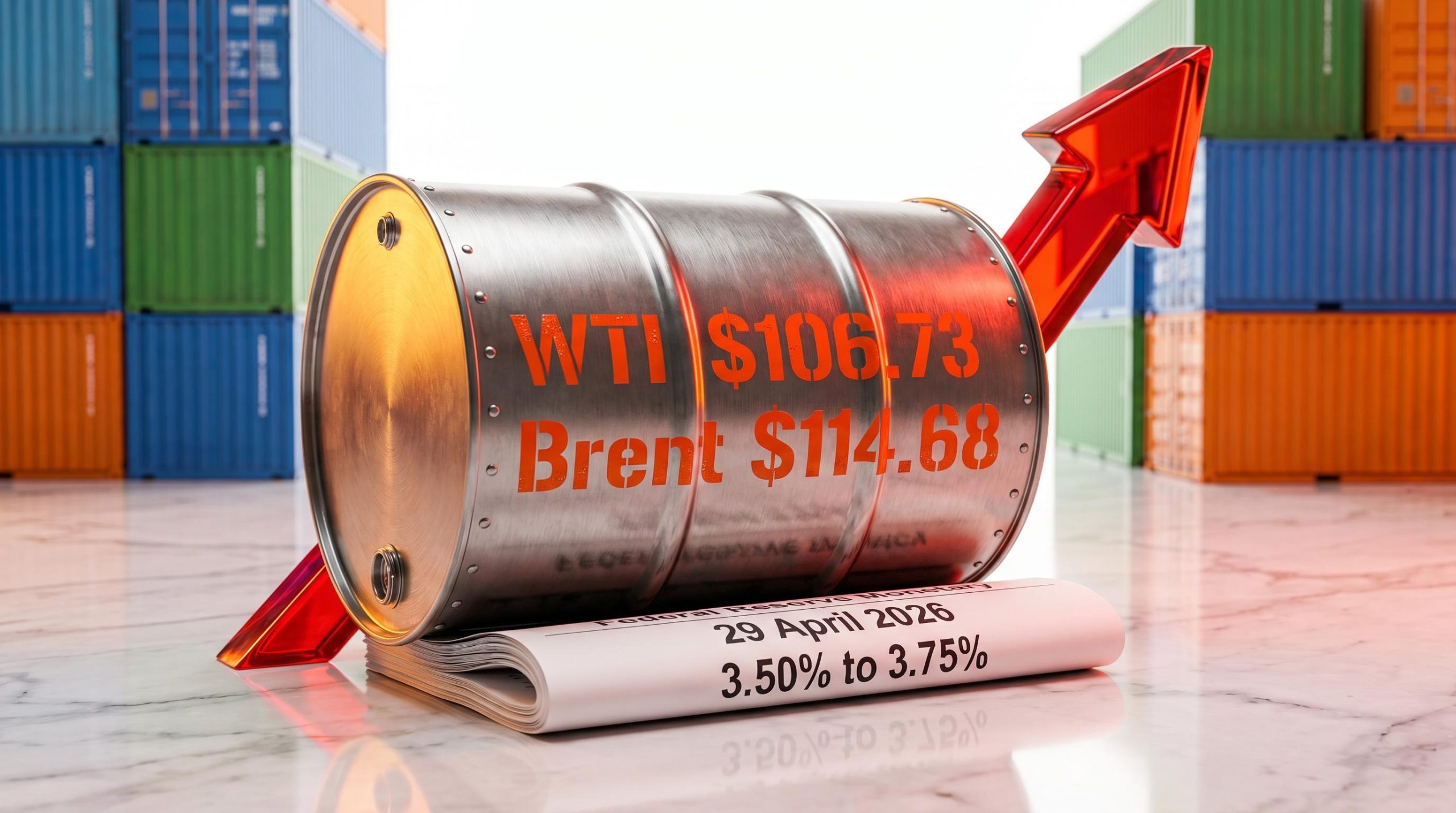
The Federal Reserve faces an immediate monetary policy decision on 29 April 2026, managing a severe global oil shock triggered by intensifying military conflicts between the United States and Iran. Hostilities in the Middle East have disrupted the Strait of Hormuz, sending immediate shockwaves through global energy markets and physical supply chains. These sudden supply restrictions are creating powerful macroeconomic headwinds that complicate the central bank’s strategy to contain domestic inflation.
As policymakers convene in Washington, the prospect of rate relief has effectively vanished from the near-term horizon. The physical realities of blocked ports and rerouted shipping lines are bleeding directly into the domestic economy, forcing corporations to adjust their forward guidance. This analysis unpacks how these geopolitical bottlenecks are locking in elevated interest rates and fundamentally altering consumer purchasing behaviour.
By examining the transmission mechanism from crude oil spikes to retail sector rotations, investors can better position their portfolios for a sustained period of tightened financial conditions.
Federal Reserve Officials Hold the Line as Policy Decision Looms
Federal Open Market Committee (FOMC) officials are poised to hold borrowing costs steady today, forced into inaction by a rapidly deteriorating geopolitical environment. The central bank previously maintained the federal funds rate target range at 3.50% to 3.75% during its January 2026 meeting. Forward expectations now indicate that rates will remain unchanged amid an elevated inflation backdrop, dashing Wall Street’s hopes for near-term monetary relief.
Interest Rate Outlook Shift “Current forward expectations indicate no rate cuts are signalled or expected through the entirety of 2027 as the central bank manages ongoing economic pressures.”
Investors face a drastically extended timeline for rate cuts, establishing a higher baseline for the cost of capital over the next 18 months. Central bank officials are actively adjusting their communications regarding employment trends and the inflationary impacts of Middle Eastern conflicts.
The official Federal Open Market Committee minutes reveal a stark consensus among policymakers that supply-side energy shocks present a formidable barrier to achieving the central bank’s dual mandate.
Five-year inflation expectations have risen to 3.5%, reflecting growing market concern over sustained pricing pressures. The data suggests that the prolonged wait for cheaper capital is forcing corporations to fundamentally alter their balance sheet strategies to survive the restricted liquidity.
When big ASX news breaks, our subscribers know first
Middle East Blockades Drive Severe Global Energy Volatility
The crisis stretches from policy conference rooms directly to physical supply bottlenecks in the Middle East. Escalating military tensions and a United States blockade of Iranian ports have severely restricted tanker passage through the Strait of Hormuz. These sustained increases in petroleum costs operate as a primary driver of domestic inflation, directly impacting every sector reliant on global logistics.
Current global supply deficit forecasts indicate a shortfall of nearly 10 million barrels per day, a structural imbalance that threatens to keep petroleum prices elevated regardless of domestic economic cooling.
Energy prices serve as a leading indicator for broader market health and help quantify the severity of the supply shock. Brent crude is currently trading between $112.83 and $114.68 per barrel. Meanwhile, WTI crude is ranging between $102.66 and $106.73 per barrel.
| Asset Class | April 2026 Price Range | Geopolitical Catalyst |
|---|---|---|
| Brent Crude | $112.83 to $114.68 | Strait of Hormuz tanker restrictions |
| WTI Crude | $102.66 to $106.73 | US blockade of Iranian ports |
Tracking these specific metrics reveals the sheer scale of the disruption driving the broader market selloff. Until these maritime channels clear, the premium on crude delivery will remain a defining feature of the global economy.
Anatomy of a Supply Shock and Its Grip on Monetary Policy
The transmission mechanism from physical ports to consumer wallets demonstrates exactly why inflation remains trapped. Supply-side inflation occurs when the cost of producing or transporting goods rises due to external constraints rather than surging domestic demand. A physical bottleneck in global shipping forces domestic prices upward regardless of underlying economic health.
When crude spikes combine with tightening credit conditions, historical recession probability models often trigger severe warnings, as the dual burden of rising input costs and falling consumer disposable income systematically chokes off economic growth.
The Federal Reserve Beige Book reports moderate price rises across the economy alongside tight financial conditions. Traditional monetary tools like interest rates struggle to solve inflation caused by foreign military conflicts.
The Physical Bottleneck
Restricted tanker passages immediately reduce available global oil inventory. This sudden scarcity triggers a panic buying effect among industrial purchasers looking to secure supply before reserves deplete.
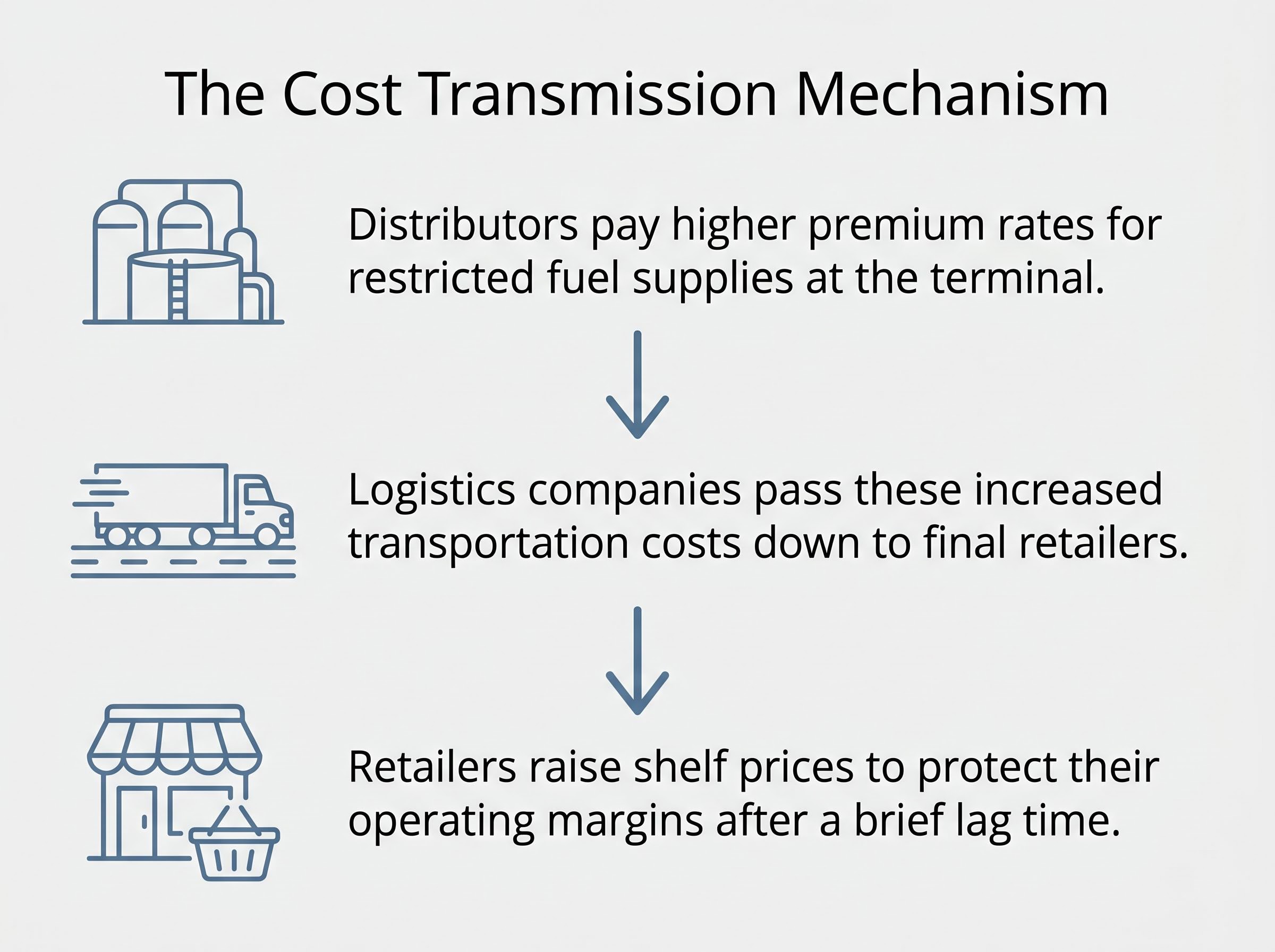
The Cost Transmission
The sequential steps from port to register follow a predictable and highly visible pattern.
- Distributors pay higher premium rates for restricted fuel supplies at the terminal.
- Logistics companies pass these increased transportation costs down to final retailers.
- Retailers raise shelf prices to protect their operating margins after a brief lag time.
The Policy Trap
Central banks cannot print more oil to solve a physical supply deficit. Policymakers face a difficult choice between holding rates high enough to risk a recession or allowing consumer prices to run hot.
Travel Industry Faces Headwinds From Soaring Fuel Expenses
The abstract economic pain translates to an acute collapse of operating margins within the hospitality and aviation sectors. Airline stocks are diving amid mass disruptions, flight suspensions, and route cancellations directly connected to the Middle East conflict.
Aviation companies are actively withdrawing their yearly financial guidance due to the extreme unpredictability of overhead costs. Jet fuel prices have more than doubled since the crisis escalated, destroying quarterly profit models across the industry.
This extreme margin compression is already forcing international carrier capacity reductions and immediate fare hikes, as airlines desperately attempt to offset refining premiums that have surged well beyond their existing hedging strategies.
Industry projections warn that fuel supply could take months to recover even after the Strait of Hormuz reopens. Booking Holdings reported a decline in first-quarter accommodation reservations. Investors holding travel equities must set realistic expectations for upcoming quarterly earnings reports as these operational challenges compound.
Airlines face specific operational pressures across their global networks:
Route reductions across international and domestic corridors. Suspended financial guidance for the remainder of 2026. * Elevated ticket pricing passed directly to consumers to offset margin compression.
Households Seek Value Options as Purchasing Power Drops
The squeeze on corporate margins is mirrored at the household level, tracking a psychological shift toward survival budgeting. United States consumer resilience is deteriorating rapidly under the weight of significantly higher living costs. Consumer sentiment slumped to a near four-year low in April 2026.
Shoppers are expressing intense caution as persistent inflation risks erode their purchasing power month over month. Analysts note a distinct market rotation benefiting retail enterprises that focus on discounted merchandise. Consumers are aggressively hunting for alternatives to maintain their standard of living amid the price hikes.
Recent Federal Reserve verified retail purchase data reveals how rapidly deteriorating sentiment translates directly into behavioral shifts at the register, prompting households to prioritize discount channels over discretionary spending.
This rotational shift highlights a growing consumer preference for necessary household purchases over discretionary vacation expenditures. Identifying the migration toward discount retail offers investors a clear view of which sectors stand to benefit from these challenging economic conditions.
Adapting to a Prolonged Era of Elevated Costs
The compounding effects of a steady Federal Reserve rate path, geopolitical energy shocks, and shifting consumer demand are structural rather than temporary. Pressures forcing consumers toward discount retail and squeezing aviation margins will persist until the underlying supply issues resolve.
Investors should monitor the resolution of port blockades closely, as physical shipping data will lead the eventual recovery. Upcoming technology sector earnings may provide an alternative growth narrative while traditional industrial sectors absorb these elevated transport costs. Adapting to this environment requires pivoting away from margin-sensitive discretionary stocks toward defensive positions.
Investors exploring how to structure portfolios amidst these conflicting forces will find our detailed coverage of barbell investment strategies for 2026, which outlines how to balance defensive commodity exposure against long-term technology growth engines.
Past performance does not guarantee future results. Financial projections are subject to market conditions and various risk factors.
This article is for informational purposes only and should not be considered financial advice. Investors should conduct their own research and consult with financial professionals before making investment decisions.