
EQT Agrees to Acquire Platinum Investment Management for Nominal Sum
Oct 12, 2026































Managed funds are one of the most widely used investment vehicles for Australian investors, offering professional management, diversification, and access to asset classes that may be difficult to access directly. The Australian managed fund industry spans retail and wholesale structures, including unlisted managed investment schemes, listed investment companies, ETFs, and superannuation funds. Performance assessment requires comparing fund returns against appropriate benchmarks after fees, assessing consistency of outperformance, and understanding the risk characteristics of the strategy. The ongoing debate between active and passive management is central to fund selection, with evidence favouring passive approaches in efficient markets but active management potentially adding value in less efficient segments. StockWire X covers managed fund news, performance data, and manager insights to help investors make informed fund selection decisions.
Managed funds in Australia are pooled investment vehicles regulated by ASIC under the Corporations Act. Investors purchase units in the fund, which are priced based on the net asset value of the underlying portfolio. A professional fund manager makes investment decisions on behalf of unit holders. Managed funds can be accessed through financial advisers, online investment platforms, and directly from fund managers. They provide diversification and professional management in a single investment.
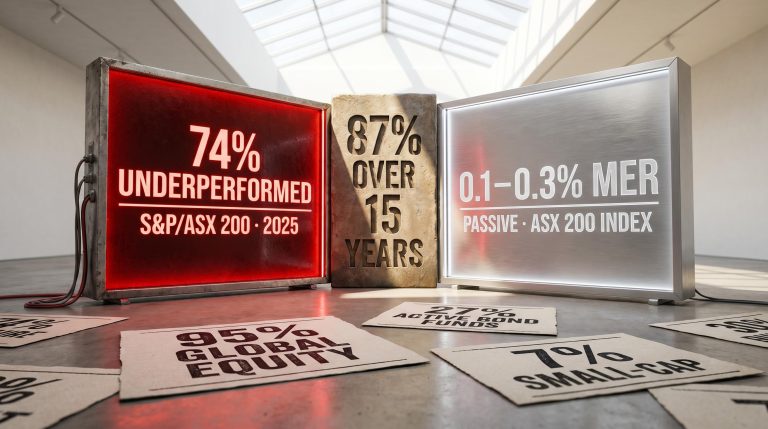
Active funds employ portfolio managers who make security selection and allocation decisions attempting to outperform a market benchmark. Index funds passively replicate a market index, aiming to match market returns at minimal cost. Research consistently shows that most active funds underperform their benchmarks after fees over long periods, though some active managers do generate sustained alpha, particularly in less efficient market segments.
Selecting managed funds requires assessing investment objective alignment, fee structures (management and performance fees), manager track record and consistency, investment process quality, fund size and liquidity, and the role the fund plays in overall portfolio construction. Comparing after-fee returns against appropriate benchmarks over full market cycles provides a meaningful performance assessment. StockWire X covers managed fund analysis to support investor fund selection decisions.
Interest rates and inflation are key drivers of mutual fund strategy and asset allocation. Rising interest rates can pressure bond prices and growth stocks, leading fund managers to shift towards value-oriented or defensive sectors. Inflation can also impact portfolio positioning, with funds adjusting exposure to commodities, energy, or inflation-sensitive assets. These shifts can influence market performance and highlight how fund managers are responding to macroeconomic conditions.
Mutual fund positioning reflects where large pools of capital are being allocated across the market. Changes in sector exposure, asset allocation, or investment strategy can signal shifts in market sentiment and future trends. By tracking how mutual funds are positioned, investors can gain insight into potential market movements, identify emerging opportunities, and better understand how institutional capital is influencing asset prices.