

Qantas navigates Middle East fuel crisis with hedging, fare increases and network pivot
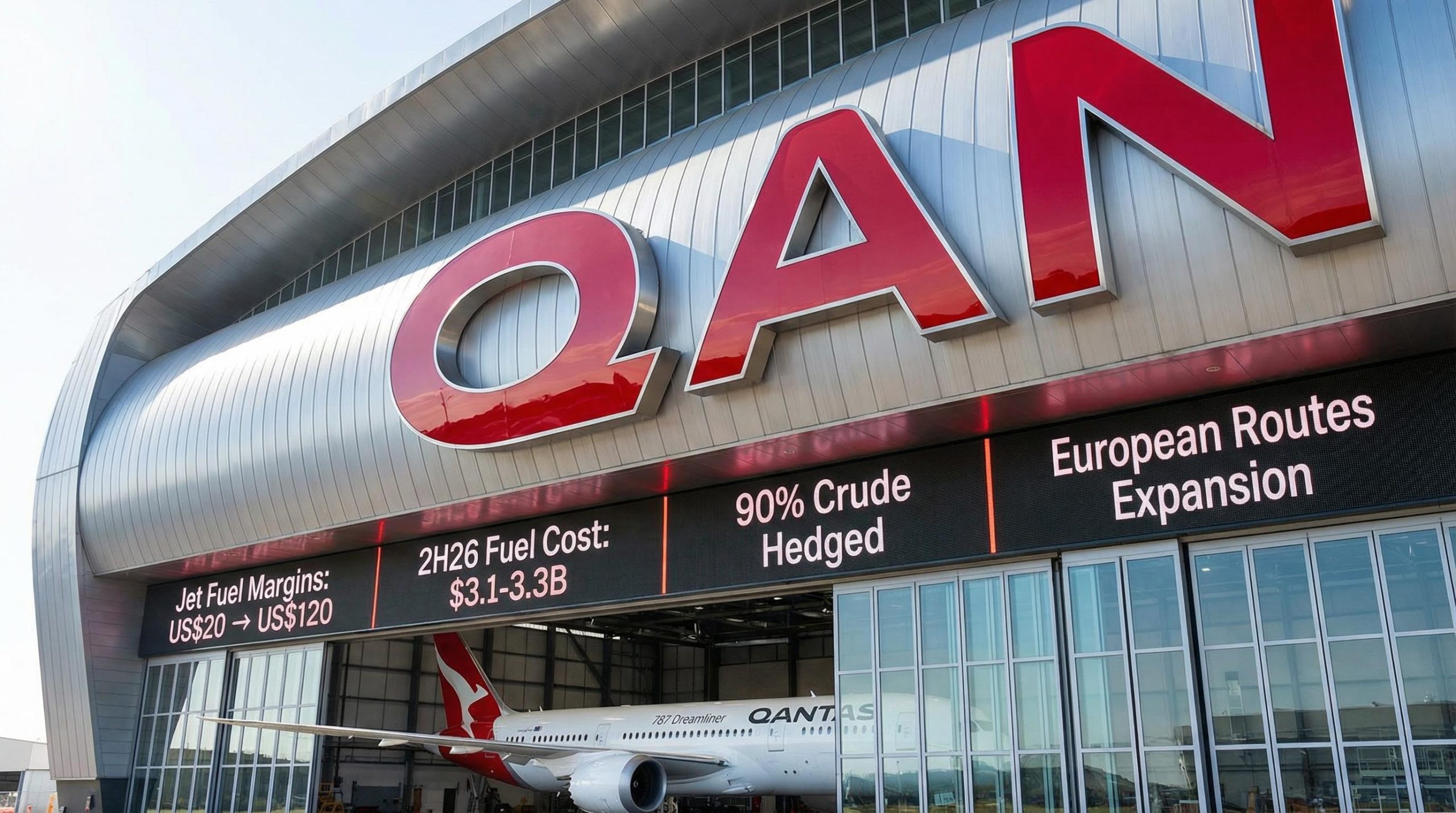
Qantas Airways has issued a comprehensive market update detailing its operational response to the Middle East conflict, which has driven jet fuel prices to more than double since the company’s February guidance. The airline group’s estimated fuel cost for the second half of FY26 has surged to $3.1–$3.3 billion, driven predominantly by jet refining margins spiking from US$20 per barrel in February to approximately US$120 per barrel.
Despite maintaining 90% hedging on crude oil exposure for 2H26, the Group remains largely exposed to movements in jet refining margins. Management has deployed multiple strategic levers to mitigate the cost pressure, including international network reconfiguration, domestic capacity cuts of approximately 5 percentage points in 4Q26, and fare increases that have doubled international unit revenue (RASK) growth guidance to 4–6% for 2H26.
Strong demand for European routes has enabled the Group to redeploy capacity from US and domestic networks to Paris and Rome services. The update demonstrates operational agility during external disruption, with management pulling multiple levers rather than absorbing elevated costs passively.
When big ASX news breaks, our subscribers know first
What investors need to know about airline fuel hedging
Jet fuel pricing operates across two distinct layers: the underlying crude oil cost and the refining margin required to convert crude into aviation-grade fuel. Qantas’s 90% crude oil hedge for 2H26 provides substantial protection against movements in benchmark oil prices, but this protection does not extend to refining margin volatility.
Refining margins represent the price differential between crude oil and refined jet fuel. Under normal conditions, these margins typically range between US$15–$25 per barrel. The current spike to ~US$120 per barrel reflects significant disruption to global refining capacity and jet fuel supply chains stemming from the Middle East conflict.
This two-tier structure explains why even well-hedged airlines face material cost pressure when refining margins spike independently of crude oil prices. Investors should understand that crude oil hedging, while valuable, does not provide full jet fuel cost protection during refining margin dislocations.
Revenue strength and capacity adjustments offset cost pressure
The Group has upgraded international RASK guidance to 4–6% growth for 2H26, double the previous outlook, signalling sustained pricing power and demand resilience. Domestic RASK is expected to grow approximately 5% for 2H26 and 6% for 4Q26, reflecting fare increases implemented in response to elevated fuel costs.
Management has demonstrated network flexibility by redeploying capacity from US routes and domestic operations to high-demand European services. The expansion of Paris and Rome frequencies capitalises on strong travel demand as customers seek alternative routing options avoiding Middle East airspace.
Domestic capacity reductions of around 5 percentage points in 4Q26 reflect disciplined capacity management, prioritising margin protection over volume growth. Affected customers are being contacted directly and offered alternative flights or full refunds.
| Segment | 3Q26 | 4Q26 | 2H26 | FY26 |
|---|---|---|---|---|
| Group Domestic | +5% | -1% | +2% | +3% |
| Qantas Domestic | +5% | -1% | +2% | +3% |
| Jetstar Domestic | +5% | 0% | +2% | +4% |
| Qantas International | +8% | +9% | +9% | +7% |
| Jetstar International | -4% | -7% | -5% | -3% |
| Group Total | +4% | +2% | +3% | +3% |
The capacity adjustments illustrate strategic reallocation rather than across-the-board cuts. Qantas International is expanding 9% in 4Q26 while Jetstar International contracts 7%, reflecting divergent demand profiles and margin opportunities across market segments.
Notably, 50% of 4Q26 revenue was sold prior to the conflict commencing, providing some revenue visibility despite ongoing volatility. The upgraded RASK guidance assumes current demand levels are sustained across both domestic and international networks.
Customer flexibility measures
The Group has implemented comprehensive customer support measures for passengers affected by Middle East disruption:
- Partner airline customers travelling to the Middle East offered flight flexibility or full refunds
- Affected Qantas and Jetstar domestic customers contacted directly regarding schedule changes
- Alternative flight options or complete refunds available for impacted bookings
These measures prioritise brand protection and customer retention during operational disruption, balancing short-term revenue impact against longer-term relationship preservation.
Balance sheet strength and capital discipline
Financial Framework
“The Group maintains a strong financial position in accordance with its Financial Framework and is well progressed with its FY27 funding plans.”
The Group’s financial framework remains intact despite elevated cost pressures. FY26 capital expenditure has been tightened to the bottom of the previously guided range, now expected at or below $4.1 billion. This capex discipline provides additional financial flexibility during the current period of uncertainty.
Net debt is now expected to be at or above the middle of the target range at 30 June 2026, reflecting the combined impact of higher fuel costs and continued capital allocation discipline. The $300 million interim dividend (19.8 cents per share) will proceed as scheduled, with payment on Wednesday 15 April signalling management confidence in liquidity and cash generation.
The planned $150 million on-market share buyback has been paused given current uncertainty. This decision reflects prudent capital preservation rather than balance sheet distress, retaining optionality to deploy capital opportunistically once visibility improves.
Management confirmed FY27 funding plans are well progressed, indicating no material refinancing risk despite the external shock. The balance sheet positioning provides multiple levers for further mitigating actions if fuel market conditions deteriorate or demand softens unexpectedly.
Supply chain and fuel availability
The Group is actively managing fuel supply security across multiple channels:
- Working closely with Government on fuel security coordination and supply chain monitoring
- Suppliers providing confidence in fuel availability through April and well into May
- Ongoing monitoring of global fuel supply chain uncertainty and potential disruption scenarios
While near-term fuel availability appears secure, the Group continues to monitor global supply chain risks that could impact operations beyond the current planning horizon.
Outlook and investor considerations
Multiple variables will determine the Group’s financial performance through the remainder of FY26, with jet refining margins representing the most significant near-term risk factor. The current RASK guidance assumes demand levels remain consistent with recent trading, but prolonged conflict or broader economic deterioration could pressure both yields and load factors.
Management retains optionality to implement further mitigating actions if conditions deteriorate, including additional capacity adjustments, network reconfiguration, or incremental fare increases. The decision to delay FY27 outlook guidance until a later date reflects the elevated uncertainty surrounding both fuel markets and broader economic conditions.
Key investor watch items include:
- Jet refining margin trajectory and potential mean reversion from current elevated levels
- European demand sustainability as alternative routing options stabilise
- Government and supplier fuel supply updates beyond May
- Further capacity or fare adjustments if cost pressures intensify or demand softens
The Group’s response demonstrates operational resilience and financial discipline during external disruption. The combination of partial hedging protection, pricing power, network flexibility, and balance sheet strength positions the airline to navigate near-term volatility while preserving optionality for future capital allocation.
Don’t Miss the Next Industrial Sector Move
Join 20,000+ investors receiving FREE breaking ASX news within minutes of release, complete with in-depth analysis. Get alerts on aviation, logistics, manufacturing and other industrial stocks the moment market-moving announcements drop. Click the “Free Alerts” button at StockWire X to stay ahead on industrial sector developments.