The global oil supply suffered a sudden contraction last month when the Strait of Hormuz closure removed 10 million barrels per day from the market. Brent Crude briefly spiked to $126 per barrel in March 2026, creating an immediate ripple effect across equity and commodity exchanges. As of 29 April 2026, oil remains entrenched above $100, forcing central banks into a complex balancing act between surging material costs and softening domestic demand. Investors require a measured inflation investing strategy to manage these conflicting pressures. This approach must account for the immediate energy supply shock while weighting the structural disinflationary megatrends that are concurrently defusing long-term price growth.
The Energy Shock and Central Bank Paralysis
The reality of triple-digit oil prices has introduced severe friction into global supply chains. Sustained elevation in energy markets is driving institutional forecasts to warn of a potential 16% surge in broad commodity prices. This immediate cost pressure is paralysing monetary policymakers.
This friction forces investors to recalibrate global inflation expectations as persistent geopolitical tensions alter the fundamental assumptions underpinning supply chain logistics.
Leading central banks face a direct dilemma between suppressing prices and protecting economic growth. Raising borrowing costs to counter the energy shock risks triggering a severe economic contraction. Institutional responses to this pressure reflect deep caution across varying geographic mandates.
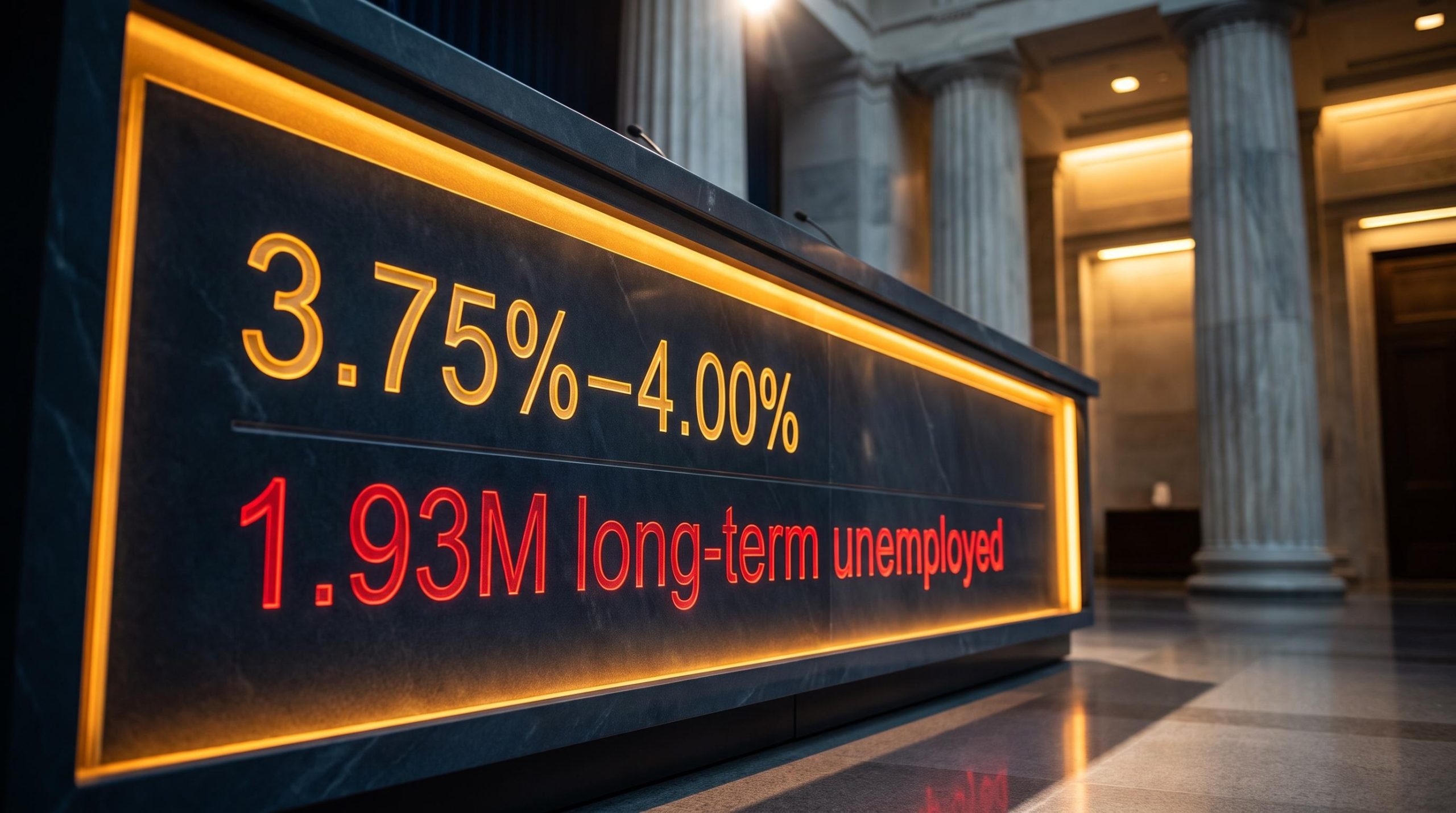
Current policy stances highlight this paralysis: U.S. Federal Reserve: Holding the balancing rate steady at 3.50% to 3.75%, with forecasts split between maintaining this level or executing two fine-tuning cuts of 25 basis points. European Central Bank (ECB): Maintaining current rates to shield the ongoing European energy transition from excessive capital costs. Bank of England (BOE): Keeping borrowing costs unchanged amid uncertainty over domestic price stickiness. Reserve Bank of Australia (RBA): Holding the cash rate steady at 4.35% in response to stubborn domestic inflation data.
As of late April 2026, Brent Crude is trading in a tight range between $104.18 and $109.85 per barrel. West Texas Intermediate (WTI) follows a similar elevated pattern, oscillating between $99.71 and $104.37. Recognising these institutional limits helps market participants anticipate extended market volatility, as central banks cannot simply print more oil to solve the liquidity strain.
When big ASX news breaks, our subscribers know first
Understanding the Mechanics of Supply-Driven Price Escalation
Separating temporary market disruptions from long-term economic decay requires a clear understanding of monetary mechanics. Restricted resource supply destroys domestic currency purchasing power by increasing the cost of baseline economic inputs. When energy costs rise, transport and manufacturing margins compress, forcing companies to pass expenses onto consumers.
The standard central bank response to runaway prices involves systematic interest rate increases, but this mechanism carries significant risk. According to historical precedent from the early 1980s, escalating rates successfully reduced price growth. According to external data, however, this same monetary tightening drove joblessness above 10%.
The Taylor Rule Metric According to external sources, economic forecasting relies heavily on the Taylor Rule, a monetary policy guideline dictating that central banks should enact a 1.5% interest rate hike for every single percentage point that inflation exceeds optimal targets.
Applying this formula to supply-side shocks often engineers a recession. International Monetary Fund (IMF) data shows that real GDP contracts for every point inflation exceeds a threshold. The current backwardation in energy futures, where near-term contracts trade higher than longer-dated ones, mirrors historical supply constraints from the 1970s and 2022. This curve structure signals that traders expect the immediate bottleneck to clear, rather than viewing the price spike as a permanent structural baseline.
The BIS targeted Taylor rules paper highlights this specific vulnerability, detailing how rigid policy responses to resource constraints can unnecessarily damage economic output.
The Hidden Disinflationary Megatrends Masking the Crisis
While the energy shock dominates immediate market pricing, massive technological and global trade forces are actively suppressing long-term costs. A macroeconomic paradox is unfolding where severe upward supply constraints are colliding with unprecedented downward structural efficiencies. These counterforces are quietly acting as a deflationary anchor across corporate operations.
Widespread artificial intelligence integration is the primary technological variable altering the cost equation. Institutional projections indicate AI implementation will drive a massive 4.9% surge in United States productivity. By increasing operational efficiency across sectors, these technological gains directly offset the margin pressure created by $100 oil.
This sudden surge in efficiency is causing capital to migrate rapidly from traditional headcount-dependent software platforms towards highly efficient synthetic infrastructure models.
Simultaneously, global trade dynamics are suppressing the prices of physical goods. Severe overcapacity in Chinese manufacturing has resulted in falling industrial profits domestically. The redirection of these manufactured goods into global markets floods international supply chains with inexpensive durable goods, providing immediate relief to consumer price indexes.
Market futures reflect these dual forces. These metrics indicate that commodity-driven interest rate spikes typically reverse, while baseline consumer price expansion targets continue hovering near the minimum.
| Immediate Inflationary Catalysts | Structural Disinflationary Anchors |
|---|---|
| Systemic energy supply constraints from the Middle East conflict | Artificial intelligence driving operational efficiency |
| Elevated global transport and shipping costs | U.S. productivity projected to surge by 4.9% |
| Potential commodity price surges affecting raw inputs | Redirected Chinese manufacturing overcapacity |
| Backwardation pricing in near-term futures contracts | Moderating baseline salary trajectories across developed markets |
Structuring a Resilient Inflation Investing Strategy for 2026
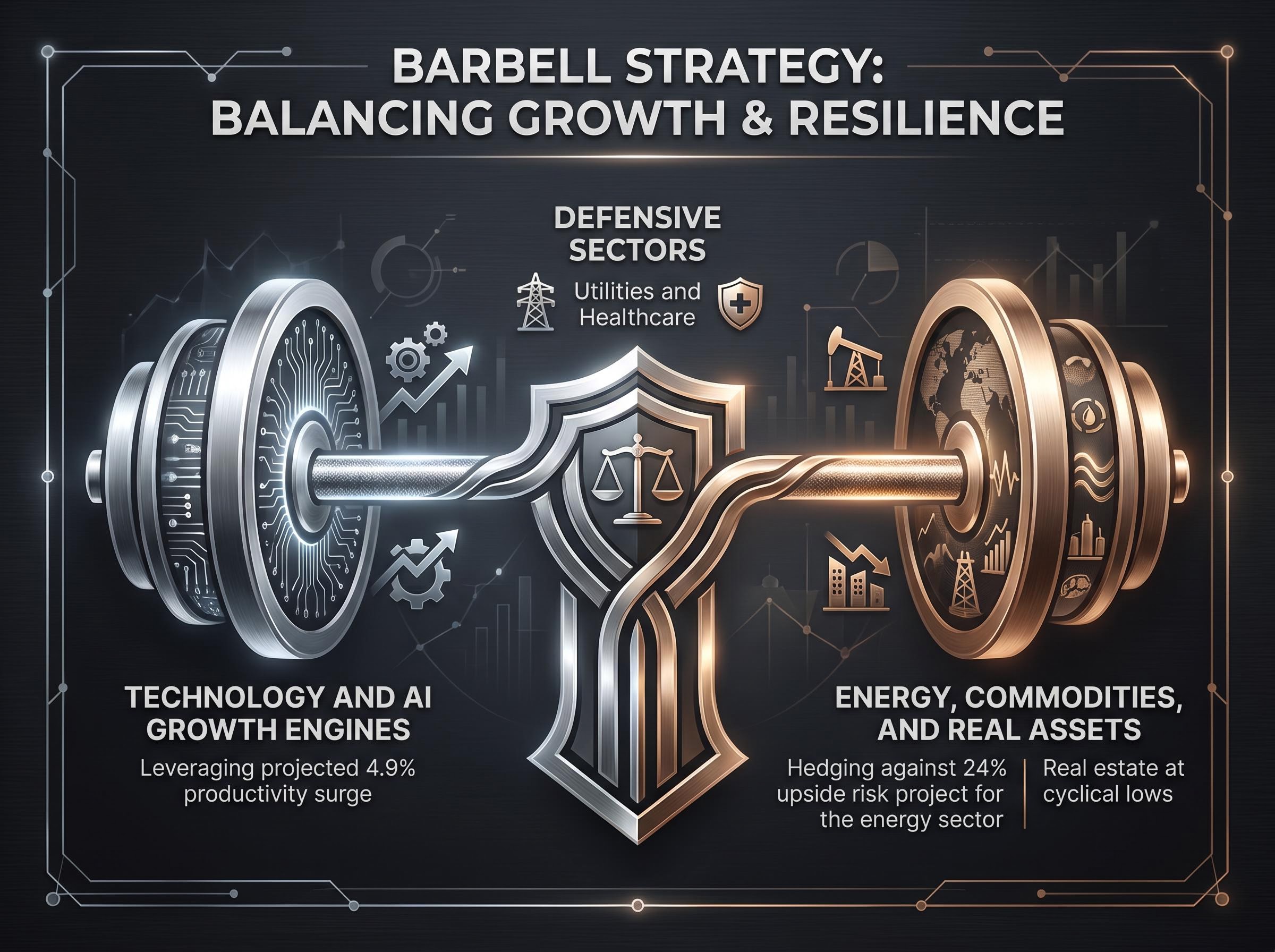
Institutional strategists are managing this complex environment by deploying a barbell approach to portfolio construction. This method balances defensive hedges with allocations to sectors benefiting from long-term productivity megatrends. Capital preservation in 2026 requires identifying highly profitable enterprises with low debt profiles and strong pricing power.
The J.P. Morgan asset allocation model heavily relies on this dual structure, recommending low volatility hedges alongside thematic technology exposure to weather uncertain cyclical conditions.
Technology and AI Growth Engines
Allocating capital toward AI equities acts as a deliberate play on the projected 4.9% productivity surge. Institutions emphasise these assets for their ability to generate organic operational gains independent of macroeconomic friction. Technology companies with high gross margins can absorb elevated input costs far more effectively than traditional industrial enterprises.
Defensive Sectors and Portfolio Stabilisers
Utilities and Healthcare provide necessary ballast against cyclical volatility. These defensive sectors deliver consistent revenue streams regardless of immediate consumer price pressures. Regulated utility pricing and inelastic healthcare demand allow these companies to pass costs forward, insulating dividend distributions from the worst of the energy shock.
Energy, Commodities, and Real Assets
Direct inflation hedges remain necessary while the Middle East conflict is unresolved. Market analysis indicates a 24% specific upside risk projection for the energy sector, leaving a sustained risk premium in the current oil market. Allocations to oil producers, fertilisers, and metals offer direct protection against this constraint.
Real estate also presents a compelling allocation opportunity. The sector is currently positioned at cyclical market lows while benefiting from structural global supply shortages.
Tactical Asset Deployment During Systemic Volatility
Theoretical portfolio construction must translate into mechanical execution steps to mitigate timing risks during severe market swings. The backwardation signal in energy markets indicates that present supply bottlenecks are likely temporary. Historical data shows that equity markets reliably stabilise once resource constraints dissipate.
Applying capital during these volatile periods requires a systematic approach rather than reactionary trading.
- Maintain highly liquid capital reserves to absorb sudden margin requirements or capture opportunistic mispricing.
- Establish strict dollar-cost averaging schedules to deploy capital incrementally, reducing exposure to isolated market peaks.
- Select international exchange-traded products to capture varying regional economic rebounds.
- Verify that chosen equity positions maintain sufficient cash reserves to survive sustained borrowing costs.
This execution methodology allows investors to enter the market without exposing their core capital to unnecessary timing risks.
For readers wanting to measure the gap between current valuations and macroeconomic reality, our full explainer on underpriced stock market risk analyses how high retail optimism frequently collides with embedded geopolitical pressures to trigger sudden market drawdowns.
Finding Clarity Within the Macroeconomic Contradiction
The economic environment of late April 2026 is defined by the contradiction between short-term oil shocks and long-term, AI-driven disinflation. Wholesale panic over energy prices ignores the structural efficiencies suppressing manufacturing and services costs. Conversely, unchecked optimism regarding technology ignores the immediate margin damage inflicted by triple-digit crude.
Evaluating these diverging corporate sectors requires a nuanced perspective, as mega-cap technology firms frequently mask the severe underlying vulnerabilities developing in traditional industrial and retail indices.
Success in this environment demands a dual-pronged approach. Investors should review their current allocations against the barbell strategy framework, ensuring adequate defence against commodity spikes while maintaining exposure to productivity multipliers.
This article is for informational purposes only and should not be considered financial advice. Investors should conduct their own research and consult with financial professionals before making investment decisions. Past performance does not guarantee future results. Financial projections are subject to market conditions and various risk factors.