
Turkey Rate Decision: Why Forecasters Split on a Hold or a Cut
Oct 19, 2026








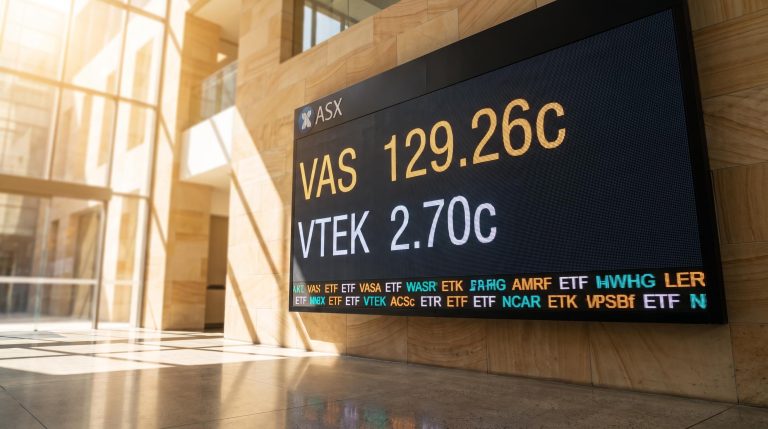


























The global ETF market has grown to manage trillions in assets, with the ASX ETF market expanding rapidly to offer hundreds of products spanning Australian and international equities, fixed income, property, commodities, currencies, and thematic investments. ETF investing strategies range from simple, low-cost market exposure for long-term wealth accumulation to tactical sector rotation, factor investing, and theme-based positioning using specialised products. The key advantages of ETF structures, daily liquidity, transparent holdings, low costs, and intraday tradability, make them suitable building blocks for a wide range of investor objectives. Understanding index methodology, tracking error, expense ratios, and distributional characteristics is important for selecting between competing ETF options. StockWire X covers ETF market news, product launches, performance data, and the strategic considerations for building ETF-based portfolios.
The best ETFs for Australian investors depend on desired exposure and investment objective. Core building blocks include broad Australian equity ETFs (VAS, IOZ), global equity ETFs (VGS, IWLD), and bond ETFs for income and diversification. Thematic ETFs in technology, healthcare, and clean energy provide targeted growth exposure. For income-focused investors, dividend-focused and covered call ETFs generate regular income. StockWire X covers ASX ETF products with performance analysis.
The Australian ETF market has grown to include hundreds of listed products across equities, fixed income, property, commodities, and alternatives, with total assets under management exceeding $150 billion. The ASX ETF market is dominated by a small number of large products tracking major indices, but includes increasingly diverse thematic and sector-specific options. New ETF listings continue to expand the investable universe for Australian investors.
ETF investing provides immediate diversification, lower transaction costs for accessing multiple securities, and professional index or active management in a single trade. Direct stock investing allows investors to concentrate in their highest-conviction ideas, avoid exposure to companies they consider unattractive, and potentially achieve higher returns through skilful security selection. Most portfolios benefit from combining core ETF exposure with selective direct stock positions where investors have genuine analytical edge.
ETF flows are often used as a real-time indicator of investor positioning, highlighting where capital is entering or exiting specific sectors, asset classes or themes. Large inflows can signal increasing conviction or momentum in a trade, while sustained outflows may reflect de-risking or rotation into other areas of the market. Because ETFs are widely used by both institutional and retail participants, flow data can provide insight into broader sentiment, liquidity conditions and macro positioning, particularly during periods of volatility or when markets are responding to changes in interest rates, inflation or economic outlook.