

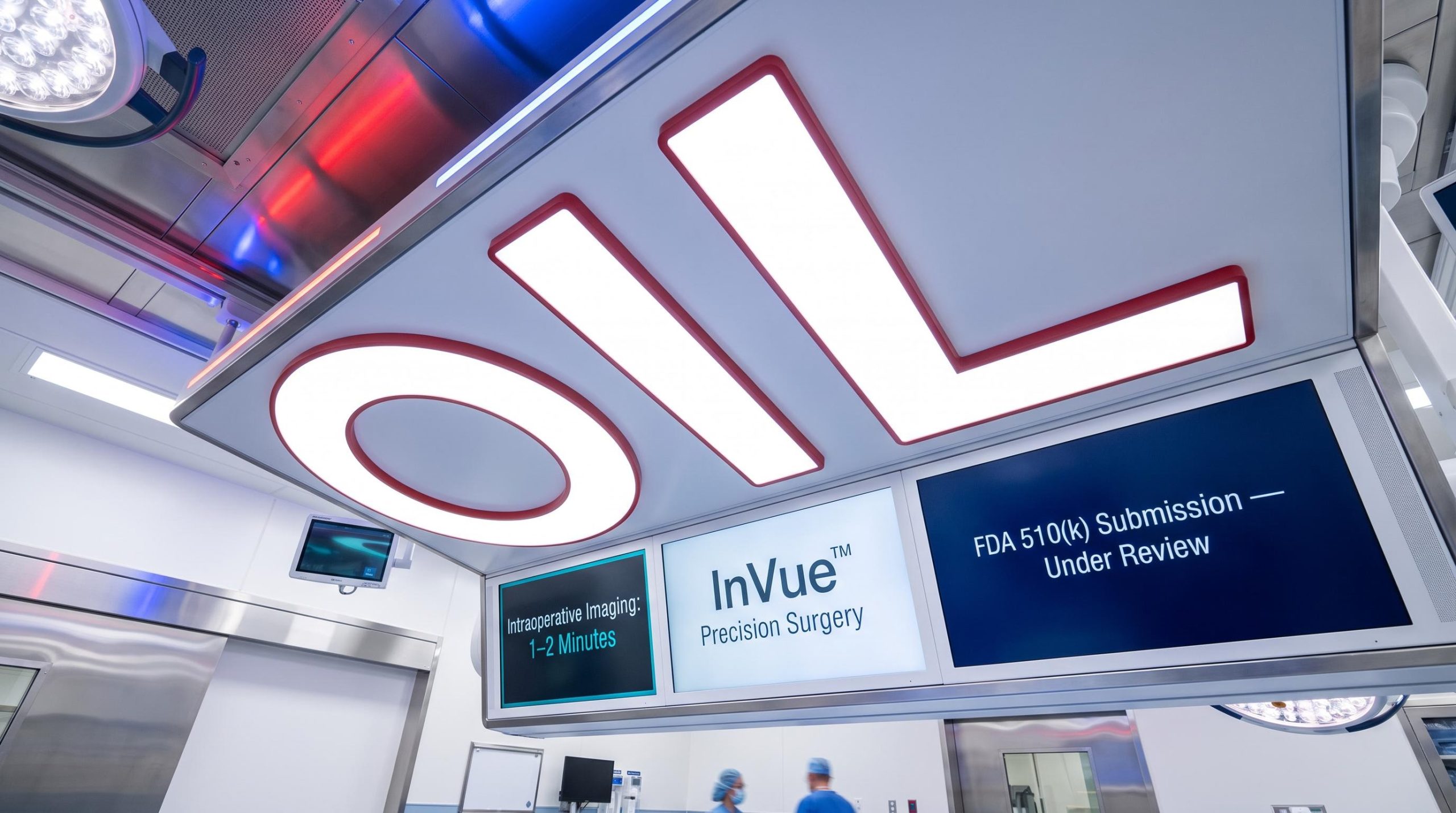
Optiscan reaches FDA submission milestone with InVue™ precision surgery device
Optiscan Imaging Ltd (ASX: OIL) has lodged a U.S. FDA 510(k) application for its InVue™ precision surgery device, marking the culmination of years of technical, clinical and regulatory development. The submission follows the InForm™ 510(k) application announced on 1 October 2026, giving Optiscan two simultaneous submissions now in formal FDA review.
For investors, the significance is direct. FDA clearance is the critical gateway to commercialisation in the U.S. market, and this submission moves InVue™ into the next formal stage of its regulatory pathway.
When big ASX news breaks, our subscribers know first
The U.S. surgical opportunity InVue™ is targeting
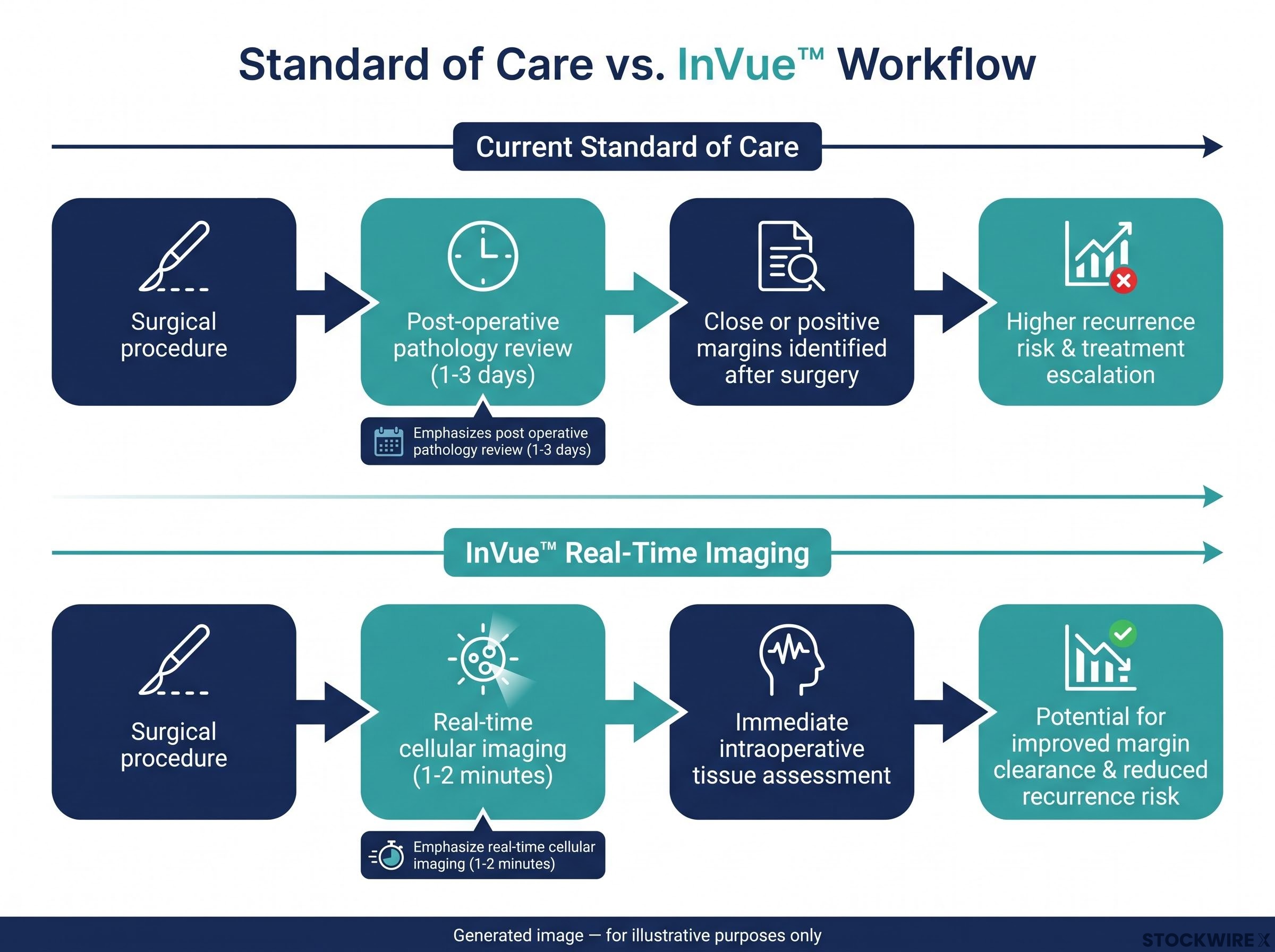
InVue™ brings microscopic, cellular-level imaging directly into the operating environment, enabling surgeons to visualise tissue in real time while the patient remains in theatre. The clinical problem it addresses is well defined: under the current standard of care, post-operative pathology review takes 1–3 days, meaning close or positive margins are often identified only after surgery, raising recurrence risk and the likelihood of treatment escalation.
InVue™ collapses this window to 1–2 minutes of intraoperative tissue assessment, with the potential to support improved margin clearance and reduced recurrence risk at the point where surgical decisions are being made.
Current standard of care vs. real-time imaging with InVue™:
- Before: Surgical procedure → post-operative pathology review (1–3 days) → close or positive margins identified after surgery → higher recurrence risk and treatment escalation
- After: Surgical procedure → real-time cellular imaging with InVue™ (1–2 minutes) → immediate intraoperative tissue assessment → potential for improved margin clearance and reduced recurrence risk
The scale of the addressable market is substantial. Approximately 60% of cancer patients undergo surgery to treat or stage their disease, equivalent to around 1.27 million patients annually based on 2026 cancer incidence figures. Cancer surgery is the largest segment of the U.S. cancer treatment facilities market, representing an estimated US$4.8 billion in annual revenue, while the broader intraoperative imaging market is forecast to reach US$1.55 billion by 2030.
Surgical oncology is the primary initial target for InVue™, spanning breast, head and neck, colorectal, genitourinary, skin and other solid tumour procedures. Across these disciplines, surgeons face a common challenge: determining during the procedure whether suspicious or residual tumour remains. Importantly, the platform is tissue agnostic, meaning its application is not limited to a single cancer type or surgical specialty, supporting a broad platform opportunity across multiple clinical pathways.
Head and neck cancer in vivo imaging reached a world-first milestone when Optiscan’s study advanced to Stage 2 intraoperative imaging ahead of schedule, generating a dataset with no direct competitor equivalent across an indication representing over 389,000 annual cases globally.
What the FDA 510(k) pathway means for investors
The FDA 510(k) pathway is the regulatory route through which medical devices can seek market clearance by demonstrating substantial equivalence to a legally marketed predicate device. It is the standard pathway for devices that are not entirely novel in concept but require independent regulatory assessment of their safety and performance evidence.
Critically, submission is not the same as clearance. The FDA will now independently assess the technical, performance and clinical evidence Optiscan has compiled for InVue™. The agency may request clarification or additional information before determining whether the device meets the requirements to be cleared.
The table below shows where InVue™ sits within the full FDA regulatory pathway:
| Stage | Description | InVue™ Status |
|---|---|---|
| Technical Development | Engineering and device design | Complete |
| Preclinical Validation | Laboratory and bench testing | Complete |
| Ethical Clearance | Ethical clearance | Complete |
| Clinical Validation | Human-use evidence generation | Complete |
| Regulatory Dossier Preparation | Regulatory dossier preparation | Complete |
| FDA Submission | Formal 510(k) application lodged with the FDA | Complete |
| Regulatory Clearance | FDA independent review and determination | In Review |
| Commercial Deployment | U.S. market entry and commercial roll-out | Pending clearance |
Clearance is the legal prerequisite for commercial sales of InVue™ in the U.S. market. Without it, no U.S. surgical revenue is possible. Progression from submission to clearance represents the single most material near-term catalyst on Optiscan’s regulatory roadmap.
Building commercial readiness in parallel
Optiscan is not waiting for clearance before advancing its commercial position. The company is actively pursuing a parallel-track approach, with regulatory review and commercial readiness progressing simultaneously across four workstreams:
- Clinical reference sites
- Customer engagement
- Manufacturing scale-up
- Discussions with commercial partners
Clinical studies will also continue beyond the submission, generating additional evidence across surgical workflows. This data supports future clinical adoption and strengthens Optiscan’s relationships with surgeons, hospitals and clinical institutions.
The two simultaneous 510(k) submissions, for both InVue™ and InForm™, reflect the depth of Optiscan’s in-house regulatory capability, with the company having built and executed complex clinical, regulatory and product development programs across both devices.
The InForm 510(k) submission, lodged on 1 October 2026, targets the U.S. anatomic pathology market valued at US$10.6 billion in 2025, with an 84-case real-world dataset from Australian Clinical Labs forming a direct input into that regulatory dossier.
Dr Camile Farah, CEO and Managing Director, Optiscan Imaging Ltd
“Lodgement of InVue™’s 510(k) submission with the FDA represents yet another key deliverable in the broader development strategy for our medical technology platform… It is a real credit to our team’s ability to advance Optiscan’s clinical program and hone the Company’s inhouse-developed regulatory capability skillsets.”
“InVue™ potentially offers multiple advantages to surgeons working in operating theatres. It could change what they can see, when they can see it, and, flowing from the first two advantages, provide them with a better course of action during surgery… That is a compelling clinical proposition, and a significant commercial opportunity as we build toward U.S. market entry.”
The CEO’s framing captures the clinical value proposition directly: what surgeons can see, when they can see it, and what action they can then take. It is a concise articulation of why intraoperative imaging at the cellular level represents a meaningful shift from the current standard of care.
What to watch next
With the FDA 510(k) application now lodged, investors should monitor the following developments:
- FDA review progress: The agency may request clarifications before making a clearance determination; any update on this process will be material
- Clinical data releases: Ongoing studies continue generating evidence that may support future adoption and commercialisation
- Commercial partner announcements: Discussions with commercial partners are active; any agreement reached would be a significant development
- Manufacturing scale-up: Progress on production readiness will signal how prepared Optiscan is for potential commercial deployment
The announcement does not disclose an expected FDA review timeframe. If clearance is achieved, InVue™ would advance from an advanced clinical-stage technology to potential commercial deployment in the U.S. market.
Don’t Miss the Next ASX Healthcare Breakthrough
Big News Blast delivers FREE breaking ASX healthcare news directly to your inbox within minutes of release, with in-depth analysis already done. Join 20,000+ investors who stay ahead of the market the moment announcements drop. Click the “Free Alerts” button at StockWire X to start receiving real-time alerts today.