
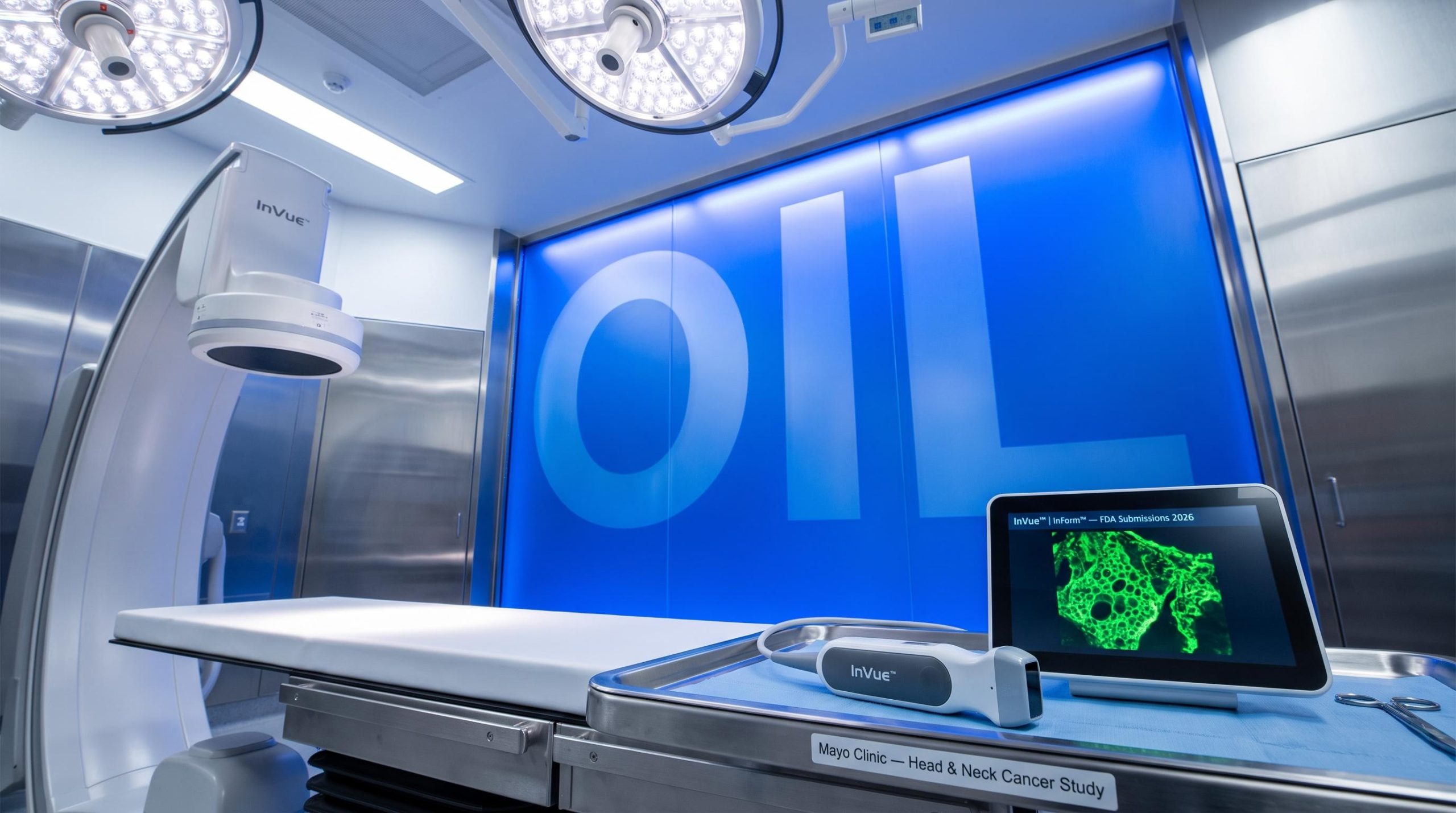
Optiscan launches US head and neck cancer study with Mayo Clinic to support FDA submissions
Optiscan Imaging (ASX: OIL) has initiated a new U.S.-based head and neck cancer imaging study under another Research Agreement with Mayo Clinic in Rochester. The 35-patient study will evaluate the company’s InVue™ and InForm™ imaging platforms in assessing surgical margins during tumour resection.
Patient recruitment is now underway at Mayo Clinic Rochester. The study evaluates InVue™ for in vivo (inside the living body) imaging and InForm™ for ex vivo (outside the body) digital pathology imaging, generating data to support the company’s planned U.S. FDA regulatory submissions for both devices, scheduled to occur later in calendar 2026.
For investors, the study extends Optiscan’s technology into a new cancer indication and surgical setting, broadening its addressable markets while directly advancing the near-term FDA pathway.
When big ASX news breaks, our subscribers know first
Inside the study — how InVue and InForm work in the surgical workflow
The study will be led by Mayo Clinic Principal Investigator Kyle Ettinger, M.D., Oral & Maxillofacial Surgeon, and co-Principal Investigator Kevin Arce, M.D., Oral & Maxillofacial Surgeon. It explores how both platforms integrate within the surgical and pathology workflow, focusing on high-resolution imaging in real time during and after resection.
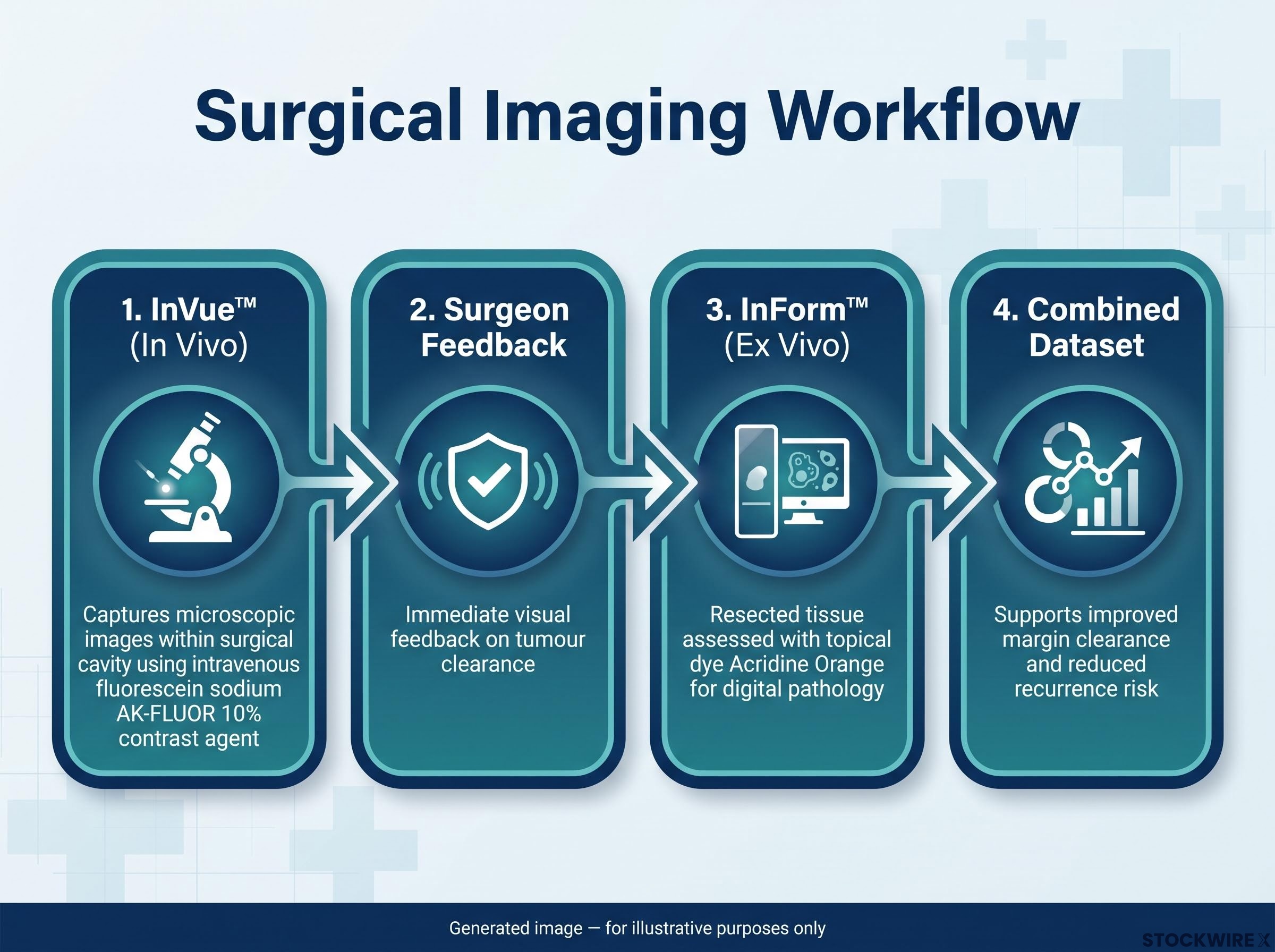
The planned workflow combines the two devices across four stages:
-
InVue™ captures real-time, in vivo microscopic images within the surgical cavity following tumour removal, using intravenous fluorescein sodium AK-FLUOR 10% contrast agent supplied by Long Grove Pharmaceuticals LLC.
-
Surgeons are given immediate visual feedback on tumour clearance.
-
Resected tissue specimens are assessed ex vivo using InForm™, with topical dye Acridine Orange applied to facilitate digital pathology imaging.
-
The combined dataset supports the potential for improved margin clearance and reduced recurrence risk.
The InForm™ component generates complementary imaging data alongside the intraoperative findings obtained with InVue™, contributing to the clinical evidence package supporting Optiscan’s U.S. FDA submissions for both devices.
Why head and neck cancer is a significant clinical opportunity
Head and neck cancer represents a significant and growing global healthcare burden. The disease encompasses a range of tumour types affecting the oral cavity, pharynx and larynx, and often requires complex surgical intervention as part of treatment.
Clinical outcomes remain heavily dependent on the surgeon’s ability to completely remove cancerous tissue while preserving critical anatomical structures responsible for speech, swallowing and breathing. When tumour removal is incomplete, the risk of recurrence rises, driving demand for technologies that can improve real-time visualisation of tumour margins during surgery.
| Metric | Figure | Why it matters |
|---|---|---|
| New cases annually (global) | ~890,000 | Large addressable patient population |
| Deaths annually (global) | ~450,000 | High unmet clinical need |
| Global cancer ranking | 7th most common | Broad market relevance |
| Recurrence rate | Up to 50% | Drives demand for better margin visualisation |
According to IARC/WHO GLOBOCAN 2022 and research published in Frontiers in Oncology (2022), up to 50% of patients experience disease recurrence following treatment. Real-time imaging aims to help surgeons remove all cancerous tissue in a single procedure, supporting improved surgical precision and, potentially, reduced recurrence rates.
The US study complements the Australian head and neck cancer study initiated earlier in 2026, which enrolled 50 patients to generate FDA-quality data while simultaneously advancing Optiscan’s oral cancer AI algorithms in partnership with Australian Clinical Labs and Long Grove Pharmaceuticals.
Strategic, regulatory and commercial significance
A new indication validating platform versatility
The study extends evaluation of Optiscan’s imaging platform into a new and clinically challenging surgical application. This provides an opportunity to demonstrate the versatility of InVue™ and InForm™ across multiple oncology indications and further validate the platform’s broader clinical utility.
Feeding the FDA evidence package
The study is expected to generate clinical data from a U.S. patient population supporting Optiscan’s U.S. FDA submissions for both devices. According to the company, the data will contribute to the near complete body of evidence demonstrating device performance across multiple tissue and cancer types, workflow integration and clinical utility in a real-world surgical setting. Importantly, the study will generate both in vivo and ex vivo imaging data, providing a comprehensive dataset to support regulatory submissions.
The head and neck study follows a parallel US breast cancer imaging study Optiscan launched with Mayo Clinic under the same Research Agreement structure, with both programs targeting FDA 510(k) submissions for InVue and InForm in H2 CY2026 and evaluating the same integrated surgical-pathology workflow.
Building a broader commercial foundation
By potentially demonstrating the complementary value of both devices within a single workflow, Optiscan is building a foundation for future opportunities across medical devices, digital pathology, software and AI-enabled clinical applications. The company notes potential expansion into additional cancer types and surgical procedures over time.
What management said
Dr Camile Farah, CEO and Managing Director
“The just initiated U.S.-based head and neck study is another great opportunity for our technology to be evaluated in an increased number of surgical settings where achieving complete tumour removal is critical. Despite advances in the treatment of head and neck cancers, their recurrence remains a major challenge for the many patients suffering these diseases. Through this study, we’re seeking to better understand how real-time imaging can support surgical decision-making and help address an important unmet clinical need.”
What’s next for Optiscan
The immediate focus is on patient recruitment and data generation, with the following milestones ahead:
-
Patient recruitment now underway at Mayo Clinic Rochester for the 35-patient study
-
Study to generate combined in vivo and ex vivo imaging data across the surgical and pathology workflow
-
Data to support the company’s planned U.S. FDA submissions for InVue™ and InForm™, scheduled to occur later in calendar 2026
For investors, the scheduled FDA submissions remain the key near-term catalyst to watch, with this new indication adding to the body of evidence underpinning that regulatory pathway.
Don’t Miss the Next Healthcare Breakthrough on ASX
Big News Blast delivers FREE breaking ASX healthcare news directly to your inbox within minutes of release, complete with in-depth analysis. Join 20,000+ subscribers already staying ahead of the market. Click the “Free Alerts” button at StockWire X to get the next market-moving announcement the moment it drops.