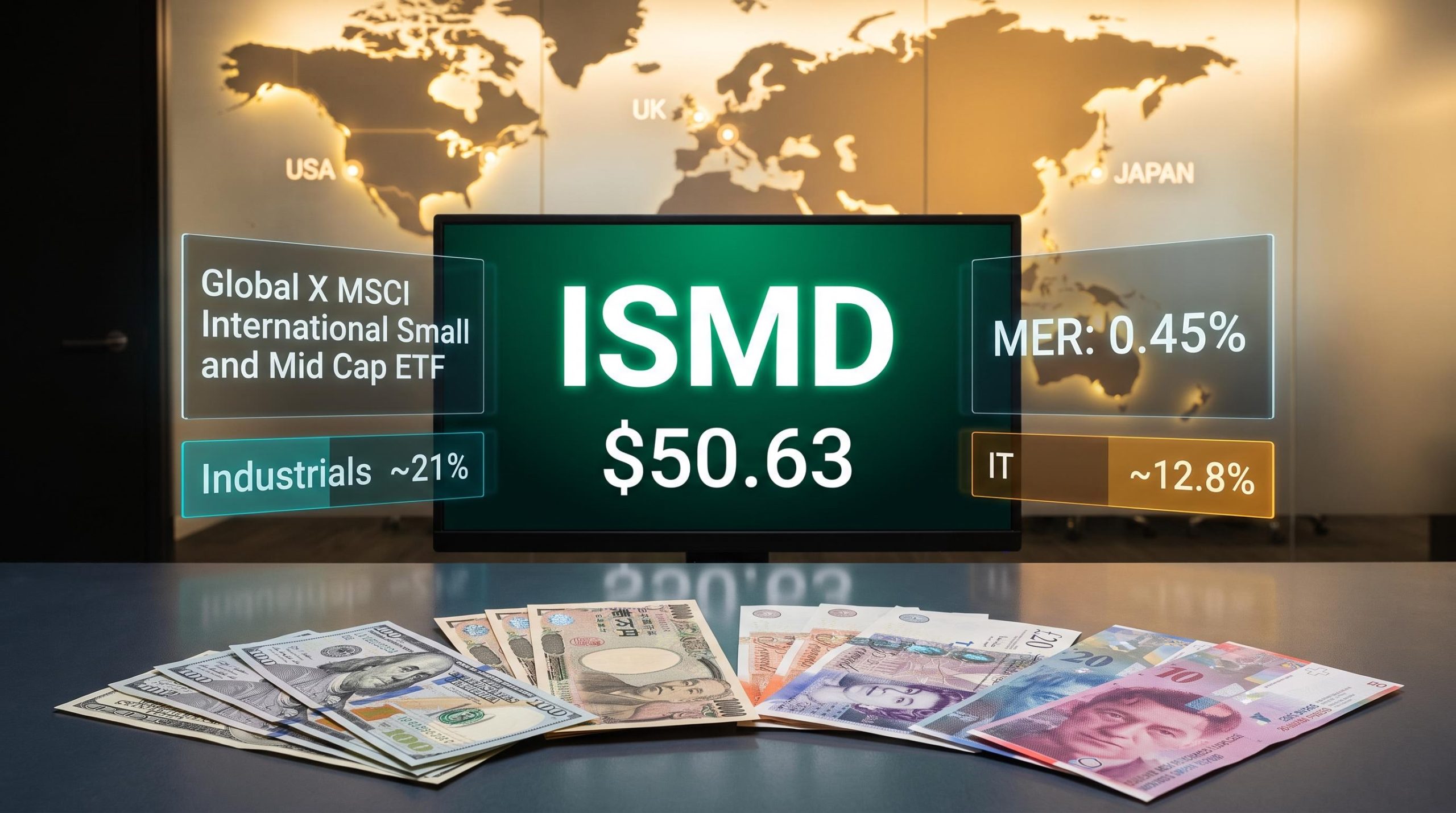
Most Australian investors who hold a global ETF are making a concentrated bet on large-cap technology whether they realise it or not. A standard MSCI World tracker puts roughly a quarter of every dollar into information technology, with Apple, Microsoft, NVIDIA, and Amazon doing most of the heavy lifting. Until this week, there was no passive, index-based product on the ASX that gave you the rest of the global equity market without that mega-cap tilt.
Global X changed that on 22 July 2026, listing the Global X MSCI International Small and Mid Cap ETF (ASX: ISMD). The fund tracks the MSCI World ex Australia SMID Cap Select Index, holding approximately 300 small and mid-cap companies across developed markets outside Australia. It is, by Global X’s account, the first index-based ETF on the ASX designed specifically to provide cohesive global small and mid-cap (SMID) exposure.
Here is what you need to know before deciding whether ISMD belongs alongside your existing holdings: how the index is built, what it actually owns, what it costs, and the honest limitations of buying a fund with zero performance history.
What ISMD actually tracks, and why the index design matters
The benchmark behind ISMD, the MSCI World ex Australia SMID Cap Select Index, applies passive screening based on market capitalisation and liquidity, then layers on diversification constraints across region, size, and sector. The result is a portfolio of roughly 300 holdings that avoids excessive concentration in any single area.
The sector profile is where the difference from a standard global ETF becomes concrete:
- Industrials: approximately 21%
- Financials: approximately 15%
- Information Technology: approximately 12.8%
ISMD’s IT weighting sits at approximately 12.8%, compared with roughly 25% in a standard MSCI World tracker such as VGS.
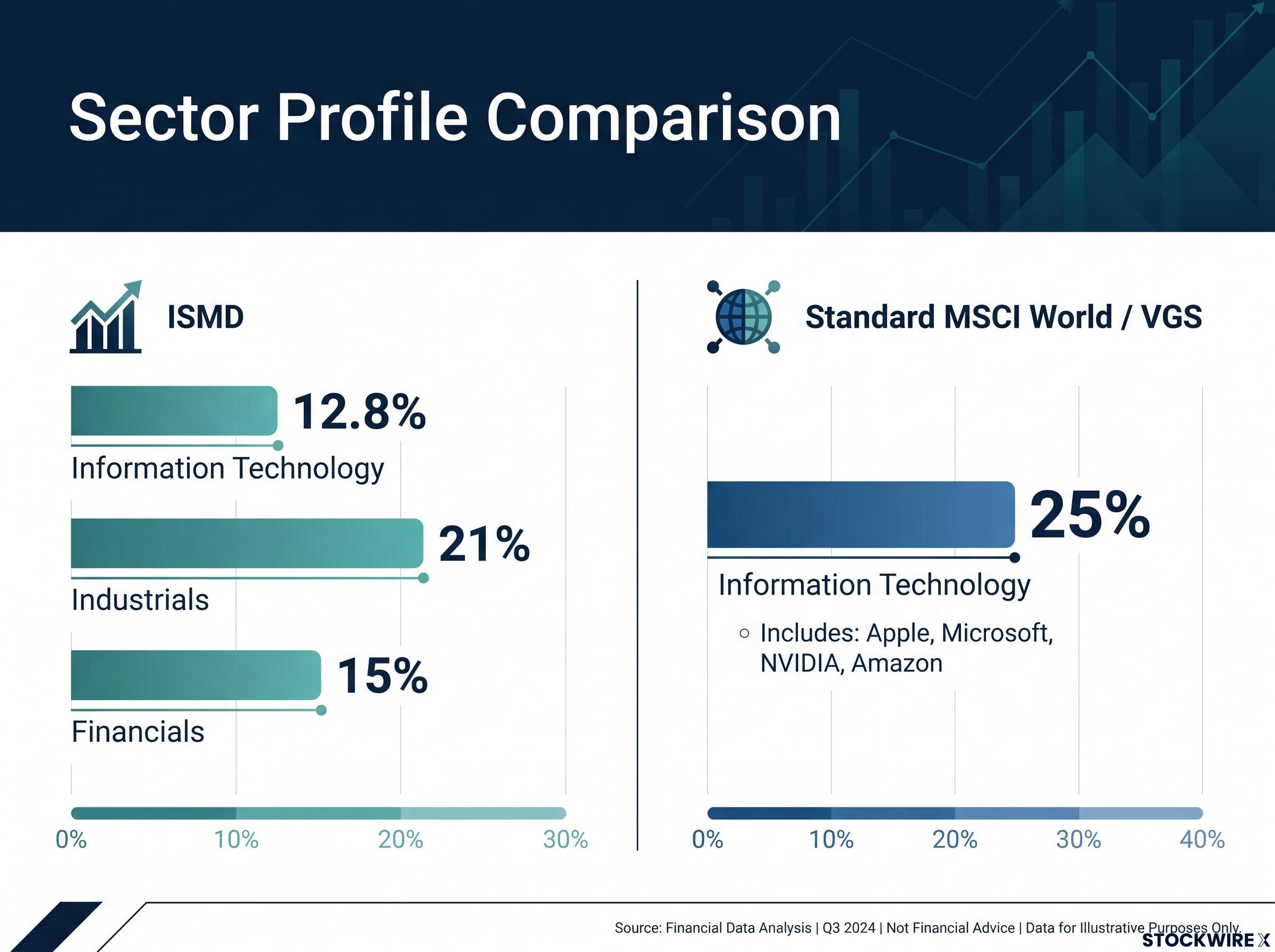
That gap is not a limitation of the index. It is a feature. Apple, Amazon, NVIDIA, and Microsoft sit outside the SMID universe entirely, which means ISMD is not a smaller version of what you may already own in a broad global ETF. The tilt away from mega-cap technology is built into the index methodology, and it is the primary reason the product offers genuinely different exposure rather than duplicating your existing allocation at a higher fee.
When big ASX news breaks, our subscribers know first
Where ISMD invests: countries, companies, and what the top holdings reveal
The top holdings make the abstract feel tangible. Among the largest positions in ISMD are names most investors will recognise:
- SanDisk Corp
- Warner Bros Discovery
- eBay
- Archer-Daniels-Midland
- Ralph Lauren
- Yum! Brands (the global quick-service restaurant group behind the KFC brand)
Global SMID does not mean obscure frontier businesses. These are established mid-tier companies operating across industries that simply do not feature in standard large-cap benchmarks.
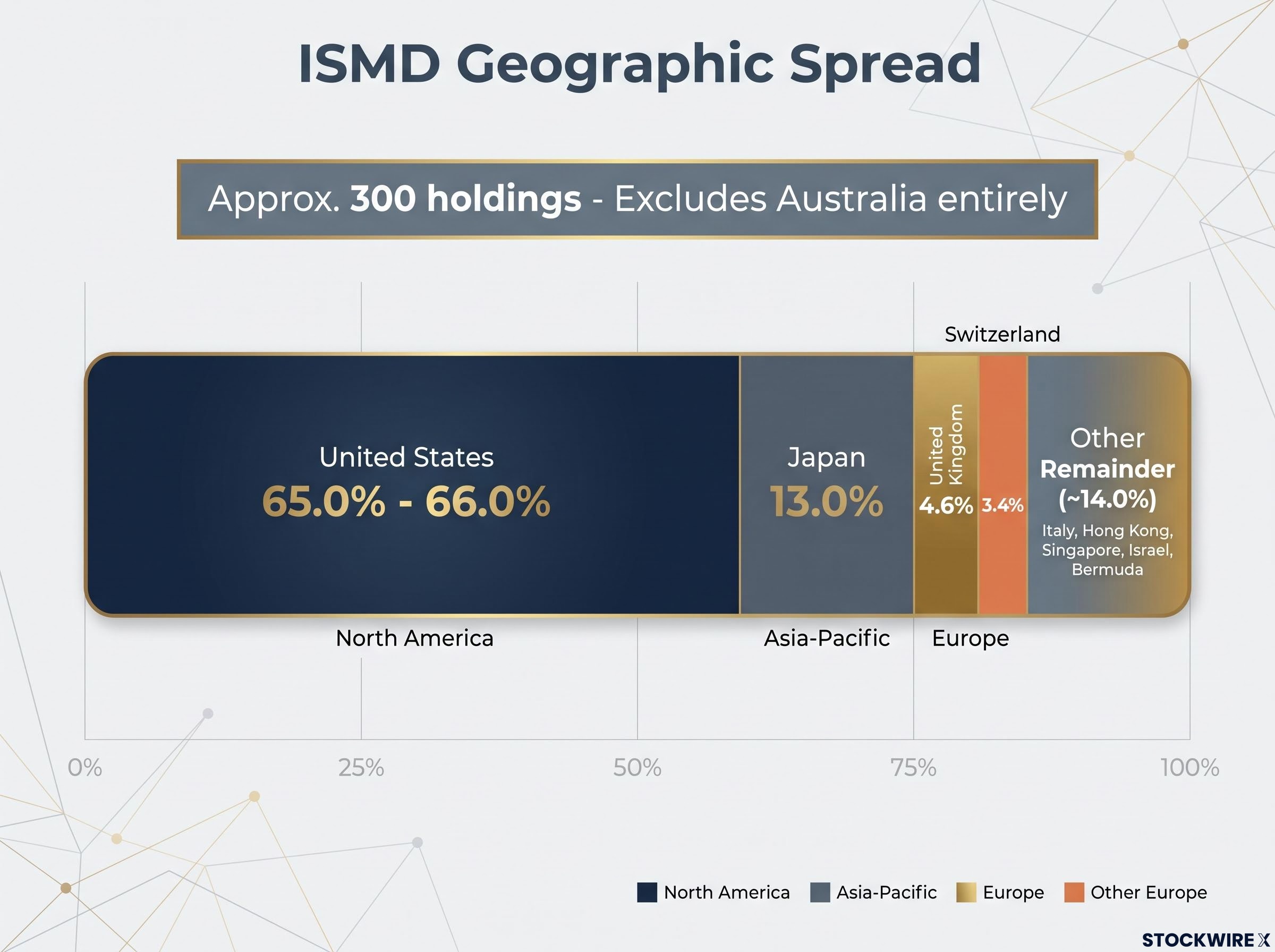
The geographic spread reinforces that reach:
| Country | Approximate Weight |
|---|---|
| United States | ~65-66% |
| Japan | ~13% |
| United Kingdom | ~4.6% |
| Switzerland | ~3.4% |
| Other (Italy, Hong Kong, Singapore, Israel, Bermuda) | Remainder |
The US tilt is significant at roughly two-thirds of the portfolio, but Japan, the UK, Switzerland, and a spread of smaller markets provide geographic diversification that goes well beyond a single-country bet. The index excludes Australia entirely, meaning ISMD complements rather than duplicates your domestic holdings.
Fees and currency exposure: what ISMD costs, and what AUD movements mean for returns
The management expense ratio (MER, the annual fee the fund charges) sits at 0.45% per year.
This works out to around $45 annually on a $10,000 investment.
That is higher than the cheapest broad-market global ETFs, which typically charge in the 0.07-0.20% range. Context matters here:
- Broad global ETFs: approximately 0.07-0.20%
- ISMD: 0.45%
- Specialist and thematic ETFs targeting narrower market segments: comparable range
The premium reflects the cost of targeting a specific, narrower slice of the global equity market. Whether that additional cost is justified depends on whether global SMID exposure adds enough diversification to your existing portfolio to warrant the fee.
ISMD is unhedged to the Australian dollar. Returns are driven by both the performance of the underlying stocks and movements in the AUD against the USD, JPY, GBP, and CHF. A weaker AUD amplifies gains on foreign assets; a stronger AUD reduces them, even if the shares themselves perform well.
AUD currency exposure has been the decisive variable separating hedged from unhedged international ETF returns in 2025-2026, with the Australian dollar’s approximately 20% appreciation against the USD creating a gap of as much as 13 percentage points between otherwise identical strategies.
Distributions are paid semi-annually, with a dividend reinvestment plan (DRP) available for those building positions over time.
For most Australian investors, the practical question is not “hedged or unhedged” but “comfortable with foreign exchange exposure or not investing in this category at all.” Hedged global SMID options are not commonly available on the ASX, making ISMD’s unhedged structure the default in this space.
What role ISMD plays in an Australian investor’s portfolio
The shift from “what is this product” to “where does it sit” matters more than the product details themselves. ISMD is best understood as a satellite holding, a deliberate addition that complements, rather than replaces, core large-cap global ETFs and Australian equity holdings.
Portfolio concentration risk in standard ASX global ETFs runs deeper than the top-ten holdings list suggests: the top 10 stocks in the ASX 200 account for roughly half of the entire index, and pairing a domestic fund with a large-cap global ETF can replicate a narrow sector bet rather than deliver genuine diversification.
The market gap it fills is structural. Index-based access to global SMID on the ASX has historically been limited to actively managed options. For passive investors, meaning those who prefer to track an index rather than pay for a manager’s stock-picking judgement, this category simply did not exist on the ASX until last week.
The broader case for global small-cap valuation rests on a verified discount to large-cap peers that VanEck research confirmed as recently as May 2026, with two of the three historical triggers for small-cap leadership already present in mid-year data.
How ISMD sits alongside common ASX ETF holdings
If you hold VGS or a similar broad global ETF, your portfolio already has significant exposure to Apple, Microsoft, and NVIDIA. ISMD holds none of them. That absence is the diversification case: reduced mega-cap tech overlap, access to businesses at different growth stages, and sector and regional exposure that broad indexes structurally underweight.
The right way to assess ISMD is in the context of what you already own. If your global allocation is concentrated in large-cap names, ISMD adds a dimension that is genuinely different. If you already have broad market-cap coverage through multiple holdings, the incremental benefit shrinks, and the 0.45% fee becomes harder to justify.
Key risks and limitations Australian investors should weigh before buying ISMD
Four considerations belong in your evaluation before committing capital:
- No track record. ISMD has zero performance history. Due diligence must rest entirely on the index methodology and Global X’s operational track record as a fund manager, not on past returns.
- SMID volatility. Small and mid-cap stocks are more sensitive to economic cycles than large caps. Even with the index’s diversification constraints, investors should expect more pronounced price swings than in a large-cap global ETF.
- Currency exposure. Unhedged AUD exposure means returns are subject to foreign exchange movements. A strengthening Australian dollar could erode gains even when the underlying holdings perform well.
- Early liquidity and AUM limitations. ISMD launched at approximately $50.20 per unit and traded around $50.60-$50.63 on 23 July 2026, but with near-zero assets under management this data reflects initial flows rather than meaningful price discovery.
Investors considering ISMD now are making a decision based entirely on index design and fee structure. That is a different kind of due diligence than evaluating an established fund with years of data, and it requires comfort with structural conviction rather than historical evidence.
ASIC Regulatory Guide 282 sets out the disclosure, liquidity, and market-making obligations that ETF issuers must satisfy before listing on an Australian exchange, providing the compliance framework within which products like ISMD are structured and launched.
Whether ISMD earns a place in your portfolio depends on one question
The decision comes down to your existing holdings. If your global equity allocation is dominated by mega-cap technology through standard index ETFs, ISMD offers genuine diversification at a fee and currency exposure that may be worth the trade-off. If not, the case weakens.
ISMD trades on the ASX through standard Australian brokerage accounts, and the DRP provides a reinvestment mechanism for those building positions gradually.
For investors new to the mechanics of ETF investing, our full explainer on ASX ETF structure and tax covers how units are held in a legally separate trust, how distributions are taxed, and the execution practices that protect returns when trading on the ASX.
This article is for informational purposes only and should not be considered financial advice. Investors should conduct their own research and consult with financial professionals before making investment decisions. Past performance does not guarantee future results, and as a newly listed ETF, ISMD has no performance history to reference.
—