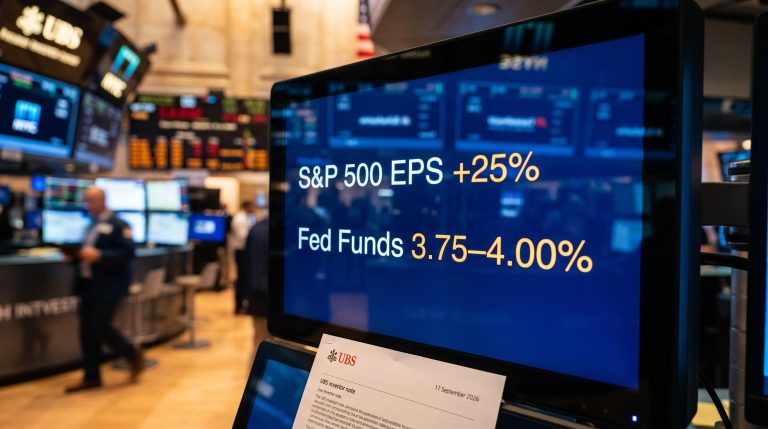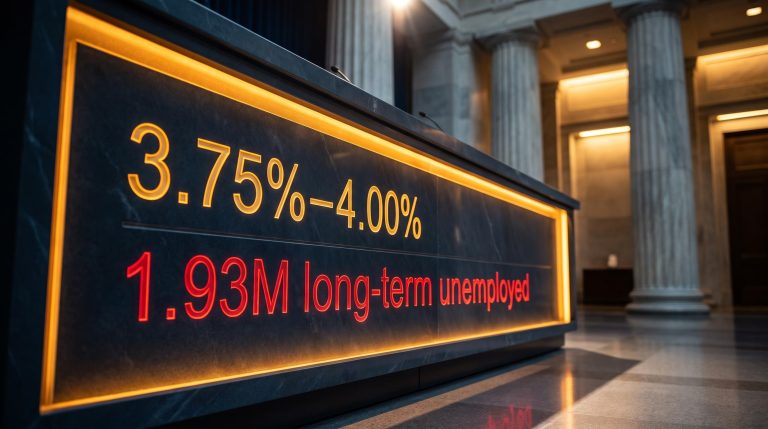
Goldman Sachs is telling clients to buy dips in a market that has already run hard. The advice sounds straightforwardly bullish until the fine print comes into focus. On 4 June 2026, Goldman analyst Christian Mueller-Glissmann published a client note maintaining an overweight stance on equities over a 12-month horizon while simultaneously flagging that near-term gains are likely to slow. The dual message: the bull case holds, but the easy money has been made.
What follows unpacks what Goldman’s stock market outlook actually means in practice, what conditions could break it, and how investors can apply an institutional-grade framework to their own portfolio decisions. The gap between the headline call and its embedded conditions is where the real signal lives.
Goldman stays overweight on equities, but the conviction has a ceiling
The headline is unambiguous. Goldman Sachs recommends buying equities on any near-term weakness, holding an overweight position across a 12-month forward horizon. Mueller-Glissmann’s note frames the current environment as one where dips represent opportunities, not warnings.
Goldman’s core position: Overweight equities on a 12-month horizon. Buy near-term weakness. The bull case remains intact.
The caveat arrives in the same note. Equity prices have been trading near record levels since mid-April, driven by technology sector earnings and accelerating AI capital investment. Goldman expects gains to slow from here, meaning the risk-reward ratio is narrower than it was six months ago.
This is not a contradiction. It is a deliberate institutional posture: conviction remains, but upside is compressed. The firm is not calling a top. It is telling clients that the next 12 months of returns will require more patience and more careful positioning than the previous six.
Investors who read the overweight call without absorbing the ceiling risk misallocating into an elevated market without appropriate hedges. The distinction between “overweight” and “unconstrained bullish” is the one that matters here.
When big ASX news breaks, our subscribers know first
The three macro headwinds that could break the bull case
Goldman’s 12-month call rests on specific assumptions, and each assumption has a named failure mode. Three macro headwinds sit at the centre of the firm’s risk framework:
- Persistently high bond yields, which compress equity valuations and raise the cost of capital across sectors
- Elevated energy costs, sustained by ongoing supply disruption and geopolitical instability
- Geopolitical risk concentrated in the Middle East, with the Strait of Hormuz closure representing the most acute near-term downside scenario
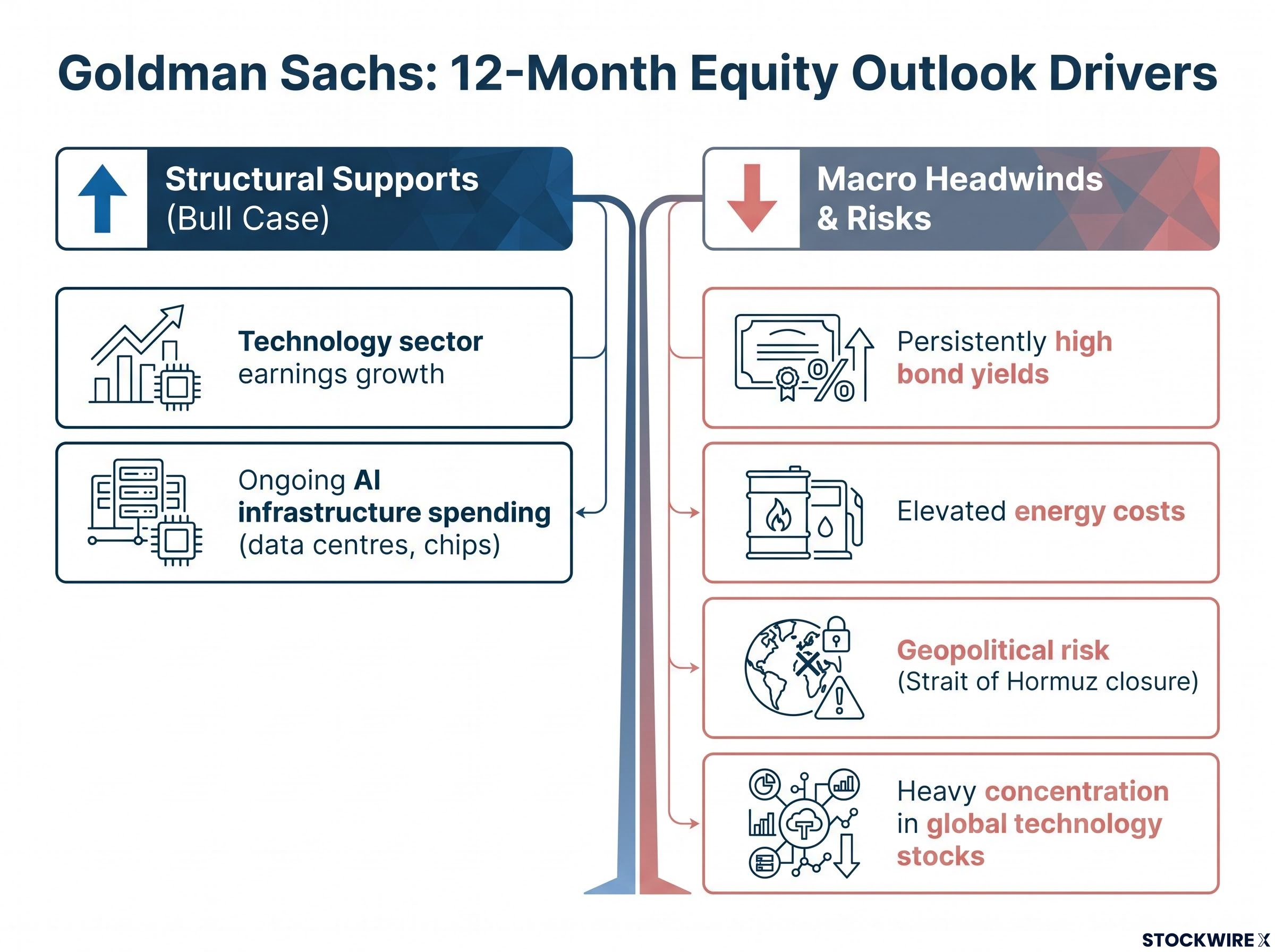
These are not decorative caveats. Goldman’s baseline scenario assumes inflation will normalise and the Strait of Hormuz will reopen. If either assumption fails, the constructive 12-month outlook comes under direct pressure.
| Goldman Baseline Assumption | Failure Mode / Risk Scenario |
|---|---|
| Inflation normalises over the forward horizon | Persistently high bond yields and energy costs erode equity valuations and compress margins |
| Strait of Hormuz reopens | Continued closure sustains oil price pressure, amplifies inflation, and elevates geopolitical risk premiums |
A fourth structural concern amplifies all three: heavy concentration of investor positioning in global technology stocks. If any of these headwinds triggers a correction, the drawdown will not be evenly distributed. The most crowded positions absorb the most pain.
Goldman analyst Dominic Wilson flagged in May 2026 that Hormuz closure tail risk remains significantly underpriced in financial markets, with the EIA treating the strait as effectively closed through at least the end of that month and shipping insurance markets corroborating ongoing disruption rather than resolution. That analysis provides the structural context behind why Goldman treats the strait reopening assumption as a genuine load-bearing condition, not a decorative caveat.
Why the rally has further to run over 12 months: the AI capex foundation
Goldman’s long-horizon optimism is not built on momentum. It is built on an earnings machinery the firm considers structural rather than cyclical.
The bull case rests on two pillars:
- Strong technology sector earnings growth, which has driven markets higher since mid-April and continues to exceed expectations
- Ongoing AI infrastructure spending, which Goldman identifies as a durable tailwind for corporate earnings across the 12-month forward horizon
AI-driven capital expenditure, the spending by major technology companies on data centres, chips, and infrastructure to support artificial intelligence workloads, is the mechanism that connects the current rally to the forward outlook. Goldman’s position is that this spending cycle is not a one-quarter event. It is an investment wave that will continue generating earnings growth across the coming year.
AI infrastructure capex at the hyperscaler level reached $130 billion in Q1 2026 alone, with the shift from conversational AI to autonomous agent workloads representing a structural step-change in compute demand that sits beneath the single-quarter earnings figures Goldman uses to justify its earnings growth projection.
Goldman’s forward case links AI capital expenditure directly to the earnings outlook, framing the current spending cycle as a structural support for equity returns rather than a sentiment-driven catalyst.
Specific company-level AI capex figures were not independently verifiable at publication. The AI theme should be understood at the macro level: Goldman sees sustained corporate investment in AI infrastructure as the primary engine keeping the 12-month equity case intact, even as near-term returns compress.
For investors accustomed to evaluating rallies through near-term catalysts alone, Goldman’s framing offers a longer structural lens. The question is not whether the next quarter delivers a beat. It is whether the capital investment cycle has enough duration to sustain earnings growth through the headwinds identified above.
Gauging market risk: what an elevated proprietary indicator signals
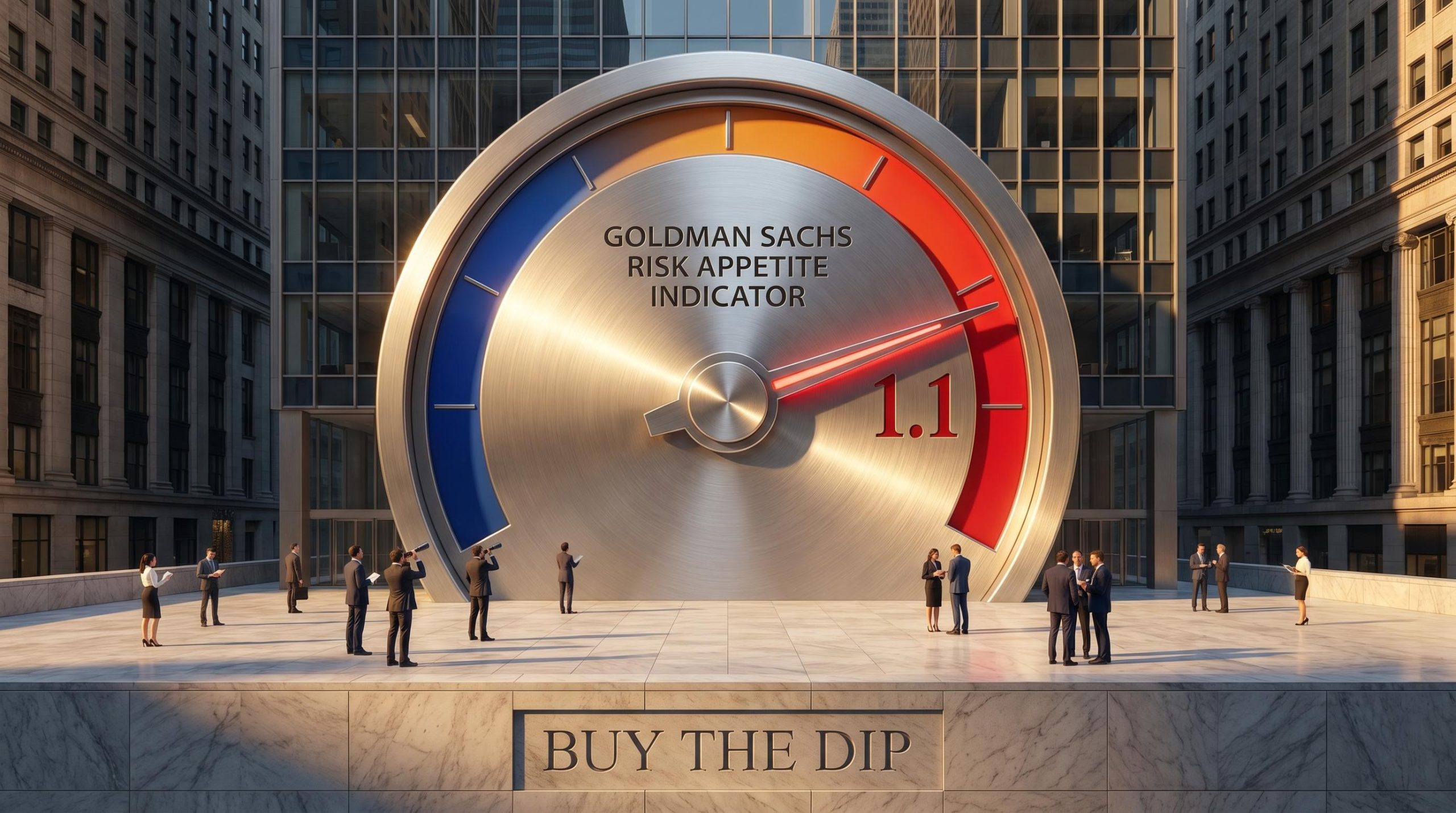
Goldman’s Risk Appetite Indicator is a proprietary gauge that measures investor sentiment and positioning across asset classes. It aggregates signals from equity flows, credit spreads, and volatility markets into a single reading that captures how aggressively investors are positioned at any given moment.
The current reading sits above 1.1, its highest level since 2021. That number carries a specific implication, and it is more nuanced than a simple warning light.
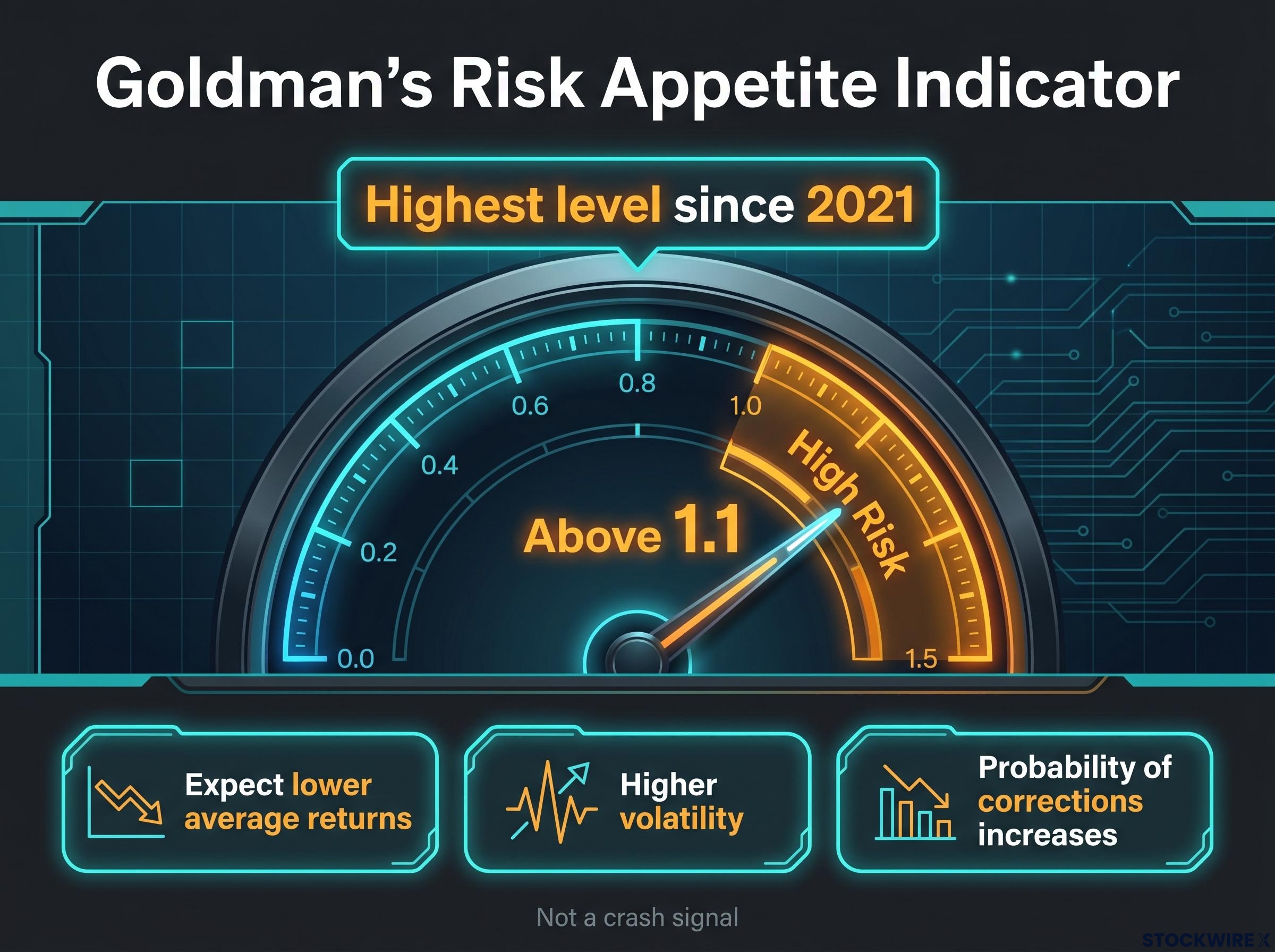
Goldman notes that very elevated Risk Appetite Indicator readings are not inherently bearish, but near-term average returns and positive return hit ratios tend to be somewhat reduced at these levels. The probability of corrections increases.
This is the quantitative foundation beneath Goldman’s “buy the dip” instruction. The firm is not calling a top. It is pricing in a bumpier path over the near term while maintaining conviction over the 12-month horizon.
What the indicator is telling investors right now
The practical near-term implication is straightforward: expect lower average returns and higher volatility, not a crash signal. A reading above 1.1 means investors are positioned aggressively, which historically compresses near-term upside and widens the range of possible outcomes.
Goldman’s response to this reading is not to reduce equity exposure. It is to manage that exposure more carefully through hedging instruments, a distinction that separates the institutional read from the retail panic interpretation. The indicator explains why Goldman holds both a constructive 12-month view and a cautious near-term stance without contradiction.
How Goldman recommends managing equity exposure in this environment
Mueller-Glissmann’s note identifies three specific risk management tools for navigating the elevated-but-constructive environment:
- Put spread collars: Options structures that cap upside in exchange for defined downside protection, allowing investors to stay invested while limiting loss in a correction
- Factor diversification: Spreading exposure across different investment styles (value, growth, quality, momentum) to reduce the concentration risk that comes from heavy technology weighting
- Long-dated call options: Instruments that provide leveraged upside exposure over a longer timeframe, allowing investors to maintain bullish positioning without committing full capital at current elevated levels
Each tool addresses a specific problem Goldman has identified. Put spread collars respond to the elevated correction probability signalled by the Risk Appetite Indicator. Factor diversification responds to the tech concentration risk. Long-dated calls respond to the compressed near-term risk-reward by extending the time horizon for capturing upside.
Technology concentration risk sits at the core of Goldman’s hedging logic: approximately 85% of the S&P 500’s year-to-date return has been driven by technology stocks, meaning any correction in that sector becomes a whole-index event rather than a rotation that spares diversified holders.
What retail investors can take from Goldman’s hedging logic
Most retail investors will not access these instruments directly. The underlying principles, however, translate. Put spread collars represent the discipline of accepting capped upside in exchange for defined downside protection. Factor diversification is sector concentration awareness applied systematically. Long-dated calls reflect the value of staying invested through volatility rather than attempting to time exits. Each principle can inform simpler portfolio decisions, from rebalancing overweight technology positions to extending the planned holding period for equity exposure.
Goldman’s call is a framework, not a forecast
Goldman’s position holds a tension that is more useful than any single directional call: long-term constructive, near-term cautious. The 12-month overweight stance and the warning about compressed near-term returns are complementary readings of the same data, not contradictions.
The variables to watch are specific. Goldman’s baseline assumptions around inflation normalisation and the reopening of the Strait of Hormuz are the load-bearing conditions. The Risk Appetite Indicator reading above 1.1 is the headline number to understand in context, a signal of elevated positioning, not an automatic sell trigger.
Specific bond yield and oil price figures were not independently confirmed at publication. Investors should verify current levels through their own sources or financial terminals before applying Goldman’s framework to live decisions.
For investors wanting to translate Goldman’s conditional framework into concrete portfolio decisions under current Middle East uncertainty, our comprehensive walkthrough of geopolitical risk investing strategy covers the behavioural traps that cause retail investors to underperform during high-attention geopolitical events, the historical data on oil price and S&P 500 outcomes across three prior episodes, and the systematic filters that separate disciplined rebalancing from costly reactive trading.
This article is for informational purposes only and should not be considered financial advice. Investors should conduct their own research and consult with financial professionals before making investment decisions. Forward-looking statements attributed to Goldman Sachs reflect the firm’s published views and are subject to change based on market developments.
The Mueller-Glissmann note is a starting point for ongoing analysis, not a one-time signal. As macro conditions evolve, the framework it provides, conditional conviction, named failure modes, quantified risk appetite, offers a structure for revisiting the call rather than simply reacting to it.