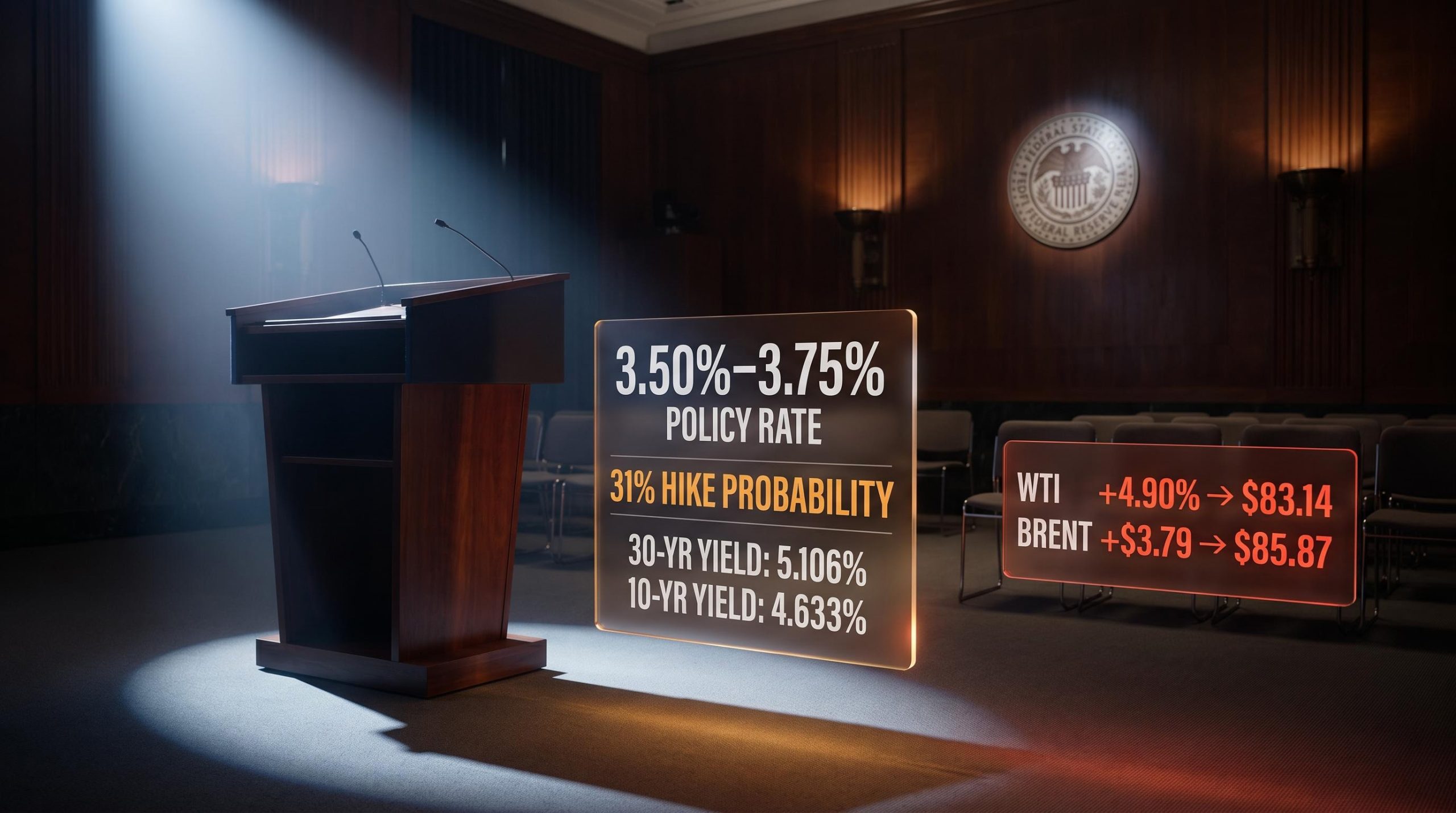
The Federal Reserve’s two-day meeting concludes today with the policy rate at 3.50%-3.75%, unchanged across five consecutive meetings. Futures markets are assigning a 31% probability to a hike at this meeting, with three distinct inflationary pressures accounting for why that figure remains well above zero.
The convergence is what matters. War-driven energy costs, tariff pass-through that refuses to fade, and sticky core inflation have all shifted market probability distributions meaningfully in recent weeks. The question today is not simply whether Chair Kevin Warsh holds or hikes. It is what he signals about whether the next move in rates is up, and how soon.
Here is what the three forces mean for the Fed’s calculus, what Warsh’s press conference language is likely to signal, and what the Treasury yield curve is already telling you before the decision lands.
Why the 31% hike probability is the number markets are watching
The base case remains a hold. Most major forecasters still expect no change to the 3.50%-3.75% target range. But the shift in probability distribution is itself market-moving information.
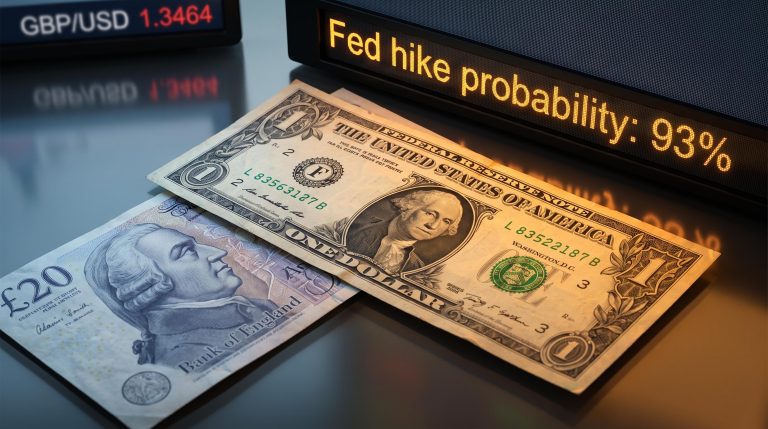
CME FedWatch implied odds of a 25-basis-point hike at this meeting have climbed to roughly 30-40%, up sharply from low double-digit probabilities just weeks earlier.
That acceleration, from background noise to a nearly one-in-three chance, tells you that professional money is paying a real premium to hedge against a surprise hike today. The tone of the press conference alone now carries enough weight to move bond and equity markets materially in either direction.
Five consecutive unchanged meetings have not resolved the underlying inflation picture. That is the structural reason the hike probability has room to exist, and why Treasury yields are elevated across every maturity.
Warsh’s July testimony to the House Financial Services Committee made the Fed’s posture explicit: the June hold at 3.50%-3.75% was not a pivot, the 2% target is non-negotiable, and the so-called Fed put has been repriced to a more distant strike than markets had assumed.
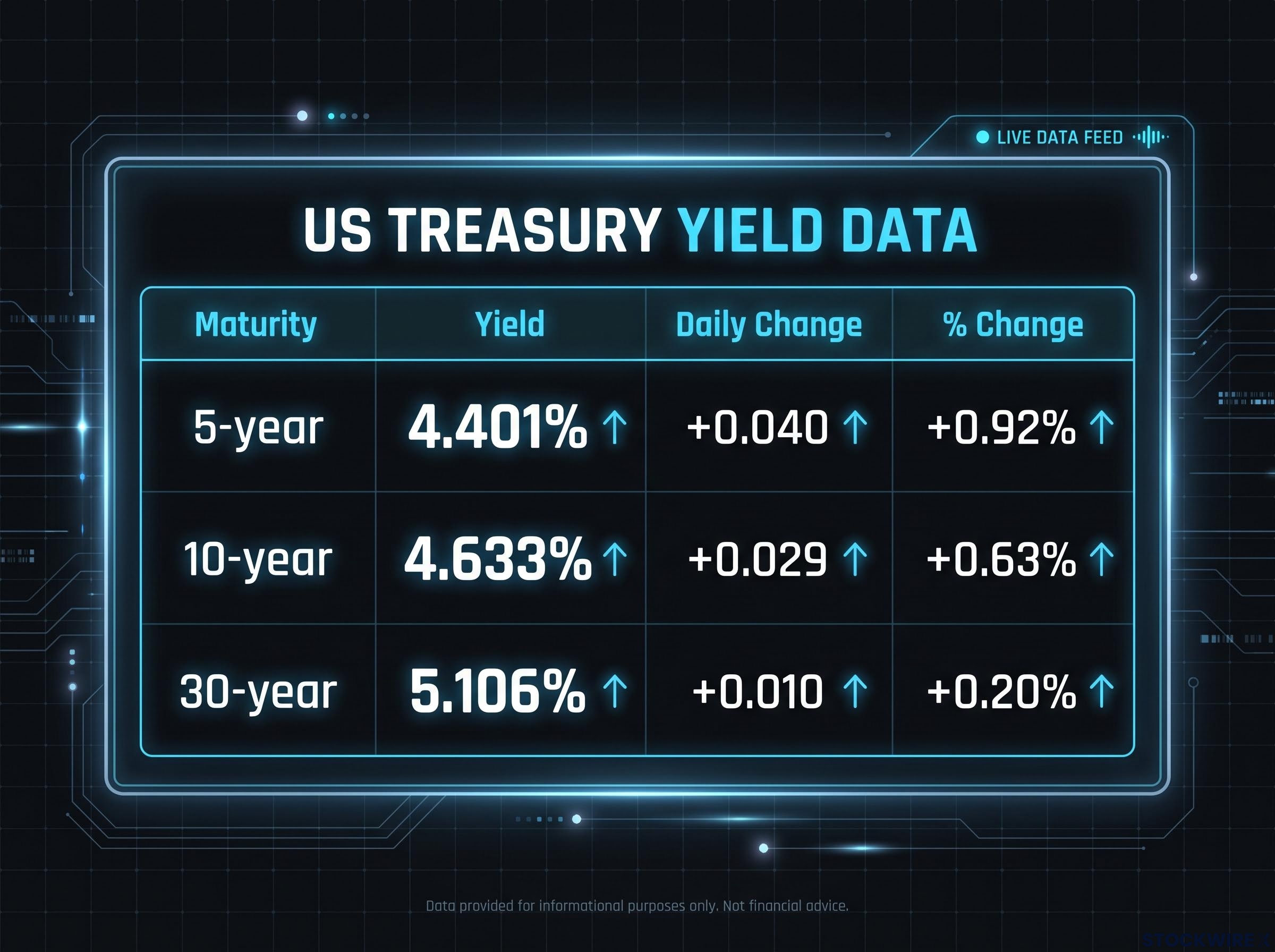
| Maturity | Yield | Daily Change | % Change |
|---|---|---|---|
| 5-year | 4.401% | +0.040 | +0.92% |
| 10-year | 4.633% | +0.029 | +0.63% |
| 30-year | 5.106% | +0.010 | +0.20% |
When big ASX news breaks, our subscribers know first
The oil shock the Fed cannot ignore
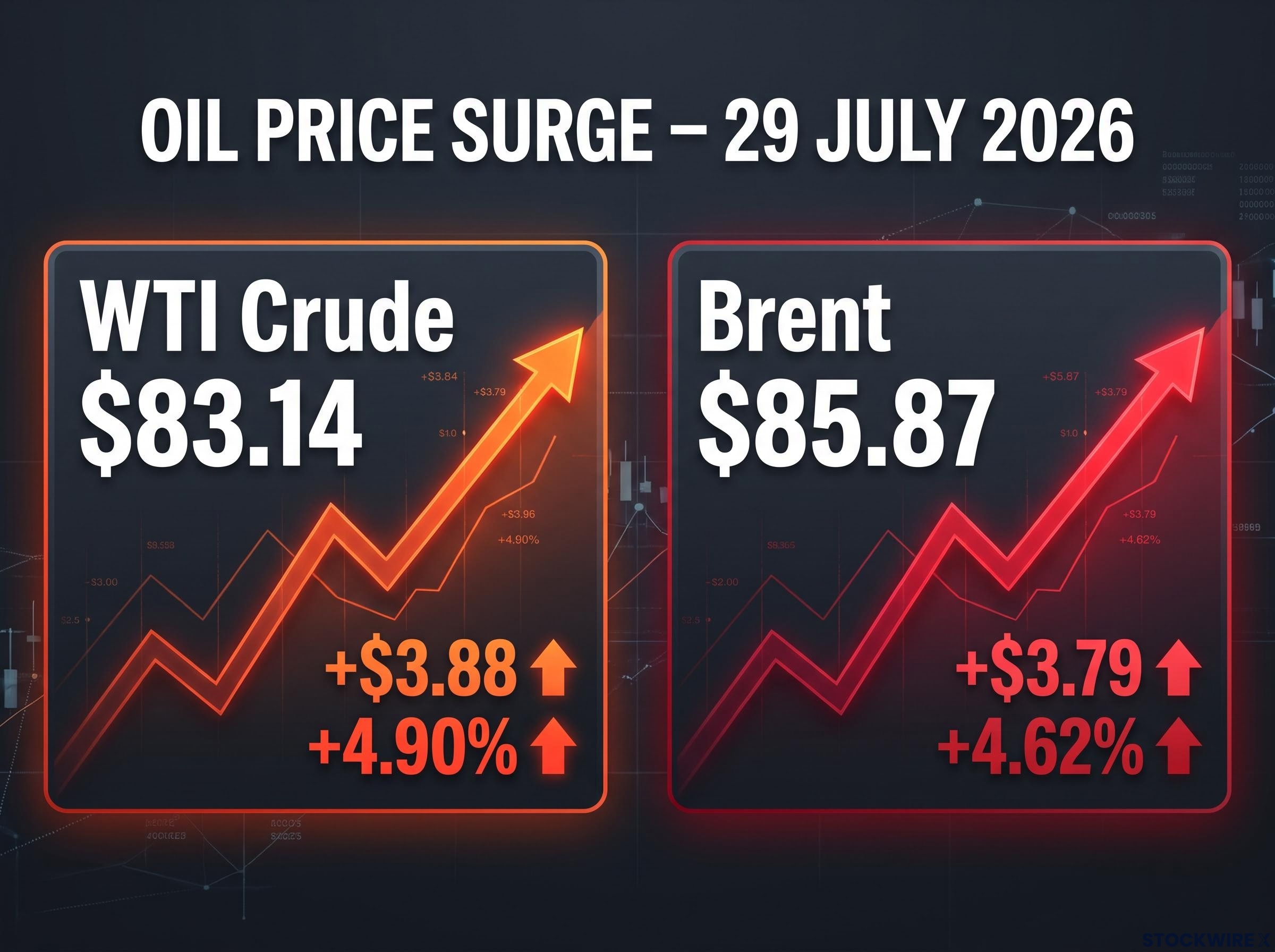
WTI crude surged $3.88 to $83.14 on 29 July 2026, a 4.90% single-session jump. Brent followed, rising $3.79 to $85.87 (+4.62%). Oil benchmarks gained roughly 3% after the announcement of joint U.S.-Saudi military strikes against Iran-backed forces in Iraq, with Tehran responding by launching ballistic missiles into the region.
That is not an abstract risk. It is today’s price at the pump, today’s input cost for manufacturers, and today’s headline inflation pressure arriving hours before Warsh steps to the podium.
The Fed’s own July Monetary Policy Report drew a direct line between the conflict and the inflation problem:
“A surge in energy prices associated with constraints on oil supplies following the start of the Middle East conflict in late February.”
That language matters because of what it excludes. The Fed did not frame this as a transitory supply blip. It framed it as a war-linked structural shock, one with two transmission channels: direct headline inflation through gasoline and utility costs, and second-round effects as higher input costs bleed into wages and core prices over time.
For anyone with energy exposure, the distinction is material. A transitory spike is a volatility event you can trade around. A war-driven structural shock means sustained policy risk sits on top of geopolitical risk, and the Fed has told you in its own documents that it cannot simply look through it.
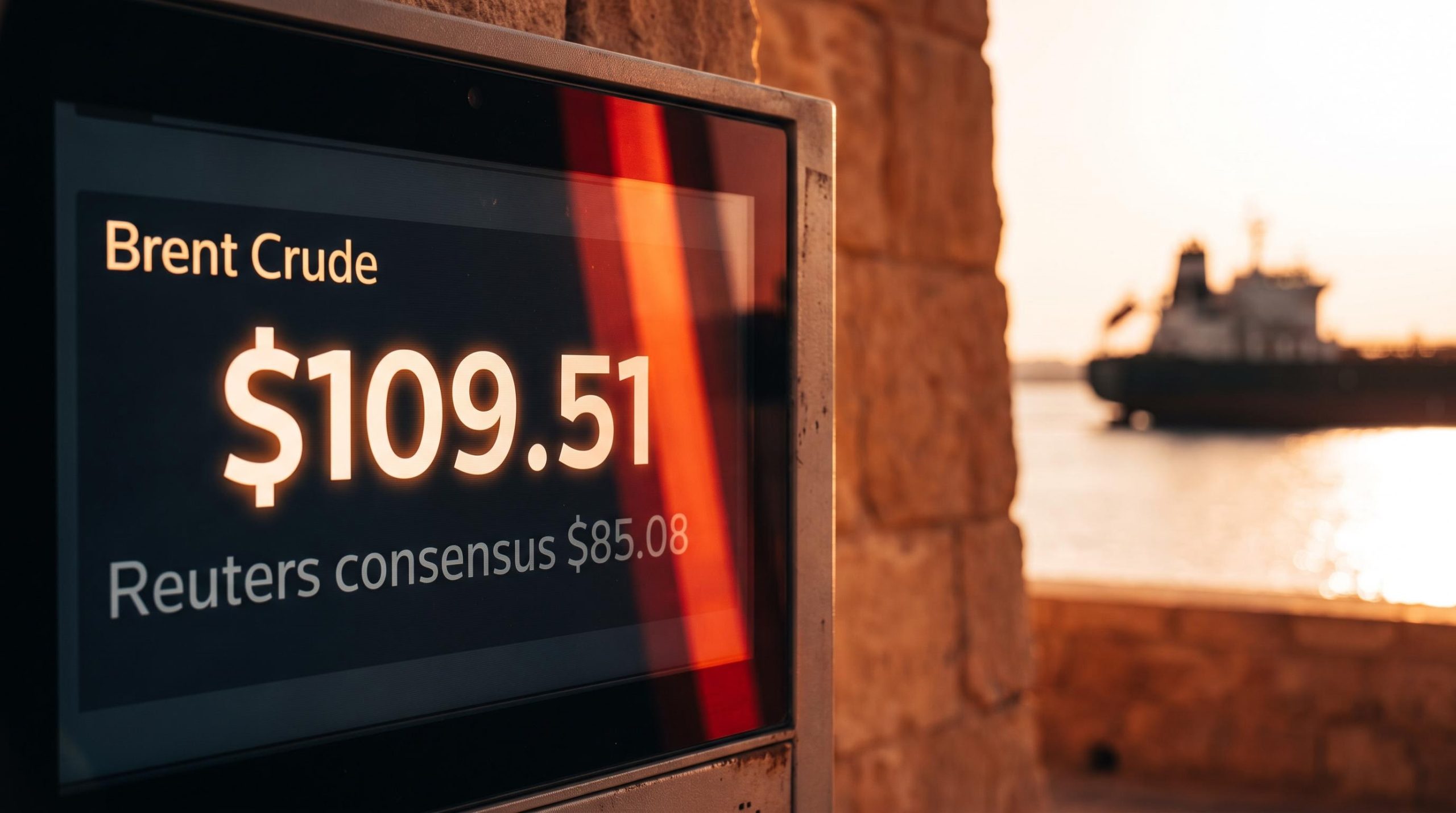
The distinction between a transitory energy spike and a structural inflation risk became analytically important in May 2026, when Brent surpassed $110 and the IEA characterised the Middle East supply disruption as a persistent upside risk to prices rather than an event that would decompress quickly.
How tariffs became a persistent inflation problem, not a one-time shock
The intuition is reasonable: a tariff hike should be a one-time price adjustment. Goods get more expensive, inflation spikes, then settles. The Fed’s own minutes dismantle that assumption.
June FOMC minutes explicitly cited “lingering effects of tariffs” as a factor keeping both core and total inflation elevated. The July meeting arrived amid court-ordered tariff refunds, new tariff announcements, and ongoing tariff uncertainty. President Trump’s tariffs and the Iran war were identified as two concurrent price shocks operating simultaneously, not sequentially.
The June FOMC minutes confirmed that inflation remained elevated relative to the Committee’s 2 percent objective, citing supply shocks in energy and the Middle East conflict as factors shaping near-term inflation expectations, providing the direct policy context behind the Fed’s current restrictive stance.
Three conditions make the tariff inflation persistent rather than bounded:
- New announcement flow. Each new tariff announcement resets the clock on when pass-through effects will fade, keeping the inflationary impulse alive.
- Documented pass-through into goods prices. The Fed’s Monetary Policy Report confirmed that earlier tariff hikes had already pushed up domestic prices of imported goods.
- Concurrent energy shock. The oil-driven inflation compresses the Fed’s tolerance for any single price deviation, meaning tariff effects that might otherwise be absorbed are instead additive.
That combination is why 2026 rate cuts have been fully priced out of futures markets. Every new tariff headline resets the pass-through timeline, which keeps the hike option alive longer than a single-event shock would. If you assumed tariff inflation was already discounted from policy expectations, the Fed’s own framing suggests that assumption needs revisiting before Warsh speaks.
What core inflation tells the Fed that headline numbers cannot
Headline inflation captures everything: food, fuel, and the cost of a haircut. That breadth is also its weakness for policymaking purposes, because a single oil spike can push the headline number around without telling the Fed anything about underlying demand.
Why the Fed focuses on core PCE, not headline CPI
Core inflation strips out food and energy prices to reveal the demand-driven and structural price dynamics the Fed cares about most. The measure it watches closest is core Personal Consumption Expenditures (PCE), a price index that captures what consumers actually spend on, weighted by current spending patterns rather than a fixed basket.
The distinction matters right now. Even if oil prices retreat after today’s geopolitical flare-up, core PCE does not reset quickly. It captures whether inflation is embedded in services, wages, and demand, the sticky components that only respond to sustained policy pressure.
The latest FOMC minutes stated that “both core and total inflation had moved higher and remained well above the 2% objective,” citing tariffs, supply disruptions, and strong demand including AI-related investment.
According to some estimates, core PCE has edged up from approximately 3.0% in late 2025 to roughly 3.4% by May 2026. Under Warsh, the Fed has signalled a willingness to maintain restrictive policy for longer.
The core PCE trajectory through May 2026 held at 3.4% year-over-year, precisely matching consensus and sitting 140 basis points above the Fed’s 2% target, confirming that while inflation was not reaccelerating, the central bank had no data basis to shift away from its restrictive stance.
The core PCE trajectory tells you something that headline numbers cannot: the inflation problem is not coming from oil or tariffs alone. Underlying demand is also running hot. Even if geopolitical tensions eased tomorrow, the Fed’s rationale for staying restrictive would not disappear.
Two scenarios for what Warsh says, and what each one moves
The rate decision is binary and already partially priced. The press conference is where markets will move. How Warsh characterises the three inflation forces, and whether he keeps further tightening explicitly on the table, will matter more than the hold-or-hike outcome.
Scenario A: Hawkish hold. Warsh acknowledges upside inflation risks, keeps additional tightening on the table, and frames data-dependence around the September meeting and beyond.
Scenario B: Neutral or dovish lean. Warsh characterises oil and tariff effects as manageable, signals the current stance is sufficiently restrictive, and offers no appetite for near-term hikes.
| Scenario | Fed Signal | Treasuries | Equities | Dollar |
|---|---|---|---|---|
| Hawkish hold | Hikes remain on table | Yields stay elevated or push higher | Rate-sensitive and growth stocks face pressure | Strengthens, creating EM and multinational headwinds |
| Dovish lean | Current stance sufficient | Relief rally in 5-10 year belly | Broadly positive for growth and duration | Softens, easing global financial conditions |
The asymmetry between the two matters. A hawkish hold would largely confirm what yields are already pricing. A dovish lean would be a genuine surprise, triggering a sharper directional move. The downside risk from a hawkish outcome is smaller than the upside from an unexpected dovish one.
Watch for these signals during the press conference:
- Whether Warsh describes inflation risks as “balanced” or “tilted to the upside”
- Whether he characterises oil and tariff effects as “manageable” or as requiring “further assessment”
- Whether forward guidance references September specifically or maintains open-ended data-dependence
What elevated yields across the curve are already pricing in
The bond market has not waited for Warsh to speak. All maturities moving higher simultaneously, the 5-year at 4.401%, the 10-year at 4.633%, the 30-year above 5.1%, reflects a broad repricing of the “higher for longer” thesis, not just positioning at one end of the curve.
The 30-year yield sitting above 5% is the marquee signal. That is not speculative positioning for today’s decision. It is a structural repricing that will not unwind quickly even if Warsh sounds less hawkish than feared.
Five consecutive unchanged meetings while yields remain elevated means the reinvestment and mark-to-market pressure on long-duration positions is ongoing. The key portfolio risk themes in this environment are clear:
- Duration risk remains elevated as the “higher for longer” repricing persists across all maturities
- Energy exposure carries event risk on both sides: geopolitical risk premia can unwind as quickly as they build
- Rate-sensitive equities face a double headwind from sticky core inflation and the prospect of additional tightening
- The dollar acts as a transmission channel: a more hawkish Fed path has already pushed markets to price in potential hikes rather than cuts for 2026, and a stronger dollar tightens global financial conditions
For anyone holding duration risk across bonds, REITs, or growth equities, the yield curve is providing a more immediate read on policy sentiment than waiting for the press conference alone.
What changes after today, regardless of which way Warsh goes
The three inflation forces converging today are not resolved by one press conference. The oil shock is ongoing. Tariff pass-through resets with every new announcement. Core PCE above 3% does not fall because of a single policy decision.
The policy asymmetry is the structural takeaway. The bar for cuts is high and rising. The bar for additional tightening is getting lower. Even if today ends with a hold, the directional risk for rates is asymmetric.
After the press conference, four variables will tell you where this is heading:
- September CME FedWatch probability. This is where the market’s verdict on Warsh’s tone will be expressed most immediately.
- Core PCE release schedule. The next reading will either confirm or complicate the “sticky inflation” thesis.
- Tariff announcement flow. Every new announcement resets the pass-through timeline.
- Middle East escalation indicators. The oil shock’s persistence depends on whether today’s military exchange marks an escalation or a peak.
The most important number to watch after today is not the federal funds rate itself. It is the September meeting probability, because that is where the market will price in what Warsh’s words actually mean for the next move.
For readers wanting to stress-test the sticky inflation thesis against the most recent data, our full explainer on the June core CPI surprise covers the 0.0% monthly print, the annual rate falling to 2.6%, and why one disinflationary report does not yet resolve the Fed’s policy calculus.
This article is for informational purposes only and should not be considered financial advice. Investors should conduct their own research and consult with financial professionals before making investment decisions. These statements are speculative and subject to change based on market developments and company performance.