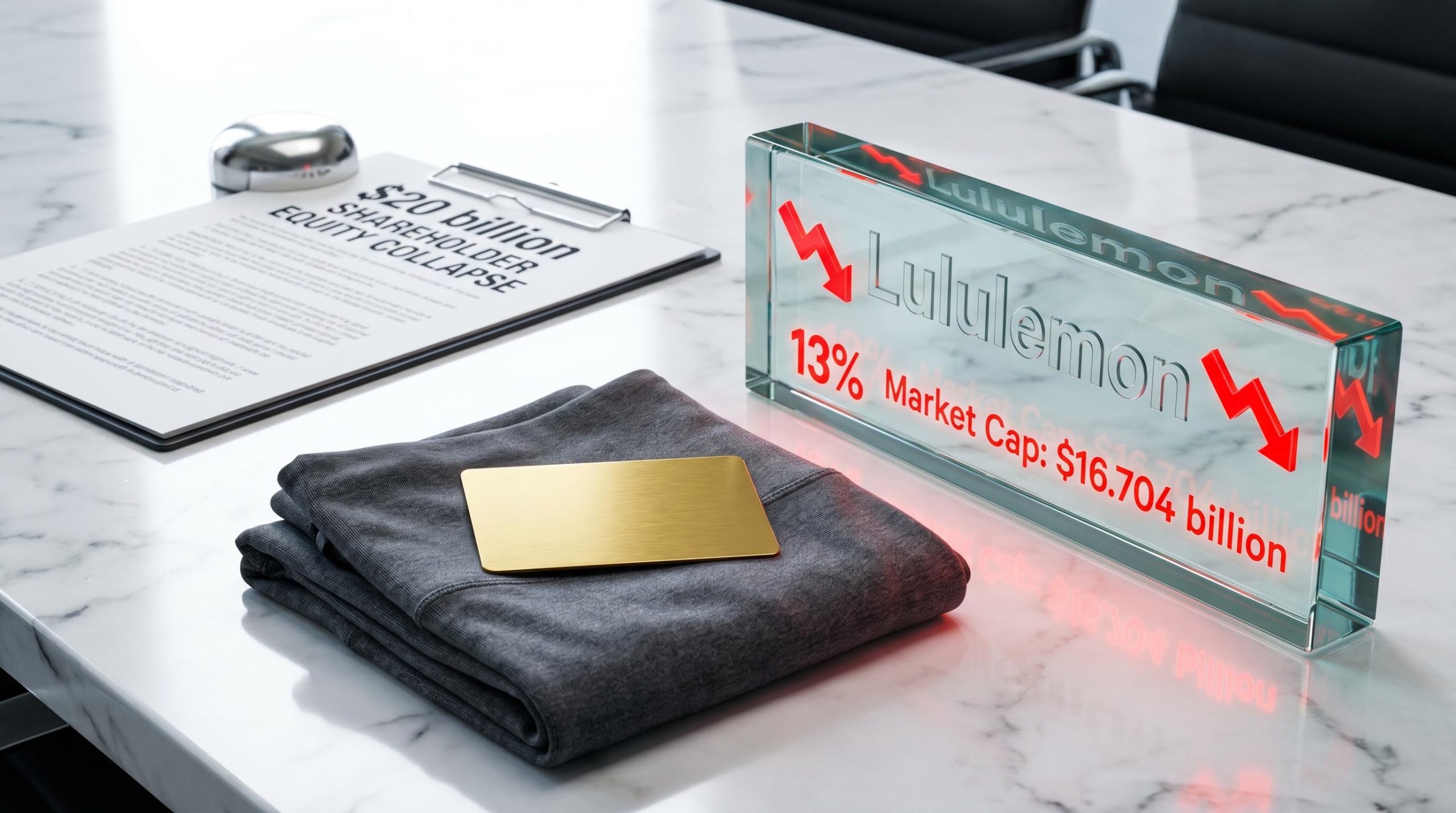
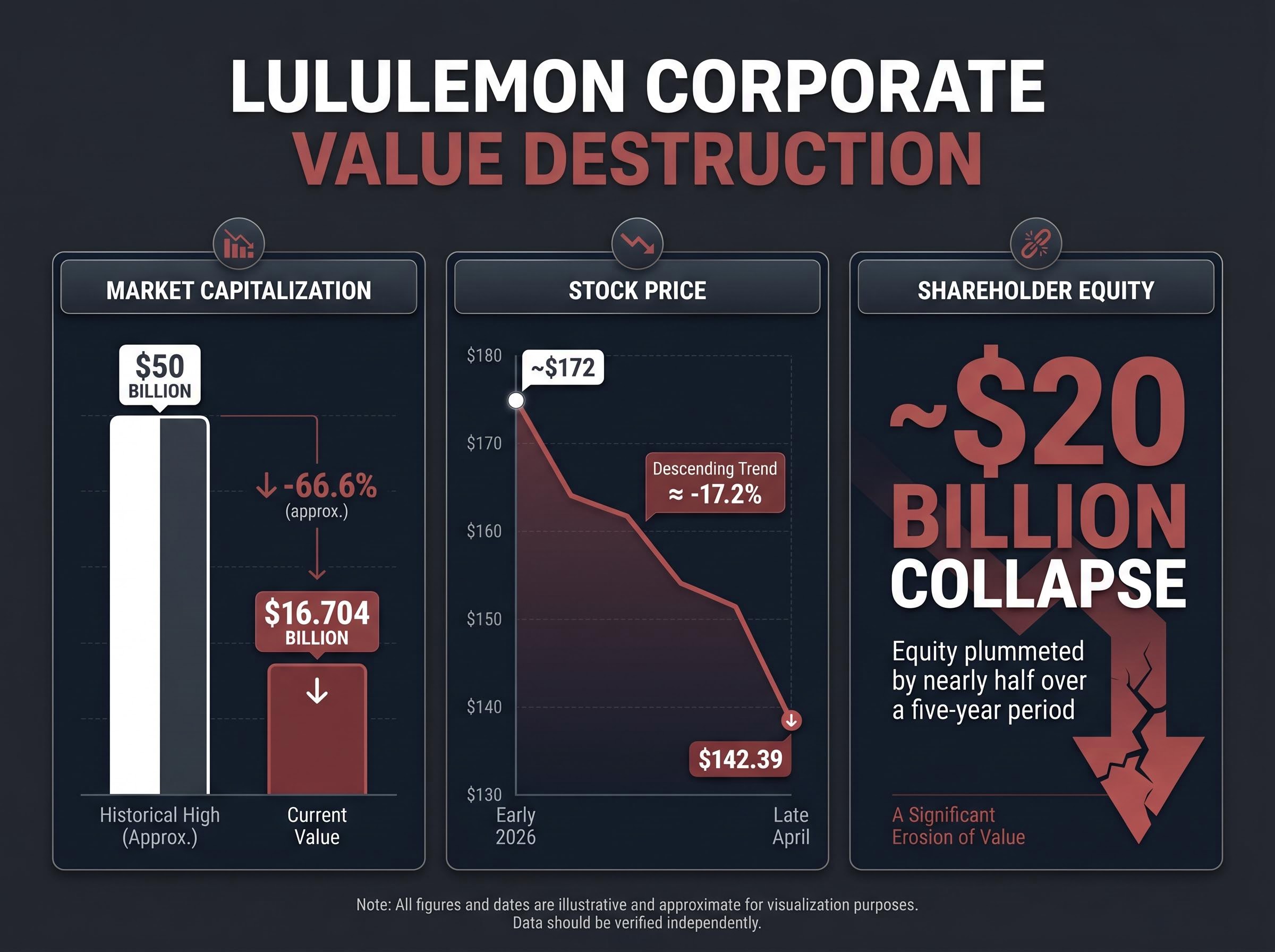
A roughly $20 billion collapse in shareholder equity has turned a premier athletic retailer into the epicentre of a fierce corporate governance war. Lululemon is facing a critical proxy battle, with founder Chip Wilson launching a formal campaign late this month to overhaul the board of directors. Wilson cites a series of strategic missteps that have heavily diluted the brand’s upscale prestige and alienated its core demographic.
The stakes of this conflict extend far beyond typical boardroom disagreements. The revolt highlights the fragility of brand equity when mainstream retail partnerships clash with premium market positioning.
What follows is an objective analysis of the exact merchandise failures, leadership transitions, and structural hurdles driving this revolt. The current situation serves as a real-time lesson in corporate value destruction and the mechanics of activist intervention.
The Merchandise Missteps Diluting Upscale Prestige
The shift from high-end exclusivity to mainstream accessibility became undeniable with the recent launch of a collaboration with The Walt Disney Company. The collection features Mickey Mouse-themed premium gear, including shorts, leggings, hoodies, and belt bags. Retail analysts view this merchandise push as a harmless short-term promotional strategy to attract family-oriented consumers.
However, the founder offers a much harsher critique of the product direction. Wilson argues the partnership fundamentally degrades the brand’s high-end status and alienates the premium customer base. He accuses the current directors of lacking the specific industry expertise required to recruit top-tier product executives capable of maintaining an upscale aesthetic.
These merchandising decisions coincide with stagnant or dropping same-store sales across North America and South America. Wall Street analysts point to this weak regional performance as a primary risk factor for the company’s growth outlook. The entertainment partnership itself appears to stem directly from existing corporate relationships rather than organic brand alignment.
The contraction in premium apparel spending aligns with broader indicators of declining consumer optimism, as household savings depletion forces affluent shoppers to increasingly rationalise their discretionary purchases.
Analyst Commentary “The recent entertainment merchandise collaboration likely originated from cross-board memberships rather than a pure product strategy, raising questions about whether the board possesses the specialised apparel expertise needed to navigate current retail headwinds,” noted a research report from Jefferies Financial Group.
This connection between mainstream partnerships and declining regional sales grounds the financial conflict in consumer reality. It helps investors understand how perceived missteps in product exclusivity can inadvertently alienate a premium customer base and trigger structural corporate crises.
When big ASX news breaks, our subscribers know first
The Leadership Transition Triggering a Market Selloff
The tension over product strategy culminated in a heavily scrutinised executive change that immediately invited severe market punishment. On 22 April 2026, the company announced that departing Chief Executive Officer Calvin McDonald would be replaced by Heidi O’Neill. O’Neill brings nearly three decades of experience at Nike Inc. and is scheduled to assume the role on 8 September 2026.
Leadership changes typically aim to project stability and renewed vision. Instead, naming a new leader amidst an active governance fight created an unnecessarily difficult transition environment. Critics argue the timing of the appointment validates activist concerns and places immense pressure on the incoming executive before she even takes the helm.
Market Reaction to the Succession Announcement
The broader market reaction delivered a brutal assessment of the board’s decision-making timeline. Following the announcement of O’Neill’s appointment, the company stock tumbled 13% in immediate trading. Investors treated the transition not as a triumphant succession, but as a risk-multiplying event.
Detailed financial reporting on the selloff indicates that this immediate drop compounds a challenging 12 months where shares fell nearly 38 percent, steadily eroding the company’s overall market value.
This selloff further eroded the company’s valuation, leaving its current market capitalisation at $16.704 billion. The figure stands in stark contrast to historical highs of approximately $50 billion. The sharp decline illustrates how poorly timed transitions can accelerate shareholder panic and validate the urgent warnings raised by activist campaigns.
Decoding the Proxy Fight and Corporate Value Destruction
Understanding the likelihood of activist success requires decoding the specific structural mechanics of this boardroom conflict. A proxy battle occurs when dissident shareholders persuade other investors to use their proxy votes to install new corporate directors. Wilson is currently utilising a gold proxy card campaign as the primary vehicle to challenge the incumbent board.
The founder controls 9.9 million shares, which includes 5.1 million special voting shares paired with exchangeable Canadian shares. Earlier this year, negotiations for a standstill agreement between the two parties collapsed over several specific friction points. According to reports, the board allegedly demanded a $1 million escrow deposit to enforce a strict non-disparagement penalty clause.
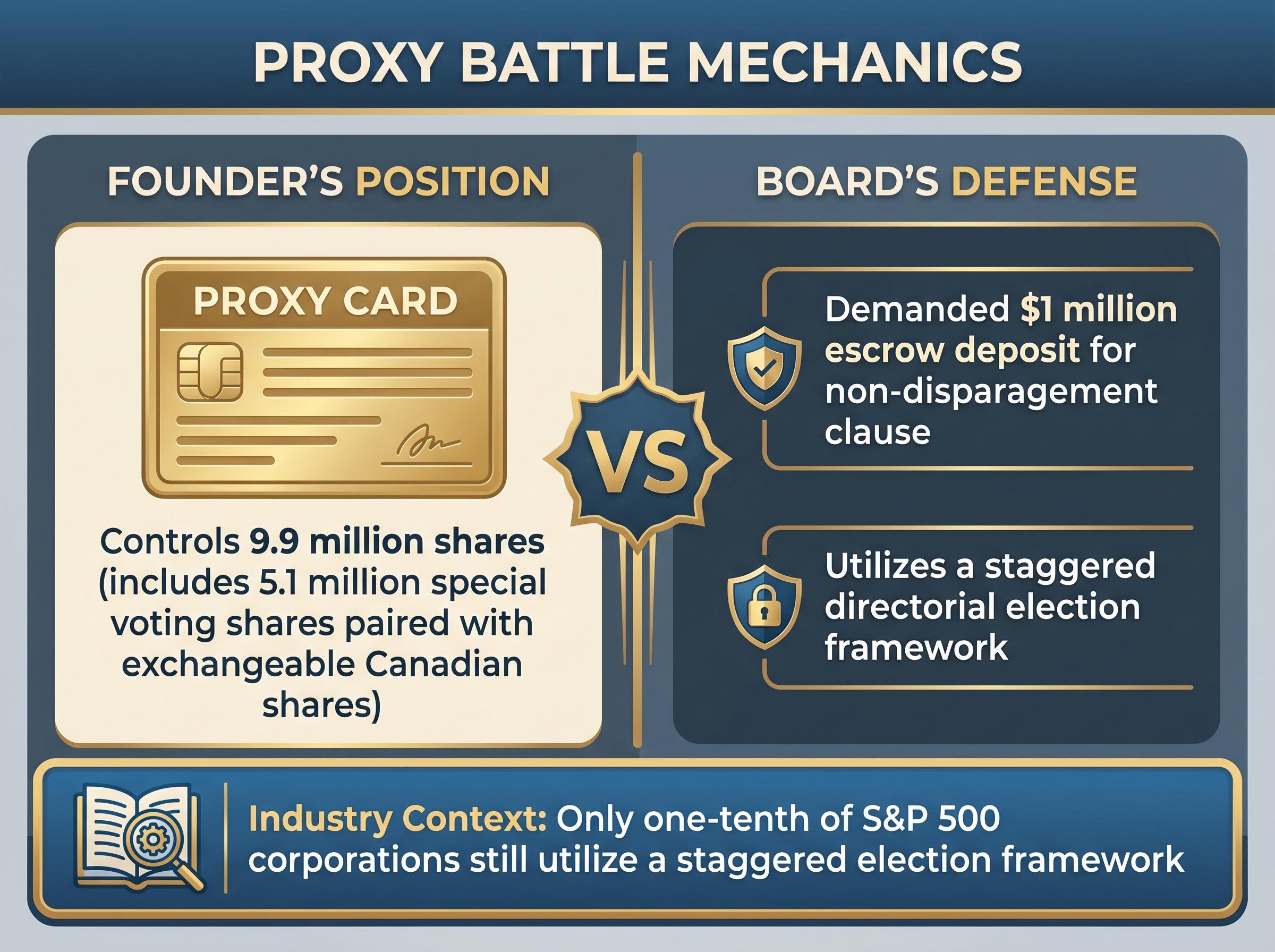
Wilson refused to subject his nominees to full interviews unless the board agreed to his complete settlement terms. The activist campaign faces a major structural hurdle due to the company’s staggered directorial election framework. Under this system, only a fraction of directors face election each year, meaning activists cannot replace the entire board in a single proxy cycle.
According to reports, only one-tenth of S&P 500 corporations still utilise a staggered election framework. Governance experts often criticise this structure for entrenching existing leadership and insulating directors from immediate shareholder accountability. The structural resistance is particularly notable given the staggering financial metrics tracking the company’s recent valuation collapse.
Academic tracking through Harvard Business School research reveals a dramatic shift away from this corporate structure over the past two decades, with adoption among major public companies plunging as institutional investors increasingly demand annual accountability for all directors.
The destruction of corporate value over the past five years includes several key metrics:
Market capitalisation has fallen from historical highs near $50 billion to $16.704 billion. Stakeholder equity has plummeted by nearly half over a span of a five-year period. * Stock prices dropped from early 2026 highs of approximately $172 to $142.39 by late April.
By understanding the exact mechanics of gold proxy cards and staggered boards, readers gain the literacy needed to accurately assess this corporate showdown.
The Alternative Slate of Turnaround Architects
To counter the board’s defensive posturing, the activist founder has put forward three independent professionals as alternative leadership choices. These candidates present specific, measurable financial growth track records in their previous executive roles. Presenting concrete alternatives allows stakeholders to judge the true credibility of the activist threat against the incumbent strategy.
The board recently appointed Esi Eggleston Bracey, Chip Bergh, and Teri List to fortify its position. Company filings heavily emphasise Bracey as a key addition amid the ongoing proxy contest. However, critics note that existing board members possess overlapping professional backgrounds with private equity firm Advent International L.P.
Activist supporters argue these entanglements limit the board’s operational independence. In contrast, the dissident slate focuses exclusively on executives with direct experience in scaling consumer and athletic brands. Evaluating whether the proposed cure is better than the disease requires a direct comparison of the activist nominees and their historical financial achievements.
Effective retail turnaround strategies increasingly rely on specialised operational expertise, particularly when legacy brands need to quickly modernise their digital engagement and streamline store operations to win back alienated customers.
| Activist Nominee | Previous Role | Key Financial Achievement |
|---|---|---|
| Marc Maurer | Co-CEO, On Holding AG | Increased corporate income nearly four times during tenure |
| Eric Hirshberg | CEO, Activision | Surged equity shares and doubled divisional earnings |
| Laura Gentile | CMO, ESPN | Drove major brand expansions and scaled marketing operations |
Preparing for the Shareholder Showdown
The overlapping pressures of weak North American sales, a plunging market capitalisation, and severe leadership scrutiny have created a volatile environment for the athletic apparel retailer. The critical path now leads directly toward the upcoming 2026 annual shareholder gathering. Both sides are intensifying their appeals to institutional investors.
The fundamental question remains whether the brand can successfully integrate its incoming chief executive in September under the shadow of this ongoing corporate warfare. The outcome of this proxy contest will likely dictate the company’s product strategy and market positioning for the next decade.
For investors exploring how these governance battles unfold in practice, our comprehensive walkthrough of the Norwegian Cruise Line activist takeover examines how dissident shareholders can successfully overcome entrenched boards to force immediate leadership changes.
This article is for informational purposes only and should not be considered financial advice. Investors should conduct their own research and consult with financial professionals before making investment decisions. Past performance does not guarantee future results. Financial projections are subject to market conditions and various risk factors.