Three Fed officials voted to raise interest rates on 29 July 2026, and the market heard it loud and clear.
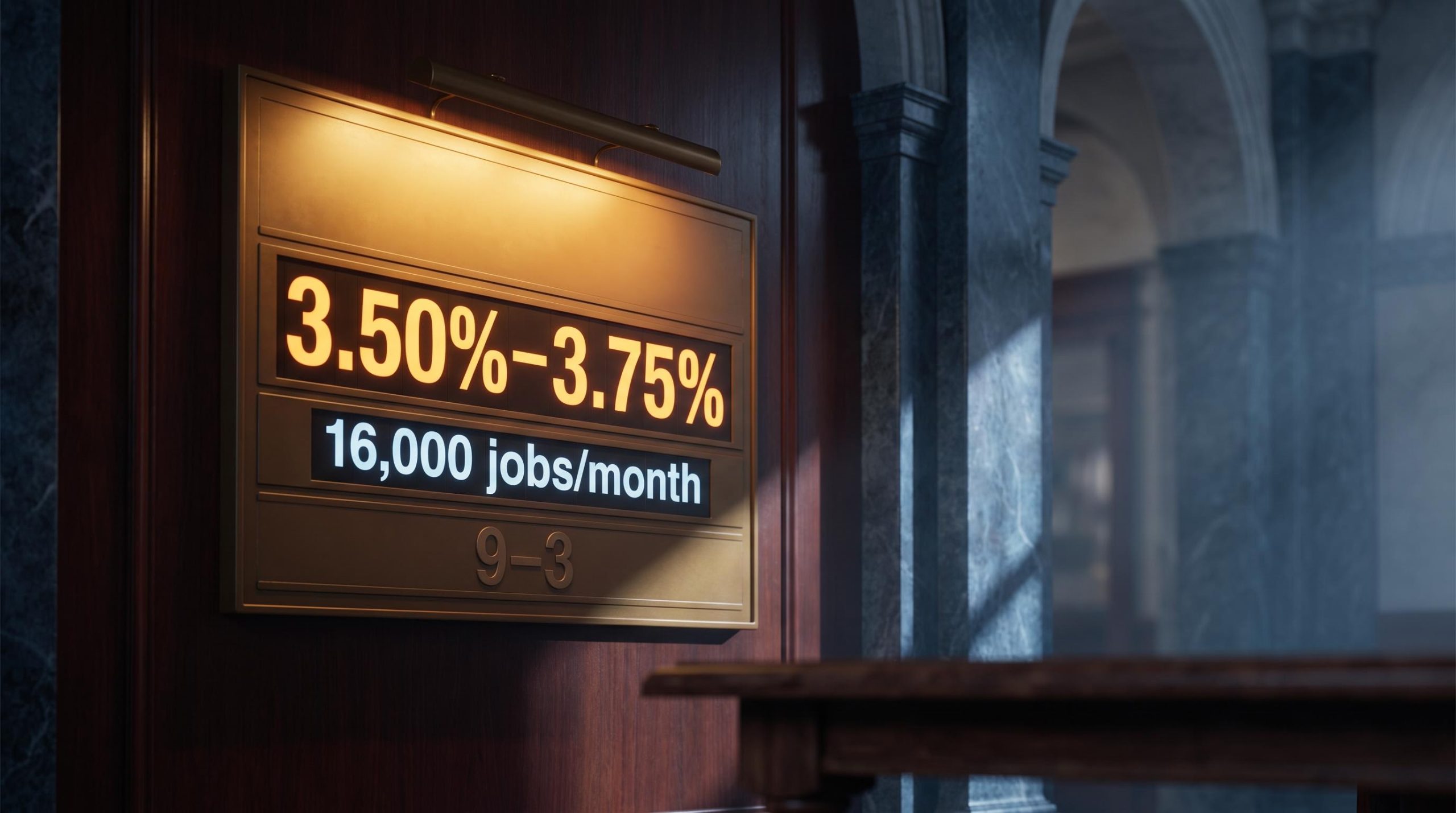
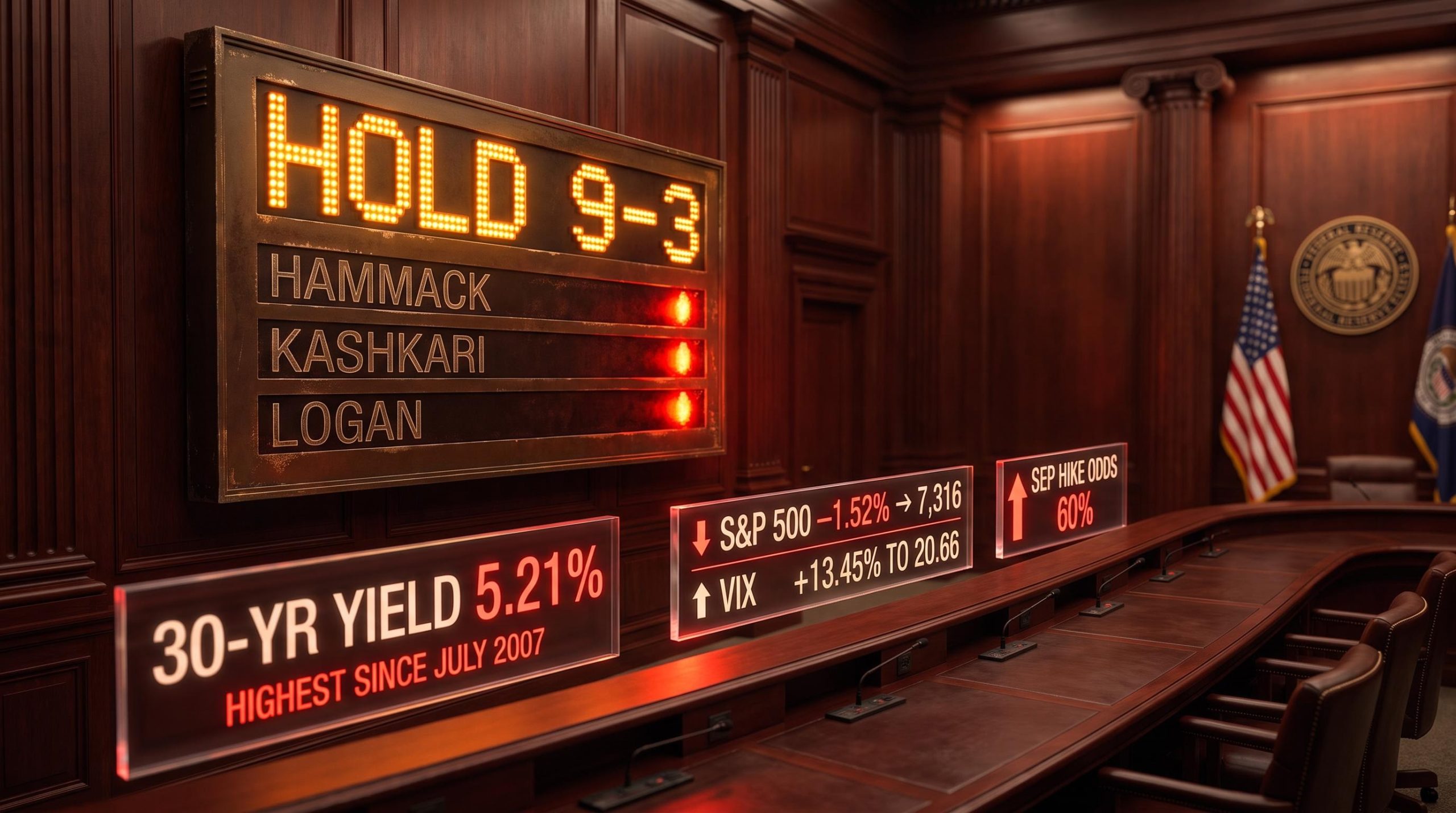
The Federal Open Market Committee (FOMC) held the federal funds rate unchanged at 3.50%-3.75%, but the vote was 9-3. Three regional Fed presidents publicly broke from Chair Kevin Warsh to demand an immediate hike. That kind of internal fracture is not routine Fed business. No FOMC in recent memory has produced three votes pushing in the same hawkish direction simultaneously, and markets repriced sharply within hours.
Here is what the vote split signals about where policy is heading, what the bond market’s reaction means for portfolio positioning, and which parts of the equity market face the most pressure if the hawks get their way in September.
Three dissenters, one direction, and why that combination is rare
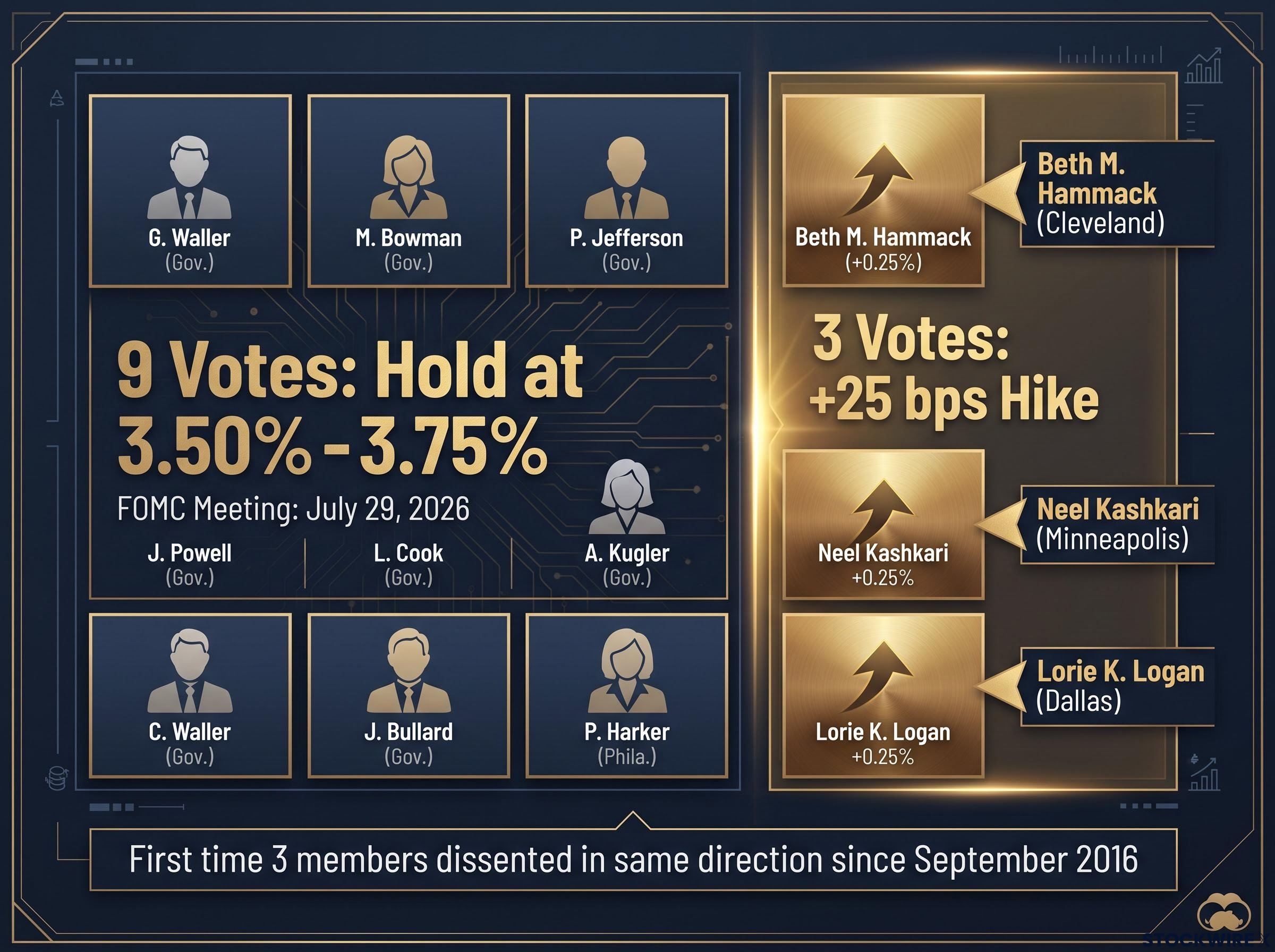
The FOMC voted 9-3 to hold rates at 3.50%-3.75%. The three dissenters all pushed in the same direction: a 25 basis point hike.
- Beth M. Hammack, President, Federal Reserve Bank of Cleveland: dissented in favour of a +25 bps hike
- Neel Kashkari, President, Federal Reserve Bank of Minneapolis: dissented in favour of a +25 bps hike
- Lorie K. Logan, President, Federal Reserve Bank of Dallas: dissented in favour of a +25 bps hike
The last occasion on which three FOMC members all dissented in the same direction was September 2016.
The July split did not emerge in isolation: the April FOMC dissent record of four votes, the most at any single Fed meeting since 1992, had already established that Warsh inherited a committee in open disagreement, with 30-year Treasury yields then at 5.14% and a Supreme Court challenge to Fed independence running in parallel.
A single dissenter can be dismissed as an outlier. Three voting identically in a hawkish direction tells you something different: there is an organised faction inside the Fed that is ready to act. That bloc represents 25% of the voting committee, and it only needs to move two more votes to command a majority. The September meeting is now a live policy decision for you to price seriously.
When big ASX news breaks, our subscribers know first
What Warsh’s guidance-light approach means for bond market volatility
Following the decision, Chair Warsh issued a statement that was noticeably shorter than what markets had grown accustomed to under prior FOMC chairs, reflecting his deliberate move to strip explicit forward guidance from FOMC communications. Prior FOMC meetings this year saw debate centred not on the rate level itself, but on how dovish the official statement should sound. Warsh has deliberately stripped back that language.
Warsh’s guidance-light regime was already reshaping rate expectations before the July vote: his June FOMC debut stripped all forward guidance from the policy statement, sent the two-year Treasury yield surging 18 basis points intraday, and launched five internal task forces, including one reviewing the dot plot’s future role.
The consequence is structural. Without a reliable anchor in Fed communication, each economic data release and each FOMC meeting becomes a discrete repricing event, not a confirmation of a known path.
Apollo Global Management chief economist Torsten Slok described the result as a “yo-yo” bond market, where reduced guidance amplifies sharp swings in yields between meetings.
When the Fed stops telling you where it is going, the bond market has to guess with each new data point. That guessing, compounded by the fact that consumer prices have held above the Fed’s 2% target continuously for more than five years, produces exactly the kind of elevated term premium that anyone holding long-duration assets needs to account for right now.
Treasury yields at levels not seen since 2007
The bond market’s reaction was immediate and historically significant.
| Tenor | Prior Yield (approx) | Post-Decision Yield | Move (bps) | Notable Level |
|---|---|---|---|---|
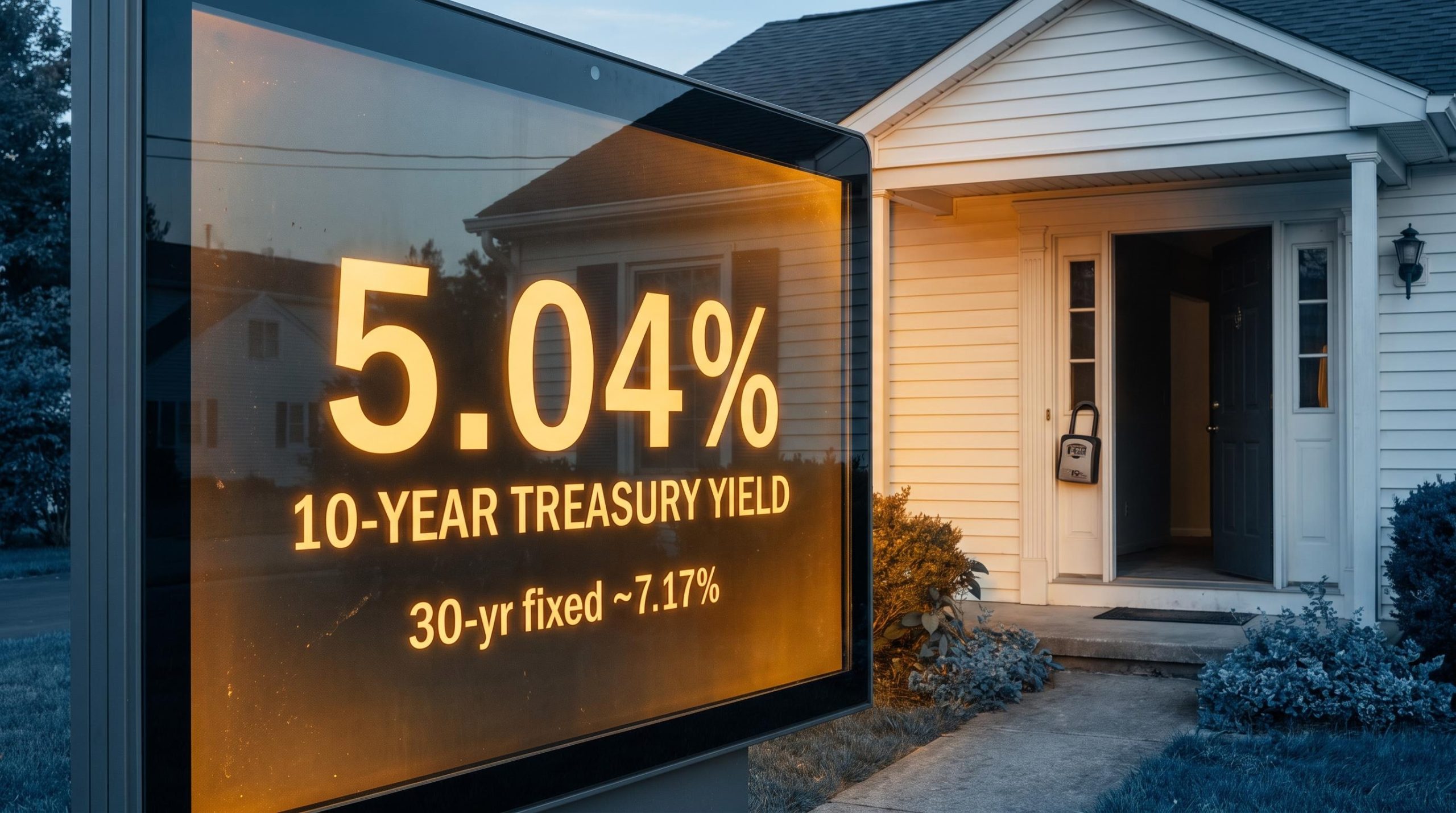
| 30-year | 5.09% | 5.21% | +12 | Highest since July 2007 |
| 10-year | 4.60% | 4.68% | +8 | Upper boundary of recent range |
The 30-year yield at 5.21% sits just below the 5.22% threshold that Slok has flagged as a key indicator of bond market instability. That is not a number to note in passing. It is the rate at which the economy discounts long-term cash flows, and if it stays elevated, valuations across equities, real estate, and corporate credit face sustained compression, not a single-day adjustment.
The 5.25% threshold on the 30-year Treasury is the level strategists have identified as a structural inflection point, the rate at which institutional allocators are forced to systematically reduce equity risk premia across portfolios, and the July post-decision yield of 5.21% sits just four basis points below it.
Swap markets have shifted to reflect roughly 60% odds that the Fed raises rates at its September 2026 meeting, with a complete 25 basis point increase fully priced into contracts expiring by December 2026.
The bond market is telling you it takes the hawkish faction seriously. These yield levels have direct consequences for every asset class you hold.
How to read a hawkish Fed surprise in equity sector rotation
Index-level losses mask a more important story in sector leadership
The four major US indices each finished at their worst marks of the session, having surrendered early gains of around 0.2% during a sharp sell-off in the final hour of trading. That kind of late-session deterioration, where early optimism completely collapses into the close, points to concentrated institutional selling rather than a steady retreat from the opening bell.
- S&P 500: -1.52% to 7,316
- Dow Jones Industrial Average: -2.19% to 51,594
- NASDAQ Composite: -1.74% to 24,443
- Russell 2000: -1.61% to 2,906
VIX surged 13.45% to 20.66, a meaningful repricing of uncertainty, not routine volatility.
Defensive rotation confirms the market’s hawkish interpretation
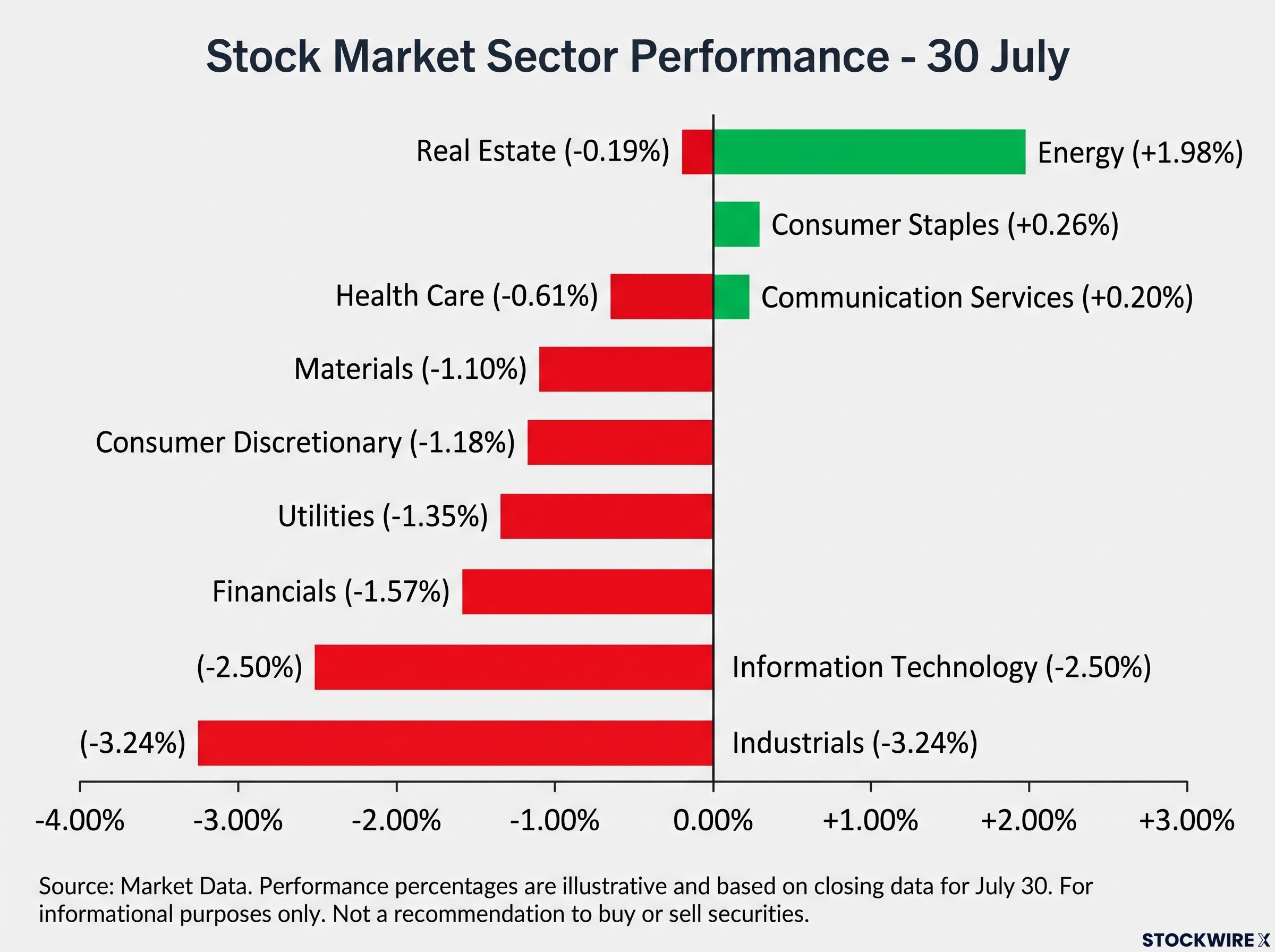
The sector breakdown is where the real signal sits.
| Sector | 30 July Performance |
|---|---|
| Energy | +1.98% |
| Consumer Staples | +0.26% |
| Communication Services | +0.20% |
| Real Estate | -0.19% |
| Health Care | -0.61% |
| Materials | -1.10% |
| Consumer Discretionary | -1.18% |
| Utilities | -1.35% |
| Financials | -1.57% |
| Information Technology | -2.50% |
| Industrials | -3.24% |
Industrials dropped 3.24%, Information Technology fell 2.50%, and Financials shed 1.57%. Energy climbed 1.98%, and Consumer Staples held green at +0.26%. The rotation tells you that professional investors repositioned in real time for a world where rates stay higher for longer: they sold the rate-sensitive, long-duration, and cyclically exposed parts of the market and rotated toward areas that can hold up if financial conditions tighten further.
The degree of alignment between this sector pattern and the standard hawkish-surprise playbook tells you how seriously the market is taking the possibility that September ends with a hike.
What is a Fed dissent, and why does the number and direction matter?
The FOMC has 12 voting members at any given meeting: seven Board of Governors members plus five rotating regional Fed presidents. Decisions are made by majority vote.
Not all dissents carry the same weight. There are three outcomes worth distinguishing:
The FOMC dissent history compiled by Federal Reserve economists shows that coordinated same-direction dissents of three or more members have occurred fewer than a handful of times across the modern central banking era, underscoring why the July 2026 vote carries genuine policy signal rather than routine disagreement.
- Single dissenter: common, often signals individual preference. Markets typically dismiss it.
- Multiple dissenters in the same direction: signals a faction with potential to shift the majority at subsequent meetings. Markets pay attention.
- Near-majority dissent: rare, and when it occurs, it signals the committee is one or two votes from changing course. Markets reprice immediately.
The 29 July vote sits firmly in that second category, bordering on the third. Three hawkish dissenters represent 25% of the voting committee. They are publicly on record that policy should be tighter right now, and they only need to bring two more colleagues across to secure a majority. Warsh acknowledged the internal debate publicly, describing it as a vigorous and consequential discussion rather than a mere formality.
For you, the practical takeaway is clear: the Fed’s next move is more likely to be a hike than the hold consensus assumed going into this meeting, and Hammack, Kashkari, and Logan are the reason to update that assumption now.
What the repriced rate path means before the September meeting
Markets have already moved. Swap markets are currently assigning around 60% probability to a rate increase in September, and a full 25 basis point move is embedded in December 2026 contracts. The question now is what data will confirm or challenge that pricing before the next FOMC meeting.
The June 2026 FOMC regime shift is the direct antecedent to the July vote: nine of eighteen officials projected at least one rate hike in 2026 following that meeting, and interest rate markets repriced approximately 50 basis points higher on a forward horizon, establishing the hawkish baseline that the three July dissenters are now pushing to convert into action.
Three catalysts matter most between now and September:
- Inflation data: any upside surprise strengthens the hawks’ case and pushes the remaining 40% of September hike probability into the price
- Labour market prints: sustained tightness gives the dissenters further ammunition; softening complicates their argument
- Informal Fed communications: speeches and interviews from Hammack, Kashkari, and Logan will reveal whether their position is hardening or whether they see room for patience
The risk for you is asymmetric. If incoming data confirms the hawks’ view, the remaining 40% reprices quickly and assets sell off further. If data softens the case, there is limited upside recovery because the hold was already the base case going into 29 July.
A divided committee operating with lighter forward guidance ensures that every data release between now and September will move markets more sharply than usual. The 30-year yield at 5.21% and the S&P 500 at 7,316 are the starting points, not the endpoints.
A divided Fed in a guidance-light era means the next move is live, not telegraphed
Two structural shifts make this cycle different from anything investors have navigated in the post-2008 era. First, a genuinely divided FOMC with a hawkish bloc on record, not just in public speeches but in the formal vote. Second, a chair who has deliberately reduced the forward guidance that markets previously relied on to smooth the adjustment between rate changes.
The combination is a volatility amplifier. Warsh must manage the internal division while his own communication posture, brief statements and minimal forward signalling, ensures that each incoming data print carries outsized market impact. Consumer prices have now run above the Fed’s 2% target for more than five years, lending the hawkish faction’s demands a solid and persistent basis.
The September FOMC meeting is a genuine decision event with real probability of a hike. Positioning for a world where 30-year yields stay above 5% is no longer a tail-risk scenario.
The rate path is live and data-dependent. That changes the risk calculus for every rate-sensitive position you hold.
This article is for informational purposes only and should not be considered financial advice. Investors should conduct their own research and consult with financial professionals before making investment decisions. Past performance does not guarantee future results. Financial projections are subject to market conditions and various risk factors.