
ASX 200 Gains 0.68% as Earnings Season Rewards Clean Beats
Aug 25, 2026









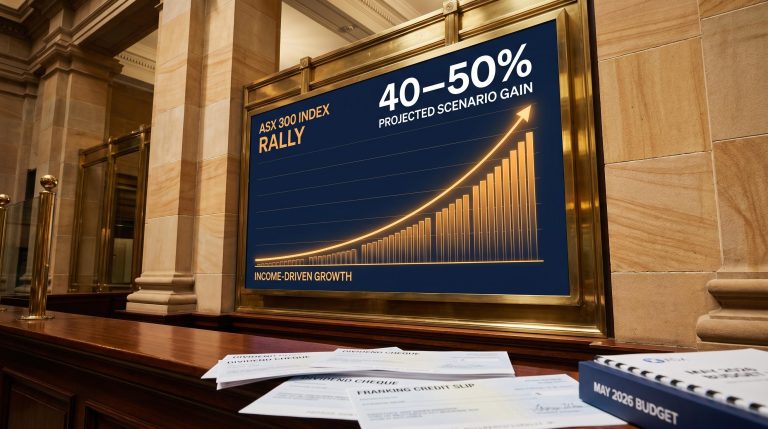











The S&P/ASX 300 index extends the ASX 200 by including the next 100 listed companies by market capitalisation, providing a more comprehensive view of the Australian listed equity market than the large-cap ASX 200 benchmark alone. The additional companies in the ASX 300 (positions 201 to 300) often represent earlier-stage growth businesses, resource companies, and emerging sectors that provide meaningful return differentiation from large-cap performance. Active fund managers frequently benchmark against the ASX 300 to capture the return opportunities offered by companies below the ASX 200 threshold. The Small Ordinaries index, which covers companies ranked 101 to 300, provides a specific small-cap performance benchmark within the ASX 300 universe. StockWire X covers ASX 300 index news, constituent company analysis, and the small and mid-cap market dynamics that distinguish ASX 300 performance from the larger ASX 200.
The ASX 300 includes the 300 largest ASX-listed companies by market capitalisation, extending the ASX 200 by adding the next 100 companies. The additional companies in positions 201 to 300 are typically mid to small-cap businesses, providing broader market exposure and greater small-cap influence on index performance. Fund managers benchmarked to the ASX 300 must actively manage positions in these smaller companies to generate alpha relative to the index.
The ASX 300 today can be tracked alongside the ASX 200 to assess whether broader market breadth is confirming or diverging from large-cap performance. When the ASX 300 outperforms the ASX 200, it signals that small and mid-cap companies are leading market gains, typically a positive risk appetite signal. When the ASX 200 outperforms, large caps are leading, often indicating defensive positioning by institutional investors.
The S&P/ASX 300 index is reconstituted quarterly by S&P Dow Jones Indices based on market capitalisation rankings. Companies that grow to join the index see increased institutional demand as funds tracking the ASX 300 must add positions. Companies removed from the index face selling pressure. Index rebalancing dates are closely monitored by active managers and algorithmic traders who position around constituent changes.
ASX 300 news helps investors understand what is driving performance across a broader slice of the market, not just the biggest names. Company updates, earnings results, capital raisings, M&A activity, guidance changes and sector-wide developments within the ASX 300 can all help signal where momentum is building or where pressure is emerging. Because the index includes both large-cap and mid-cap stocks, news flow within the ASX 300 can also highlight early shifts in sentiment that may not yet be obvious from looking at headline indices alone.
Strong ASX 300 performance can suggest that gains are being supported across a wider range of companies, which is often seen as a sign of healthier market breadth and broader investor confidence. Weakness in the ASX 300, especially if it is more pronounced in mid-cap names, can indicate a more cautious market environment where investors are becoming selective, reducing risk or concentrating capital in only the largest and most defensive stocks. For that reason, the index can be a useful tool for judging whether market strength is broad-based or narrowly concentrated.