A stronger-than-expected US jobs report landed last Friday. The dollar rose briefly, then reversed lower. By Monday the greenback was back below 99.00 on the DXY, as if the payrolls beat had never happened.
That contradiction is the whole story. When a strong labour print fails to hold a currency bid, the market is telling you something about what it is actually pricing, and it is not the headline data.
The US dollar forecast heading into this week rests on three forces converging in the same direction at once: a fading Iran safe-haven premium, relative rate expectations tilting against the dollar, and a technically overstretched currency ripe for mean-reversion. That alignment is unusual, and it is why the sub-99 level has held.
Markets are now pivoting to Friday’s Consumer Price Index (CPI) release, the next inflection point that will either validate or challenge the dollar-weakening thesis. This piece gives you a framework for reading that print: which number to watch, what each outcome likely means for the Fed, and how the dollar should respond in the sessions that follow.
Why a strong jobs report did not save the dollar
Start with the Nonfarm Payrolls (NFP) print. It beat expectations, and under a simpler market regime that would have been a clean buy signal for the dollar. Stronger jobs data raises the odds the Federal Reserve hikes at its September meeting, and higher rates typically support the currency.
The bid did not last. Friday’s brief recovery reversed as the new week opened, and by Tuesday the DXY had slipped back below the 99.00 threshold to the vicinity of recent multi-day lows.
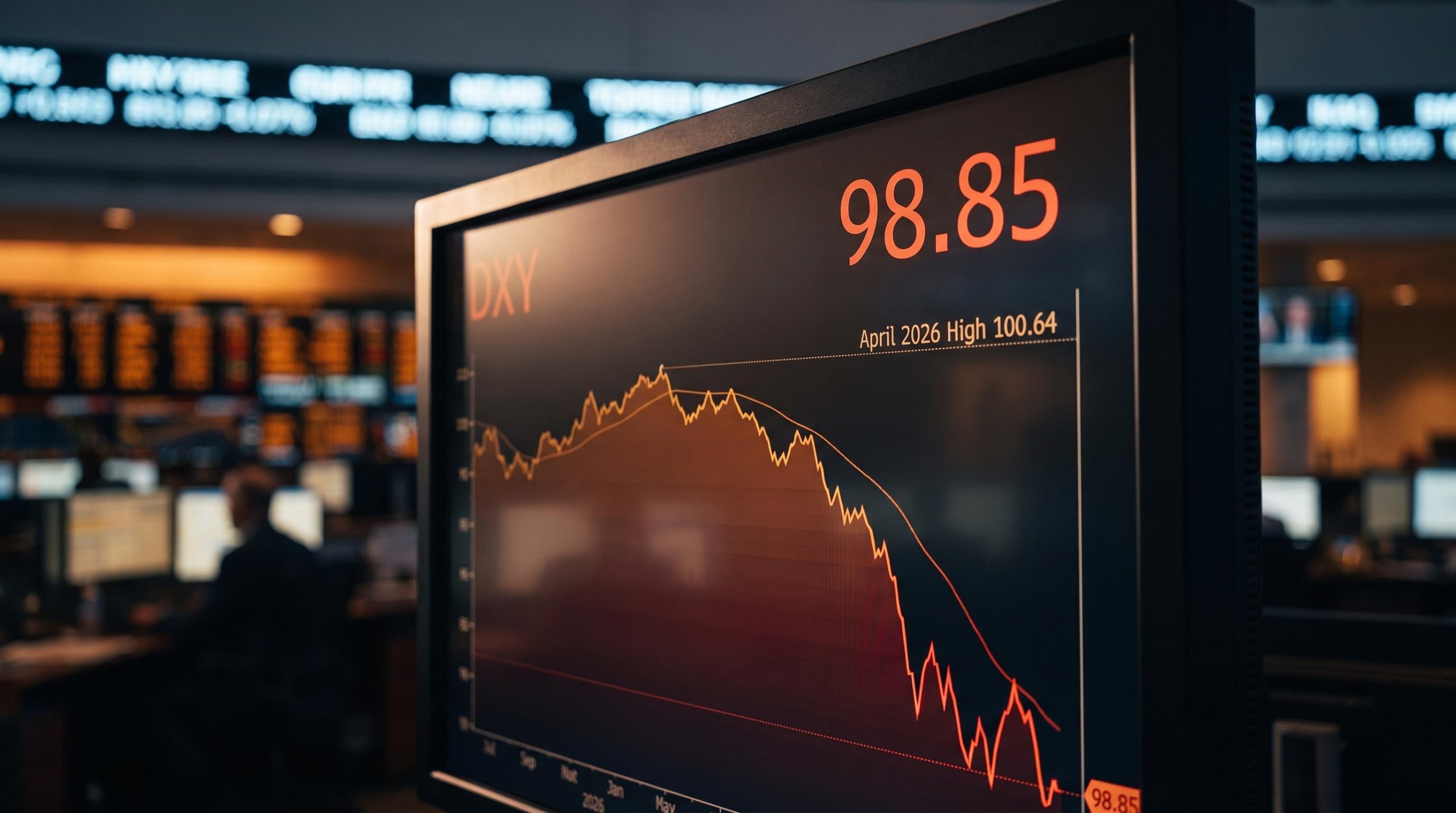
This was a return to established territory, not a fresh breakdown. On 7 September 2026, the index traded around 98.85-98.90 across data feeds, having opened the session near 99.16 and reached a high of 99.21 before settling.
Here is the intraday shape:
- Open: 99.16
- High: 99.21
- Low: 98.84
- Close: near 98.89
- Change: approximately -0.27%
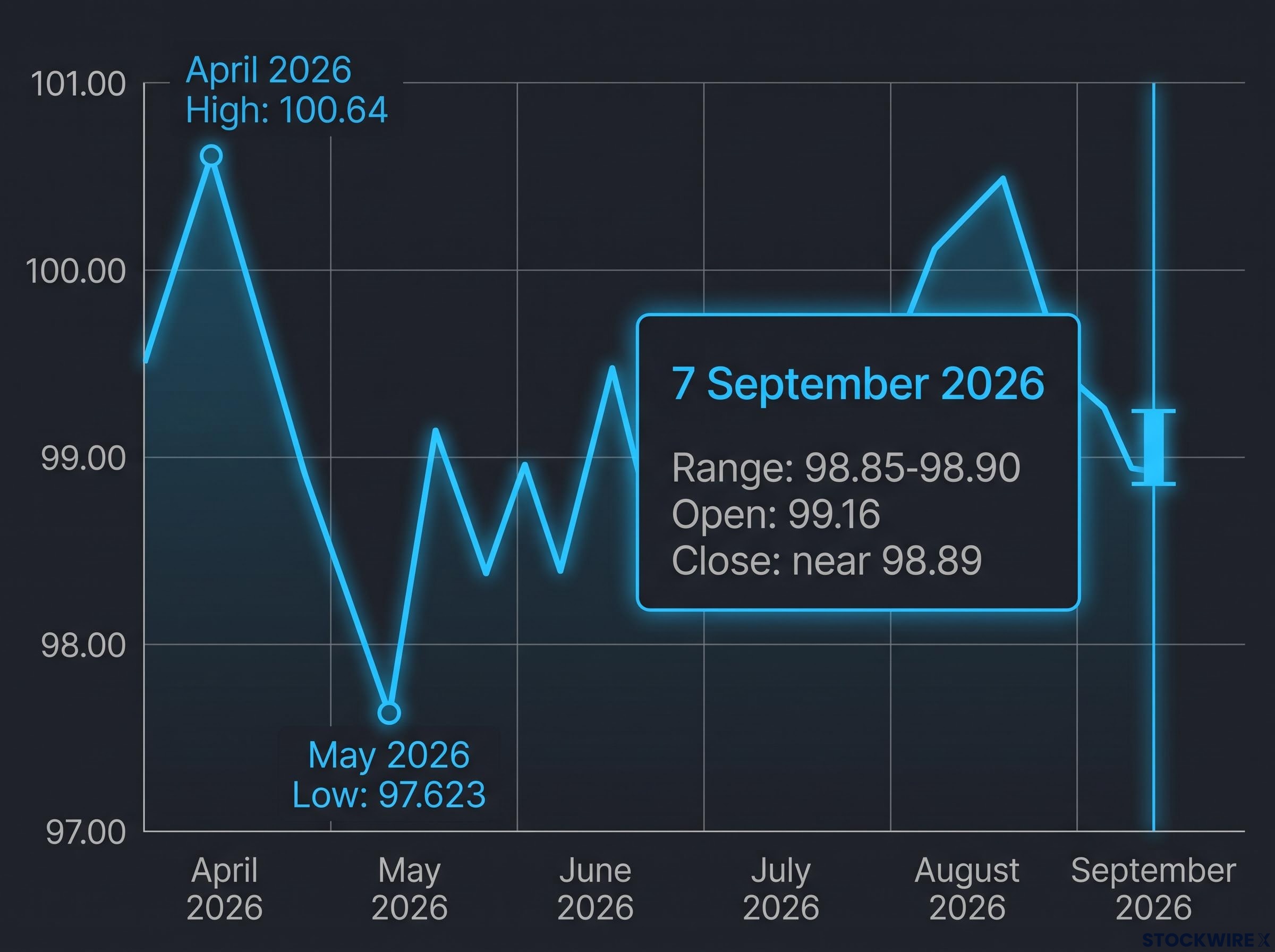
That the dollar could shrug off a jobs beat and drift lower tells you the near-term direction is being set by positioning and relative expectations, not by headline macro surprises. The market has already moved past the acute safe-haven panic that pushed the DXY to a 10-month high of 100.64 in April 2026, a surge of more than 3% at the height of Iran-related demand.
Headline versus core divergence was the defining diagnostic signal in the May 2026 report, where a 40.5% annual gasoline surge drove headline CPI to 4.2% while core held at 2.9%, confirming the spike was geopolitically driven rather than a sign of broad demand overheating that would justify aggressive Fed tightening.
Marc Chandler, chief market strategist at Bannockburn Capital Markets, framed the setup plainly.
The dollar is “overstretched” and “momentum indicators are oversold,” Chandler said in Reuters coverage dated 25 August 2026, arguing the currency had run too far and was primed for correction.
For anyone trading or hedging dollar exposure, the practical read is this. A strong US data print is no longer a reliable reason to buy the currency when the broader thesis has shifted to relative rate trajectories. That distinction changes how you should position around Friday’s CPI, and it is the reason the payrolls surprise faded so quickly.
When big ASX news breaks, our subscribers know first
The three forces pulling the dollar lower at once
Each of these forces could soften the dollar on its own. What makes the current weakness more durable is that all three are pointing the same way simultaneously, and they reinforce one another.
- The fading Iran safe-haven premium
- Relative rate expectations shifting against the dollar
- Technical overextension from crowded positioning
Take them in order, because the sequence is how the current level was reached.
Safe-haven rerouting toward gold and European currencies during the Hormuz escalation, rather than into the dollar, was the first structural signal that the dollar’s role in crisis episodes had shifted from clean safe-haven to cyclical asset, a repricing that still underpins the current sub-99 level.
Fading geopolitical premium
The Iran conflict drove the dollar’s spring surge. According to Reuters coverage dated 15 April 2026, the DXY jumped more than 3% to a 10-month high of 100.64 as escalation triggered safe-haven demand.
That premium then bled away. By 15 April 2026 the index had retraced to 98.07, roughly 0.5% above its pre-conflict level, meaning most of the war-driven gain had already unwound.
The slide continued. By May 2026 the DXY had fallen to 97.623, its lowest since late February 2026, even with a ceasefire officially in place. Dominic Bunning of Nomura captured the mechanism in CNBC coverage dated 10 June 2026, noting that markets read renewed tensions as bringing the sides closer to agreement, which cooled the safe-haven bid rather than reigniting it.
Relative rates and positioning
The second and third forces are structural, and they work as two sides of the same headwind. Chandler’s central argument, in the same 25 August 2026 Reuters piece, was that “the fundamentals seem to move against the dollar.”
The mechanism is not a dovish Fed. It is that other central banks are expected to raise rates more than the Fed, narrowing the interest-rate differentials that had favoured the dollar. When foreign policymakers still have room to hike while the Fed nears the end of its cycle, the dollar softens even against strong US data.
Layered on top is positioning. With speculative long-dollar bets crowded and momentum indicators oversold, strong prints produce only muted, short-lived support before mean-reversion reasserts itself.
| Force | What drove it | Peak DXY impact | Current status |
|---|---|---|---|
| Fading Iran premium | Safe-haven demand from conflict escalation | 100.64 (April 2026) | Residual premium ~0.5% above pre-conflict level |
| Relative rate expectations | Other central banks expected to hike more than the Fed | Narrowing differentials | Ongoing structural headwind |
| Technical overextension | Crowded long-dollar positioning | Oversold momentum signals | Favouring mean-reversion lower |
When all three align, a genuine dollar recovery needs either a real policy surprise from the Fed or a fresh geopolitical escalation. Hold that threshold in mind: if you are assuming the current weakness is temporary, the combination of fading war premium, relative rate headwinds, and stretched positioning suggests the path of least resistance stays lower until one of these specific forces reverses.
How major currency pairs are reading the dollar’s slide
Broad dollar weakness does not lift every currency equally, or for the same reason. Looking at the major pairs one by one reveals the internal structure of the move, and where the most coherent trades sit.
EUR/USD held above 1.1600 on 8 September 2026, near the upper edge of its recent range and benefiting from general dollar softness. The session’s regional catalysts were German trade balance data and a scheduled speech from ECB policymaker Frank Elderson, neither likely to force a breakout on its own.
GBP/USD tells a more constrained story. Sterling gains were capped near 1.3550, with a firm resistance zone holding the pair back. The BRC Retail Sales Monitor was the only notable UK release for the session, offering no catalyst to break through.
AUD/USD is the standout. The pair climbed above 0.7220 on 8 September 2026, a level not seen since mid-May, extending a multi-week uptrend.
AUD/USD above 0.7220 marks its highest since mid-May 2026, driven by hawkish RBA expectations layered on top of broad dollar weakness.
| Currency pair | Current level | Primary driver | Key event risk this week |
|---|---|---|---|
| EUR/USD | Above 1.1600 | Broad USD weakness | German trade balance; Elderson speech |
| GBP/USD | Capped near 1.3550 | USD weakness, resistance-bound | BRC Retail Sales Monitor |
| AUD/USD | Above 0.7220 | Hawkish RBA plus USD weakness | RBA speakers Hunter and Hauser |
The Aussie move is the most actionable signal here because it reflects two independent tailwinds converging: general dollar softness and a hawkish Reserve Bank of Australia. RBA officials Hunter and Hauser are both scheduled to speak this week, giving that hawkish read a live test.
For anyone holding a multi-currency portfolio, this distinction matters. AUD/USD carries multi-factor support that GBP/USD does not, which changes the risk profile of holding each pair through Friday’s CPI. Sterling upside is fenced in by resistance; the Aussie has an internally coherent case that does not depend on the dollar alone.
What Friday’s CPI print will tell you about the dollar’s next move
Friday’s CPI release is the pivot event of the week. It will either confirm the dollar-weakening thesis or challenge it, depending on whether the number gives the Fed room to hold or pressure to hike.
The July CPI report delivered a second consecutive monthly decline, pulling headline inflation to 3.4% and pushing September hike odds below 40%, which is the baseline from which Friday’s print will either confirm continued disinflation or mark an abrupt reversal.
Before Friday, Tuesday’s data slate offers early directional signalling. Three releases function as a diagnostic ahead of the main event:
- NFIB Small Business Index
- ADP Employment report
- Consumer Inflation Expectations
These will nudge expectations without settling them. The CPI is the number that connects directly to the Fed’s rate path, and per CNBC coverage dated 10 June 2026, investors have been closely examining inflation data for insight into future Fed decisions and monitoring how the Fed Chair responds to each print.
Here is the conditional map for how the dollar should read the print:
- Hot CPI: A meaningful upside surprise forces markets to price a more aggressive Fed, widening rate differentials back toward the dollar and giving the currency a reason to rally. This directly challenges the weakening thesis.
- Cool CPI: An in-line or soft print gives the Fed room to hold, leaves relative rate expectations intact, and lets the three-force weakness continue to dominate.
The critical calibration comes from what already happened. Stronger-than-expected employment raised expectations of a September hike, yet the dollar still reversed lower.
That sets a high bar. Given how quickly the NFP beat was absorbed, only a genuinely large upside CPI surprise is likely to sustain a dollar rally rather than trigger another brief, reversible bid.
For anyone positioned in dollar-sensitive assets, the value of this framework is that it works before the number drops, not after. You know which outcome supports each side of the thesis, and you know the surprise threshold that would need to be cleared to shift the medium-term picture rather than just spike volatility for a session.
Positioning for what comes next in a rate-plateau environment
Pull the threads together and the forward picture sharpens. The dollar’s near-term direction hinges on whether any of the three forces reverses, and each has a specific condition that would need to be met.
For a sustained recovery, one of the following would need to turn:
- Geopolitical re-escalation reviving the Iran safe-haven premium
- A Fed pivot to materially more aggressive hiking than markets currently expect
- Position unwinds reversing back in the dollar’s favour
Absent one of those, the baseline is soft. The analyst cited by Reuters on 15 April 2026, Haddad, described the cyclical environment for the dollar as neutral over the next 6-9 months, which is the case against which more bullish or bearish scenarios should be stress-tested.
Stack that neutral cyclical read on top of Chandler’s relative-rate argument, and the message is that the fundamentals move against the dollar as long as other central banks are hiking more than the Fed. Together they point to a dollar-soft path of least resistance into year-end, unless the Fed turns notably more hawkish than priced.
The residual Iran premium sits at roughly 0.5% above pre-conflict levels, with the DXY at 98.85-98.90. That leaves little geopolitical cushion left to unwind, meaning the next leg is more likely to be driven by rates than by risk.
Watch the major pairs as barometers of how much weakness is already priced. AUD/USD above 0.7220 and EUR/USD above 1.1600 show the market has moved a fair distance already, which matters because knowing what would break the thesis is as useful as the thesis itself. Friday’s CPI is the first live test of whether the Fed can supply the hawkish surprise the dollar would need.
This article is for informational purposes only and should not be considered financial advice. Investors should conduct their own research and consult with financial professionals before making investment decisions.
Past performance does not guarantee future results. Financial projections are subject to market conditions and various risk factors.
What the CPI print decides, and what it does not
Friday’s CPI is best understood as a volatility catalyst inside an established trend, not a trend-changer. That distinction is the single most useful thing to carry into the release.
The reason is the split between cyclical and structural forces. A hot print can move the cyclical lever by repricing the September Fed path, but it cannot on its own reverse the structural relative-rate and positioning dynamics dragging the dollar lower. Even a strong number leaves the underlying headwind intact unless it is large enough to force a wholesale rethink of the Fed’s trajectory.
The DXY sub-99 level is the threshold to watch in the immediate post-CPI sessions, anchored between May’s low of 97.623 and April’s high of 100.64, with the current 98.85-98.90 sitting mid-range. The readable outcomes:
For investors wanting deeper context on why 100 functions as a mechanically loaded level for the dollar, our full explainer on the DXY at the 100 threshold examines how option strikes, stop clusters, and institutional targets converge at that number, shaping the dollar’s ceiling even during strong data periods.
- Hot print: A recovery attempt toward the upper end of the recent range, testing whether hawkish repricing can hold.
- Cool print: A move toward the lower end of the recent range, extending the structural weakness lower.
Two data gaps are worth flagging honestly. Specific CME FedWatch probabilities for the September FOMC meeting and consensus CPI estimates were not available in current sourcing, so consult real-time tools for those inputs before Friday.
The mechanism linking CPI to the dollar runs through Fed expectations, with markets monitoring the Fed Chair’s stance in response to the print, per CNBC’s 10 June 2026 coverage. Against Haddad’s neutral 6-9 month cyclical baseline, the sensible move is to size positioning around event risk rather than repositioning wholesale on a single number. The CPI will sharpen the near-term picture without resolving the medium-term one, and knowing that in advance is itself worth acting on.