Investors tracking today’s stock market news are navigating a rare convergence of macroeconomic policy and mega-cap corporate earnings. The Federal Reserve’s interest rate decision arrives just hours before the technology sector’s largest constituents report their quarterly results. This alignment forces markets to process persistent inflation signals alongside artificial intelligence infrastructure costs in a single trading session.
The Federal Reserve Policy Outlook for April 2026
The Federal Open Market Committee will announce its policy decision at 2:00 PM ET, with markets universally pricing in a benchmark rate hold between 3.50% and 3.75%. The immediate focus shifts from the baseline decision to the widening gap between near-term stability and longer-term monetary easing. According to some estimates, derivative markets have dramatically recalibrated their expectations, pushing the next anticipated rate reduction to late 2027.
This delayed timeline forces fixed-income managers to adjust strategies and caps near-term equity momentum. Several macroeconomic headwinds complicate the central bank’s path forward:
The persistence of crude oil above the century mark creates immediate retail inflation pressures, reinforcing the necessity for restrictive federal reserve interest rates despite signs of slowing domestic demand.
WTI crude trading at $103.33 per barrel, sustaining input cost pressures. Travel and leisure sector margin compression indicating consumer pullbacks. * Prolonged geopolitical disruptions affecting global supply chains.
Derivative Market Pricing and Leadership Transitions
The pricing shift in derivative markets aligns with incoming Federal Reserve Chair nominee Kevin Warsh advancing through the congressional confirmation process. During recent hearings, Warsh strongly emphasised central bank independence. While his direct policy influence will not materialise until mid-year meetings, his stated priorities reinforce the market consensus that aggressive rate cuts are officially paused.
When big ASX news breaks, our subscribers know first
Understanding How Capital Expenditure Dictates Tech Valuations
Capital expenditure refers to the funds a company uses to acquire, upgrade, and maintain physical assets. In the current technology sector, this metric translates directly into the construction of data centres and the acquisition of advanced processing units required to train artificial intelligence models. Massive upfront spending must eventually generate proportional revenue growth, or the companies risk severe valuation corrections.
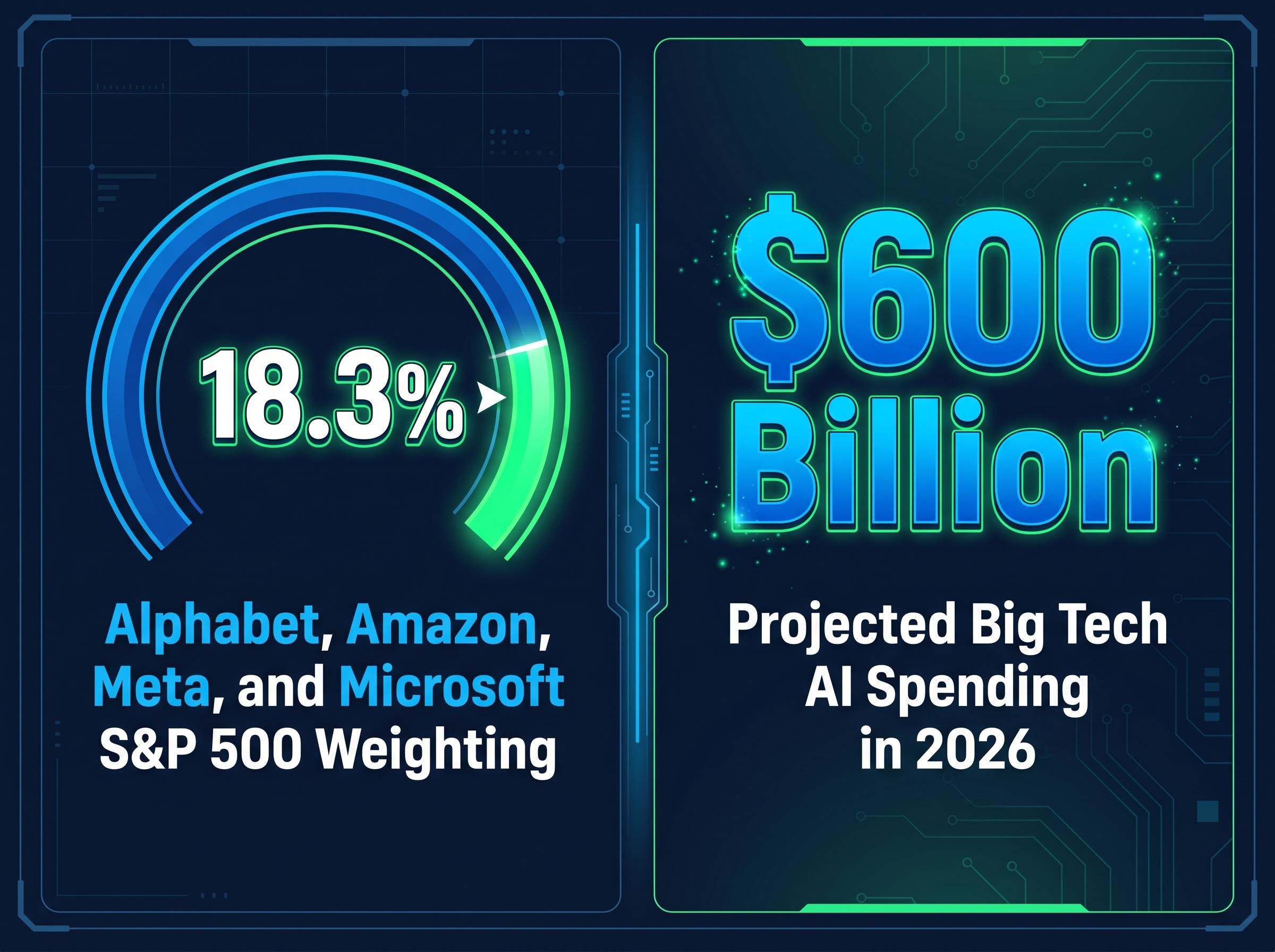
This dynamic acts as a gravitational pull on broader US equities because of high concentration at the top of the market. According to market data, Alphabet, Amazon, Meta, and Microsoft currently represent approximately 18.3% of the S&P 500 index weighting. Their aggregate performance sets the baseline for market-wide returns.
Sector Investment Scale Industry projections indicate overall Big Tech artificial intelligence spending will reach $600 billion in 2026, forcing analysts to scrutinise balance sheets for tangible returns on this historic investment cycle.
For everyday investors, monitoring capital expenditure transforms abstract technology promises into concrete indicators of future stock performance.
Alphabet and Microsoft Lead the Earnings Charge
The massive corporate spending figures set a high bar for today’s post-market earnings releases. While analysts have issued positive earnings per share revisions for the mega-cap cohort, they are simultaneously applying heavy scrutiny to remaining performance obligations and profit margins. Microsoft and Alphabet serve as the primary bellwethers for enterprise technology demand, giving investors a precise scorecard for the sector’s health.
Consensus estimates highlight the scale of expected performance. Alphabet enters the print with Q1 2026 projections of $2.62 EPS on $106.8 billion in revenue. Microsoft has seen its EPS estimates recently rise 1.2% to $4.07. Alongside these two leaders, Meta has recorded positive EPS revisions, and Amazon maintains strong growth expectations tied to sustained infrastructure investments.
Knowing these exact targets allows investors to gauge whether after-hours price movements are overreactions or justified repricing events.
For retail investors seeking a structural advantage during these volatile announcements, our detailed coverage of earnings season options pricing explains how implied volatility crush affects mega-cap technology stocks after their results are published.
| Company | Q1 2026 EPS Target | Primary AI Growth Driver |
|---|---|---|
| Alphabet | $2.62 | Cloud computing integration and search generative models |
| Microsoft | $4.07 | Enterprise software adoption and infrastructure services |
| Meta | Positive Revisions | Targeted advertising algorithms and engagement tools |
| Amazon | Strong Growth Expected | Web services expansion and logistical automation |
OpenAI Shortfalls Inject Caution Into Digital Infrastructure
Private market friction is actively bleeding into public valuations, challenging the sector’s growth narrative. According to industry analysis, OpenAI missed its internal targets for user growth and revenue. This shortfall generates immediate scepticism around the long-term viability of massive data centre expansion plans.
The missed targets have placed distinct stock pressure on publicly traded technology conglomerates linked to Chief Executive Officer Sam Altman and his broader ambitions. When the leading private enterprise in the sector struggles to monetise its user base, public market analysts recalibrate their expectations for the companies providing the underlying computing power.
This emerging disconnect between massive hardware deployment and lagging software application revenue is increasingly driving fears of a structural tech bubble across the domestic equity market.
This dynamic highlights a major blind spot for retail participants. Investors who do not own shares in private start-ups must still monitor these unlisted entities, as their failures can swiftly drag down the public tech conglomerates that fund them.
Bloom Energy Surges as Data Centres Demand Massive Power
While software developers face monetisation questions, the physical infrastructure required to sustain the technology boom continues to reward specific hardware providers. Alternative energy provider Bloom Energy demonstrated this divergence by delivering a massive first-quarter revenue beat. The success highlights how peripheral sectors are reaping immediate financial benefits from the expansion of advanced computing facilities.
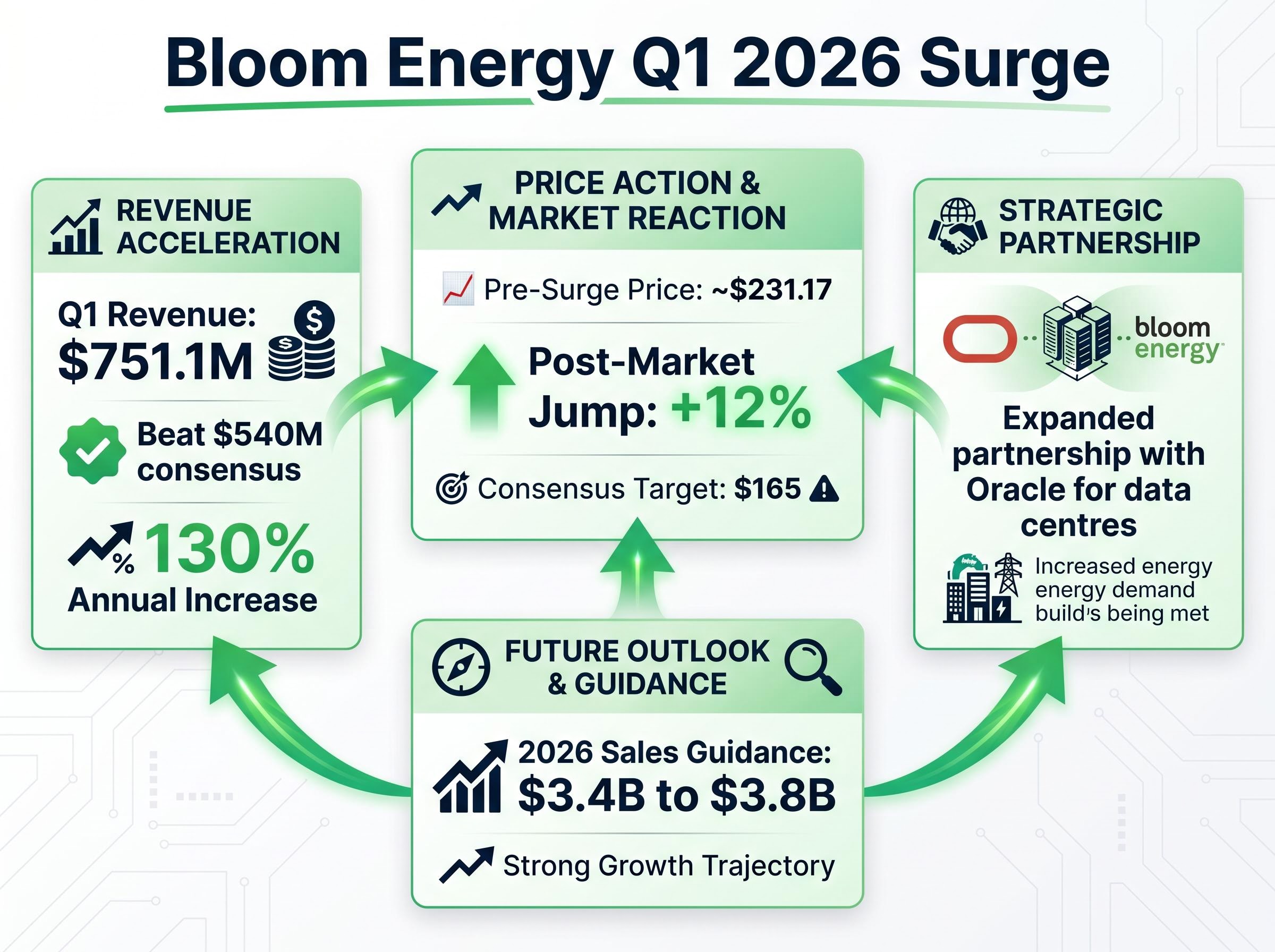
Bloom Energy shares traded near $231.17 before jumping over 12% in post-market trading. This surge creates a complex valuation picture, as the stock is now trading significantly above the analyst consensus price target of approximately $165.
The after-hours rally stems from three distinct catalysts:
- According to reports, a first-quarter revenue print of $751.1 million, representing a 130% annual increase that easily surpassed the $540 million consensus.
- An expanded partnership with Oracle to provide fuel cell power specifically for data centres.
- According to reports, management upwardly revising full-year 2026 sales guidance to between $3.4 billion and $3.8 billion.
Market Trajectory Beyond the April FOMC Meeting
The convergence of the Federal Reserve decision and technology sector earnings sets the market outlook for the remainder of the second quarter. The broader S&P 500, currently trading above 7,100, requires both stable monetary policy and justified corporate spending to maintain its elevated position.
However, elevated recession probability estimates and volatile energy markets suggest that this index level might be underpricing significant structural vulnerabilities in the domestic economy.
When markets open on Thursday morning, investors must monitor how bond yields react to the extended rate cut timeline and whether mega-cap revenue guidance validates the historic capital expenditure cycle. The gap between hardware infrastructure demand and software monetisation challenges will likely drive sector rotation as capital seeks verifiable returns.
This article is for informational purposes only and should not be considered financial advice. Investors should conduct their own research and consult with financial professionals before making investment decisions. Past performance does not guarantee future results, and financial projections are subject to market conditions and various risk factors.