Generac Earnings Drive 8.6% Share Surge on AI Data Centre Pivot
5 mins ago


On 29 April 2026, San Francisco-based enterprise software provider Hightouch secured $150 million in Series D capital, marking a significant AI marketing funding milestone for the quarter. The cash injection arrives exactly two weeks after the company crossed the $100 million annualised recurring revenue threshold. These milestones illustrate a rapid transition in how major corporations approach automated promotional production.
The capital injection provides an inside look at how aggressive market expansion and automated creative agents are actively restructuring enterprise advertising. Rather than relying on traditional human-led workflows, top-tier brands are now deploying machine-learning algorithms to execute campaigns at scale.
At a time when broader technology budgets face intense scrutiny, this capital allocation highlights a distinct divergence in investor sentiment. For financial professionals monitoring the enterprise software market, the underlying mechanics of these artificial intelligence platforms reveal exactly why venture capital continues to flow heavily toward automated creative agents.
The transaction establishes a new $2.75 billion enterprise valuation for the company. This represents a massive leap from the previous $1.2 billion appraisal secured during its Series C round in February 2025. Total capital raised by the platform now exceeds $322 million.
The official Series D funding announcement confirms this substantial financial leap, highlighting the heavy institutional appetite for proven commercial traction in automated marketing over speculative software models.
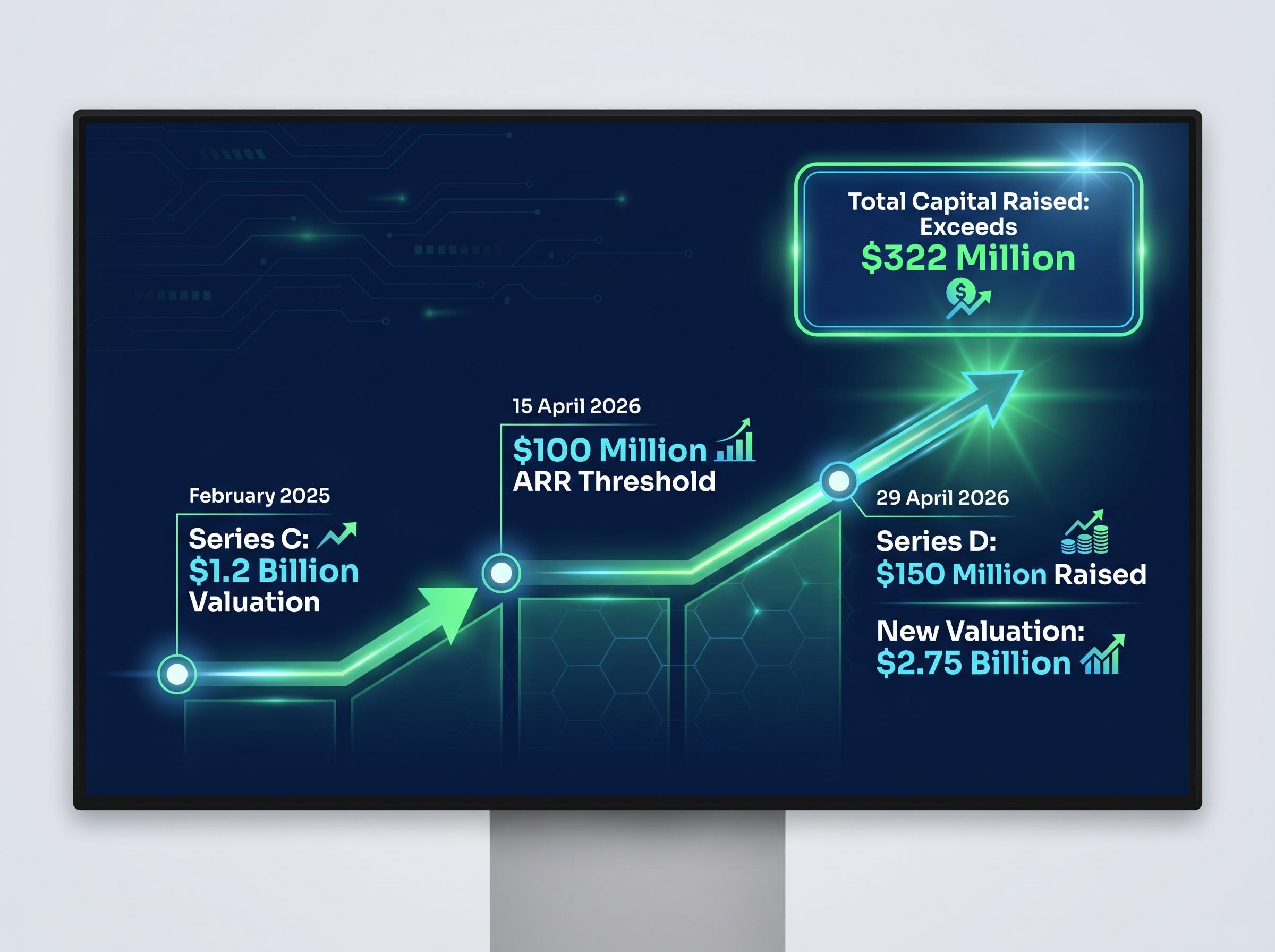
This pace of capital accumulation acts as a decisive vote of confidence in artificial intelligence-driven applications over legacy software systems. The Series D financing arrangement brings together significant institutional backing. The specific venture capital groups driving this round highlight the strategic importance of automated enterprise infrastructure.
Growth Equity at Goldman Sachs Alternatives: Led the investment round, pointing to the platform’s exceptionally strong enterprise adoption and capacity to scale operations within large corporate environments. Bain Capital Ventures: Co-led the transaction, categorising the capital injection as a calculated bet on artificial intelligence fundamentally shifting the underlying mechanics of marketing technology. * The Trade Desk: Participated as a strategic corporate entity, signalling the immediate utility of automated campaign orchestration within broader digital advertising ecosystems.
This scale of financial commitment demonstrates that top-tier institutional money is targeting proven operational execution rather than theoretical product roadmaps. Reaching a multibillion-dollar appraisal within a constrained macroeconomic environment requires demonstrable commercial traction. The participation of established public entities further validates where the industry’s infrastructure is heading.
The abstract promises of algorithmic media generation only translate to a premium valuation when tied to concrete enterprise utility. Over a 20-month period, the company added $70 million in annualised recurring revenue directly tied to these new generative tools. The platform evolved from a simple cloud storage analysis mechanism into a sophisticated creative generation suite.
This system solves the persistent authenticity problem in generative media by training its models directly on a brand’s verified historical archives. Major United States enterprise adopters, including PetSmart, Domino’s, Chime, and Spotify, actively use this infrastructure to streamline data activation. Management reports that advanced automation delivers a marketing impact of 30% or higher for these corporate clients.
Capturing this level of verifiable return requires massive amounts of historical information, a requirement that is currently sending shockwaves through enterprise data storage markets as corporations stockpile capacity for their own proprietary models.
The automated creative production workflow follows a strict sequential process to ensure brand safety:
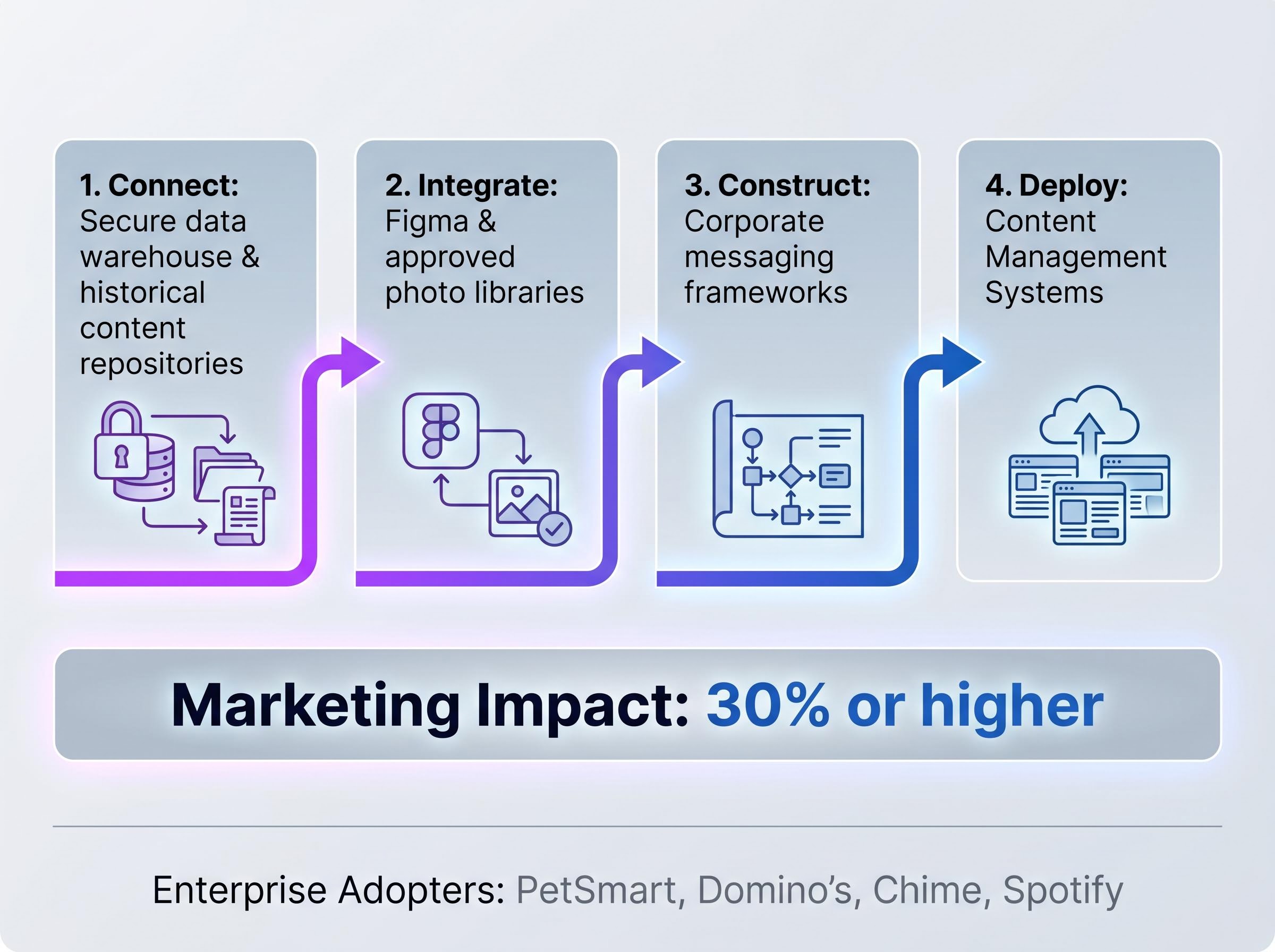
By integrating natively with existing creative hubs, the technology prevents the rogue asset generation that typically plagues standalone artificial intelligence tools. Readers assessing the technology sector can view this controlled workflow as the operational bridge between experimental algorithms and practical corporate deployment.
Reaching the $100 million annualised recurring revenue threshold on 15 April 2026 marks a critical junction for any modern software provider. This calculated strategy involves funnelling incoming capital directly into supplementary feature development rather than optimising for net income.
The underlying mechanics of scaling software recurring revenue are shifting entirely toward platforms that can demonstrate immediate efficiency gains and zero churn through embedded artificial intelligence processing.
The underlying logic treats the current market environment as a brief window to capture dominant share before legacy incumbents can fully pivot their operations. Funnelling capital into aggressive expansion carries inherent risks, but executives argue the cost of moving slowly is far higher.
CEO Strategic Vision “This investment is a major vote of confidence in our vision for AI-powered marketing,” stated Tejas Manohar, co-chief executive officer, in July 2025 regarding previous investments.
This corporate timeline of deliberate unprofitability reflects a highly aggressive operational posture. It highlights the calculated trade-offs between rapid market capture and long-term financial sustainability.
Investors evaluating similar growth stocks must weigh the benefits of this land-grab strategy against the delayed timeline for cash flow generation. By prioritising the rollout of advanced orchestration capabilities, the company is attempting to outpace the industry’s looming consolidation wave.
The optimism surrounding automated media platforms contrasts sharply with the severe market anxiety currently impacting traditional computer applications. In early 2026, established legacy software providers experienced a collective market capitalisation contraction approaching $1 trillion. Meanwhile, United States sector funding for advanced algorithmic marketing platforms exceeded $5 billion in the first quarter of 2026 alone.
This massive market repricing aligns with PitchBook’s Q1 2026 valuation analysis, which documented broad public equity declines across traditional enterprise applications as investor enthusiasm migrated toward generative infrastructure.
To survive this tectonic shift, established incumbents are executing aggressive acquisition strategies to purchase necessary capabilities quickly. This dynamic is driving rapid consolidation across the broader United States software industry as larger players attempt to buy their way into the modern era.
| Company | Event Type | Date | Valuation or Deal Size |
|---|---|---|---|
| Hightouch | Series D Funding | 29 April 2026 | $2.75 Billion |
| Adobe / Semrush | Corporate Acquisition | 28 April 2026 | $1.9 Billion |
| Profound | Series C Funding | 24 February 2026 | $1.0 Billion |
While the influx of capital validates the underlying technology, the sector faces an evolving United States regulatory backdrop. Upcoming Federal Trade Commission guidelines regarding data privacy are expected to act as a potential future constraint. Companies must manage these impending regulations carefully to protect their premium valuations while maintaining their aggressive operational cadence.
The $2.75 billion valuation metric serves as a clear indicator of how institutional capital assesses the software sector. The broader industry consolidation trend proves that the threshold for competitive enterprise software now requires native automated capabilities, rather than simply bolted-on features. Legacy systems that fail to integrate machine learning at the foundational level face continued market share erosion.
Recognizing this existential threat, traditional operators are rapidly pivoting toward AI-native software development to modernize their platforms before agile competitors capture their entire enterprise client base.
Looking ahead, the balance between rapid innovation and upcoming federal privacy regulations will dictate sector performance throughout the remainder of the year. Firms that can rapidly deploy compliant campaign orchestration tools are positioned to capture the enterprise spending shift.
The information provided is for informational purposes only and should not be considered financial advice. Investors should conduct their own research and consult with financial professionals before making investment decisions. Past performance does not guarantee future results, and financial projections are subject to market conditions and regulatory changes.
AI marketing funding refers to capital injections into companies that develop artificial intelligence platforms designed to automate and enhance marketing workflows, such as creative generation and campaign orchestration.
Hightouch secured a $2.75 billion enterprise valuation following a $150 million Series D funding round in April 2026, marking a significant leap from its previous $1.2 billion appraisal due to rapid growth and proven commercial traction in automated marketing.
Significant institutional investors, including Growth Equity at Goldman Sachs Alternatives, Bain Capital Ventures, and strategic corporate entity The Trade Desk, participated in Hightouch's latest funding round, demonstrating strong confidence in its enterprise adoption.
The platform ensures brand safety by connecting directly to an enterprise client's secure data warehouse to establish baseline brand guidelines, integrating with approved design hubs, and referencing corporate messaging frameworks for contextual copy generation.
Investors are prioritizing AI marketing platforms due to their demonstrated capacity for immediate efficiency gains, potential for zero churn through embedded AI processing, and ability to capture dominant market share rapidly during a period of sector consolidation.