
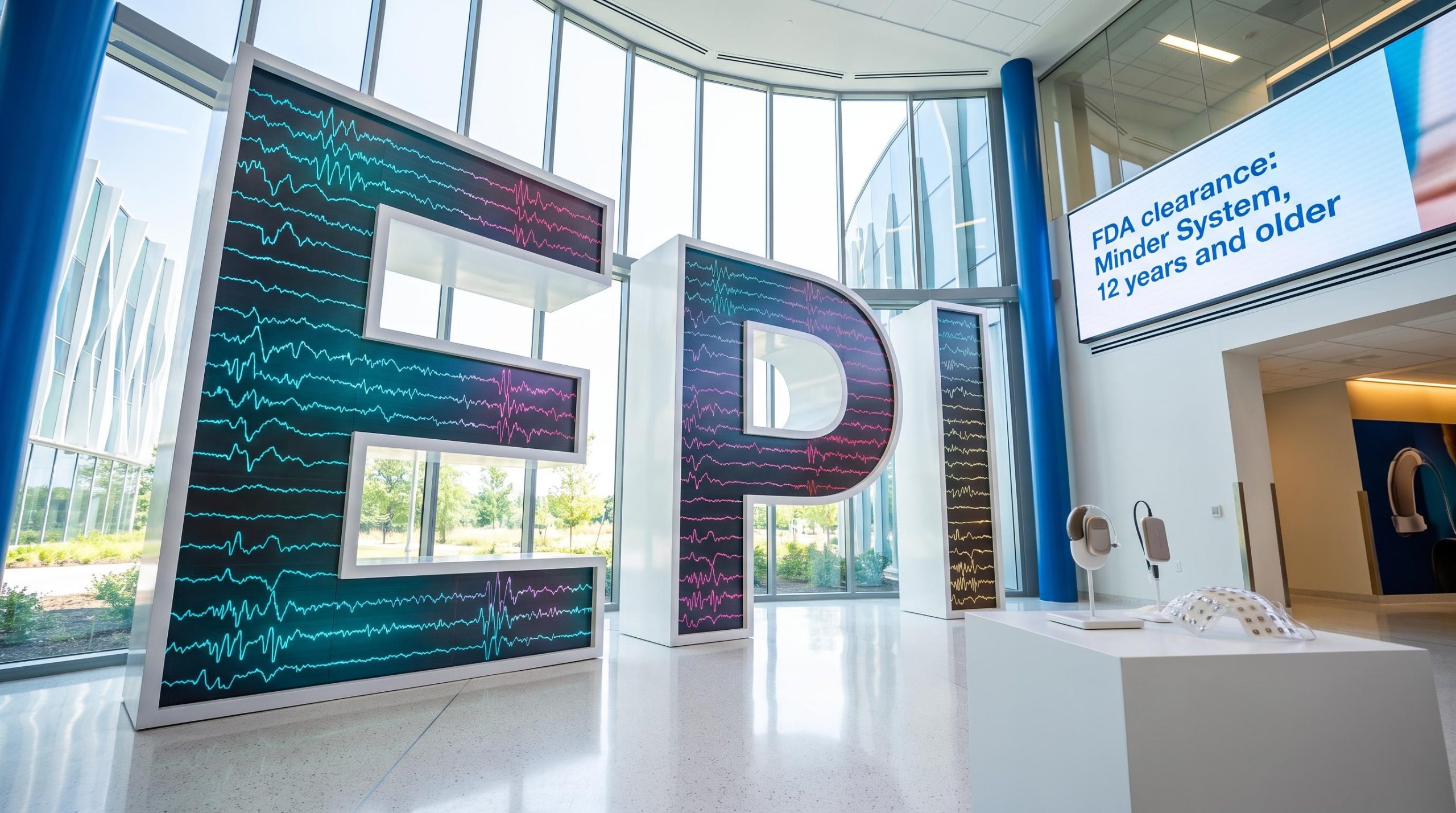
FDA clears Minder System for patients aged 12 and older
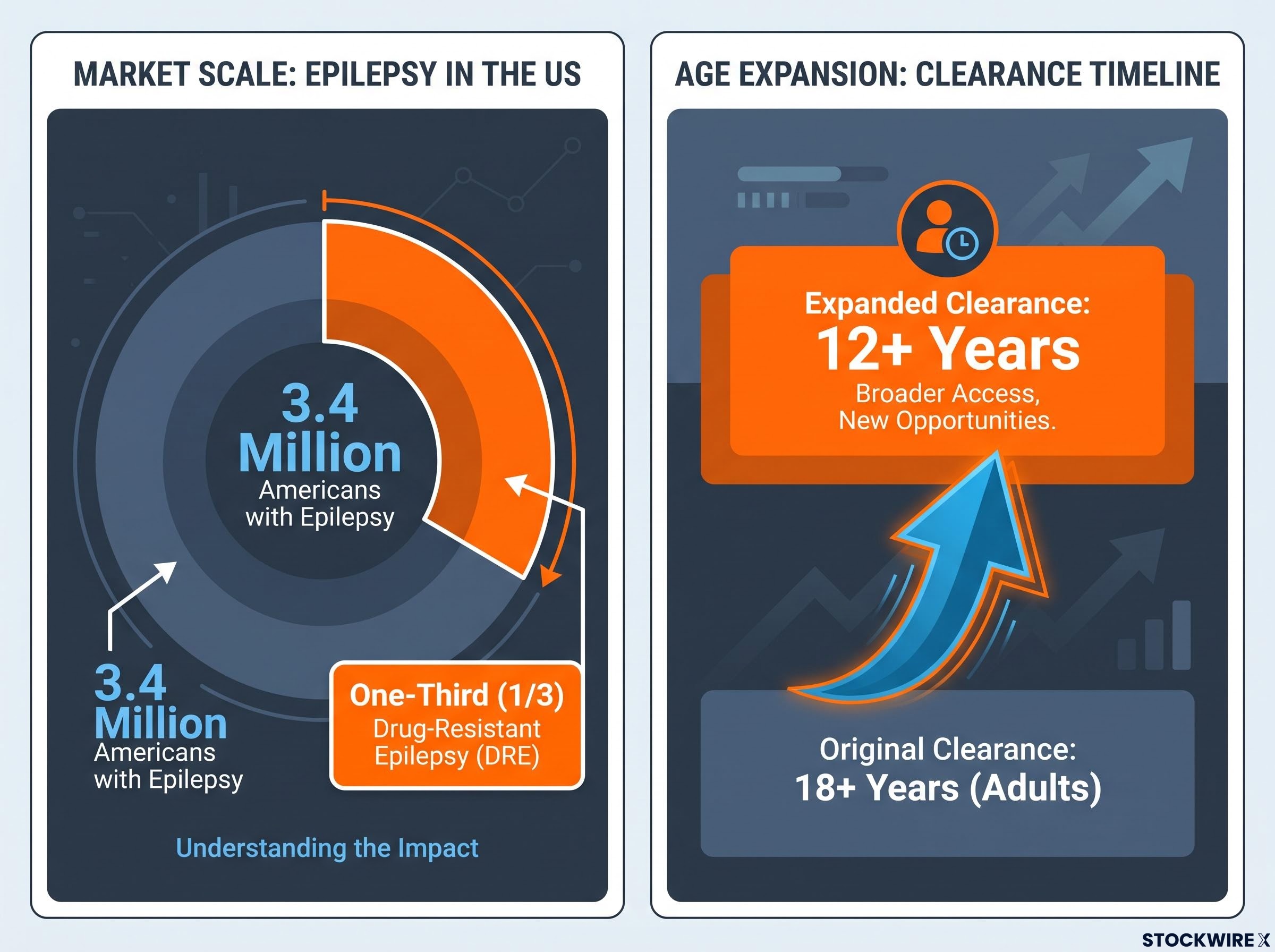
Epiminder Limited (ASX: EPI) announced on 30 October 2026 that the US Food and Drug Administration (FDA) has cleared an expansion of the Minder® System to patients aged 12 years and older with drug-resistant epilepsy (DRE). The original clearance covered patients 18 years of age and older.
The FDA clearance broadens the eligible patient population, and US clinicians can now offer continuous EEG monitoring to adolescent patients for the first time. The Minder System is described by the company as the “world’s first implantable sub-scalp continuous EEG monitoring device”.
Key points from the announcement:
- The FDA has cleared the Minder System for patients aged 12 years and older with DRE, beyond the original clearance for adults.
- The clearance was supported by clinical and technical data on safety and performance in adolescent patients, including biocompatibility and device performance data specific to adolescent anatomy and physiology.
- The expansion opens access to the device for a significant adolescent patient population.
For investors, the development means a broader eligible patient group for the same device.
When big ASX news breaks, our subscribers know first
Why the adolescent market matters for drug-resistant epilepsy
The scale of the problem
Epilepsy affects an estimated 3.4 million Americans, and approximately one-third of cases are categorised as drug resistant. An important group within that population is children and adolescents whose seizures persist despite two or more antiseizure medications.
Adolescence is a high-stakes period for people with DRE. Uncontrolled seizures during these years carry significant consequences for cognitive development, educational achievement and independence.
The monitoring gap
Continuous EEG monitoring for adolescents has historically required hospitalisation in an epilepsy monitoring unit (EMU). That limits access to short, episodic windows that frequently fail to capture the seizure activity clinicians need to see.
Between 30% and 50% of US inpatient epilepsy monitoring stays are inconclusive, and these inconclusive epilepsy monitoring stays, estimated at 25,000 to 45,000 a year, define the structural gap that continuous ambulatory EEG is designed to fill.
How the Minder System works
An EEG records the brain’s electrical activity. Continuous EEG monitoring tracks that activity over long periods rather than in a brief snapshot, which matters because seizure diaries and short hospital stays may not capture appropriate events, according to Dr R. Edward Hogan, Past President of the American Epilepsy Society.
The Minder System provides continuous, ambulatory sub-scalp EEG data, transmitted wirelessly to a secure cloud platform and reviewed remotely by the patient’s care team. The system consists of three components:
- An implantable sub-scalp electrode array.
- An implantable telemetry unit placed behind the ear.
- A wearable that charges the device and transmits data.
The sub-scalp placement is minimally invasive relative to intracranial devices and does not penetrate the skull.
Patients wear the device during normal daily activities, enabling real-world monitoring over months or years. For investors, that remote, real-world data over extended periods is the feature that distinguishes the product.
Regulatory foundation and clinical backing
The clearance was supported by a comprehensive submission encompassing device performance, biocompatibility and clinical safety data specific to adolescent anatomy and physiology. The Minder System was originally authorised by the FDA via the de novo pathway, while Dr Tracy Cameron referred to the age expansion as a 510k clearance.
The device is being used in the DETECT post-market study as a marketed device. The UMPIRE first-in-human multicentre trial, published in Epilepsia (2025), demonstrated the system’s safety and high-quality signal acquisition across extended monitoring periods.
The DETECT post-market study is a randomised, controlled, blinded trial with a six-month primary follow-up, and it reached its 100th enrolled patient across 22 US epilepsy centres ahead of the company’s own November target.
| Milestone | Pathway or Study | Detail |
|---|---|---|
| Original authorisation | De novo pathway | Minder System cleared for adults 18 years of age and older |
| Age expansion | 510k clearance | Extended to patients 12 years and older with DRE |
| DETECT | Post-market study | Minder used as a marketed device |
| UMPIRE | First-in-human multicentre trial | Published in Epilepsia (2025); demonstrated safety and high-quality signal acquisition across extended monitoring periods |
What management and clinicians are saying
Dr Rohan Hoare, CEO of Epiminder
“…We have always believed that every patient who could benefit from continuous EEG monitoring deserves access to it, and this clearance brings us meaningfully closer to that goal.”
Dr R. Edward Hogan, Past President of the American Epilepsy Society
“…We can see how often seizures are truly occurring, identify events that would otherwise go unrecognized, and base medication and treatment decisions on objective data rather than recall alone….”
Dr Tracy Cameron, Vice President of Clinical and Regulatory Affairs at Epiminder, said the clearance strengthens the company’s regulatory foundation as it continues to evaluate additional indications and platform enhancements for the Minder System.
What the expanded indication means for Epiminder investors
The announcement points to several elements of the investment case:
- A larger eligible patient group within the existing product, now including patients aged 12 years and older.
- A strengthened regulatory foundation following the FDA clearance.
- The company’s continuing evaluation of additional indications and platform enhancements.
- The Minder System’s position as an FDA-authorised implantable continuous EEG monitoring (iCEM®) system.
The company’s stated belief is that every patient who could benefit from continuous EEG monitoring deserves access to it, and management said this clearance brings it meaningfully closer to that goal.
Get Healthcare News Before the Market Moves
Join 20,000+ investors receiving FREE breaking ASX news within minutes of release, complete with in-depth analysis already done. Click the “Free Alerts” button at Big News Blast to get healthcare and other non-resource announcements in your inbox the moment they break.