


Simble Solutions (ASX:SIS) has advanced the design and initial fabrication of a transparent, stretchable polymer platform intended to serve as the physical foundation for future wearable e-skin applications. The workstream builds on the company’s earlier sensing results, marking the next development step in translating its NanoSensor technology towards flexible, body-conforming formats.
The initiative extends the initial UV and longer-wavelength detection results reported on 10 June 2026, moving the technology from a standalone sensing component towards wearable use. The immediate target application is personal UV exposure monitoring, with current work focused on the transparency, stretchability and body-conforming performance required for future wearable integration, subject to further development and validation.
Why conventional wearable platforms fall short
Wearable sensing technologies must remain functional while conforming to the body’s curved surfaces and responding to continuous movement. Many conventional sensor platforms, however, are built on rigid substrates or flexible films that can bend but cannot stretch with the skin.
This mechanical mismatch can limit comfort, consistent contact and reliable performance during prolonged or movement-intensive use. Existing stretchable platforms can also involve trade-offs between mechanical flexibility, optical transparency, durability and ease of sensor integration.
These constraints become particularly acute for personal and health-monitoring applications, where a device may need to be lightweight, discreet and comfortable while maintaining close contact with the body. Simble’s workstream is investigating transparent and stretchable polymer architectures designed to address these challenges and provide a foundation for future NanoSensor integration.
| Conventional Wearable Substrates | Simble Polymer Platform |
|---|---|
| Rigid or flexible, but often not stretchable | Designed for flexibility and stretchability |
| Limited conformity during body movement | Intended to conform to curved, moving surfaces |
| Trade-offs in comfort and transparency | Transparent foundation for future functional layers |
When big ASX news breaks, our subscribers know first
Where the workstream sits today
The polymer-platform workstream is currently at the material design and initial fabrication stage. Activities are focused on developing and refining polymer structures with the aim of achieving three core requirements: transparency, stretchability and body conformity.
The program is expected to progress through a defined development pathway, with each stage generating performance data to inform progression towards a functional e-skin prototype.
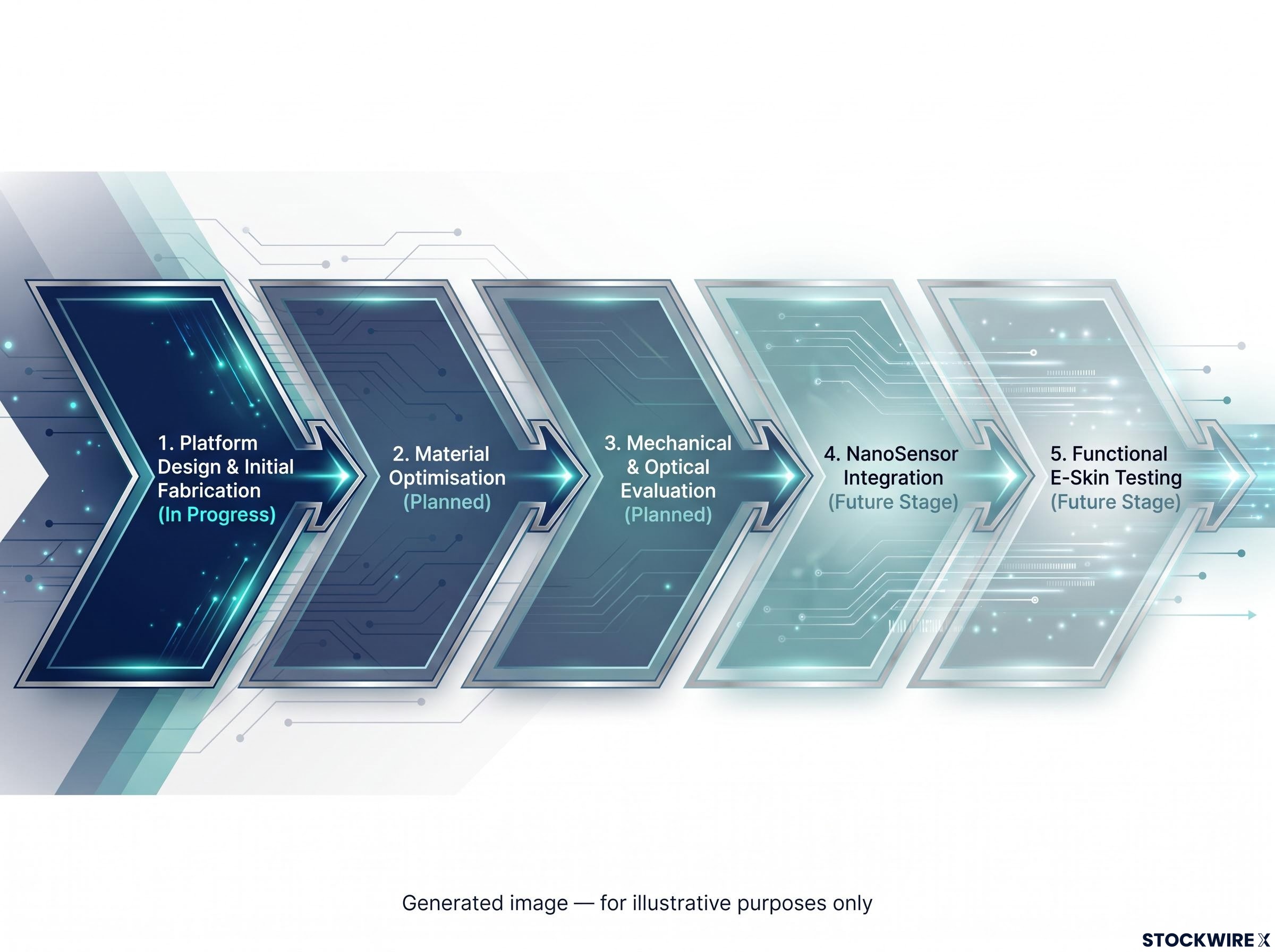
-
Platform Design & Initial Fabrication — In Progress
-
Material Optimisation — Planned
-
Mechanical & Optical Evaluation — Planned
-
NanoSensor Integration — Future Stage
-
Functional E-Skin Testing — Future Stage
The next stages are expected to assess key performance characteristics, including transparency, stretchability and stability under conditions relevant to wearable use. These findings will inform future NanoSensor integration and functional e-skin testing, with progress to be reported in subsequent announcements.
From UV detection to broader health monitoring
Personal UV exposure monitoring represents the most immediate potential application, with future skin-worn devices designed to track cumulative exposure over time and support more informed personal wellbeing decisions.
Beyond UV exposure, the successful integration of additional sensing functions could open longer-term opportunities. These future pathways, all subject to further device development, sensor integration, performance validation and applicable regulatory approval, include:
-
Skin and treatment monitoring
-
Movement and rehabilitation
-
Occupational wellbeing
-
Continuous personal health monitoring
These applications remain future pathways rather than current capabilities. The platform is being designed to support the NanoSensor alongside additional functional layers within a common architecture, an approach that could reduce the need for separate hardware development for each new application.
The polymer platform workstream is one component within a broader structured program evaluating six distinct application areas, including gas detection, defence sensing and multi-sensor integration, with the five-stage development framework designed to deploy capital progressively as each pathway demonstrates commercial viability.
Connecting wearable sensing with Simble’s digital platforms
The potential commercial opportunity extends beyond wearable hardware. Data generated by future e-skin devices could be integrated with SimbleSense and CarbonView to support connected monitoring, visualisation, alerts and reporting through Simble’s existing digital infrastructure.
This hardware-to-software pathway could enable the company to combine its proprietary sensing technology with established data management capabilities, positioning a future connected wearable as part of a broader ecosystem rather than an isolated device.
Simble’s engineering teams are continuing platform-readiness activities in parallel, with a focus on positioning SimbleSense and CarbonView to ingest and visualise wearable sensor data as device development progresses. This approach remains subject to successful device development, integration and validation.
What it means for investors
The longer-term value of the workstream lies in its design as a reusable, scalable sensing platform intended to support multiple future product pathways from a common architecture. This approach could allow application-specific devices to be developed without rebuilding the physical hardware for each use case, subject to successful fabrication, performance validation and functional integration.
Simble is an ASX-listed global energy and sustainability provider, operating the SimbleSense and CarbonView platforms. Following its December 2025 acquisition of exclusive rights to the patented NanoSensor Technology, the company is advancing a structured evaluation program to investigate the platform’s commercial potential across multiple application areas.
The Macquarie University nanosensor collaboration, formalised in mid-2026, underpins this development pathway, with Simble contributing $288,000 toward project costs while retaining exclusive commercialisation rights to any technology improvements generated through the two-year program.
Fadi Geha, Chief Executive Officer
“Developing a transparent and stretchable polymer platform is an important step in moving our NanoSensor technology towards future wearable applications. Building on the initial UV and wavelength results, this workstream is focused on creating the flexible, body-conforming foundation required for wearable integration.
“Personal UV exposure represents the most immediate potential application, while the future integration of additional sensing functions could open broader pathways across health, wellbeing and occupational monitoring.”
Upcoming activities will focus on material optimisation, mechanical and optical evaluation and future NanoSensor integration, with progress to be reported as the program advances.
Don’t Miss the Next ASX Tech Breakthrough
Big News Blast delivers FREE breaking ASX tech news directly to your inbox within minutes of release, complete with in-depth analysis. Join 20,000+ subscribers already staying ahead of the market. Click the “Free Alerts” button at StockWire X to make sure you never miss the moment market-moving news drops.