
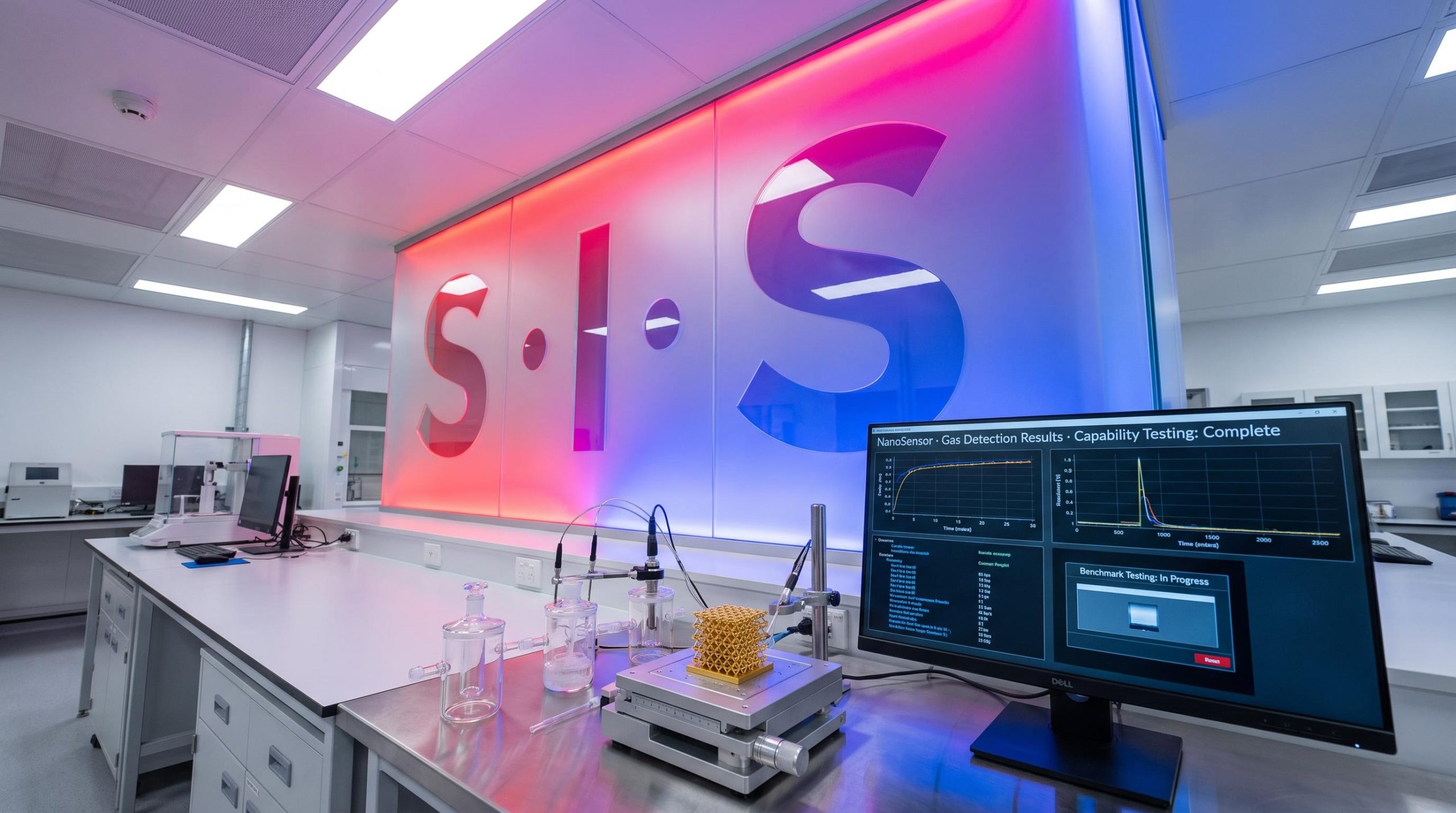
Simble validates NanoSensor gas detection at molecular level in first laboratory results
Simble Solutions (ASX:SIS) has achieved initial gas detection results using its proprietary NanoSensor platform, with the sensor responding to selected volatile organic compounds (VOCs) at low concentrations under laboratory conditions. The results demonstrate sensitivity at the molecular level and validate the design principles behind the technology.
These are the first detailed capability results reported from the NanoSensor development program announced on 10 June 2026. Sensor fabrication and initial capability testing are complete, and formal benchmark testing is now underway.
Simble holds the exclusive global commercialisation licence to the patented NanoSensor Technology through its wholly owned subsidiary Next Nano Pty Ltd, acquired in December 2025. The company frames the milestone as validation of the core design principles, establishing a baseline against which formal benchmarking can proceed.
When big ASX news breaks, our subscribers know first
What the results show and where the program sits
Laboratory testing indicates the NanoSensor can respond to selected VOCs at low concentrations, demonstrating gas detection capability at the molecular level. This performance supports its potential relevance across hazardous VOC detection, industrial safety, environmental monitoring, workplace exposure and air-quality applications.
The gas detection workstream is the most advanced of the NanoSensor application areas. It has entered the formal benchmark testing stage of the five-stage development pathway, with the first two stages now complete.
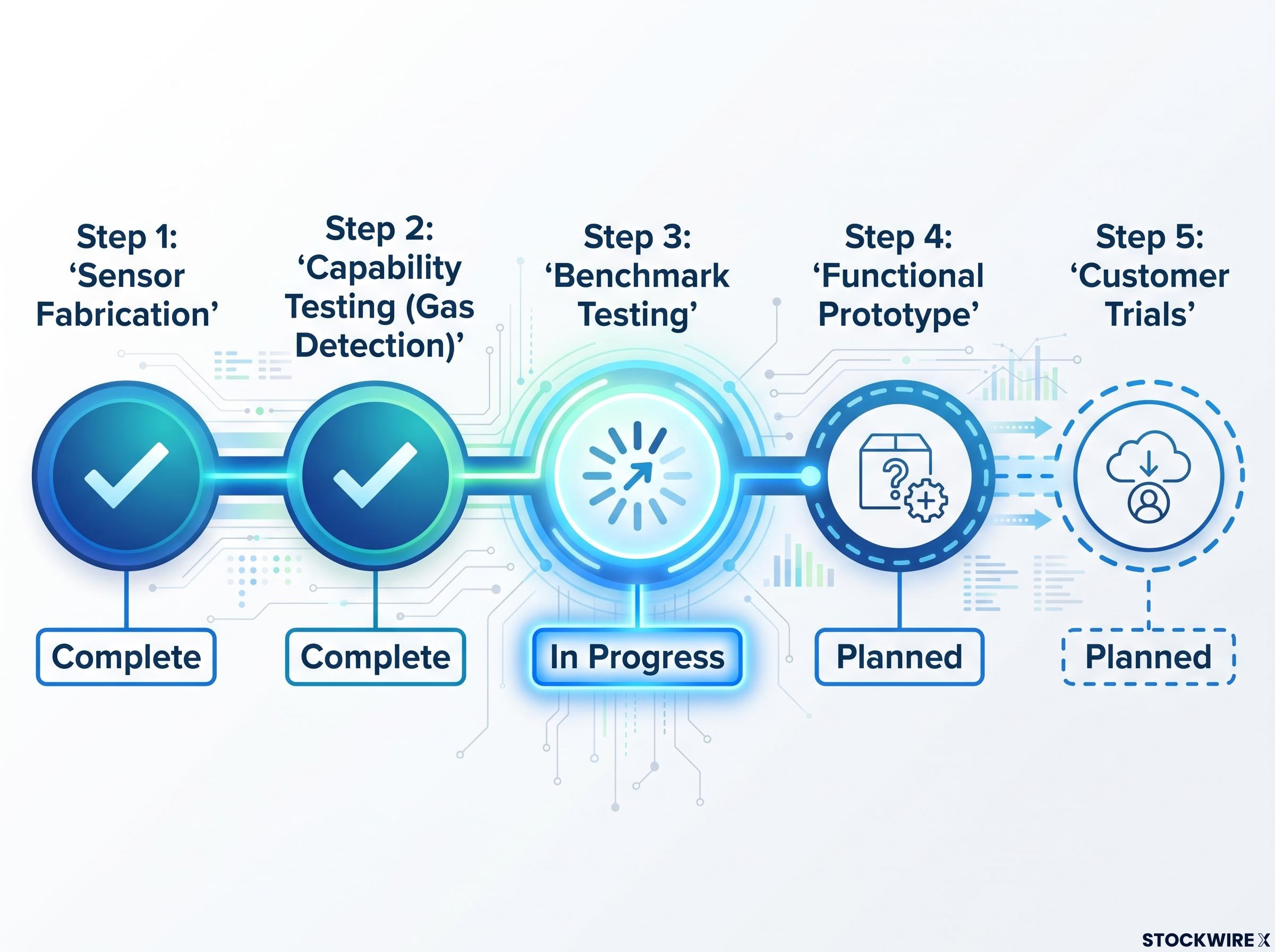
Gas detection is the most advanced of the six distinct application areas under evaluation in the NanoSensor development program, with UV sensing, e-skin, defence, multi-sensor integration, and platform readiness also being progressed through the same structured five-stage framework.
| Stage | Status |
|---|---|
| Sensor Fabrication | Complete |
| Capability Testing (Gas Detection) | Complete |
| Benchmark Testing | In Progress |
| Functional Prototype | Planned |
| Customer Trials | Planned |
Benchmark testing will systematically characterise the platform’s sensitivity, selectivity, response time and stability under conditions relevant to industrial safety, environmental monitoring, workplace exposure and air-quality sensing.
Why conventional gas sensors fall short and how the NanoSensor differs
Gas detection ranks among the most technically demanding requirements in industrial safety and environmental monitoring. Conventional sensors work by exposing a sensing material to the surrounding environment and measuring changes at the material’s surface.
This surface-interaction model creates a ceiling on performance, because the sensor can only detect what reaches its flat surface. Low-concentration gases may be missed, response can be slow, and a physically larger sensing area is often required to achieve adequate sensitivity. Scaling up sensitivity typically means scaling up size and power consumption, limiting the use of conventional sensors in wearable, portable and compact hardware.
Simble’s NanoSensor is built on a proprietary high-surface-area nanostructured material within a sub-millimetre-scale platform. The architecture is designed to increase the number of accessible interaction sites available to a target gas, detecting throughout a three-dimensional nanostructure rather than at a flat surface. The stated aim is to support low-concentration detection at low power without relying on a physically larger sensing area.
The table below contrasts conventional sensors with the NanoSensor’s target performance. Every NanoSensor claim below is a design goal that has not yet been confirmed and remains subject to formal benchmarking.
-
Sensitivity: Conventional sensors detect only at relatively high concentrations, where low-concentration hazards may be missed. The NanoSensor is designed to detect at far lower concentrations (design goal, not yet confirmed).
-
Response speed: Conventional designs create inherent lag as gases diffuse to the sensor surface. The NanoSensor architecture is designed for faster response kinetics (design goal, to be confirmed through testing).
-
Size and power: Conventional sensors require larger sensing surfaces and higher power draw. The NanoSensor targets a sub-millimetre form factor with ultra-low power draw (design goal, pending validation).
-
Deployment flexibility: Conventional units are hard to embed into wearables or drone payloads. The NanoSensor is designed to embed into wristbands, drone payloads and portable field devices (design goal, to be validated in prototype development).
-
Manufacturing: Conventional production is complex and multi-step. The NanoSensor is designed around a single-step, room-temperature process (design goal, pending full-scale validation).
This architecture is what could make the technology potentially suitable for compact, portable, wearable and field-deployable applications that conventional sensors cannot serve.
The market opportunity and application breadth
Safety, environmental, industrial and health-monitoring applications face a growing need for compact sensing platforms capable of detecting low-concentration gases in real-world environments. Early detection of hazardous VOCs, emissions and workplace exposure markers can support faster alerts, improved compliance and more informed operational decisions.
Third-party forecasts point to substantial addressable markets across the segments the NanoSensor is designed to serve:
-
CBRNe defence sensing market: approximately US$31 billion by 2035 (Market Research Future)
-
Global Industrial IoT market: approximately US$516 billion by 2030 (industry report)
-
Wearable medical devices market: approximately US$167 billion by 2035 (Market Research Future)
According to Simble, the VOC detection profile being characterised in the current development program maps directly to the threat classes that drive defence and security procurement priorities. The company identifies four application areas: portable and field-deployable sensing; hazardous gas and VOC monitoring; industrial safety and incident response; and air quality, ventilation and exposure monitoring.
Connecting sensing to Simble’s digital platforms
The potential commercial opportunity extends beyond sensor hardware. Subject to successful benchmarking and device development, data generated by NanoSensor gas sensing could be integrated with SimbleSense and CarbonView to support connected monitoring, alerts, visualisation and emissions reporting through Simble’s existing digital infrastructure.
Each gas in the initial detection profile carries relevance to both application-level monitoring and commercial deployment through those platforms.
| Gas | Commercial and Platform Relevance |
|---|---|
| Methane | Greenhouse gas monitoring, Net Zero reporting, industrial safety and agricultural sensing |
| Hydrogen | Hydrogen economy safety, energy systems monitoring and compact hazard-detection platforms |
| Carbon monoxide | Workplace safety, environmental monitoring, smart buildings and portable safety devices |
Rather than operating as an isolated sensing component, the NanoSensor could form part of a broader ecosystem for collecting, interpreting and reporting application-relevant information. Simble’s engineering teams are continuing platform-readiness activities in parallel, with a focus on positioning SimbleSense and CarbonView to ingest and visualise NanoSensor data ahead of the functional prototype stage.
For investors, the approach combines proprietary sensing with Simble’s existing data infrastructure and its established Commercial and Industrial customer base.
CEO commentary
Fadi Geha, Chief Executive Officer
“Achieving initial gas detection results is an important step for the NanoSensor development program. Laboratory testing indicates the sensor can respond to selected volatile organic compounds at low concentrations, which supports the design principles behind the platform and gives us a baseline to benchmark against.”
Geha noted that formal benchmark testing is now underway to characterise sensitivity, selectivity, response time and stability under application-relevant conditions, adding that the company “will report those results to the market as the program advances.”
What comes next
Formal benchmarking is now underway, to be followed by the functional prototype and customer trial stages of the five-stage pathway. Simble has committed to reporting benchmarking results as the program progresses.
The Macquarie University collaboration supporting this work is structured as a formal two-year research agreement, with Simble contributing $288,000 toward project costs and retaining exclusive commercialisation rights to any technology improvements developed through the partnership.
The milestone marks an early-stage but structured pathway toward commercialising a proprietary sensing technology intended to extend Simble’s existing platforms. Whether the design goals characterised in early testing can be confirmed under application-relevant conditions remains subject to the formal benchmarking now in progress.
Don’t Miss the Next ASX Tech Breakthrough
Big News Blast delivers FREE breaking ASX tech news and in-depth analysis directly to your inbox within minutes of release. Join 20,000+ investors already staying ahead of the market on announcements just like this one. Click the “Free Alerts” button at StockWire X to start receiving real-time alerts the moment market-moving news breaks.