JPMorgan’s base case for today’s FOMC decision is not a pivot, not a hike, and not a neutral outcome. It is a hawkish hold: the Federal Reserve keeps rates unchanged but leaves every door open for more tightening. For equity investors watching the S&P 500, that framing matters more than the headline number.
The July 29 decision arrives against a backdrop of elevated but non-accelerating inflation and GDP growth running near trend. The Fed has limited reason to move aggressively in either direction. JPMorgan economist Michael Feroli forecasts that rates will be left on hold, with at least two hawkish dissents anticipated, from Hammack and Logan among others. The bank’s Market Intelligence desk considers a surprise hike less likely than current market pricing suggests, placing the odds at around 30%.
Here is the full scenario framework JPMorgan has mapped onto today’s likely S&P 500 reaction, the specific language signals that will matter more than the rate decision itself, and a clear read on the risk/reward profile for equity positioning heading into the announcement.
Why JPMorgan sees a hawkish hold, not a hike, as today’s most likely outcome
A hawkish hold is a meeting where the Fed keeps the policy rate unchanged but signals a meaningful willingness to tighten further, through both the official statement and the chair’s press conference. Rates do not move. The message does.
JPMorgan builds its hold call on three pillars:
FOMC internal divisions have been building for months; the April meeting produced four dissenting votes, the most at any single Fed meeting since 1992, establishing the committee fracture that today’s anticipated two hawkish dissents from Hammack and Logan now extends rather than initiates.
- Inflation is elevated but not accelerating. The current readings do not suggest a new wave of price pressure that would force the Fed’s hand today.
- GDP growth is tracking close to trend with risks skewed to the upside. Growth is neither weak enough to warrant caution nor hot enough to demand an immediate response.
- June would have been the cleaner window for a hike. JPMorgan noted that the June 2026 meeting, when CPI readings exceeded the fed funds rate, represented a more suitable juncture for tightening. That window passed without action.
JPMorgan indicated that the Fed would have found firmer ground for a hike back in June 2026, at a time when CPI was running above the fed funds rate. Raising in July, after passing on June, would require a stronger justification the data does not currently provide.
The bank’s Market Intelligence desk assigned a 30% probability to a surprise hike at today’s meeting. That figure sits below what market pricing appeared to reflect this morning, which tells you JPMorgan thinks the market may be slightly too nervous about a surprise. Should the Fed opt to hold, dissenting votes on the hawkish side are anticipated from Hammack and Logan, both of whom have publicly favoured additional tightening.
When big ASX news breaks, our subscribers know first
What a hawkish pause actually does to equities on the day
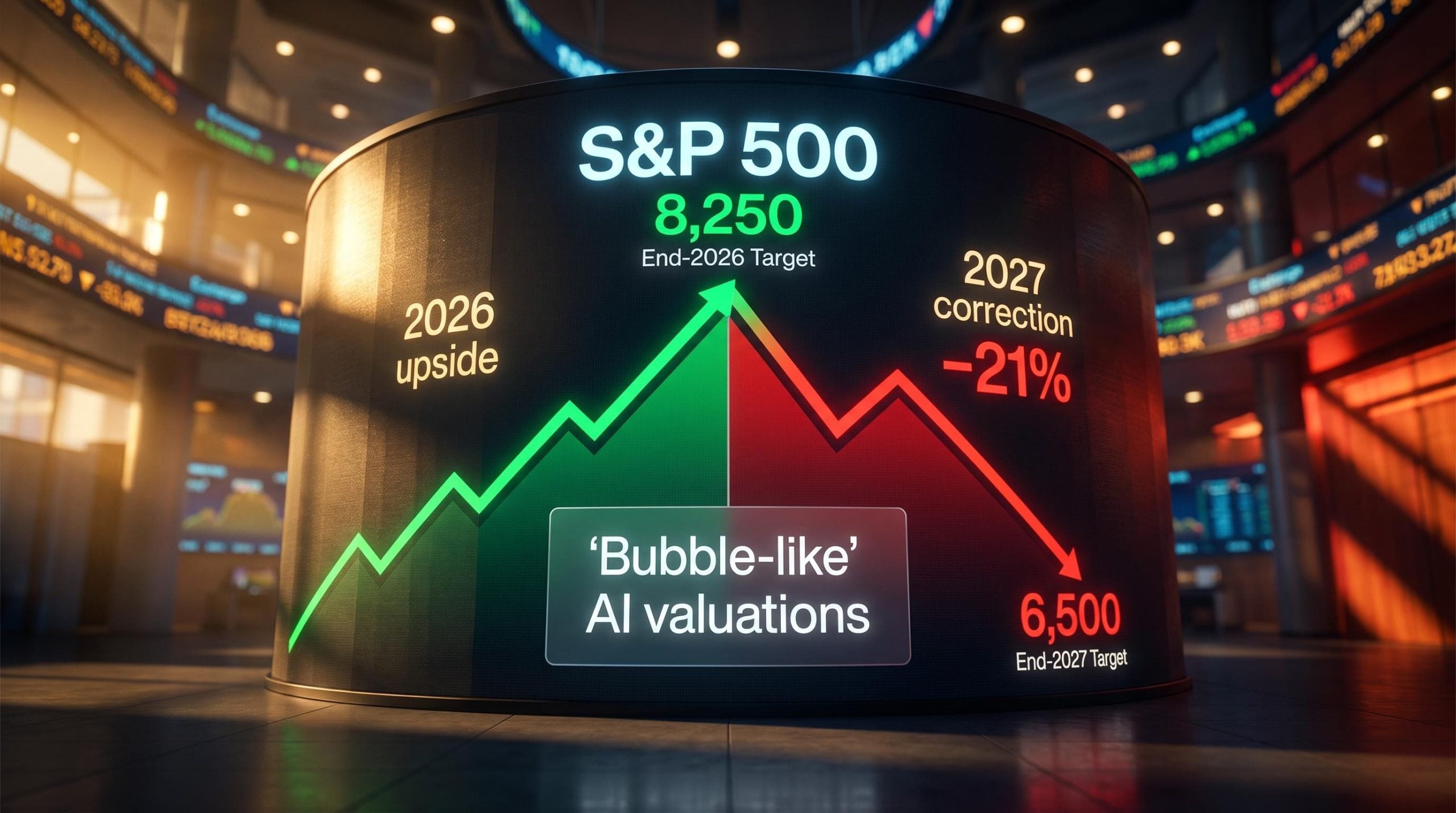
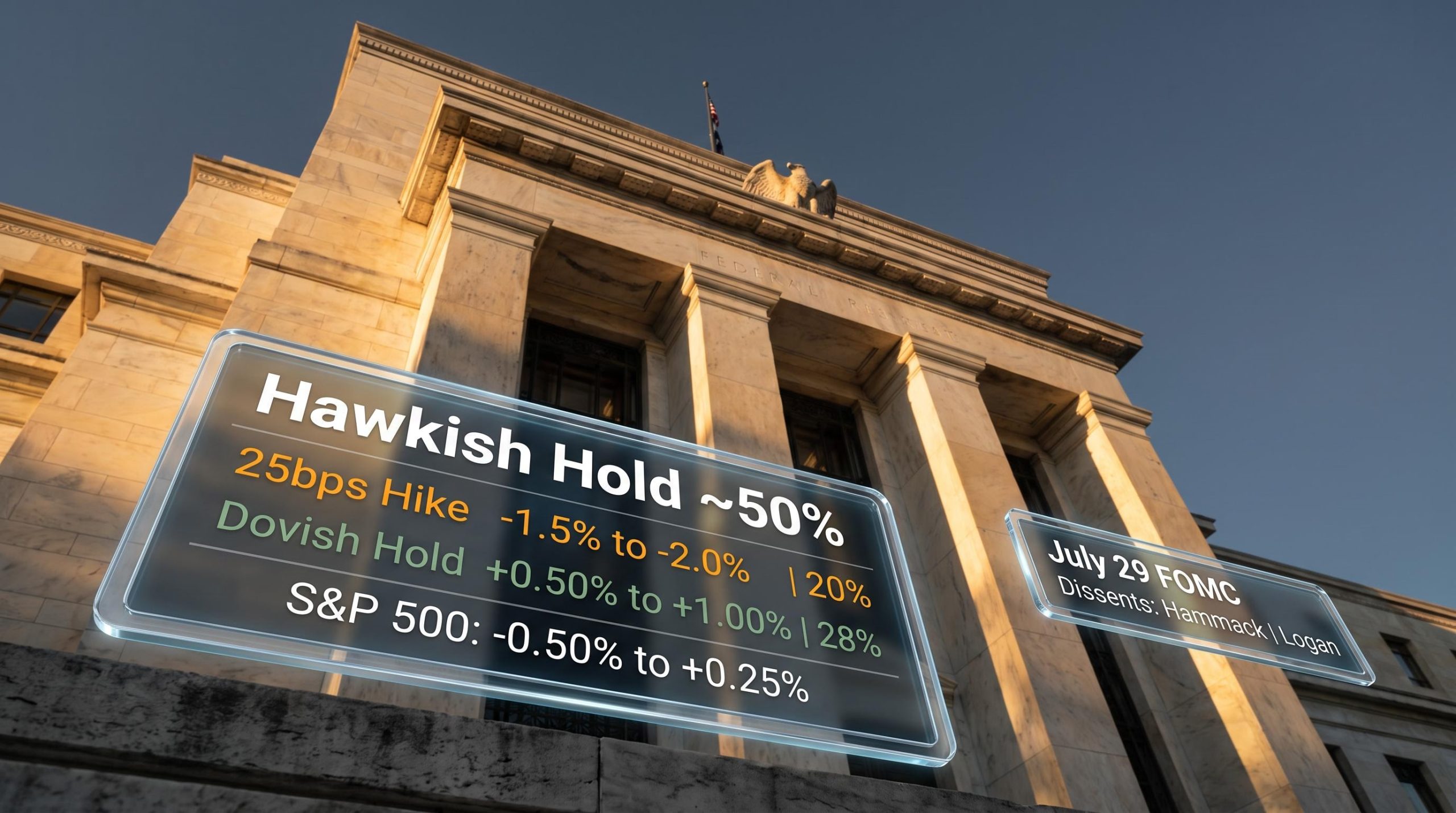
The projected S&P 500 move under a hawkish hold is narrow: negative 0.50% to positive 0.25%. The bank places the probability of this outcome at around 50%. A range that small on a day with this much anticipation may look underwhelming, but it carries real information.
The logic is two-sided. No actual rate hike means no immediate tightening shock, so systematic de-risking stays limited. But hawkish language in the statement and press conference prevents the market from pricing in a clean “end of hikes” narrative, capping any relief rally before it starts. The result is a ceiling and a floor, both close to flat.
What is happening underneath the headline number
The muted index move masks more interesting activity beneath the surface. JPMorgan’s prior analogous meeting frameworks, where a hawkish pause baseline was similarly constructed with comparable move ranges, showed the real action in rotation and dispersion rather than direction.
Sector-level moves diverge. Growth names face a different pressure profile than defensives. Style factors shift. The index stays flat while the composition of the index quietly reprices. If you are looking for a directional index bet on today’s decision, the base case says the edge is thin. If you are looking for opportunity, it sits in the rotation underneath.
JPMorgan’s full scenario map: probabilities, S&P 500 moves, and the key asymmetry
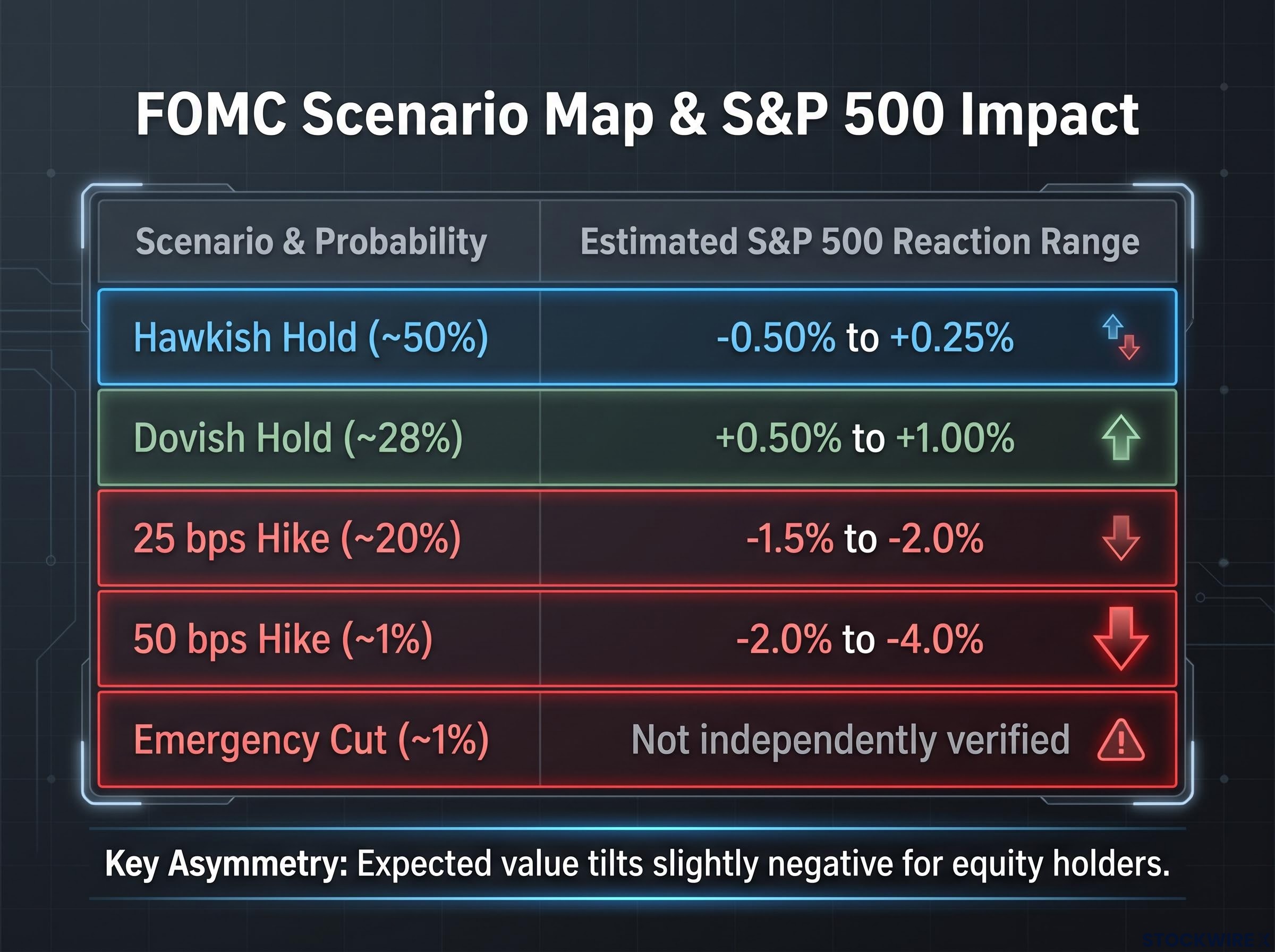
JPMorgan built a probability-weighted framework covering five distinct outcomes for today’s decision. The full matrix:
| Scenario | Probability | Expected S&P 500 Move | Nasdaq 100 Note |
|---|---|---|---|
| Hawkish Hold (Base Case) | ~50% | -0.50% to +0.25% | In line with S&P 500 |
| Dovish Hold (Bull Case) | ~28% | +0.50% to +1.00% | Outperforms |
| 25 bps Hike (Risk Scenario) | ~20% | -1.5% to -2.0% | Larger decline expected |
| 50 bps Hike (Extreme) | ~1% | -2.0% to -4.0% | Severe underperformance |
| Emergency Cut (Extreme) | ~1% | Not independently verified | Not independently verified |
The extreme scenarios at roughly 1% each are tail risks, not live possibilities in JPMorgan’s view. They exist in the framework for completeness. The three scenarios that matter sit above them.
The asymmetry that sharpens your read: A 25 bps hike carries -1.5% to -2.0% downside at 20% probability. A dovish hold carries +0.50% to +1.00% upside at 28% probability. The hike’s magnitude of impact is roughly double the dovish hold’s, even though its probability is lower. When you probability-weight the full matrix, the expected value of today’s announcement tilts slightly negative for equity holders. That is worth knowing before deciding whether to trim risk ahead of the decision.
What to actually watch during the announcement: the language signals that move markets
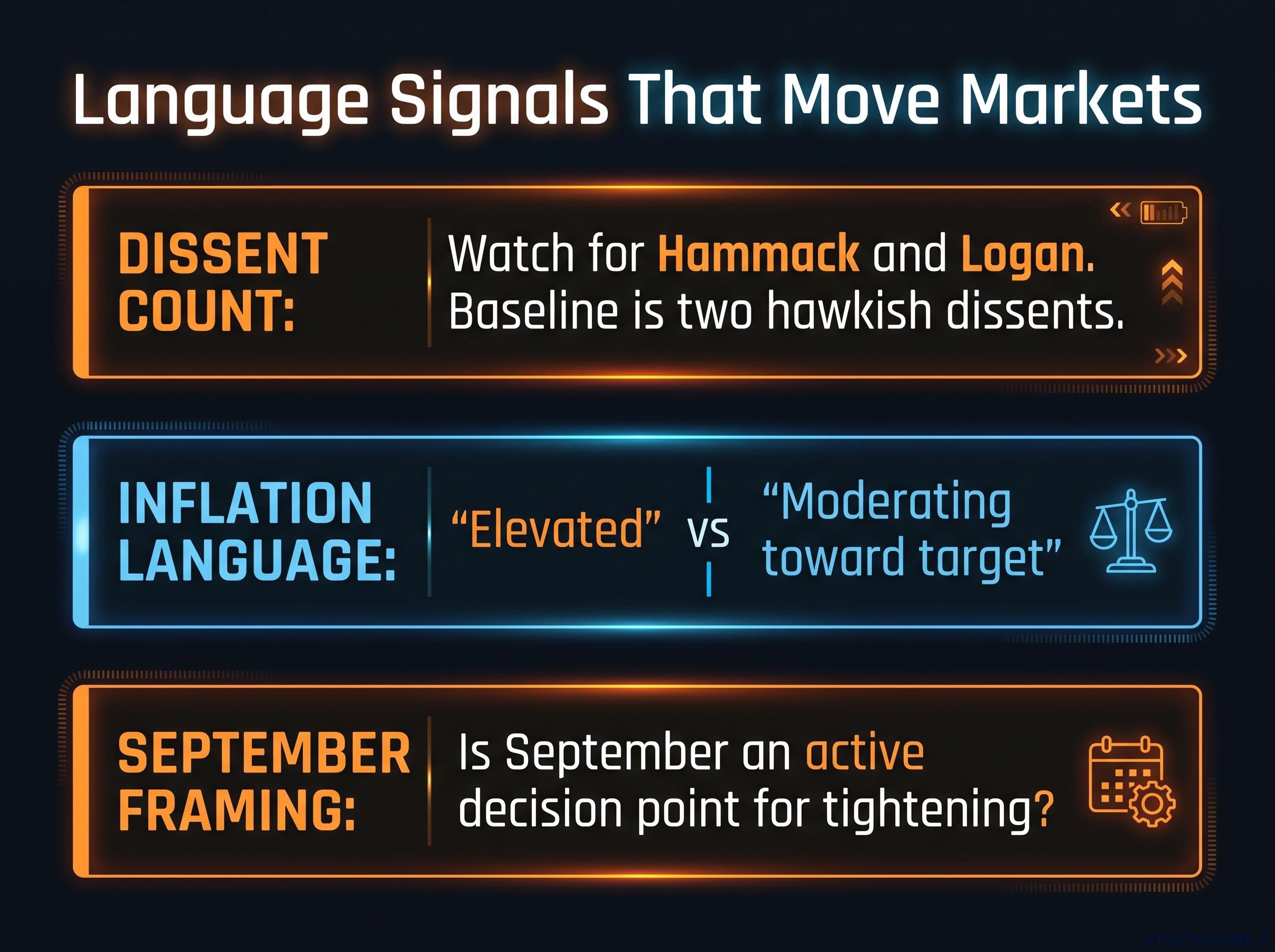
The rate decision itself is binary and knowable within seconds. The language takes longer to parse, and that is where the market actually moves. JPMorgan flags three specific watchpoints, ranked by signal value:
The dissent count
- Number and direction of dissenting votes. Hammack and Logan are already expected to dissent on the hawkish side. The baseline is two hawkish dissents. If the number is larger, it tells you internal FOMC pressure for further tightening is building. If only one dissents, or neither does, the read shifts meaningfully toward the dovish hold scenario.
The dot plot division at the June meeting, where nine officials favoured further hikes and nine favoured no change or a cut, is the quantitative backdrop against which today’s dissent count should be read; two hawkish dissents from Hammack and Logan represents the visible tip of a committee that was already near-evenly split six weeks ago.
Inflation language and September framing
- How inflation is characterised in the statement. The specific word choice matters. “Elevated” inflation language keeps the tightening door wide open. “Moderating toward target” language signals the committee sees progress and reduces the urgency for further hikes. If the statement uses “moderating” rather than “elevated,” you should read that as a shift toward the dovish hold scenario and expect equity reaction to move toward the positive end of the base case range.
- Whether September is framed as a live meeting for further hikes. If Powell or the statement explicitly characterise the September meeting as an active decision point for potential tightening, the market will treat today’s hold as a delay rather than a conclusion. That reopens the tightening cycle narrative and keeps rate-sensitive assets under pressure beyond today’s session.
Sector rotation and style implications under each scenario
The probability matrix translates directly into portfolio-level exposure. Here is what each scenario means for the positioning you hold right now.
Hawkish hold (base case, ~50%)
- Continued pressure on high-duration growth stocks as the forward rate path remains uncertain.
- Some support for value and defensive segments that benefit from a “higher for longer” rate environment.
- No wholesale regime change without an actual hike; the shift is incremental, not structural.
Dovish hold (bull case, ~28%)
- Growth and tech exposures tend to outperform as the forward rate path looks more favourable, according to JPMorgan’s framework.
- Long-duration assets broadly benefit from the implication that the tightening cycle is nearing its end.
- Cyclical risk appetite improves as rate-cut expectations move closer on the timeline.
25 bps hike (risk scenario, ~20%)
- The Nasdaq 100 is expected to decline more sharply than the broader S&P 500 given its concentration in rate-sensitive growth names.
- Growth and long-duration assets are the most exposed, facing both a repricing of the forward rate path and a risk premium adjustment.
- Defensive positioning and short-duration value names provide relative shelter.
Crowded equity positioning across major indices entering the July meeting amplifies the scenario asymmetry JPMorgan identifies; when consensus trades are extended, a surprise hike does not just reprice the rate path but also triggers forced unwinds in over-owned positions, compounding the directional index move.
If you hold significant tech or long-duration growth exposure, the probability-weighted scenario map from the previous section now has a direct translation: the expected value of today’s outcome tilts slightly against that exposure, even under the base case. That does not necessarily mean you sell; it means you should understand exactly what you are holding into.
What changes after today, and what does not
A single FOMC meeting rarely rewrites a medium-term equity thesis. Today is no exception.
JPMorgan has consistently argued that equity reactions depend more on the path of policy than on any single meeting. A hawkish hold delays but does not preclude a later pivot.
What a hawkish hold changes today is the timetable. It keeps the tightening option open and may push back the start of the “Fed is done” narrative that tends to underpin equity rallies. It does not close the door on an eventual easing cycle. The September meeting becomes the next live decision point, and the language signals from today’s statement will shape how markets approach that date.
What it does not change is JPMorgan’s broader view: once the Fed is genuinely done hiking, the backdrop turns structurally supportive for equities, with the S&P 500 capable of reaching new highs as rate cuts eventually come into view. For a long-horizon equity investor, today’s hawkish hold changes the timetable, not the destination. Understanding that distinction is the difference between making a reactive trade and holding a considered position.
The Fed put repricing under Warsh shifts a key assumption that has underpinned equity positioning for years; investors who previously expected Fed intervention during meaningful market corrections now need to stress-test portfolios against a scenario where that backstop sits at a materially more distant strike.
This article is for informational purposes only and should not be considered financial advice. Investors should conduct their own research and consult with financial professionals before making investment decisions. These statements regarding future market and policy outcomes are speculative and subject to change based on market developments and Federal Reserve actions.
—