Alphabet and Tesla both reported Q2 2026 earnings after market close on 22 July 2026, and both are trading lower in after-hours sessions despite beating revenue expectations. Two of the most closely watched names in American equity markets delivered on the top line and got punished anyway.
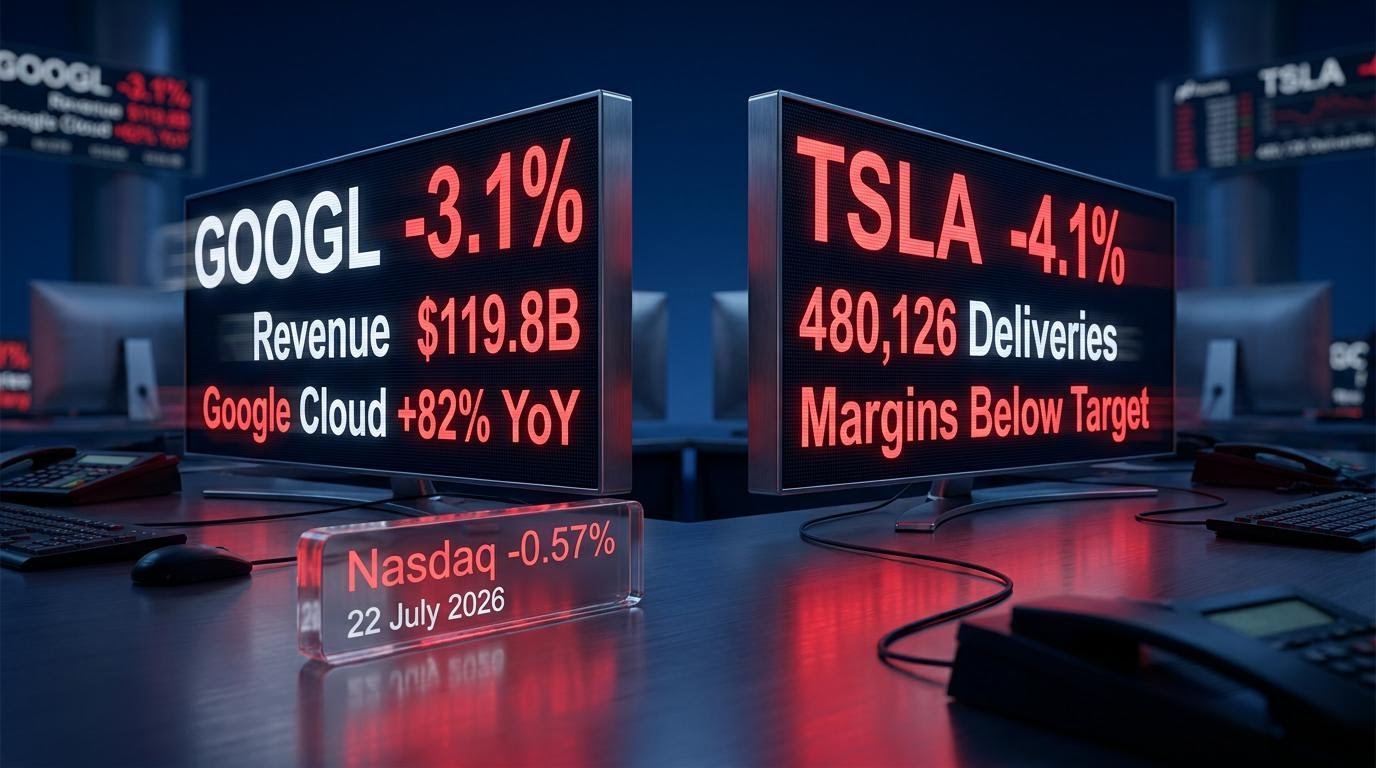
Alphabet recorded $119.8 billion in quarterly revenue, with Google Cloud expanding by 82%, yet its shares fell around 3.1% in after-hours trading. Tesla posted a record 480,126 vehicle deliveries and surpassed its own revenue target, yet saw a steeper decline of approximately 4.1% as automotive margin figures came in short of expectations. Heading into both prints, the Nasdaq had already closed the prior session down 0.57%, reflecting a cautious broader market.
Here is what each company actually reported, why the market punished both stocks despite the revenue beats, and what these reactions tell you about how the rest of the Magnificent Seven season is likely to trade.
Alphabet beat the revenue number, then the stock sold off anyway
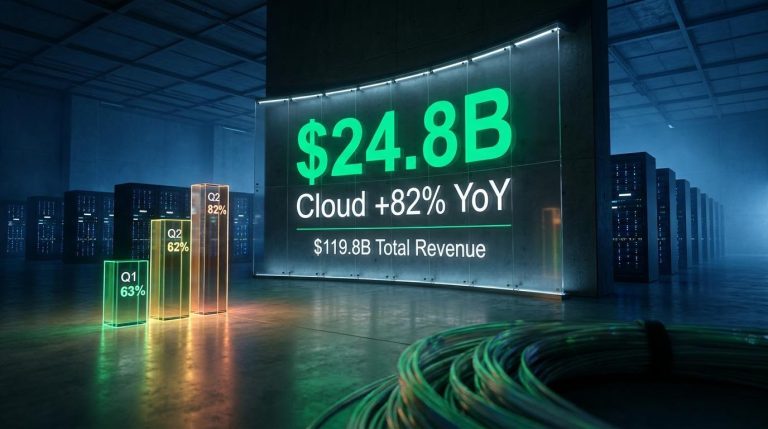
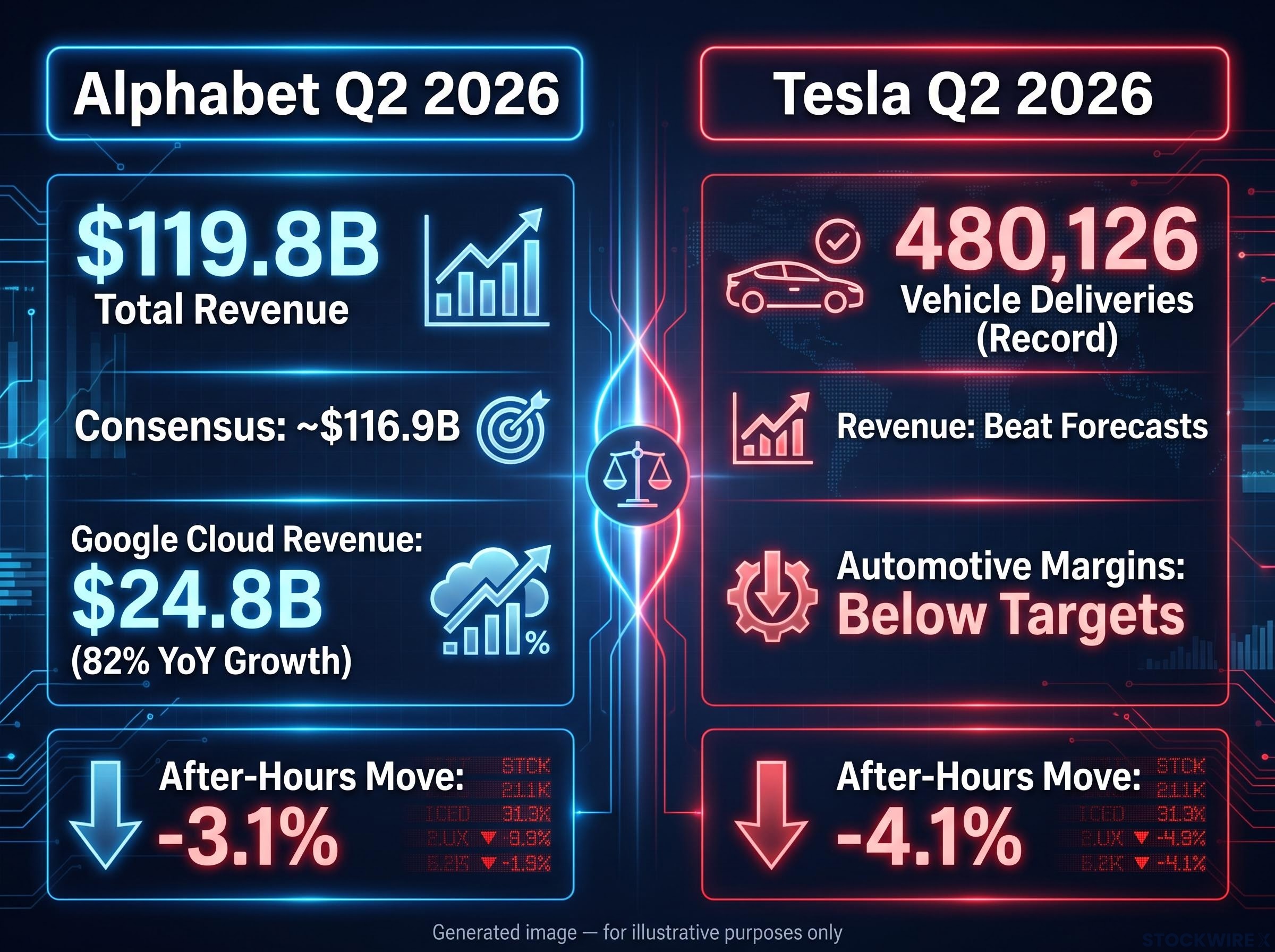
Alphabet cleared the Q2 2026 revenue bar by a wide margin. Total revenue came in at $119.8 billion, comfortably ahead of consensus estimates around $116.9 billion. Overall company revenue grew 24% year-over-year. On paper, that is a clean beat from one of the largest companies on the planet.
The standout was Google Cloud.
Google Cloud posted $24.8 billion in revenue for the quarter, delivering year-over-year growth of 82%, the clearest signal yet that enterprise demand for AI-enabled cloud infrastructure is scaling rapidly.
Here are the numbers that matter:
- Total revenue: $119.8 billion (vs. consensus ~$116.9 billion)
- Revenue growth: 24% year-over-year
- Google Cloud revenue: $24.8 billion, a year-over-year increase of 82%
- After-hours move: after-hours stock performance roughly -3.1%
That 82% Cloud growth figure is genuinely exceptional. But the after-hours decline tells you something important: investors came into this print expecting Alphabet to deliver a fully upgraded narrative on AI monetisation, not just another strong cloud quarter. Cloud strength is now the baseline assumption, not the upside surprise. At Alphabet’s valuation, a near-$120 billion quarter that confirms what the market already expects gets met with profit-taking, not applause. The gap between what was delivered and what was priced in is what moved the stock.
Alphabet’s operating margin expanded to 34% in the same quarter that revenue accelerated to $119.8 billion, a combination that typically signals genuine business momentum, yet the market’s after-hours response treated the result as confirmation rather than a positive revision to the growth outlook.
When big ASX news breaks, our subscribers know first
Tesla’s record deliveries could not cover for the margin miss
Tesla played its strongest card first: a record 480,126 vehicles delivered in Q2 2026, surpassing prior expectations and demonstrating that the company can still move volume in an increasingly competitive electric vehicle market. Revenue also came in ahead of analyst forecasts.
The problem was everything underneath the top line.
Automotive gross margins and profitability metrics missed their targets, confirming that ongoing price cuts, intensifying competition, and heavy capital investment continue to weigh on the bottom line. The market’s response was swift, and steeper than Alphabet’s.
- Vehicle deliveries: 480,126 units (record quarter)
- Revenue: beat analyst forecasts
- Automotive profitability and margins: below targets
- After-hours move: after-hours stock performance roughly -4.1%
Tesla’s situation is structurally different from Alphabet’s. The company’s valuation still prices in a future where autonomy, robotics, and energy scale into a high-margin business. Every quarter that delays margin normalisation in the core automotive segment chips away at the credibility of that timeline, and the -4.1% after-hours move reflects exactly that logic. This is not about a bar that was too high for a good result. It is about whether the profitability story is on track.
Tesla’s autonomy valuation premium has been embedded in the share price well before Q2 results were reported: the stock carried a 188x forward P/E entering the quarter, a multiple that prices in successful execution on robotaxis, Optimus deployments, and autonomy software subscriptions on a timeline the core automotive business cannot independently justify.
What the bar actually looks like for Magnificent Seven names right now
Both of these results beat revenue expectations. Both stocks sold off. That is not a coincidence; it is the market telling you that the evaluation criteria for premium-valued mega-cap technology stocks have shifted.
Magnificent Seven positioning had already undergone a structural shift heading into Q2 reporting season: Deutsche Bank identified four simultaneous headwinds converging on the cohort, including a move from AI capex enthusiasm to a credibility test, a more hawkish Federal Reserve compressing growth multiples, and rising chip costs squeezing platform margins.
A revenue beat, for names trading at these multiples, is now what the market considers “table stakes,” the minimum acceptable outcome rather than a positive surprise. That term means the cost of entry: the result you need just to stay in the game, before anyone starts rewarding you. Consensus estimates for these companies already reflect strong growth assumptions. Clearing the bar confirms those assumptions; it does not upgrade them.
In 2026, the floor for a positive post-earnings reaction in a Magnificent Seven name is no longer a revenue beat. It is a revenue beat accompanied by scaled AI monetisation and a credible margin recovery timeline.
Two specific tests are now being applied to every report from this cohort. The first is whether AI investment is translating into monetisation at scale, not just demand growth but durable, margin-accretive revenue. Alphabet’s 82% Cloud growth showed the demand side; the stock’s decline suggests investors wanted more evidence on the monetisation side. The second test is margin recovery credibility. Tesla’s record deliveries showed operational execution; the margin miss showed the profitability trajectory has not yet turned.
| Company | Revenue result | Key growth metric | Profitability result | After-hours move |
|---|---|---|---|---|
| Alphabet | Beat (~$119.8B vs. ~$116.9B consensus) | Google Cloud grew 82% year-over-year | Met expectations; no upgraded narrative | Moved -3.1% |
| Tesla | Beat (record 480,126 deliveries) | Record vehicle deliveries | Margins/profitability below target | Moved -4.1% |
If you hold any of the remaining Magnificent Seven names heading into their own reports, these two results have just told you the review criteria. Revenue beats will not move your stock unless they are accompanied by margin progress and a credible AI monetisation story.
How a risk-off session set the stage for sharper post-earnings drops
These post-earnings reactions did not land in a vacuum. The session immediately ahead of the releases had already pulled risk appetite lower across US equities, removing the cushion of bullish momentum that might otherwise have softened a lukewarm result.
Here is how the major indices closed on the session prior:
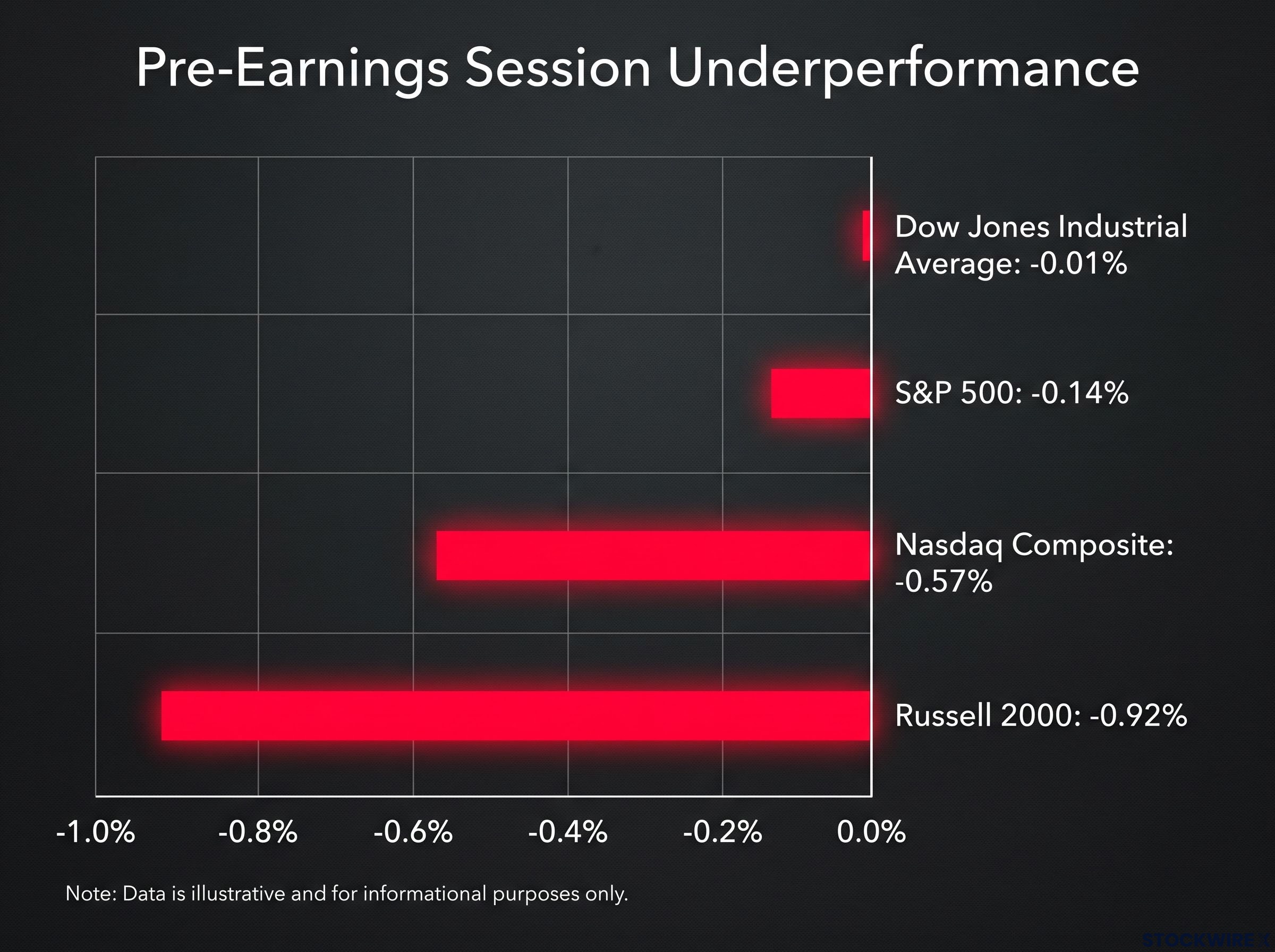
- S&P 500: closed down 0.14%
- Nasdaq Composite: declined 0.57%
- Dow Jones Industrial Average: fell 0.01%
- Russell 2000: dropped 0.92%
The Nasdaq’s underperformance is the number that matters most here. Prior to Alphabet and Tesla reporting, selling pressure had already concentrated in large-cap technology names, meaning both results arrived into a market carrying reduced tolerance for anything short of an upgraded outlook. Elevated oil prices compounded that backdrop, introducing an additional source of macro concern, even as strength in energy stocks cushioned some of the session’s overall losses.
The Russell 2000’s -0.92% decline points to risk appetite contracting beyond just the mega-cap cohort. When small caps sell off ahead of a Magnificent Seven earnings night, it signals that positioning across the market is defensive. Stocks entering results without momentum have less buffer when the numbers fail to deliver a meaningfully upgraded narrative, and both Alphabet and Tesla felt that dynamic in their after-hours moves.
What the remaining Magnificent Seven reporters now face
The Q2 2026 reporting cycle opened on 22 July 2026, and the first two results have calibrated the market’s expectations for every report that follows. The remaining Magnificent Seven companies, reporting later in July and into August 2026, now face an audience that has been reminded what happens when a revenue beat arrives without the supporting cast.
Three specific factors will now be applied as evaluation criteria:
- AI monetisation at scale: Strong demand for AI infrastructure is already priced in. Investors want evidence that demand is converting into durable, margin-accretive revenue, not just top-line growth.
- Margin recovery credibility: Any company whose valuation embeds a future margin expansion story will be measured on whether quarterly results show progress toward that trajectory or further delay.
- Guidance quality: Forward guidance that confirms or upgrades the current consensus will matter as much as the backward-looking numbers. Reaffirming existing targets without upgrading them may be treated the same way Alphabet’s strong-but-expected Cloud result was treated: as confirmation rather than catalyst.
Alphabet’s -3.1% and Tesla’s -4.1% are now the reference points. If you are tracking the broader cohort, these results have raised the implicit threshold: the next reporters that clear margin expectations alongside revenue will be rewarded proportionally more than a clean beat alone would have produced six months ago.
A season defined by what revenue beats can no longer do on their own
The Q2 2026 season opener delivered two genuine revenue beats and two negative after-hours reactions. That is not an overreaction or an anomaly. It is the market telling you that the evaluation framework for premium-valued technology names has structurally shifted.
Revenue growth is the floor. The ceiling, the thing that actually moves stocks higher, now requires scaled AI monetisation, credible margin recovery, and guidance that upgrades rather than confirms. Alphabet and Tesla each fell short on different dimensions of that test, and the market responded accordingly.
The remaining Magnificent Seven reporters arrive with this recalibrated standard already in place. Every result between now and the end of August will be measured against it.
For investors wanting to model what Alphabet’s Q2 result means for the longer-term valuation, our full explainer on Alphabet’s cloud investment case examines the $460 billion revenue backlog, the free cash flow tension created by $175-190 billion in full-year capex, and the antitrust proceedings that make Cloud growth strategically critical.
This article is for informational purposes only and should not be considered financial advice. Investors should conduct their own research and consult with financial professionals before making investment decisions.