

From alpha to beta: Archer advances its Biosensor toward clinical-ready manufacturing
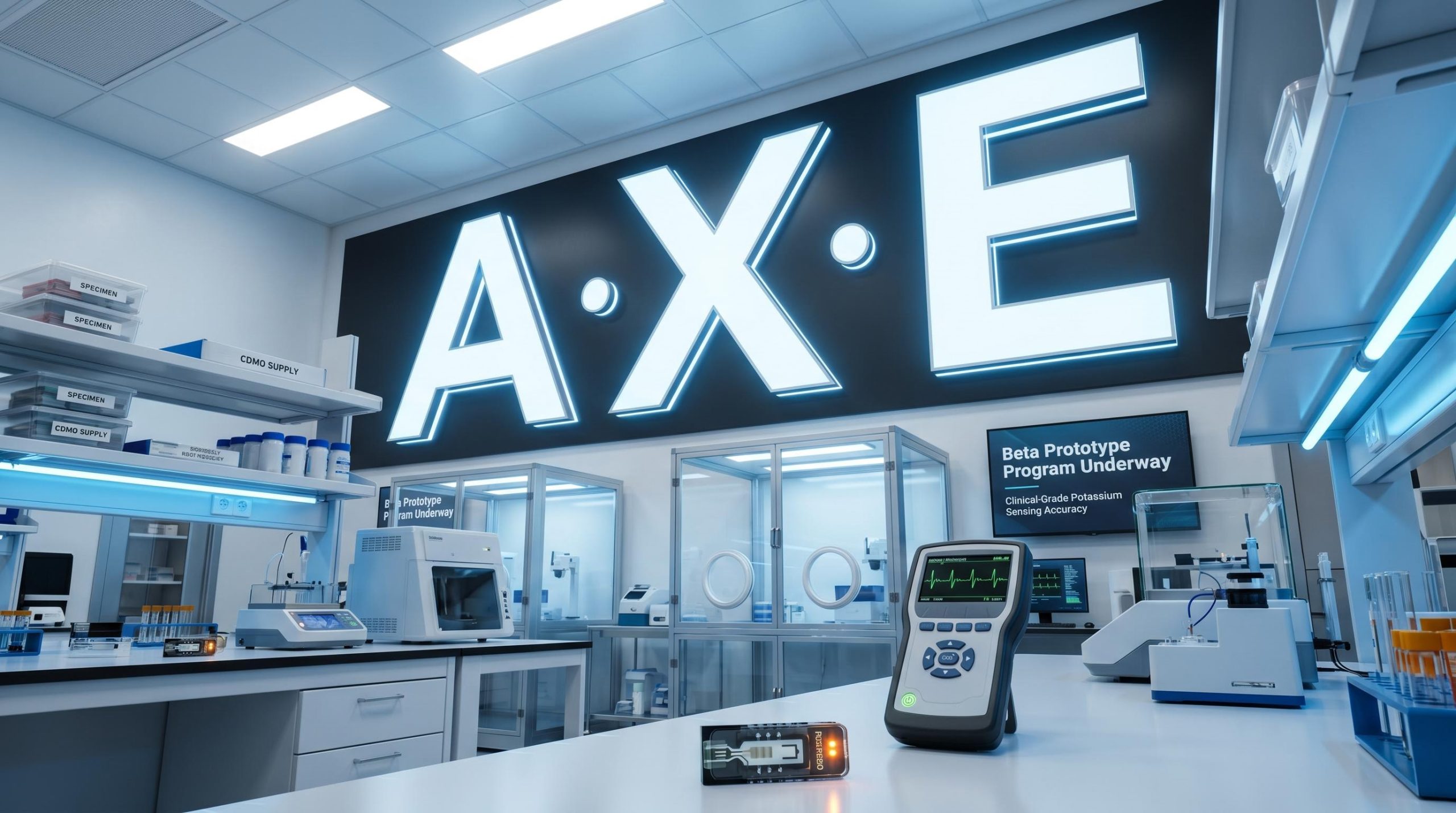
Archer Materials (ASX: AXE) has progressed its Biosensor development program to the beta prototype stage, following the alpha prototype’s demonstration of clinical-grade potassium sensing accuracy in January 2026. The beta prototype is being built as a user-ready, manufacturable system designed to support preclinical validation, future clinical trials, and commercial partnership development. The first beta prototype system is expected to be available for testing in the coming months.
When big ASX news breaks, our subscribers know first
What’s inside the beta prototype program
Five engineering streams driving progress
Development activities across the beta prototype program have been advancing since the start of 2026, spanning multiple engineering and productisation workstreams:
- First beta prototype cartridge design completed, with initial part revisions released for manufacturing
- Handheld readout electronics and control system advanced toward manufacturing release, beyond the alpha prototype version
- Productisation activities commenced with IMEC, including supply of advanced Biochips and Archer’s proprietary functionalisation processes for future beta prototype generations
- Engagement with contract development and manufacturing organisations (CDMOs) to support future scale-up, manufacturing pathways, and clinical deployment activities
- Intellectual property roadmap advancement, including preparation of provisional patent filings for the Biochip platform and system integration technologies
Beta vs. alpha — what’s improved
The beta prototype is designed to deliver measurable improvements across several dimensions compared to its predecessor.
| Attribute | Alpha Prototype | Beta Prototype | Significance |
|---|---|---|---|
| Usability | Integrated lab-level device | User-ready handheld system | Supports external testing and clinical workflows |
| Manufacturability | Prototype-stage construction | Designed for manufacturing release | Enables scale-up and CDMO engagement |
| Stability | Demonstrated sensing accuracy | Refined, robust platform | Reduces variability in real-world conditions |
| Integration | Biochip, microfluidics, readout electronics | Scalable diagnostic product platform | Positions system for commercial deployment |
| Validation readiness | Internal proof of concept | Designed for preclinical validation | Enables future clinical studies and partner engagement |
Understanding the Biochip platform — and why it matters beyond potassium
What the Biochip actually does
The Biochip is a semiconductor sensing device embedded within the Biosensor that detects specific biomarkers in blood. Its initial application is potassium sensing — a measurement that is clinically important across kidney disease management, cardiac monitoring, and critical care settings, where abnormal potassium levels can carry serious health consequences.
Point-of-care testing aims to bring this kind of monitoring closer to the patient, reducing reliance on centralised laboratory analysis. The Archer Biosensor, built around the Biochip, is being developed with this deployment context in mind, designed to integrate into clinical workflows rather than operate as a standalone research instrument.
Lithium monitoring: a new frontier for the platform
In parallel with potassium development, Archer is exploring an additional diagnostic application using the same Biochip platform. Early feasibility testing for monitoring lithium levels in blood is now underway, targeting potential use in the management of bipolar disorder and other mood disorders treated with lithium-based medication.
Patients on lithium therapy require regular blood monitoring, as the margin between a therapeutic dose and a toxic level is relatively narrow. A point-of-care solution in this area could address a meaningful clinical need. Archer has stated that these additional applications may broaden the long-term commercial potential of the Biochip platform, though the company has not provided specific timelines for this workstream.
The road ahead — timelines, partners, and commercial positioning
Archer has outlined a structured development timeline for the beta prototype program:
- Coming months: First beta prototype system available for testing
- Second half of 2026: Additional optimisation and validation activities
- 2027: Target of a fully optimised beta prototype for use in trials
The expanded engagement with IMEC and ongoing CDMO discussions are positioned as manufacturing and scale-up enablers, providing Archer with access to advanced Biochip supply and industrial-grade production pathways. External validation data generated through beta prototype testing is expected to support engagement with Medtech partners, clinical collaborators, and manufacturing groups as commercialisation discussions progress.
The development framework follows a deliberate de-risking logic. Each completed phase, from alpha to beta and on to external validation, is designed to reduce technical uncertainty and strengthen Archer’s position in future commercial conversations.
Dr Simon Ruffell, CEO, Archer Materials
“We believe the ongoing engineering and productisation progress continues to significantly de-risk the Biosensor and Biochip technology and positions Archer well for the next stage of external validation and commercial discussions.”
Archer describes itself as a quantum technology company operating within the semiconductor industry. Its Biosensor program represents one strand of a broader portfolio spanning quantum computing and sensing. As the beta prototype program advances toward external validation in 2027, commercialisation opportunities in semiconductor-based medical diagnostics may become more clearly defined, though near-term outcomes remain subject to the completion of ongoing technical development milestones.
Don’t Miss the Next Healthcare Tech Breakthrough on ASX
Big News Blast delivers FREE breaking ASX healthcare and tech news directly to your inbox within minutes of release, complete with in-depth analysis already done for you. Over 20,000 active subscribers rely on it to stay ahead of the market. Click the “Free Alerts” button to start receiving alerts the moment ASX announcements drop.