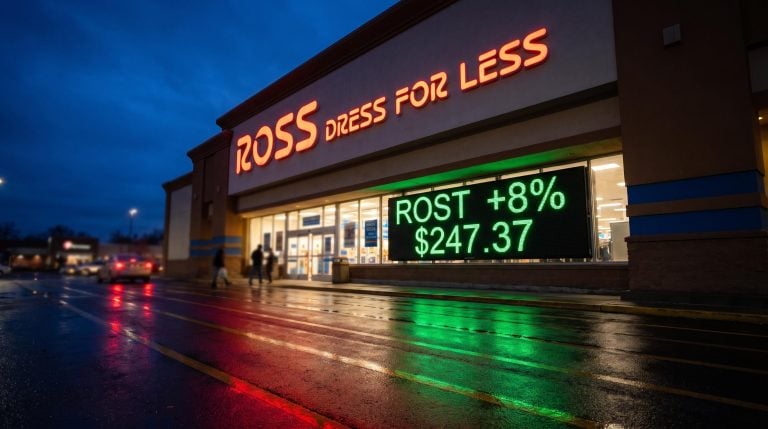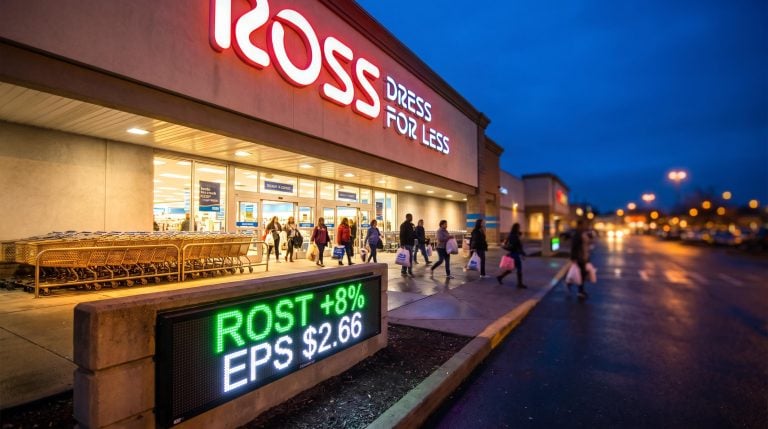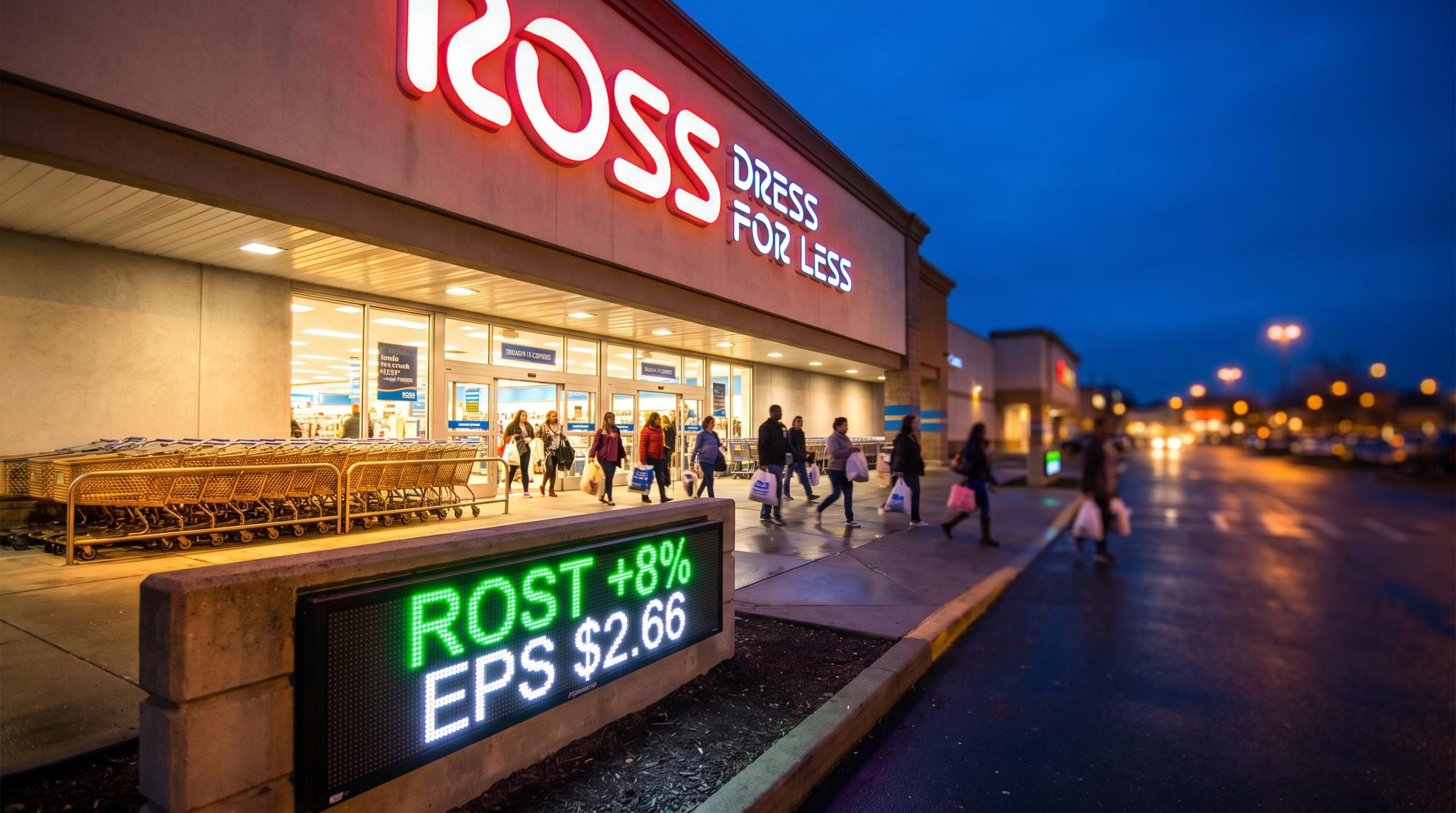
“Ross Stores just delivered one of the most emphatic earnings beats in U.S. retail this year. Diluted EPS came in at $2.66 against a Wall Street consensus of approximately $1.94, a 37% earnings surprise that sent shares surging more than 8% in after-hours trading on the evening of 20 August 2026.\n\nThe result lands against a backdrop of widening divergence in U.S. retail, where off-price chains are accelerating while traditional department stores and specialty apparel retailers lose ground to cost-conscious consumers trading down. Ross’s Q2 numbers are not just a company-specific win; they are a data point in a structural shift in where American households are choosing to spend.\n\nHere is the full breakdown of what drove the beat, what the guidance raise signals about management’s confidence, why the one-time tariff refund matters before drawing conclusions about underlying earnings power, and what investors weighing Ross Stores stock at approximately $247 need to think through next.\n\n## Ross beats by $0.72 a share as comparable-store sales surge 10%\n\nThe scale of the beat is hard to overstate. Ross Stores reported diluted EPS of $2.66 for fiscal Q2 2026, roughly $0.72 above a consensus estimate of approximately $1.94 based on LSEG data. That is not a rounding-error beat. It is a result that forced a same-day repricing of the stock.\n\n> Ross Stores delivered an earnings surprise of approximately 37% above Wall Street consensus, one of the largest beats in the U.S. retail sector this earnings season.\n\nThe top line backed it up. Q2 revenue reached approximately $6.26-$6.3 billion, up roughly 13% year over year from approximately $5.5 billion. Comparable-store sales grew approximately 10%, a figure that signals customers are actively choosing Ross more often, and for investors, that kind of traffic-driven growth is a more durable signal than a margin surprise or a one-off cost reduction.\n\n
| Metric | Q2 FY2026 | Prior Year Q2 |
|---|---|---|
| Diluted EPS (reported) | $2.66 | $1.56 |
| Analyst consensus EPS | ~$1.94 | — |
| EPS beat | ~$0.72 (~37%) | — |
| Revenue | ~$6.26-$6.3B | ~$5.5B |
| Revenue growth (YoY) | ~13% | — |
| Comparable-store sales growth | ~10% | — |
\n
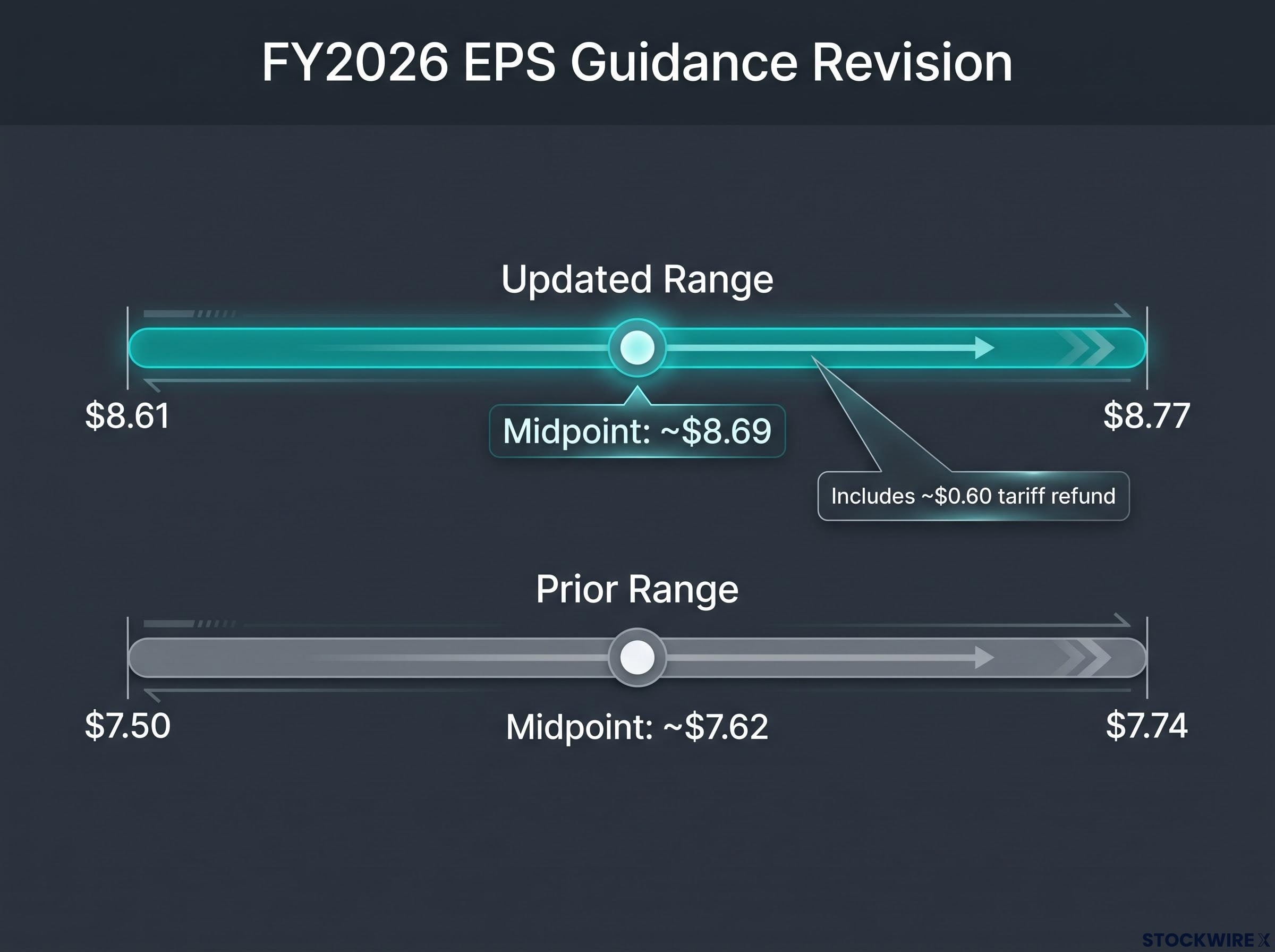
\n\nThis was not a beat built on a single line item. Revenue, comp sales, and earnings all came in well ahead of expectations. That breadth matters when assessing whether the after-hours share price reaction was proportionate.\n\n## What the IEEPA tariff refund adds to the numbers, and why it matters\n\nThe headline EPS figure deserves an asterisk, and understanding that asterisk is where the real analytical work begins.\n\nApproximately $0.60 per share of the reported $2.66 diluted EPS is attributable to a one-time refund under the International Emergency Economic Powers Act (IEEPA) tariff programme, a government-initiated rebate recognised in Q2. This is a non-recurring item. It will not repeat next quarter.\n\nIEEPA tariff rulings from two federal courts struck down the broadest pillars of executive tariff authority within three months, a legal sequence that created the conditions for the government-initiated rebate now flowing through Ross’s Q2 income statement as a non-recurring item.\n\nStrip the tariff refund out, and the underlying Q2 EPS figure lands at approximately $2.06. That is still meaningfully above the consensus estimate of approximately $1.94 and well ahead of the prior-year figure of $1.56. The underlying business performed ahead of expectations on its own merits.\n\nWalmart’s tariff refund created a near-identical analytical problem in the same earnings season: a $2.9 billion one-time IEEPA benefit inflated Walmart’s reported operating income by approximately 750 basis points, making the separation of recurring earnings from policy windfalls one of the defining valuation tasks across U.S. retail this quarter.\n\n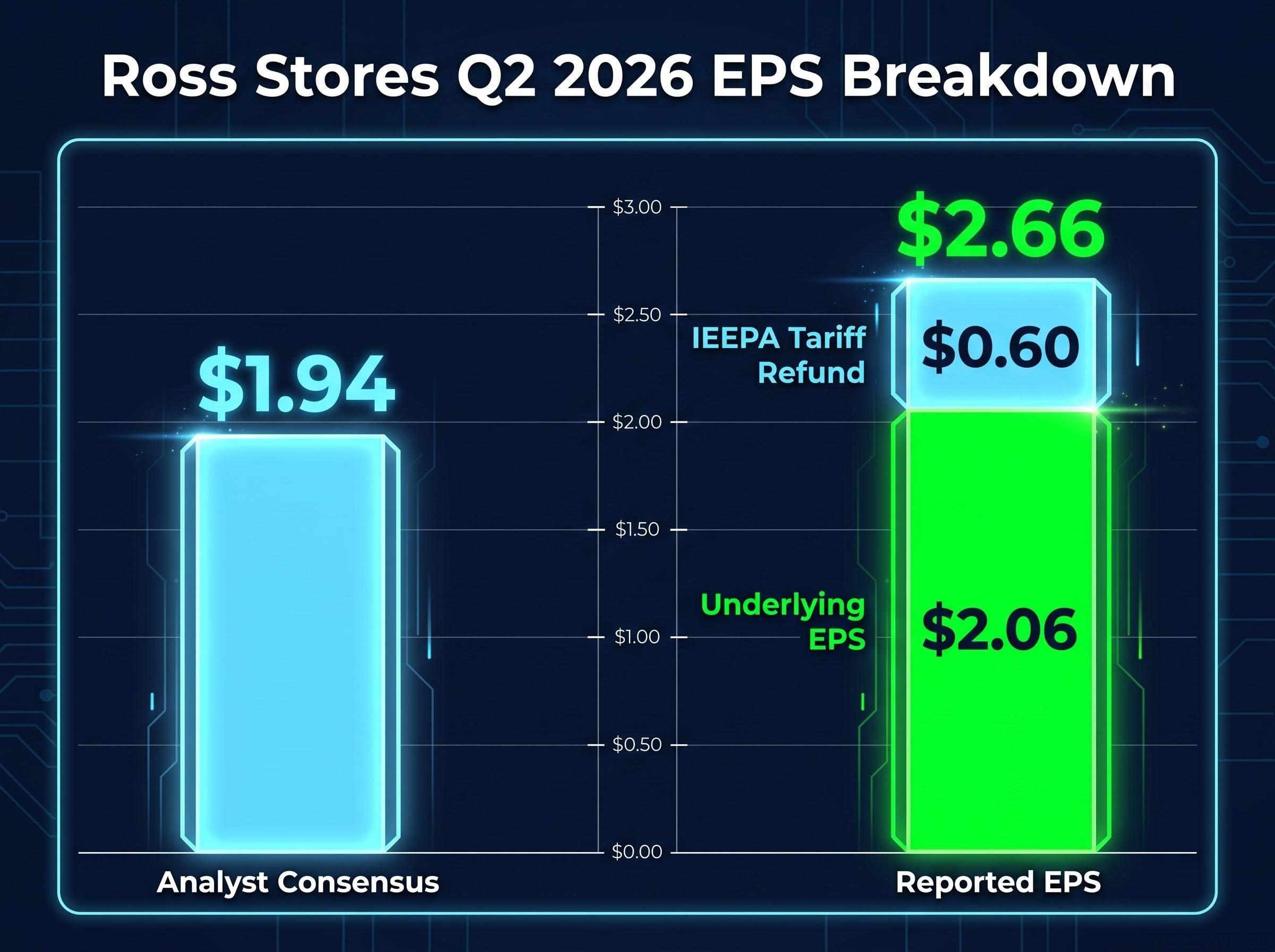 \n\n- Reported diluted EPS: $2.66\n- EPS excluding tariff refund: approximately $2.06\n- Prior-year EPS: $1.56\n- Analyst consensus: approximately $1.94\n\nThe tariff refund also flows into the updated full-year guidance range, which incorporates approximately $0.60 of tariff-related EPS benefit for FY2026. That means the same adjustment investors need to make for Q2 applies to the annual outlook as well.\n\nFor investors in Ross Stores stock, the $2.06 figure is the cleaner measure of what the company’s operations actually delivered this quarter. The beat is real even without the refund. But treating the $2.66 headline as a run-rate number would overstate the underlying earnings power.\n\n## Why off-price retail keeps winning as traditional retailers lose ground\n\nThe Q2 result does not exist in isolation. It sits inside a consumer spending shift that has been building for over a year.\n\nElevated cost-of-living burdens across the U.S. are redirecting household spending toward off-price retail and away from full-price department stores and traditional specialty apparel retailers. Ross is not the only beneficiary, but a 10% comparable-store sales gain is among the clearest data points confirming that the trade-down cycle is accelerating rather than plateauing.\n\n> The trade-down cycle lifting Ross’s comp sales is not a temporary blip tied to one economic quarter. It reflects a durable repricing of where American consumers believe they get value.\n\nHousehold tariff costs running at $1,830 to $2,600 per American family in 2026 are compressing discretionary budgets in ways that push more consumers toward the off-price channel, providing a demand tailwind for Ross that operates independently of any government rebate programme and is more durable as a comp-sales driver.\n\nRoss competes within a value retail segment that includes several distinct players:\n\n- TJX (T.J. Maxx, Marshalls): the largest off-price retailer, competing directly on the \”treasure hunt\” shopping model\n- Burlington: a direct off-price peer positioned similarly on price and in-store experience\n- Shein: an online fast-fashion platform that undercuts on price but cannot replicate the physical store discovery experience\n- Amazon: the dominant e-commerce player, competing on range and convenience but operating without the brand-surplus inventory sourcing model\n\nWhat sets Ross and its off-price peers apart is the in-store experience itself. The \”treasure hunt\” model, where shoppers discover branded merchandise at steep discounts with constantly rotating inventory, creates a loyalty loop that pure price-based competitors like Shein or Amazon cannot fully replicate. That distinction matters when assessing how long the current comp trajectory can run.\n\n## Full-year guidance raised by more than $1.00 a share at the midpoint\n\nManagement’s response to Q2 strength was emphatic. Ross Stores updated its FY2026 EPS outlook to a range of $8.61-$8.77, raising the top and bottom of the prior range of $7.50-$7.74.\n\nThe midpoint moved from approximately $7.62 to approximately $8.69, an increase of more than $1.00 per share. The new midpoint also sits well above the prior Wall Street consensus of approximately $7.83. The updated range covers the 52 weeks ending 30 January 2027.\n\n
 \n\n
\n\n
| FY2026 Guidance | Prior Range | Updated Range |
|---|---|---|
| EPS range | $7.50-$7.74 | $8.61-$8.77 |
| Midpoint | ~$7.62 | ~$8.69 |
| Prior Wall Street consensus | ~$7.83 | |
| Tariff refund component | ~$0.60/share embedded in updated range |
\n
\n\nA guidance raise of more than $1.00 per share at the midpoint, in a tariff-uncertain environment, tells investors that management sees the current sales environment as strong enough to absorb cost pressures and still deliver materially higher profits than it projected just months ago. This is not a routine quarterly nudge. It is a signal of conviction in the trajectory.\n\n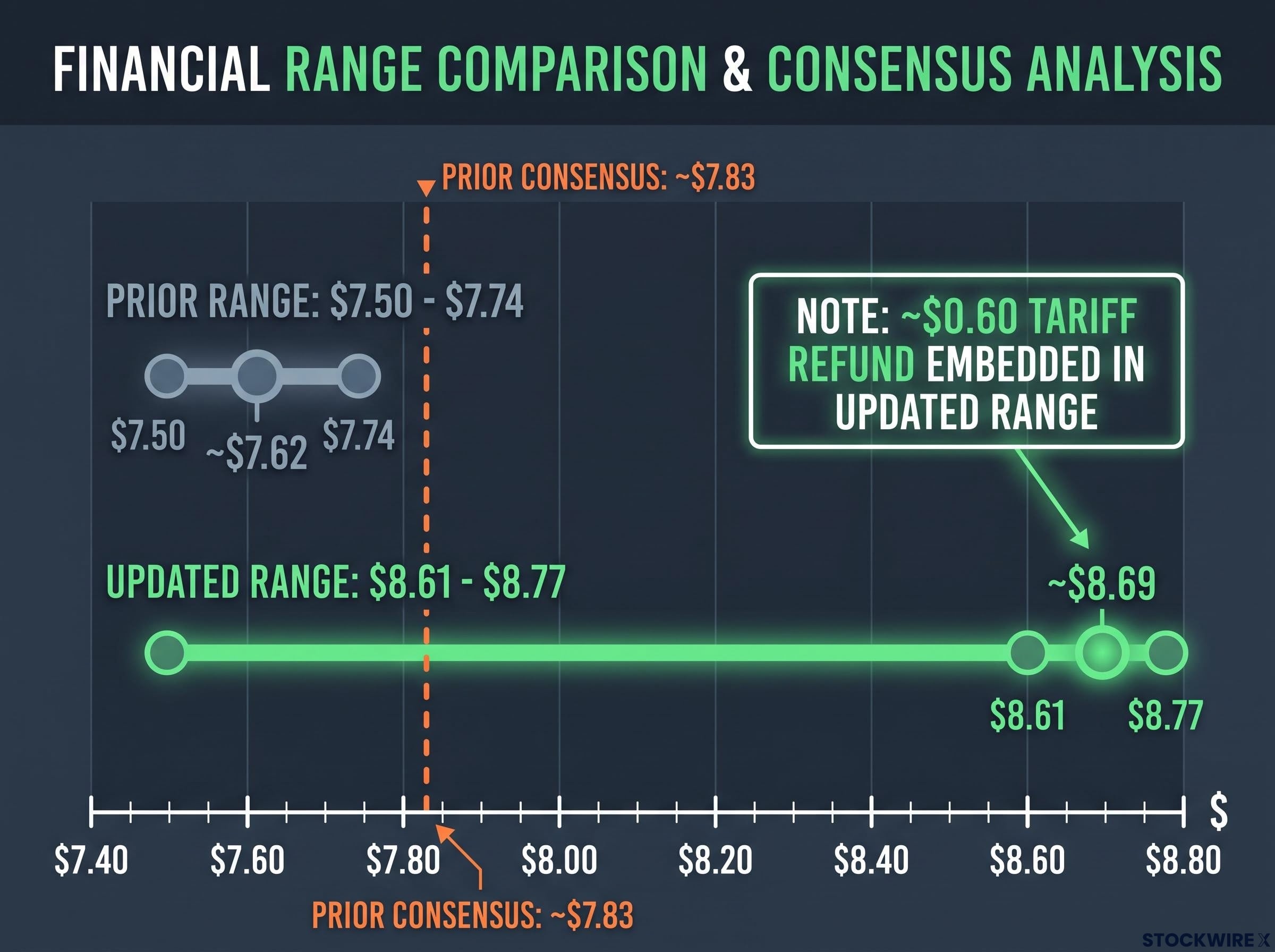 \n\nFor investors evaluating Ross Stores stock at current levels, the updated guidance is the most forward-looking data point in this earnings report. What the new range implies for the earnings run-rate is the critical input for any price-to-earnings-based valuation.\n\n## How off-price retail works, and why the model holds up under cost pressure\n\nOff-price retail operates on a fundamentally different buying model to traditional retail. Understanding the mechanics explains why Ross’s margins hold up in an environment that squeezes full-price competitors.\n\n- Inventory sourcing: Ross buys excess, out-of-season, or overproduced inventory from brands and manufacturers at significant discounts. Full-price retailers buy inventory at standard wholesale cost and must sell it at planned markups.\n- Promotional dependency: Ross does not rely on traditional sale cycles or markdowns to move inventory, because it already purchased that inventory at a discount. Full-price retailers must discount aggressively when consumer spending softens, compressing margins on goods they bought at full cost.\n- Margin behaviour during downturns: Off-price margins tend to hold or improve during periods of consumer pressure. Full-price margins compress.\n\nCEO Barbara Rentler‘s Q2 commentary pointed to operating margin benefits from higher sales volumes and lower distribution costs alongside the tariff refund, evidence the model is performing as designed under current conditions.\n\n### Why economic pressure actually improves Ross’s sourcing conditions\n\nThis is the counter-intuitive element. When brands and manufacturers face softer demand at the full-price tier, they accumulate excess inventory. That surplus has to go somewhere, and off-price buyers like Ross become the natural outlet.\n\nThe result is that Ross’s merchandise quality and value proposition can actually improve during the same period that traditional retailers are struggling. Better branded goods at steeper discounts draw more customer traffic, which reinforces comparable-store sales gains. The same economic environment that squeezes full-price retailers creates better sourcing conditions for Ross, making the business model counter-cyclically advantaged rather than merely defensive.\n\n## What the 8% after-hours move means for investors sizing up the stock now\n\nShares moved from approximately $228.99 at the regular session close to approximately $247.37-$247.57 in after-hours trading on the evening of 20 August 2026, a jump of just over 8%. Investors now face the question of whether that re-rating is warranted or has run ahead of revised fundamentals.\n\nThe answer depends on which earnings number you use. The updated FY2026 guidance range of $8.61-$8.77 includes the approximately $0.60 tariff refund. Strip it out, and the underlying operating EPS range falls to approximately $8.01-$8.17. Those two numbers produce meaningfully different implied valuations at a $247 share price.\n\n> At approximately $247, Ross Stores stock trades at roughly 28-29x the reported FY2026 EPS guidance midpoint, but 30-31x the underlying EPS excluding the tariff refund. The gap between those two multiples is the valuation question investors need to resolve.\n\nThree specific variables will determine whether the current re-rating holds:\n\n1. Comparable-store sales sustainability: Can Ross maintain anything close to the 10% comp pace into the second half of FY2026 and beyond, or does the growth rate normalise as the trade-down cycle matures?\n2. Tariff refund non-recurrence: The approximately $0.60 per share benefit will not repeat in FY2027. Investors need to model the year-over-year EPS comparison without it.\n3. Cost trajectory: Distribution, sourcing, and labour cost pressures will determine whether operating margins can be sustained at current levels once the tariff benefit falls away.\n\nThe 8% after-hours move is the market immediately repricing Ross to a stronger earnings profile. Whether the new price reflects the underlying earnings power or the tariff-inflated reported figure is the distinction that separates a well-sized position from one that is paying up for a non-recurring tailwind.\n\n## A strong quarter with one important asterisk, and what to watch next\n\nRoss delivered a genuine operational beat across revenue, comparable-store sales, and underlying EPS. The tariff refund added a meaningful but non-recurring boost that investors should account for separately when assessing valuation.\n\nThe structural backdrop remains favourable. The off-price model’s counter-cyclical sourcing advantage means the current consumer environment is more tailwind than headwind for Ross. But whether 10% comparable-store sales growth is sustainable into FY2027 remains the key open question.\n\nThe next catalyst is the Q3 FY2026 earnings report, which will be the first read on whether comp growth is holding above or below the pace set this quarter, and whether operating margins can be sustained without the tariff benefit.\n\nTariff policy uncertainty in the second half of 2026 extends beyond the IEEPA refund already recognised: the administration’s remaining Section 232 authority and proposed legislation with explicit 100% tariff powers create a forward cost environment that Ross’s sourcing model must navigate even as the one-time Q2 benefit falls away.\n\n> This article is for informational purposes only and should not be considered financial advice. Investors should conduct their own research and consult with financial professionals before making investment decisions. Past performance does not guarantee future results. Financial projections are subject to market conditions and various risk factors.“
GAAP versus non-GAAP adjustments of the kind embedded in Ross’s headline EPS figure represent one of the most consistently exploited information gaps between retail and institutional investors, with institutions routinely stripping non-recurring items before forming a view on earnings quality and forward-year comparisons.
Consumer discretionary valuations entering the current earnings season embedded a degree of pessimism not seen in roughly 20 years, with the Consumer Discretionary index sitting negative year-to-date and its ratio to the S&P 500 near multi-decade lows, a context that makes Ross’s 10% comp growth figure a particularly striking outlier against the sector’s priced-in narrative.