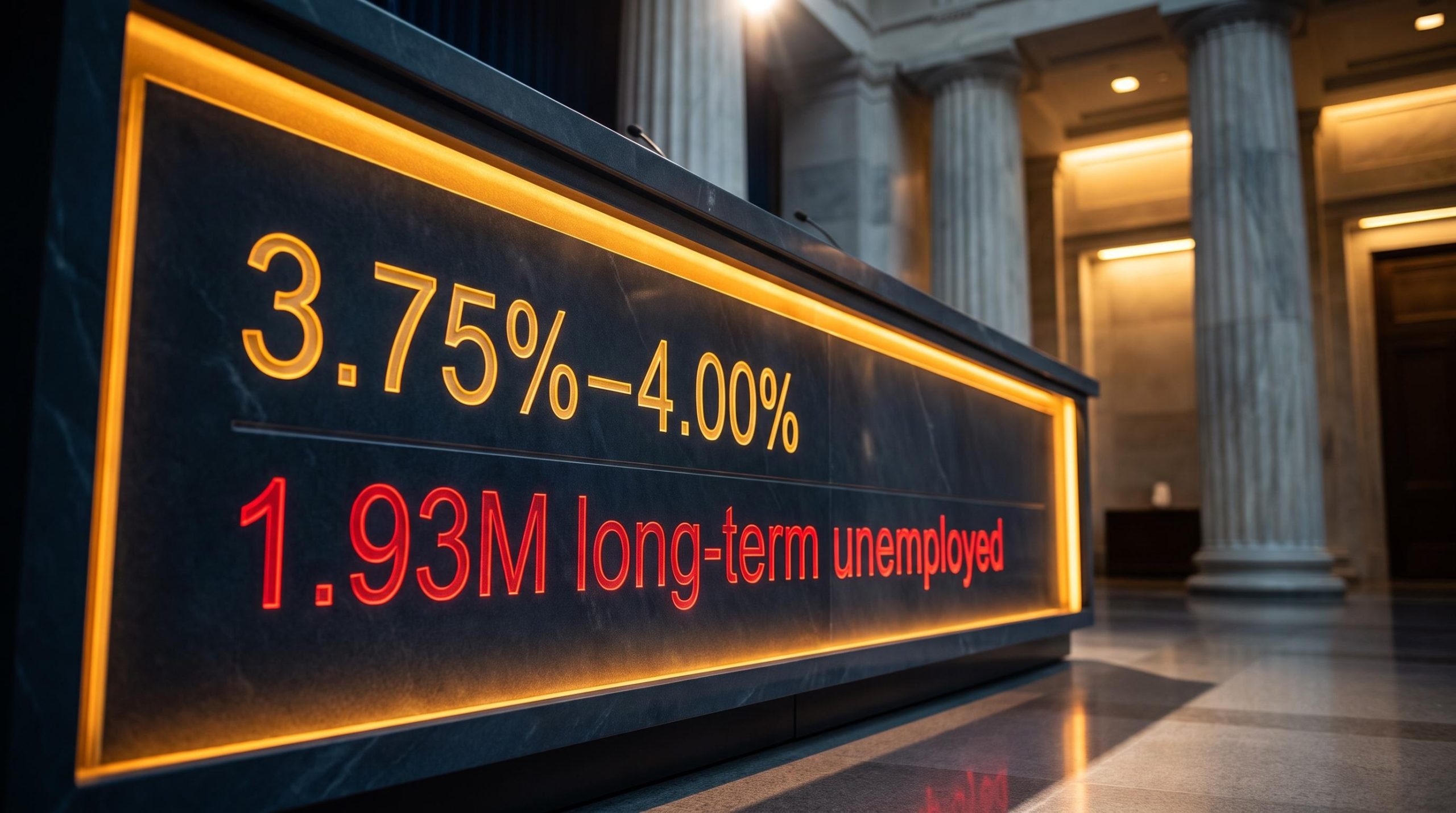
Gold bullion prices pushed past US$3,000 per ounce in early 2026, yet Australian capital ran the opposite direction toward international growth equities. Despite broader market volatility and back-to-back rate hikes from the Reserve Bank of Australia, self-directed market participants maintain a cautious confidence. Evaluating these retail investor trends reveals a distinct structural shift away from historical domestic concentration and defensive posturing.
The brokerage data demonstrates that retail participants are no longer relying on standard domestic index funds as their primary wealth vehicles. Instead, they are aggressively pursuing overseas expansion while systematically adjusting their defensive positions. This analysis breaks down exactly how different demographics manage tightening monetary policy through deliberate capital allocation.
Understanding this rotation provides clarity on where retail liquidity is heading next.
Demographics dictate risk as younger cohorts dominate market participation
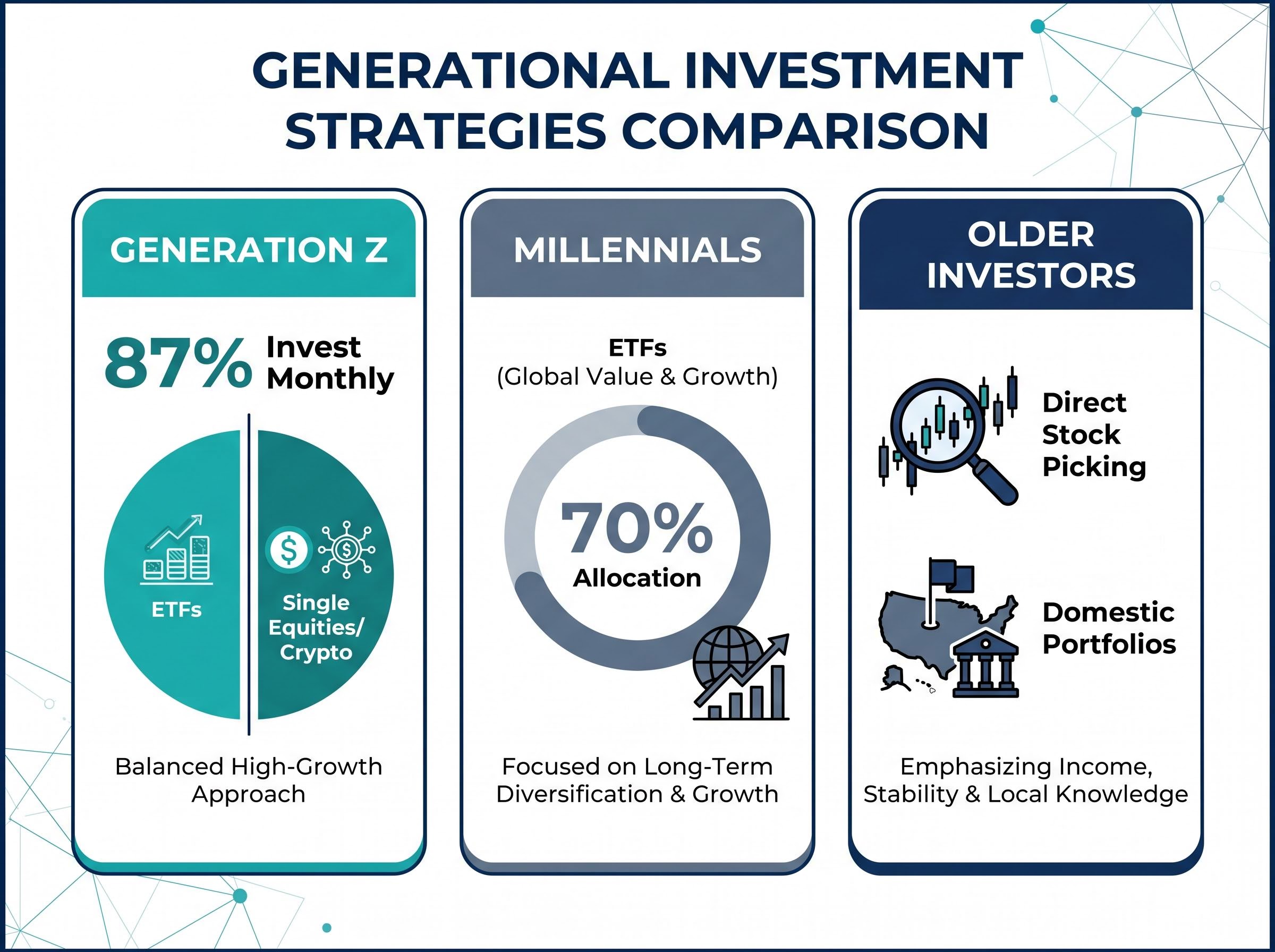
Market engagement patterns in early 2026 demonstrate that age and peer behaviour dictate risk appetite more heavily than available capital. Consistent monthly market participation has become the default behaviour for younger adults, fundamentally altering how brokerages measure active accounts. According to industry analysis, Generation Z leads this consistent engagement metric, with platform statistics showing 87% of this cohort invest on a monthly basis.
Understanding generational peer behaviour provides a benchmark for evaluating individual portfolio construction against current market standards. Younger demographics approach asset allocation with distinct strategies, viewing volatility as an acquisition opportunity rather than a signal to liquidate. Their capital deployment relies heavily on automated, recurring transfers rather than discretionary lump-sum purchases timed to market dips.
By executing systematic investing strategies through these automated platforms, younger demographics effectively mitigate the emotional pitfalls of market volatility while building long-term wealth.
Primary allocation strategies by generation include:
Generation Z: Maintains a 50-50 capital split between packaged exchange-traded funds and single equities, deliberately including risk-on assets like cryptocurrency within their self-directed accounts. Millennials: Favour a simplified and automated approach, holding an approximate 70% allocation to exchange-traded products heavily weighted toward global value and growth. * Older Investors: Continue to show a historical preference for direct stock picking and individual company analysis, holding highly concentrated domestic portfolios.
Older generations begin the transition
Veteran market participants are actively modifying their historical preference for direct Australian equities. Brokerage platform data indicates a gradual but measurable adoption of packaged global products within older demographic accounts.
This transition reflects a growing recognition that domestic dividend yields alone cannot match the capital appreciation offered by international technology stocks. This shift signals a broader acceptance of international diversification across all age brackets, permanently altering the aggregate retail profile.
When big ASX news breaks, our subscribers know first
Overcoming home bias through packaged global exposure
The Australian equities market carries a heavy structural concentration in financial institutions and resource companies. This index composition creates a phenomenon known as home bias, where domestic participants inadvertently overexpose their portfolios to local economic cycles and commodity fluctuations. When retail participants buy local index funds, they are overwhelmingly purchasing bank stocks and mining conglomerates.
To counter this heavy domestic concentration, many participants are increasingly utilising international ETFs as a functional hedge against local sector volatility.
Exchange-traded products allow domestic participants to bypass these local sector limitations with single transactions. By acquiring international funds, individuals can instantly allocate capital across hundreds of overseas enterprises without managing foreign exchange complexities or multiple international brokerage accounts. Retail capital is actively seeking this structure to capture the technological innovation and healthcare advancements largely absent from the local exchange.
Geographic Concentration Risk “Maintaining a portfolio restricted to Australian equities limits exposure to the technology and healthcare sectors driving global economic growth, exposing capital to unnecessary domestic regulatory and commodity risks.”
This massive reallocation serves as a mathematical correction to domestic concentration rather than a speculative market bet. Institutional analysis routinely highlights that Australia represents only a fraction of global market capitalisation. Understanding this structural limitation explains the massive capital flows recorded on major brokerage platforms throughout the first quarter.
Retail traders are simply right-sizing their geographic exposure to align with global economic realities.
Capital flight to international equities alters quarterly platform inflows
Retail diversification into global growth sectors drove total exchange-traded fund market inflows to a massive $15.6 billion for the first quarter of 2026. According to Selfwealth platform data, a historic milestone occurred early in the year, as overseas funds officially overtook domestic equivalents as the most acquired category. This overall sector growth represents a deliberate, structural strategy for international diversification among self-directed participants.
This transition is part of a wider global ETF market shift that analysts project will drive the sector to unprecedented valuation heights by late 2026.
Retail capital consolidated around specific providers offering broad global exposure and thematic overseas investment options. The sheer scale of these allocations highlights where market participants see forward value despite tightening monetary conditions.
| Provider | Key Fund / Metric | Q1 2026 Data Point |
|---|---|---|
| Vanguard | VGS (International Shares) | $361 million in January inflows |
| Vanguard | VAS (Australian Shares) | $24 billion in total assets |
| Betashares | Overall Quarterly Inflows | $4.3 billion secured |
These metrics provide direct visibility into liquidity trends and popular thematic vehicles dominating the self-directed market. The $361 million January inflow into the Vanguard VGS product alone illustrates the urgency with which retail traders are accumulating global assets.
While Vanguard VAS maintains its position as the largest overall fund through historical accumulation, the momentum has definitively shifted overseas. Betashares securing $4.3 billion in quarterly inflows further proves that the transition to global equities is a permanent market adjustment. Smart retail money is consistently choosing geographic diversification over domestic familiarity.
Immediate behavioral shifts follow central bank tightening cycles
The Reserve Bank of Australia applied immediate pressure to retail portfolios early in the year through aggressive monetary policy. Rising borrowing costs forced a rapid behavioural response from self-directed traders, altering platform dynamics almost overnight.
Platform engagement and trading velocity reacted directly to macroeconomic announcements as capital availability tightened. The central bank intervention timeline unfolded across two distinct policy adjustments:
The official RBA cash rate target details the precise sequence of these central bank policy adjustments, establishing the higher baseline for borrowing costs that triggered immediate retail portfolio recalibrations.
- The February 4 rate hike of 0.25%, bringing the cash rate to 3.85%.
- The March 18 rate hike of 0.25%, elevating the cash rate to 4.10%.
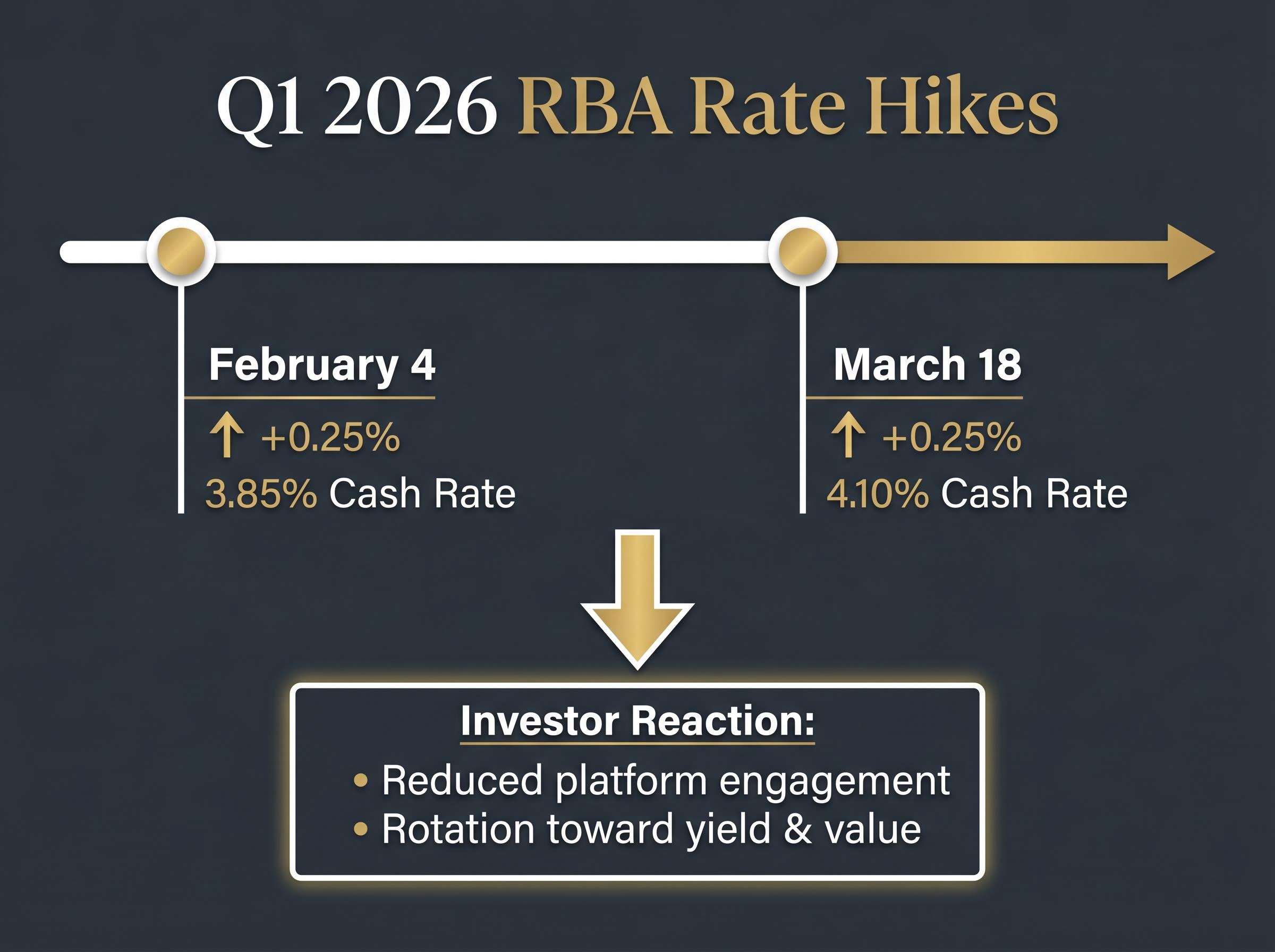
Following these borrowing cost elevations, overall platform engagement decreased, according to brokerage metrics. This direct causal link between macro policy and platform behaviour highlights the defensive mechanisms retail participants employ during tightening cycles. Reduced engagement signals a period of assessment, as individuals calculate the impact of higher mortgage obligations on their discretionary investment capital.
As traditional growth sectors faced valuation pressure from these higher interest rates, retail capital rapidly rotated toward yield and value factors. This tactical adjustment demonstrates that self-directed individuals are actively managing their risk exposure. By seeking income-generating assets, they are building protective mechanisms into their portfolios to offset the broader macroeconomic drag.
High-yield allocations outperformed as higher interest rates applied pressure to non-profitable technology segments. Retail investors recognised this shift, reallocating funds to capture elevated dividend payouts while waiting for the interest rate cycle to stabilise.
Retail capital abandons bullion despite sustained record pricing
Bullion spot prices surpassed US$3,000 per ounce in the first quarter of 2026, driven by persistent geopolitical uncertainties. Despite this sustained record pricing for traditional safe havens, retail transaction volume for the yellow metal declined sharply across brokerage applications.
Data indicates retail purchasing transactions for gold fell compared to the massive surge recorded in late 2025. This divergence serves as a strong sign of underlying retail optimism and a clear appetite for risk-on assets. Self-directed individuals are ensuring defensive allocations and strong interest in gold persist, despite a broader bullish undertone across consumer accounts.
The divergence from institutional consensus
Self-directed individuals are charting a distinctly different course than institutional defensive models. While institutional capital continues hoarding safe haven assets against systemic geopolitical uncertainty, retail strategy has fundamentally pivoted toward international equities.
This aggressive shift from defensive safe-haven assets toward global technology and healthcare sectors clearly illustrates that individual market participants are prioritising secular growth trends over immediate capital preservation.
This persistent preference for technology and healthcare expansion over capital preservation marks a defining characteristic of the modern retail market. Rather than buying gold at all-time highs, individual investors are allocating capital to sectors they believe will drive the next decade of economic expansion.
The new baseline for self-directed portfolio construction
The quarterly data defines the modern retail portfolio as globally diversified, yield-aware, and heavily growth-oriented. Generational shifts toward consistent market participation and international exchange-traded products represent permanent structural changes to the market, moving well beyond temporary investment fads.
By actively overcoming home bias and adapting swiftly to central bank tightening, self-directed participants are demonstrating sophisticated portfolio management. These individuals are demonstrably better equipped to handle domestic volatility than in previous economic cycles. The data confirms that retail traders are no longer passive participants; they are strategic capital allocators building resilient, globalised wealth engines.
This article is for informational purposes only and should not be considered financial advice. Investors should conduct their own research and consult with financial professionals before making investment decisions. Past performance does not guarantee future results.