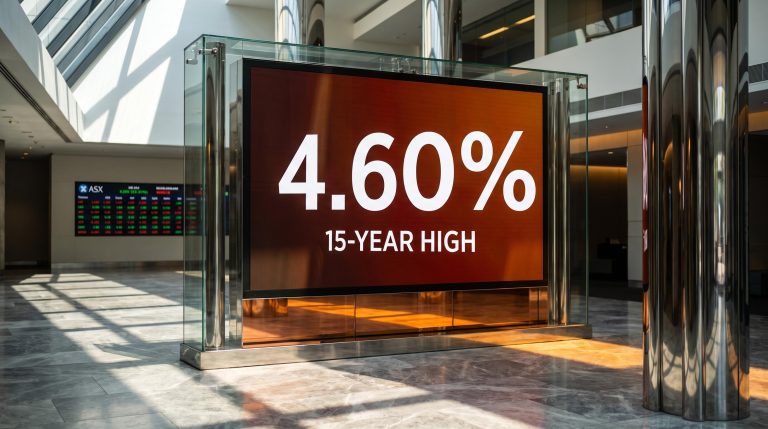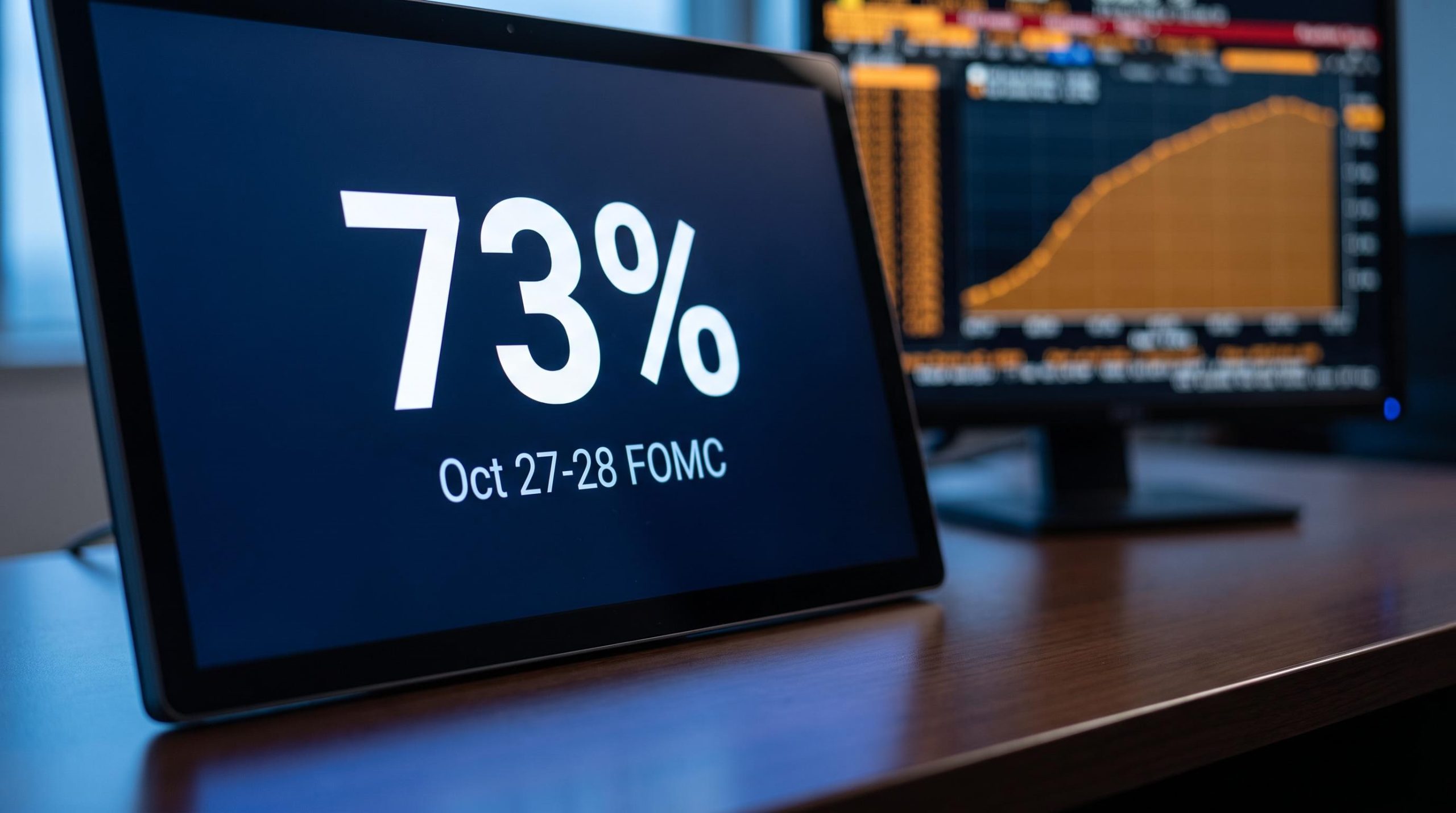
The market has already made up its mind. As of 23 September 2026, CME Group’s FedWatch tool put the probability of another quarter-point rate increase at the 27-28 October FOMC meeting at 73%, and that conviction has held firm.
Yet two of the week’s most closely watched releases point the other way. The Conference Board Consumer Confidence Index came in at 81.9 against a consensus of 89.0, and JOLTS job openings slipped to 7.079 million versus the 7.23 million economists expected. Soft data, hard pricing, and a contradiction that sits right at the centre of the current setup.
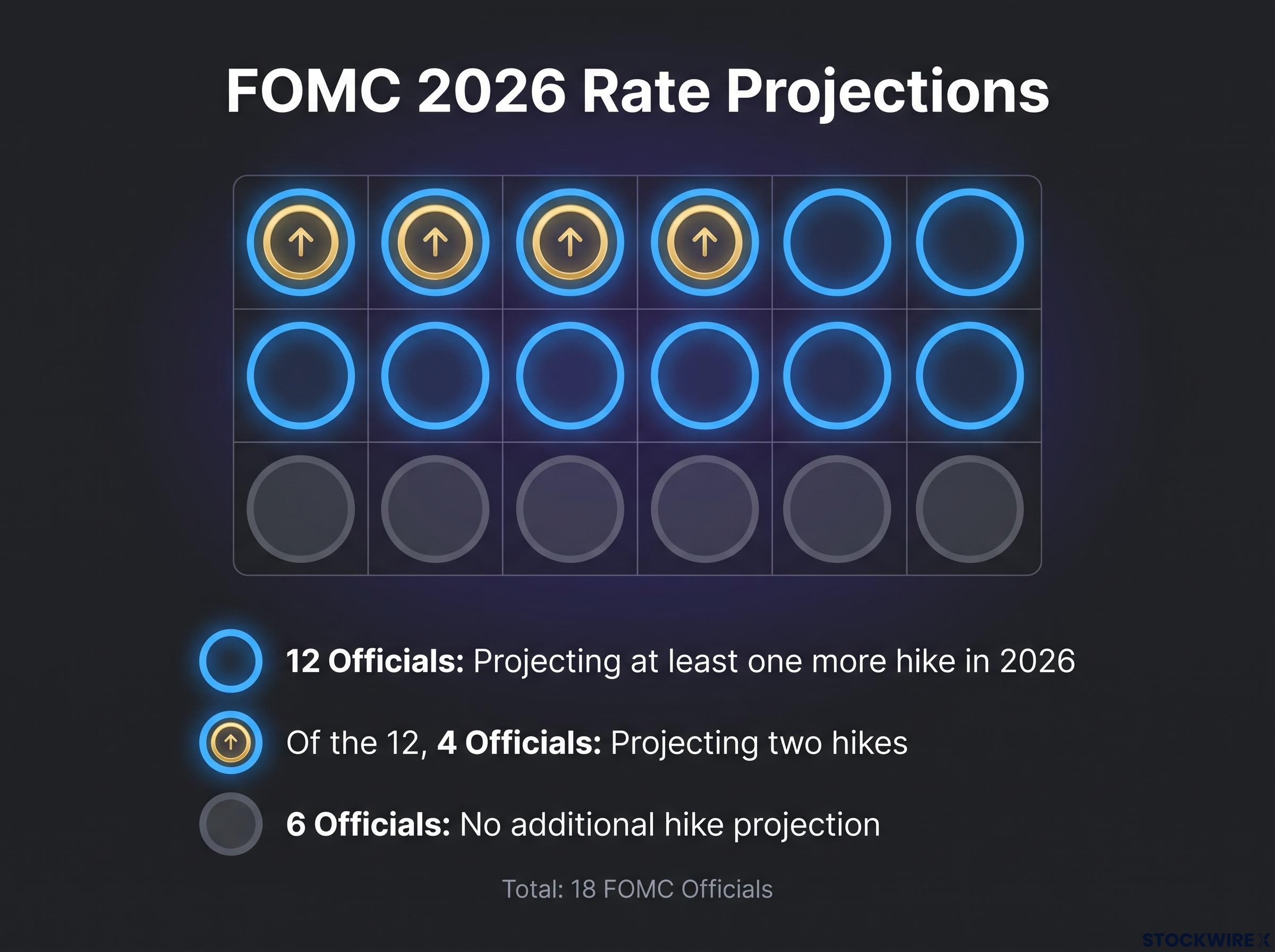
The question is not whether the Federal Reserve wants to hike again. A 25-basis-point increase was already delivered earlier in September, and 12 of 18 FOMC officials still project at least one more before year-end. The question is whether the incoming data can stop them. Misread that, and you position for a pause the Committee has no intention of delivering.
Here is what the next few days actually decide: which data releases carry the most weight into 27 October, what the Fed’s internal balance really looks like, and precisely what it would take to move market pricing before the meeting.
What futures markets are actually saying about October
The 73% figure is not a static snapshot. It is a signal that moved sharply once the September hike landed, and it has stayed elevated ever since, telling you the market treats another increase as its working assumption rather than a possibility to hedge against.
That number comes from 30-day Fed funds futures, the instrument traders use to bet on where the central bank’s benchmark rate will sit after each meeting. CME FedWatch translates that pricing into a clean probability, and right now it is pointing in one direction.
The CME FedWatch methodology translates 30-day Fed funds futures pricing into meeting-level probabilities by comparing the implied rate against the current target range, making the tool a direct read of institutional money rather than a sentiment survey.
The spread across outlets is narrow enough to be noise. All three readings describe the same market signal, filtered through slightly different rounding:
- CNBC reported the probability at 73% as of 23 September 2026
- Reuters characterised short-term rate futures as implying roughly a 70% chance
- The Hill described traders pricing in a “nearly 70 percent” likelihood
73% probability of a 25bp hike at the 27-28 October FOMC meeting Source: CME Group FedWatch, derived from 30-day Fed funds futures, as of 23 September 2026
That gap between 70% and 73% is rounding, not disagreement. The underlying data is identical.
To read the number properly, anchor it in context. Before the September action, the federal funds target range sat at 3.50%-3.75%, the last level explicitly confirmed in reporting. A 25-basis-point hike would have lifted it to 3.75%-4.00%, and it is from that higher baseline that markets are now pricing the next move.
Here is why 73% matters more than it might first appear. A probability at that level is not the market flagging genuine uncertainty; it is the market treating a hike as base case and pricing most of the risk premium in already.
If you are building a position on the assumption the Fed pauses in October, you are trading against odds that have already moved firmly against you. The cushion is gone.
The more useful way to watch this figure is as a repricing gauge. Should the probability slide from 73% toward 50% or below, that would signal a material shift in expectations, and rate-sensitive assets across the board would move with it. Until then, the market’s read is unambiguous.
When big ASX news breaks, our subscribers know first
Why the weak data is not moving the needle (yet)
Take the soft data at full weight for a moment. Consumer confidence missed by more than seven points, with August revised down to 88.6 from an initial 89.4. Job openings came in below forecast too, and on the surface, that is a textbook case for the Committee to step back and wait.
| Indicator | Reported | Consensus | Prior Reading | Surprise |
|---|---|---|---|---|
| Consumer Confidence (Sept) | 81.9 | 89.0 | 88.6 (Aug, revised down) | Downside |
| JOLTS Job Openings (Aug) | 7.079M | 7.23M | 7.335M (July, revised up) | Downside |
So why is none of this shifting the calculus? Because the hard data still tells a different story, and this Committee weights hard data more heavily than surveys.
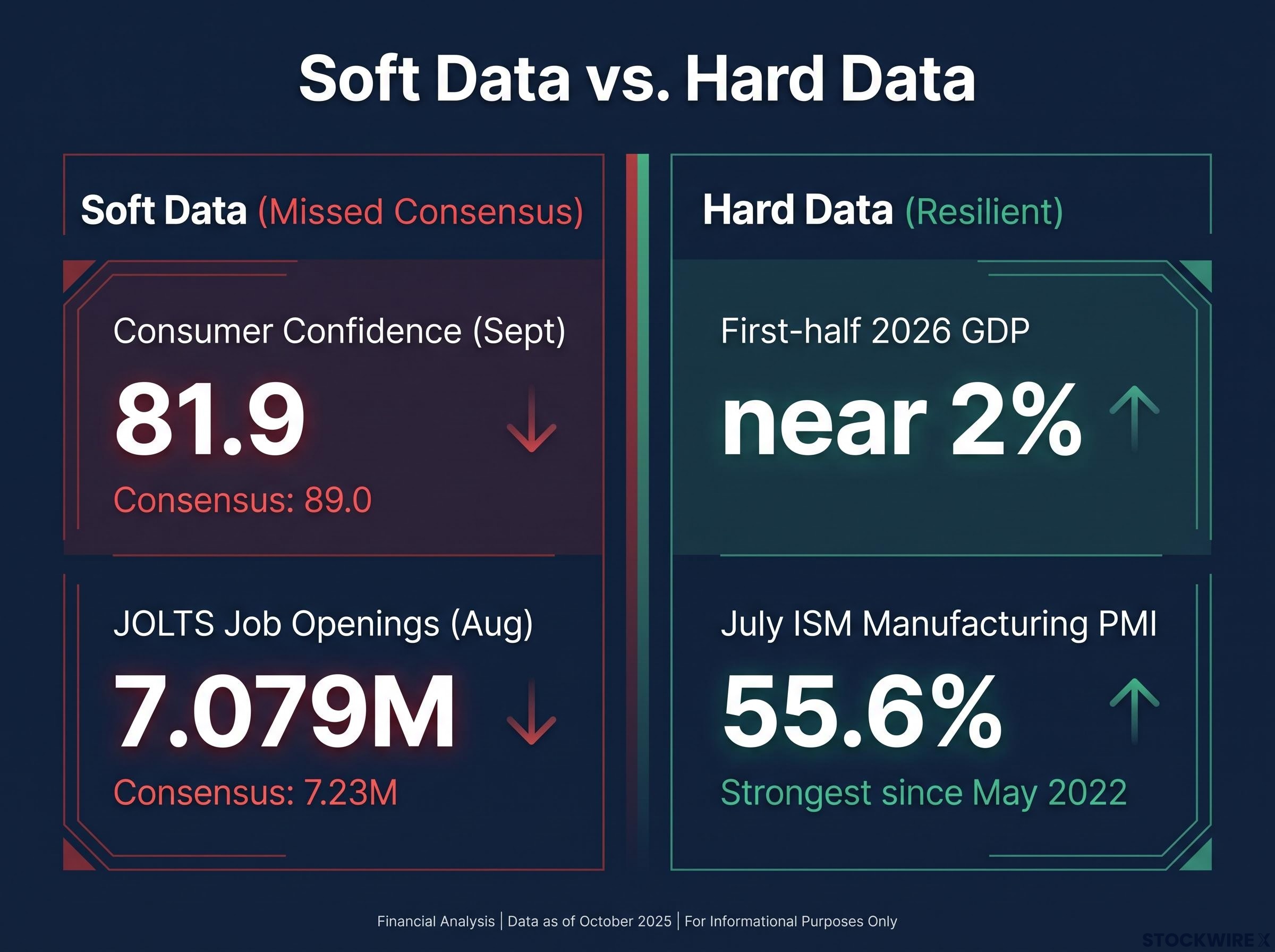
First-half 2026 GDP growth ran near 2%, a figure Barr has cited directly as evidence that activity remains resilient. Add the July ISM Manufacturing PMI at 55.6%, the strongest reading since May 2022, and the picture is of an economy still expanding, not one breaking.
There is a subtler point buried in the JOLTS release that actually strengthens the case for hiking. The prior month was revised higher to 7.335 million, confirming that July’s labour demand was tighter than first reported.
That revision reframes August’s softness. What looks like the start of a trend on the headline number reads more like single-month moderation once you account for the stronger July base. For the Fed, that distinction is the whole argument.
The case for a pause the Fed is not taking
The counterargument deserves its due. Simultaneous misses in confidence and labour demand can be leading indicators, not lagging ones, an early sign that higher rates are beginning to bite before job losses show up in the data.
The risk here is timing. Monetary policy works with long and variable lags, so by the time employment data confirms real weakness, the Fed may already have tightened too far. This camp reads the soft prints as grounds to pause now rather than clean up an overshoot later.
It is a legitimate case. It is simply not the one a majority of the Committee is currently persuaded by.
The Sahm Rule trigger and a long-term unemployed count exceeding job leavers are among the labour market recession signals that sit outside the headline payrolls figure, and they form the strongest empirical case for the pause argument the Committee is currently dismissing.
Inside the Fed: what Barr and the dot plot are actually signalling
The soft data arrived after the Committee had largely made up its mind. The dot plot, the FOMC’s chart of where each official expects rates to go, shows 12 of 18 members projecting at least one more hike in 2026, with four projecting two.
The September 2026 FOMC press conference materials, including the updated dot plot and economic projections, provide the primary-source record showing 12 of 18 officials projecting at least one additional hike, the distribution the article’s market pricing analysis rests on.
That structure matters more than any single release. When a two-thirds majority is already on record for further tightening, a one-month confidence or JOLTS miss is unlikely to shift the collective decision. What would move it is a sustained pattern across multiple prints, not an isolated surprise.
The 12-of-18 majority is itself a product of how the dot plot aggregates individual projections, and the dot plot vs market pricing divergence has historically been wide enough that treating either signal as definitive without a clear framework has cost investors real money.
Governor Michael Barr’s public arc tells the same story. His position has hardened steadily through the year:
- February 2026: likely appropriate to hold rates steady “for some time” while assessing risks
- March 2026: confirmed a second consecutive hold, wanting clear evidence of retreating inflation before cutting
- 1 September 2026: a conditional framework, take more time if inflation moderates, act decisively if it does not
- 23 September 2026: a Chicago speech calling for “further interest rate increases,” with comments suggesting at least two more may be needed
- 29 September 2026: a renewed case for hikes, citing specific structural obstacles
By his most recent statement, Barr had moved from patience to advocacy. He supported the September hike and characterised the Fed as having been out of position given recent economic shocks.
“In his base case, further policy adjustments are likely to be needed.” Governor Michael Barr, 29 September 2026, citing high energy prices and a surge in AI-related investment as factors knocking the Fed off course toward its 2% inflation goal.
Those two drivers, energy costs and the AI investment boom, are worth noting because they are supply and demand pressures that higher rates address only slowly. Barr’s framing is that inflation risks have increased while labour-market risks have receded, which makes further tightening, in his current assessment, the path of least regret.
For you, the read is straightforward. When 12 of 18 members already project further hikes and the loudest public voice is calling for two more, the collective conviction is firm rather than fragile. This is not a Committee on the fence; it is one that has reached a working consensus and is waiting for the data to talk it out of that view.
The data that could actually change the October calculus
The established facts point toward a hike. The uncertainty lives entirely in the releases still to come, and not all of them carry equal weight.
Ranked by their likely impact on FedWatch pricing before 27 October:
- PCE Price Index. The Fed’s preferred inflation gauge. A reading showing clear deceleration toward 2% would do more to open a pause window than any other single release, because it speaks directly to the Committee’s stated reason for tightening.
- Nonfarm Payrolls. A binary risk event. A print showing outright job losses, not merely slower growth, would validate the inflection-point argument and force a genuine rethink. Moderation alone will not.
The distinction between headline payrolls versus underlying weakness — where a beat in total jobs added can coincide with contracting ISM employment readings and surging involuntary part-time work — is exactly the analytical layer the Committee will apply to the next nonfarm print before October.
- ISM Manufacturing PMI. The July figure sat at 55.6%, firmly in expansion. A sharp reversal from that level would signal the real economy cooling faster than the Fed assumes, though it ranks below the first two in the current inflation-first reaction function.
The asymmetry here is worth internalising. If PCE shows inflation accelerating rather than moderating, the 73% probability is a floor, not a ceiling, and any position built on a pause faces risk on both sides.
What history says about pausing late in a tightening cycle
Two past cycles frame the paths ahead. In 1994-1995, the Fed hiked rapidly, then paused in time and achieved disinflation without a deep recession, the outcome hawks point to as proof that forceful action followed by a well-judged pause works.
The 2015-2018 cycle cuts the other way. There, the Fed tightened and then reversed course as labour and confidence data deteriorated, a reminder that policy must stay flexible when conditions genuinely shift.
The 2021-2023 rapid hike cycle is the backdrop to all of it. It marks the start of the current restrictive stance, and its lesson is that cumulative tightening can carry effects that only surface later, which is exactly why the coming data prints matter as much as they do.
What the October decision actually hinges on
Pull the three layers together. Market pricing sits at 73%, the soft economic data has not moved the Committee, and 12 of 18 officials are already on record for further hikes. The weight of evidence points clearly toward another increase on 28 October.
Two specific outcomes would need to converge to change that. A PCE reading showing clear deceleration toward 2%, paired with a Nonfarm Payrolls print revealing outright job losses rather than slowing growth. Anything short of both, and the Committee’s working consensus is likely to hold.
“Further policy adjustments are likely to be needed.” Governor Michael Barr, 29 September 2026, on the base case for the path ahead.
For portfolio positioning, the real point is this: at 73%, the hike itself is largely priced in. The asymmetric risk is not the decision but a data surprise that reprices expectations sharply before the meeting.
The September hike portfolio implications extend well beyond the rate decision itself, touching equity discount rates, bond duration exposure, and credit spreads in ways that compound once a second hike is confirmed rather than merely probable.
That means the window to act ahead of a probability shift is narrow and closing. Watch PCE and payrolls above all else, and treat any material move in the FedWatch number as the signal that the setup has genuinely changed.
This article is for informational purposes only and should not be considered financial advice. Investors should conduct their own research and consult with financial professionals before making investment decisions. Past performance does not guarantee future results, and financial projections are subject to market conditions and various risk factors. Forward-looking statements are speculative and subject to change based on economic developments and central bank policy.