Every uncrewed platform runs on a single budget of stored energy. Range, endurance and payload all draw from it, so extra hours in the air come out of the sensors you can carry or the distance you can cover. That makes energy density, the amount of energy a battery stores per kilogram, the setting that decides which missions an uncrewed platform can fly at all. Most people treat the battery as one component among many.
That matters if you follow defence-adjacent companies. The limit is physical, not a design shortcut. What a defence buyer needs from a battery also differs sharply from what a phone or car maker needs.
This piece explains why energy density caps what drones, ground robots and undersea vehicles can do, and why the origin of battery materials is a defence question rather than a commercial one. It closes with one Australian company, Li-S Energy, as a worked example of what the path to a defence customer looks like.
Why energy density sets the limits of an uncrewed platform
You might assume a better battery is a product upgrade, like a faster processor. The physics says otherwise.
The ceiling
Endurance is roughly usable battery energy divided by the power the platform consumes. Energy density is measured in watt-hours per kilogram (Wh/kg). You cannot add energy without adding mass, and mass costs power. Here is how the trade-off appears across platform types:
- Uncrewed aircraft: a heavier battery needs more lift, which needs more power, which needs more battery.
- Ground robots: the penalty is milder, but patrol distance and sensor time still fall as payload rises.
- Undersea vehicles: batteries run propulsion, navigation and payloads under pressure, often far from any recharge point.
Published figures put practical commercial lithium-ion cells at roughly 150-300 Wh/kg, depending on format and chemistry. That figure is set by the chemistry itself, and recent gains have come mostly from packaging and thermal management rather than the cell. If you want double the endurance from the same chemistry, you cut payload, build a bigger airframe, or wait for a new chemistry.
Cell level is not system level A cell figure is measured on a single cell. Packaging, protection, battery-management electronics, connectors and cold-weather derating (a reduction in usable capacity at low temperature) all cut what the platform actually receives.
What the ceiling does to capability and procurement
Consider a requirement for 12 hours of persistent surveillance. Whether it is achievable often comes down to grams per watt-hour. Requirements that fail the test get deferred, cut back, or covered with more platforms and more operators.
That is why short-endurance quadcopters are everywhere while long-endurance fixed-wing and undersea autonomy remain rarer. When you read an endurance claim, you are really reading a claim about which missions become possible. Defence buyers know this, so they treat batteries as a capability input that must be qualified, not a commodity chosen on price.
When big ASX news breaks, our subscribers know first
Why buying a defence battery hinges on procurement gates rather than product features
Once you accept the ceiling, the next question shifts from whether a cell works to whether it can pass two gates.
Gate one: qualification
Before anything else, a cell has to cope with a set range of environmental conditions, clear safety testing and satisfy shipping rules. After that, each platform needs its own integration and qualification work. The process runs for years and starts over with every platform, and once a cell is integrated, swapping it can trigger the whole process again.
So evaluation and collaboration arrangements are the pipeline, not near-term revenue. A shipment to a defence laboratory is evidence of evaluation, not a purchase order. No reliable public figure exists for how many evaluations convert, and an evaluation that ends quietly rarely prompts an announcement.
The shipping and export layer
Moving cells between allies involves four separate gates, and passing one does not pass the others:
- Transport safety and dangerous-goods compliance, including the UN 38.3 test standard
- Acceptance by airlines and aviation authorities under International Air Transport Association (IATA) rules
- Export-control eligibility for defence technology transfer
- Customer qualification and platform integration
The AUKUS exemption under the US International Traffic in Arms Regulations (ITAR) took effect on 1 September 2024, with a final rule on 30 December 2025 adding conditions. It is limited by authorised-user status and excluded technologies. It streamlines some licensing but removes none of the engineering or procurement qualification.
Gate two: provenance
Conventional lithium-ion depends on graphite, cobalt and nickel, and refining those minerals is concentrated. The International Energy Agency (IEA) reports China leads refining for 19 of 20 strategic minerals it tracks, at an average share of about 70%.
| Mineral | Refined-supply concentration | Year | Source |
|---|---|---|---|
| Key energy minerals (average) | Top three refiners 86% (up from about 82% in 2020) | 2024 | IEA, Global Critical Minerals Outlook 2025 |
| Graphite | China above 90% | 2024 | IEA, strategic stockpiling report, September 2026 |
| Nickel | Top three refiners 78% | 2024 | IEA, Nickel, August 2026 |
For a commercial maker, that concentration is a cost risk. For a defence force, it means the controlling party could deliberately cut supply at a critical moment, which is why sovereign and allied supply has become a procurement criterion.
The caveat is plain. A chemistry avoiding those minerals still needs lithium, sulfur, electrolyte, separators and production equipment, so sovereign cell manufacturing is not an end-to-end sovereign supply chain.
For readers wanting the domestic picture, our dedicated guide to Australia’s battery materials funding gap shows why a secured grant does not mean a funded factory.
How should an investor read defence battery announcements?
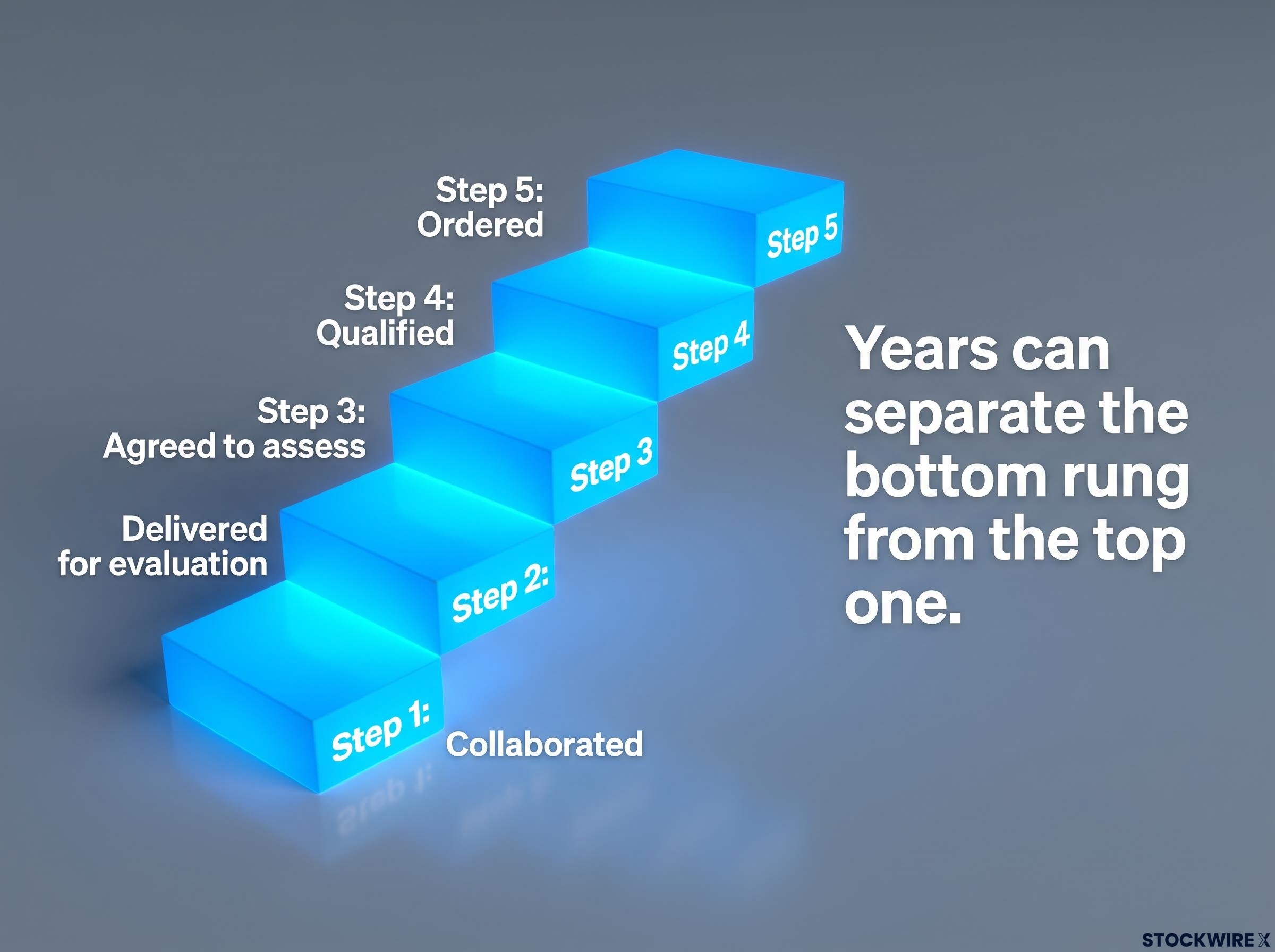
You cannot see inside a qualification programme. What you can do is identify which rung an announcement sits on and who controls the next step.
The commitment ladder Collaborated, delivered for evaluation, agreed to assess, qualified, ordered. Years can separate the bottom rung from the top one.
- Which verb does the announcement use?
- Who holds the next decision: the company or someone else?
- Is the energy figure cell level or system level?
- Who received the grant, and for what? A grant to a partner is not a grant to the company, and facility funding is not revenue.
- Does the cash on hand match the build programme ahead?
None of these questions points to a good or bad outcome. They tell you what you are looking at.
Li-S Energy as a worked example: what exists on the pathway
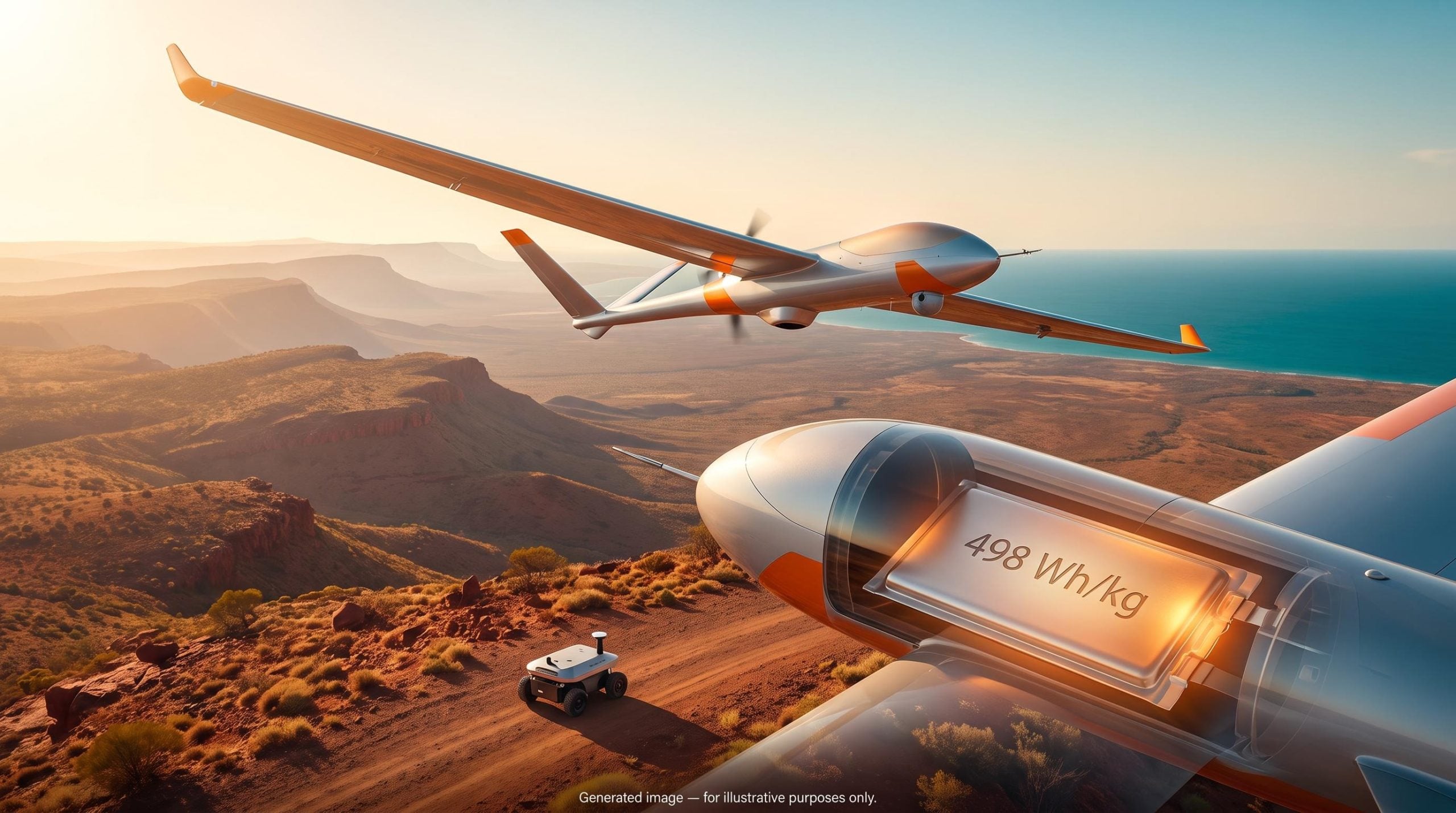
Li-S Energy is headquartered in Brisbane and makes lithium-sulfur cells in Geelong, combining lithium and sulfur with boron nitride nanotubes and a proprietary Li-nanomesh. Its chemistry uses no graphite, cobalt or nickel. In October 2024 the company reported full-size 10Ah semi-solid-state cells reaching 498 Wh/kg on first discharge and 456 Wh/kg after formation cycling, with cycling continuing. These are cell-level laboratory figures, set against the 150-300 Wh/kg band for commercial lithium-ion cells.
Place each item below on the ladder yourself.
| Date | Item | What it is | Who decides next |
|---|---|---|---|
| December 2025 | MSubs collaboration | Cells tested under simulated deep-ocean conditions to 1,000 metres; not a production contract | MSubs and its programmes |
| 13 May 2026 | Shipping approvals | AUKUS authorisation plus CASA, PHMSA and FAA approvals to airfreight cells to the US | Prospective US evaluators |
| 23-24 August 2026 | US Army DEVCOM C5ISR Center | First cell delivery for independent evaluation; Paladin Defence Services appointed US representative; not an order | US Army evaluators |
| 2 September 2026 | EPE Trusted to Protect | Non-exclusive collaboration to evaluate, demonstrate and qualify cells; not a supply agreement | EPE’s customers and partners |
| 30 September 2026 | EATP Pegasus flight test | Flight of almost 2 hours over more than 75 km on a single LIS pack; platform sales are a stated target, not an order | V-TOL, Halocell and prospective platform buyers |
On 30 September 2026 the company reported a system-level result rather than a cell figure. The EATP Pegasus drone flew for almost two hours and covered more than 75 kilometres on a single Li-S Energy pack, landing with capacity to spare. The aircraft combines a V-TOL Aerospace airframe, a Halocell Energy perovskite solar array and 382 Wh Li-S Energy packs with the company’s own battery management system. The project ran on a Commonwealth EATP grant of just over $1.35 million announced in June 2024, matched by the partners. With two packs and improved solar performance the partners are targeting missions of five to eight hours over 250 kilometres.
Note what that figure does and does not tell you. The 382 Wh is pack energy, not pack energy density, and the pack mass is not disclosed. So a reader cannot derive a Wh/kg figure at system level from it and compare it directly against the 498 Wh/kg cell result. The company’s own release instead benchmarks the platform against a Tattu 16000 mAh 6S pack at 355 Wh and around 1.85 kg, roughly 192 Wh/kg, a common choice for large professional UAVs. That comparison is the useful one, because both sides of it are packs. The flight is the highest rung LIS has publicly reached, and the partners describe the next step as assessing commercial development and targeting future platform sales.
The FY26 annual report, released on 21 August 2026, showed $15.6 million in cash and short-term investments at 30 June 2026. Li-S Energy is pre-revenue. Trailing cash burn has run in the high single-digit millions a year, so that balance implies roughly two years of runway at the recent rate. The company is also the recipient of a $7.8 million Australian Renewable Energy Agency (ARENA) grant tied to a manufacturing scale-up pathway, drawn in milestones rather than as a lump sum, with a first $1.9 million received in February 2026.
Apply question five to that. A gigawatt-scale plant is a capital programme far larger than the current balance sheet, so a funding decision sits between the feasibility study and a built facility. The grant supports the study, not the factory.
The grant is tied to scale-up work, including a Hatch feasibility study for a gigawatt-scale plant, which matters because defence customers need evidence of manufacturing readiness before they commit to a platform.
What lithium-sulfur has not yet shown
A high energy density figure can feel like it settles the matter. It does not.
Lithium-sulfur has been seen as theoretically superior to lithium-ion for decades without reaching volume production. The main obstacle is cycle life, meaning how many charge and discharge cycles a cell survives before losing too much capacity.
The unresolved threshold Peer-reviewed literature describes the goal as above 400 Wh/kg at cell level together with at least 500 cycles at roughly 80% capacity retention, achieved at the same time and at commercially relevant scale. Published pouch cells have typically managed fewer than 100 cycles.
Independent results show the spread. Zhou et al. (2024) reported a pouch cell at 151 Wh/kg with 70% retention after 100 cycles. A 2025 benchmarking study found a highest reported pouch result of 441 Wh/kg against a median of 298 Wh/kg, both cell level. The open risks are:
- Cycle life: the polysulfide shuttle, where dissolved sulfur compounds migrate inside the cell and drain capacity
- Scale-up: proving a chemistry differs from manufacturing it reliably at volume
- Competition: silicon-anode lithium-ion, solid-state cells and steadily improving incumbents
- Confidential evaluations: defence test outcomes are rarely published
Li-S Energy states it has addressed aspects of the problem through its Power Cell architecture and boron nitride nanotubes that restrain dendrite growth (needle-like lithium deposits). Independent verification at scale is what would settle it, which is exactly what evaluation programmes exist to do. Those outcomes are not yet public, so you are holding a reported figure against an open question.
Competition is already visible in defence testing, where silicon-anode lithium-ion chemistries are entering live battlefield evaluation with drone makers, so lithium-sulfur is not the only route to better endurance.
The distance between a cell and a qualified system
Coverage tends to quote laboratory cell figures. Defence forces buy qualified systems in service. Separating the two are environmental testing, shipping approvals, export authorisation, platform integration and a procurement decision that someone else will make.
That gap is where this industry lives. Knowing it will not tell you what happens to any company. It tells you what you are actually reading when a battery is described as twice as good, and it gives you a sharper question than whether the technology works: which gate is it at, and who opens the next one?
This article is for informational purposes only and should not be considered financial advice. Investors should conduct their own research and consult with financial professionals before making investment decisions. Company-reported results and partner targets are subject to change based on testing outcomes, market developments and third-party decisions.
—