

First real-world test of ClearVue-LandVac glazing gets underway
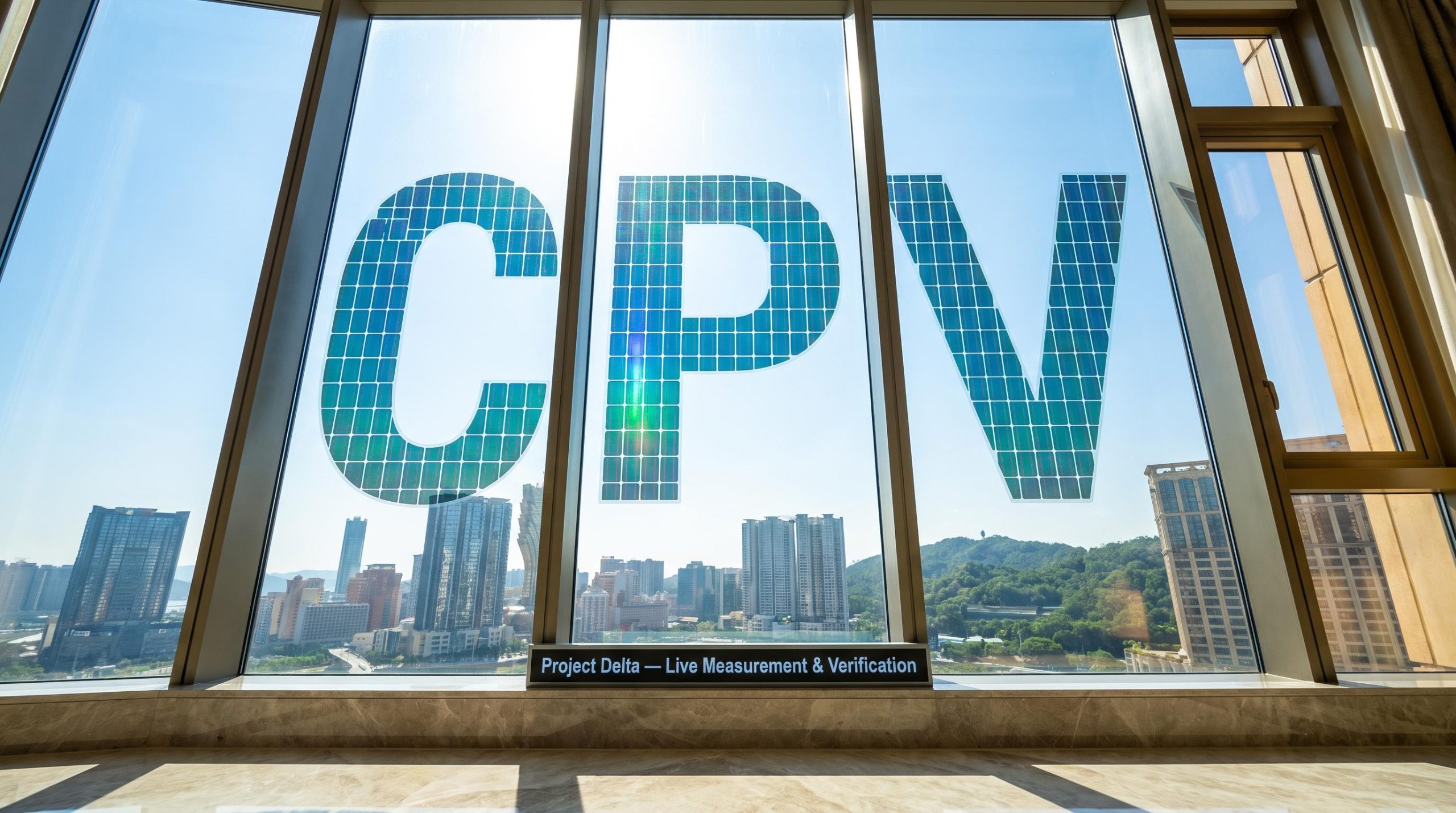
As of 24 September 2026, ClearVue Technologies Limited (ASX: CPV | OTCQX: CVUEF) has commenced the first real-world deployment of photovoltaic glazing technology jointly developed with LandVac. The deployment marks an execution milestone for the parties’ recently announced Hong Kong joint venture, moving the technology from product development into real-world Measurement and Verification (M&V). The installation is taking place at a hotel in Macau under a Letter of Intent with the customer, with the product bearing the development name “Project Delta.”
When big ASX news breaks, our subscribers know first
What Project Delta is — and why Macau is the proving ground
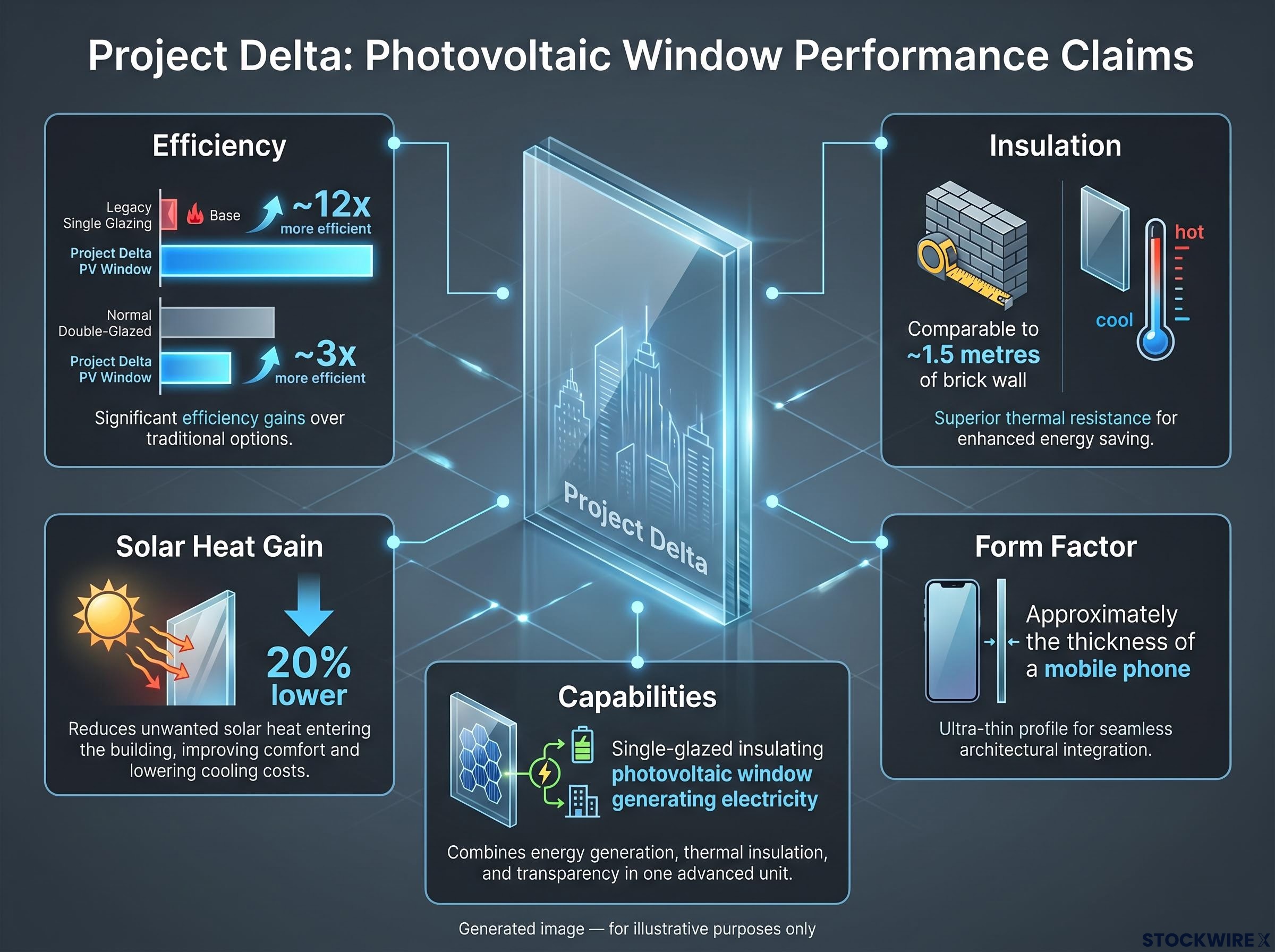
Project Delta is a single-glazed insulating photovoltaic window designed to replace legacy single glazing in existing buildings. According to Chief Executive Officer and Managing Director Doug Hunt, the product delivers “excellent insulation and a 20% less solar heat gain coefficient,” is “roughly three times as efficient as a normal double-glazed unit and around 12 times more efficient than legacy single glazing,” and achieves this while being approximately the thickness of a mobile phone. The thermal insulation is described as comparable to approximately 1.5 metres of brick wall.
Macau’s subtropical climate, characterised by high heat and humidity, was selected precisely because it creates demanding real-world conditions for a glazing solution. LandVac Founder Mr ZHAO, Yan explained the rationale directly:
LandVac Founder, Mr ZHAO, Yan
“Legacy single glazing allows significant heat transfer, driving up cooling loads in hot, humid climates, which makes Macau’s subtropical conditions an ideal test environment. A side-by-side comparison with an adjacent room will show us two things: how much electricity the window generates, and what difference it makes to cooling demand…”
The methodology is straightforward: one hotel room receives the new Project Delta window, while an adjacent room retains the existing legacy glazing. Environmental sensors will then measure thermal performance and air-conditioning energy consumption across both rooms, while electricity generation is measured only for the room equipped with the Project Delta window.
Understanding BIPV glazing and the retrofit opportunity
Building-Integrated Photovoltaics (BIPV) refers to solar technology embedded directly into a building’s fabric, such as windows, façades, or cladding, rather than mounted separately on a rooftop. Unlike conventional rooftop solar panels, BIPV replaces standard building materials entirely, meaning the building surface itself becomes an energy-generating asset. This distinction matters particularly for existing buildings, where rooftop space may be limited or already allocated.
The global retrofit opportunity is substantial. The majority of existing buildings worldwide still rely on legacy single glazing, which offers minimal thermal resistance and no energy generation capability. A product capable of replacing that glazing on a like-for-like basis, without requiring structural changes, addresses a market that rooftop solar cannot easily serve.
Non-Executive Director Andrew Lau highlighted the regional significance of this opportunity:
Non-Executive Director Andrew Lau
“The retrofit market represents one of the largest opportunities to improve the energy performance of the built environment, and validation under real operating conditions is an essential step in demonstrating both technical performance and practical application…”
The Macau deployment will measure the following performance parameters:
- Electricity generation output
- Thermal performance (heat transfer reduction)
- Cooling and air-conditioning energy consumption difference
- BIPV cladding panel durability and weathering (three surface finishes evaluated, not electrically connected in this phase)
Independent engineering firm erbas is providing engineering support for the project. CEO Hunt noted that their involvement will “provide valuable validation of the technology under real operating conditions and support its progression towards commercial deployment,” a signal of methodological rigour that is relevant for architects, engineers, developers, and building owners evaluating the technology.
ClearVue’s triple global certification under IECEE CB, CE, and TUV MARK Safety standards, achieved following independent testing by TUV SUD, provides the compliance foundation that architects and engineers require before specifying any glazing product in regulated construction markets across more than 50 economies.
What this milestone means for ClearVue’s commercial roadmap
Real-world M&V data serves as the critical bridge between laboratory performance claims and commercial adoption. The Macau deployment moves the ClearVue-LandVac joint venture from the product development phase into validated, site-specific evidence — the kind of independent data that supports procurement decisions by building owners and developers.
The Cyprus building retrofit contract, a A$305,000 supply agreement covering more than 800 square metres of the Rio Business Centre in Paphos, illustrates the kind of commercial outcome that validated real-world performance data is designed to unlock, with procurement decisions in regulated construction markets closely tied to independently demonstrated technical credentials.
CEO Hunt also noted a broader sustainability dimension, stating that the product “has the potential to reduce both operational carbon in buildings and embodied carbon in construction due to its lower weight and reduced material requirements.” This positions Project Delta within green building and ESG frameworks, which are increasingly relevant to building procurement decisions across Asia and globally.
The table below summarises how Project Delta compares against legacy glazing technologies, based on performance claims made by CEO Doug Hunt in the announcement:
| Technology | Thermal Efficiency (vs. legacy single) | Solar Heat Gain | Weight Profile | Electricity Generation |
|---|---|---|---|---|
| Legacy single glazing | Baseline | Baseline | Heavier | None |
| Standard double-glazed | Better | Better | Heavier | None |
| Project Delta (ClearVue-LandVac) | ~12x more efficient | **20% lower SHGC** | Lightweight | Yes — renewable |
CEO & Managing Director Doug Hunt
“Independent real-world data is an important part of progressing the technology towards broader commercial deployment and building confidence among architects, engineers, developers and building owners.”
Data generated through the Macau deployment is expected to support future retrofit project pipelines and broader commercial adoption of the technology. Mr ZHAO noted that the Macau hotel “certainly won’t be the last” deployment, signalling that the joint venture views this as the first of multiple planned real-world validations rather than a standalone exercise.
Don’t Miss the Next Clean Tech Breakout on the ASX
Big News Blast delivers FREE breaking ASX tech and clean energy news directly to your inbox within minutes of release, with in-depth analysis already done. Join 20,000+ investors who never miss a market-moving announcement. Click the “Free Alerts” button at Big News Blast to start receiving alerts the moment news breaks.