
Osteopore Ltd Wins Neurosurgery Approval at Major Bangkok Teaching Hospital
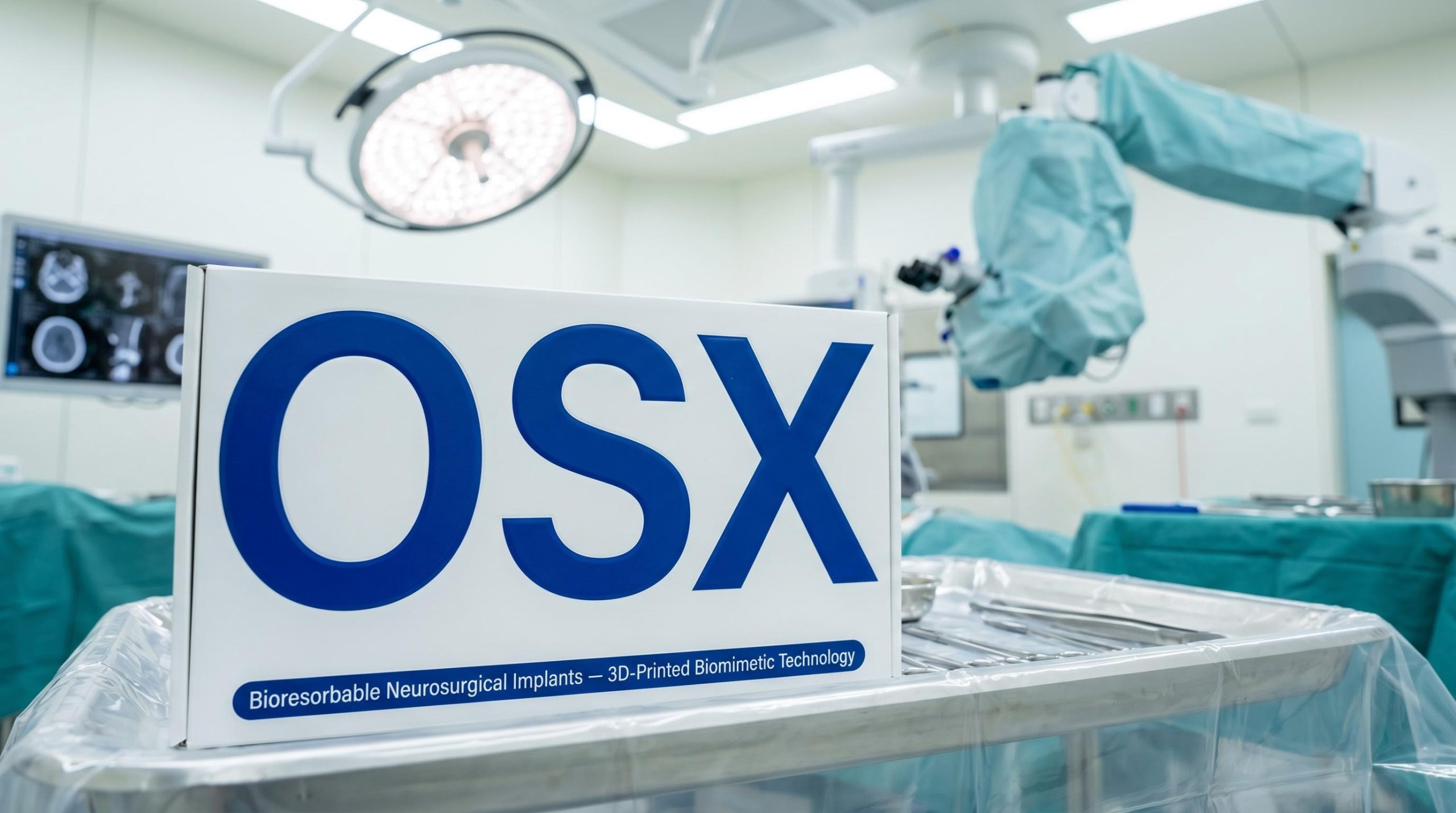
Osteopore wins neurosurgery product approval at a major Bangkok teaching hospital
Osteopore (ASX: OSX) has secured approval for its neurosurgery products at Thammasat University Hospital (TUH), a major medical centre in Bangkok, Thailand. The milestone opens a leading academic hospital to the Company’s regenerative implant technology.
The development follows the appointment of Peakmed Co., Ltd (Peakmed) as Osteopore’s exclusive distributor in Thailand, announced on 6 May 2025.
Osteopore is an Australian-Singaporean regenerative medicine company described as a “global leader in 3D-printed biomimetic and bioresorbable implants.” For investors, hospital approval is the gateway to clinical adoption and ongoing product use within an institution’s surgical workflows.
No revenue or order value has been disclosed in connection with this approval.
When big ASX news breaks, our subscribers know first
Why Thammasat University Hospital matters
TUH is a high-level tertiary care hospital and referral centre serving Pathum Thani, Bangkok and the wider central region of Thailand. Its scale and accreditation establish the significance of this access point.
Key credentials of the hospital include:
-
A high-level tertiary care hospital and referral centre serving Pathum Thani, Bangkok and central Thailand
-
Established by royal decree and granted Advanced Healthcare Accreditation by Thailand’s Healthcare Accreditation Institute
-
Averages approximately 4,000 outpatient visits per day
-
Operates more than 800 inpatient beds, with capacity expanding toward 1,000 beds as it transitions into a “Super Tertiary University Hospital” and hub of specialised Centres of Excellence
-
Serves as the teaching hospital of Thammasat University’s Faculty of Medicine, training specialists across all major disciplines
-
Houses a dedicated neurosurgery division accredited by the Royal College of Neurological Surgeons of Thailand
Adoption within the Department of Surgery’s neurosurgery division was supported by Dr Vich Yindeedej, a Thammasat-trained neurosurgeon with international fellowships in epilepsy, functional and paediatric neurosurgery from Osaka Metropolitan University and Osaka City General Hospital, Japan.
This combination of institutional scale, clinical accreditation and specialist expertise provides a strong foundation for the broader adoption of Osteopore’s technology within one of Thailand’s leading academic medical centres.
Understanding Osteopore’s neurosurgery technology
Osteopore’s neurosurgical implants are described as one of the Company’s more mature product lines. They are focused on treating a range of brain surgeries where bone tissue is removed, such as burr hole and craniotomy procedures.
The technology centres on patented, 3D-printed, bioresorbable scaffolds. A bioresorbable scaffold is an implant made from a material that naturally dissolves in the body over time.
As the scaffold dissolves, it allows natural and healthy bone tissue to regenerate in its place. According to the Company, this significantly reduces the post-surgery complications commonly associated with permanent bone implants. Osteopore states that its 3D printing technology is “unique to Osteopore.”
For investors, a mature and differentiated product line is well positioned for adoption within established surgical procedures.
The Thailand market opportunity
Thailand’s craniomaxillofacial (CMF) market is a primary focus for Osteopore due to the significant number of neurosurgical procedures performed. Neurosurgery represents one segment within the broader CMF market.
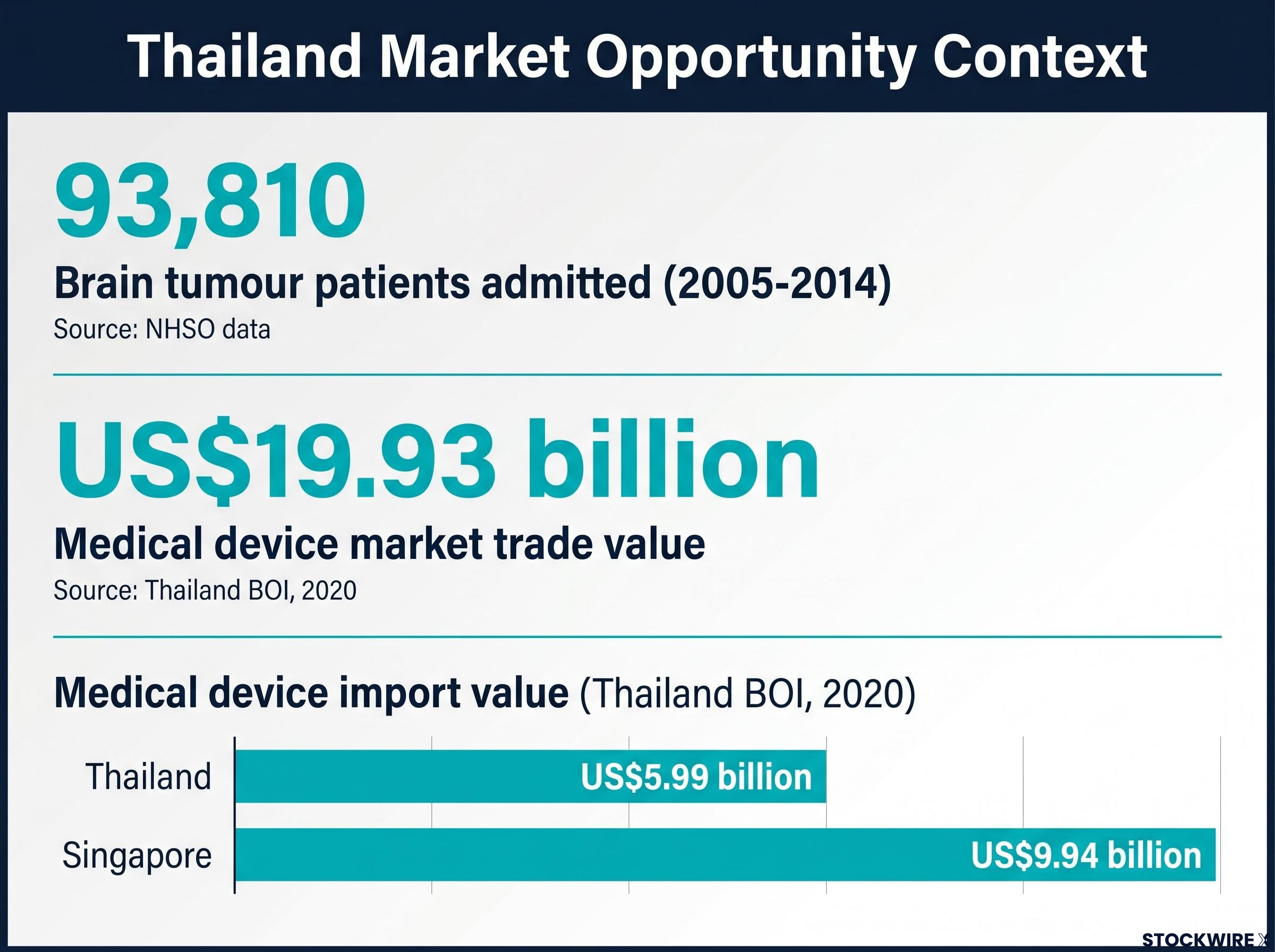
The table below summarises key data points framing the market context.
| Metric | Figure | Source / Period | Relevance to Osteopore |
|---|---|---|---|
| Brain tumour patients admitted | 93,810 | NHSO data, 10 years (2005–2014) | Indicates neurosurgical procedure volume |
| Medical device market trade value | US$19.93 billion | Thailand BOI, 2020 | Scale of the addressable device market |
| Medical device import value | US$5.99 billion | Thailand BOI, 2020 | Ranks second only to Singapore (US$9.94 billion) |
Market context
Based on published data from Thailand’s National Health Security Office (NHSO), 93,810 brain tumour patients were admitted over the 10 years from 2005 to 2014.
These figures point to a substantial neurosurgical patient base and a medical device market that ranks among the largest in the region. For Osteopore, a sizeable and growing market provides a meaningful runway for its CMF-focused product lines.
The next major ASX story will hit our subscribers first
What this means for investors and what’s next
The hospital approval follows the recent appointment of Peakmed and creates a foundation for broader adoption within one of Thailand’s leading academic medical centres. With a distributor in place and hospital approval secured, the pathway now points toward potential repeat clinical use within the institution.
Osteopore’s approach in Thailand mirrors the capital-efficient distributor model the Company applied in China, where a partnership with Majeton secured access to 13,500 hospitals without requiring an independent in-country salesforce.
No specific revenue targets or timelines have been disclosed for this approval, and the broader adoption of the technology remains subject to clinical uptake.
The Company is steadily building market access in Thailand, with a differentiated, mature product line now embedded in one of Thailand’s leading academic medical centres.
Don’t Miss the Next Healthcare Breakthrough in Your Inbox
Big News Blast delivers FREE breaking ASX healthcare news directly to your inbox within minutes of release, complete with in-depth analysis. Join 20,000+ subscribers already staying ahead of the market. Click the “Free Alerts” button at StockWire X to get real-time alerts the moment market-moving news breaks.