
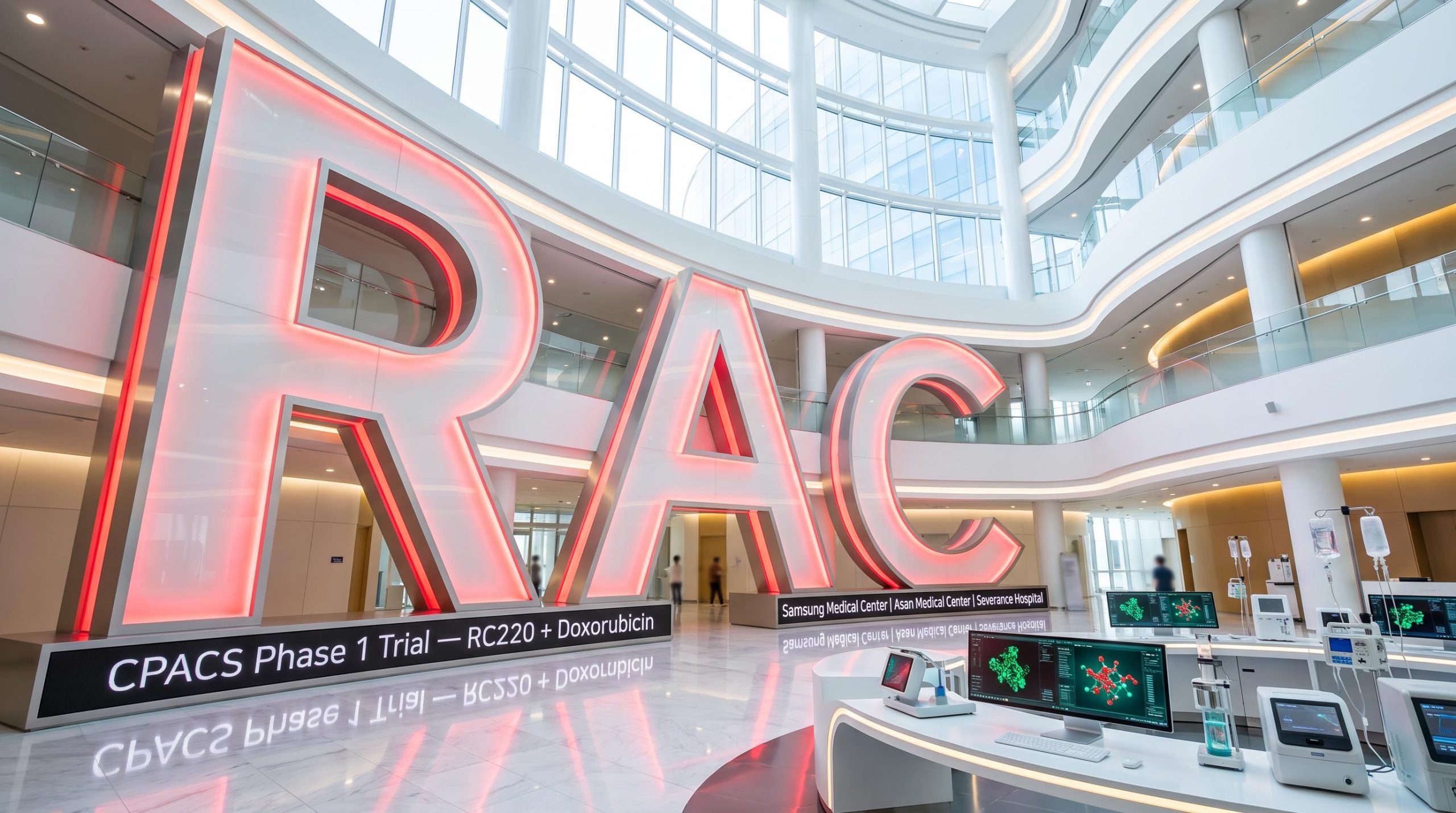
Racura opens first Korean site for RC220 CPACS trial in advanced solid tumours
Racura Oncology (ASX: RAC) has activated its first Korean site, Ewha Womans University Seoul Hospital, for patient enrolment in the Phase 1 trial of RC220 in combination with doxorubicin in patients with advanced solid tumours. The announcement, dated 1 September 2026, marks the entry of the Cardioprotection and Anticancer Synergy (CPACS) trial into a key global pharmaceutical market.
Pre-screening of patients has begun at both Ewha and Severance Hospital, with treatment of the first patient expected soon, subject to the availability of an open treatment slot.
Adding sites in Korea is expected to accelerate recruitment and build momentum for the CPACS Phase 1 programme, expanding the pool of clinicians and patients able to participate in the study.
When big ASX news breaks, our subscribers know first
Three world-class Korean sites activating in rapid succession
The Korean rollout is proceeding in staged fashion across several leading oncology centres. Alongside Ewha, three further sites are being brought online.
-
Ewha Womans University Seoul Hospital — activated as the first Korean site.
-
Severance Hospital — scheduled to open for patient enrolment on 4 September 2026.
-
Samsung Medical Center — scheduled to open for patient enrolment on 8 September 2026.
-
Asan Medical Center — all regulatory and governance approvals received, with activation awaiting execution of the study contract.
All Korean CPACS trial sites are recognised world-class oncology centres with outstanding five-year patient survival outcomes. The Newsweek 2026 rankings underscore their standing in global oncology care.
| Site | Status / Date | Global Standing (Newsweek 2026) |
|---|---|---|
| Ewha Womans University Seoul Hospital | Activated (first site) | — |
| Severance Hospital | Opens 4 September 2026 | 22nd-best oncology hospital |
| Samsung Medical Center | Opens 8 September 2026 | 3rd-best oncology hospital in the world |
| Asan Medical Center | Awaiting study contract execution | 4th-best oncology hospital in the world |
For investors, the calibre of these institutions matters. Engaging top-tier oncology centres with strong survival outcomes helps de-risk trial execution and lends credibility to the CPACS programme.
Why the Korean launch took time and why it strengthens the trial
Activation of the Korean sites was protracted by protocol changes required to support the blood-based biomarker of cardioprotection (ASX Announcement: 11 February 2026). These changes are best understood as a data-quality and safety upgrade rather than a delay.
The blood-based cardioprotection biomarker at the heart of this protocol change was developed to accelerate RC220 heart-protection data by at least two years versus the original trial timeline, with Australian regulatory approval secured before the Korean resubmission process began.
The amended protocol required resubmission to the Republic of Korea Ministry of Food and Drug Safety (MFDS) for approval, together with independent Institutional Review Board (IRB) ethics and governance approvals at each trial site.
The doxorubicin monotherapy cycle explained
The central change was the addition of a doxorubicin monotherapy cycle before patients receive the RC220 combination. This upfront cycle delivers three benefits.
-
It establishes each patient’s baseline cellular damage from doxorubicin alone versus the RC220 combination, which is the core measurement underpinning the cardioprotection biomarker.
-
It improves patient safety by identifying patients who cannot tolerate doxorubicin before they are exposed to the more intense combination therapy.
-
It prevents doxorubicin-caused toxicities from being incorrectly attributed to RC220, protecting trial integrity in a dose-escalation setting.
The clinical rationale is significant. According to Racura, up to 40% of patients suffer Grade 3 or 4 side effects from standard-of-care doxorubicin-containing therapies, and the rate of doxorubicin metabolism can vary more than 10-fold between individuals. This variability explains why a reliable cardioprotection biomarker matters.
Understanding the CPACS trial and dose-escalation design
For investors newer to early-stage oncology, the science and structure of the CPACS trial are worth setting out clearly.
What RC220 aims to achieve
RC220 is Racura’s proprietary formulation of (E,E)-bisantrene. The CPACS trial aims to deliver both anthracycline cardioprotection and enhanced anticancer activity when RC220 is used in combination with doxorubicin.
The compound primarily acts by silencing c-MYC, a key cancer gene that Racura notes is dysregulated in up to 70% of all cancers.
How the dose-escalation stage works
The goal of the dose-escalation stage is to identify the maximum RC220 dose that patients can safely tolerate. Getting this right is important, as later efficacy studies can fail when the optimal dose is not correctly established.
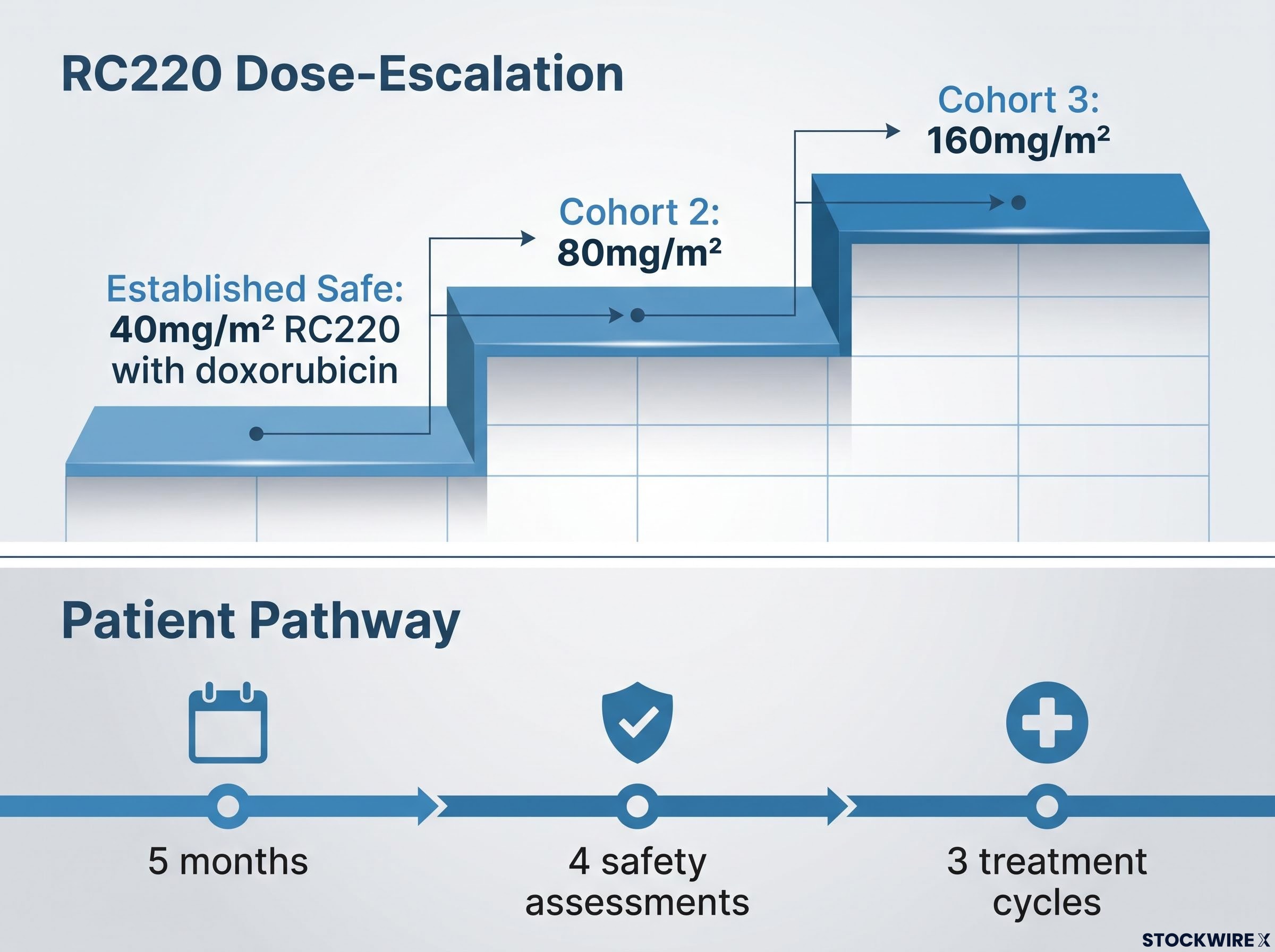
The trial has already established that 40mg/m² of RC220 with doxorubicin is safe (ASX Announcement: 15 May 2026), a dose level that provided both cardioprotection and added anticancer activity in preclinical models.
Cohort 2 tests 80mg/m². If this dose is tolerated, the trial is designed to escalate to Cohort 3 at 160mg/m². Each patient’s pathway takes approximately five months, comprising four safety assessments and three treatment cycles.
What the Korean expansion means for investors
Racura has cited three main reasons for opening the new CPACS trial sites in Korea.
-
Strong interest in the trial from eminent, world-class clinical investigators who recognise the need to address cardiotoxicity caused by anthracyclines such as doxorubicin.
-
Faster trial recruitment, as more sites increase both the number of patients who can be recruited and the overall speed of recruitment.
-
Evidence of clinical safety and efficacy in the commercially important Korean pharmaceutical market, outside Australia and Hong Kong.
Dr Daniel Tillett, CEO/MD
“Activating the CPACS trial sites in Korea is an important milestone for Racura. We appreciate the dedication and enthusiasm of these world-class investigators and clinical teams participating in this trial. We look forward to enrolling and treating the first patient with RC220 in Korea in the near future.”
Next steps and upcoming catalysts
Treatment of the first Korean patient is expected soon, subject to patient eligibility, completion of screening requirements, and the availability of an open treatment slot.
After Cohort 2 completes, the Safety Review Committee (SRC) will review the collated safety and tolerability data to determine the next step. If 80mg/m² is considered tolerable and safe, the trial will escalate to Cohort 3 at 160mg/m². If the dose-limiting toxicity rate exceeds the prespecified allowed rate, the dose-escalation stage will end and the efficacy stage will begin using the highest tolerated dose.
CPACS dose escalation to 80mg/m2 was formally cleared by the Safety Review Committee in May 2026 after confirming zero dose-limiting toxicities across all Cohort 1 patients, with all three patients remaining alive despite advanced metastatic tumour status at enrolment.
Investors will be updated once the SRC has reviewed all Cohort 2 patient data and determined the next step.
The CPACS trial sits alongside Racura’s broader clinical pipeline, which includes the EMILI Phase 3 trial in acute myeloid leukaemia and the HARNESS Phase 1a/b trial in EGFR-mutated non-small cell lung cancer.
With multiple leading Korean centres coming online in quick succession, the expansion is expected to accelerate the pace of the CPACS trial’s progress.
Don’t Miss the Next Healthcare Breakthrough on ASX
Big News Blast delivers FREE breaking ASX healthcare news straight to your inbox within minutes of release, complete with in-depth analysis. Join 20,000+ investors already staying ahead of the market. Click the “Free Alerts” button at Big News Blast to receive the next market-moving announcement the moment it drops.