
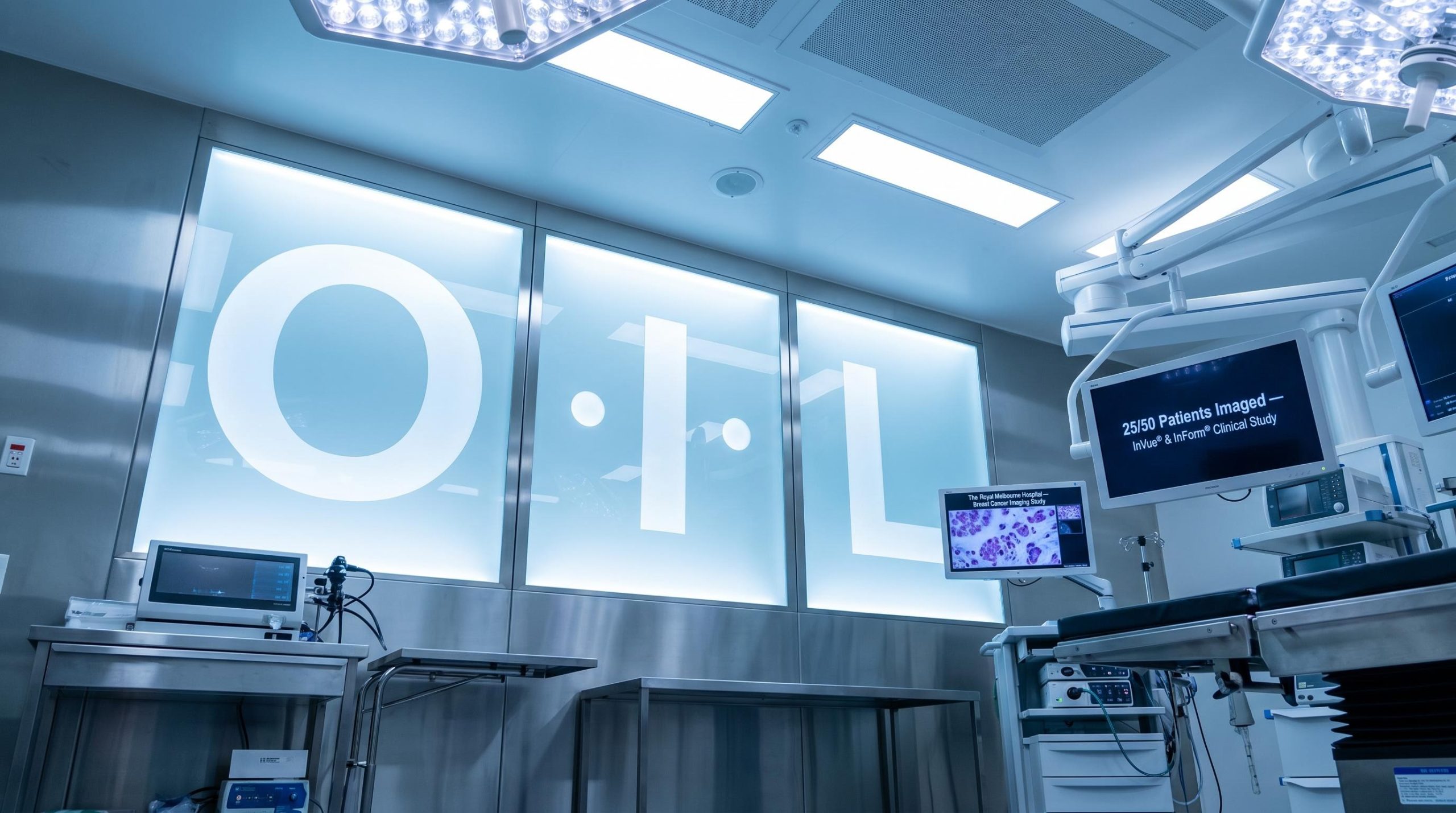
Optiscan reaches halfway mark in landmark breast cancer imaging study
Optiscan Imaging Ltd (ASX: OIL) has reached the halfway recruitment milestone in its first in-human breast cancer imaging study at The Royal Melbourne Hospital (RMH), with 25 of the target 50 patients imaged as of 4 June 2026. The milestone keeps the company on schedule for U.S. FDA submissions for both its InVue® and InForm® devices, targeted for H2 CY2026.
Key highlights from the announcement include:
- 25 of 50 target patients imaged at The Royal Melbourne Hospital
- Study expanded to a second clinical site (Frances Perry House) to accelerate recruitment
- Study commenced June 2025, assessing InVue® (in vivo) and InForm® (ex vivo) imaging
- Combined study data to support U.S. FDA submissions for both devices in H2 CY2026
When big ASX news breaks, our subscribers know first
What the study is testing and why it matters for breast cancer surgery
Under the current standard of care, surgeons performing lumpectomy procedures must wait one to three days for post-operative pathology results to determine whether tumour margins are clear. This uncertainty drives a re-operation rate estimated at 15–25%, placing significant burden on patients and the broader healthcare system.
The RMH study is evaluating whether real-time imaging at the point of care can address this gap directly, integrating Optiscan’s two devices into the surgical workflow to provide immediate margin assessment during and immediately after the procedure.
InVue® and InForm®: two devices, one surgical workflow
InVue® is used intraoperatively inside the resection cavity, generating live in vivo images immediately after tumour removal. InForm® then analyses the excised tissue using ex vivo digital pathology imaging, providing additional margin insight alongside the intraoperative findings.
Both devices acquire interpretable images in a matter of seconds to minutes, depending on workflow and contrast agent used. Together, they are designed to support more informed surgical decision-making at the point of care, with the potential to reduce the need for repeat operations.
Early clinical readouts show promising signals
Clinical readouts from 18 analysed cases to date show consistent concordance between Optiscan imaging and definitive histopathology using hematoxylin and eosin (H&E)-stained slides. The imaging has demonstrated like-for-like cellular and architectural features across both healthy normal tissues and invasive cancer.
| Patient cohort analysed | Clear margins | Narrowly clear margins | Involved margins | Adverse events |
|---|---|---|---|---|
| n=18 | 9 patients | 4 patients | 5 patients | 0 reported adverse events |
No adverse events related to intravenous sodium fluorescein contrast agent injections have been reported across the cohort to date.
On track for FDA: the regulatory significance of this milestone
Reaching the halfway recruitment mark is not merely an operational update. It represents a direct input into the regulatory dossier that will underpin Optiscan’s planned U.S. FDA submissions. The combined data from both InVue® and InForm® assessments will also support ongoing development of the company’s artificial intelligence and machine learning models.
The company’s current position on the FDA regulatory pathway is at the Regulatory Dossier Preparation stage, moving toward formal FDA submission. The full pathway, as outlined in the announcement, is as follows:
- Technical development
- Preclinical validation
- Ethical clearance
- Clinical validation
- Regulatory dossier preparation (current position)
- FDA submission
- Regulatory clearance
- Commercial deployment
This positions Optiscan well past the early development and preclinical stages, and firmly in the preparation phase ahead of formal submission. For investors, this distinction is material: the company is not awaiting ethics approval or completing bench testing; it is building the evidentiary package required to file with the FDA.
Dr Camile Farah, CEO and Managing Director, Optiscan Imaging
“The study also has another benefit for Optiscan over and above its demonstration of the clinical importance of the Company’s medical technology. It will additionally make a valuable contribution to our efforts to deliver regulatory approvals, a core requirement in Optiscan’s plans to commercialise its product offering. The insights generated by this RMH study will definitely continue to inform our commercial strategy and support broader market adoption of our devices.”
A large and growing market awaiting regulatory clearance
The commercial context for Optiscan’s regulatory push is considerable. Breast cancer is historically one of the most resource-intensive malignancies to manage in the U.S., with approximately 275,000 new invasive breast cancer diagnoses occurring annually. The global breast-conserving surgery market was estimated at USD $2.45 billion in 2024 and is projected to reach USD $4.58 billion by 2033, growing at a compound annual growth rate of 7.26% from 2025 to 2033. The scale of unmet clinical need directly validates the problem Optiscan is working to solve.
Professor Bruce Mann, Lead Investigator on the RMH study, framed the clinical gap clearly:
Professor Bruce Mann, Lead Investigator, The Royal Melbourne Hospital
“Despite the prevalence of breast cancer surgery globally, surgeons still have limited access to immediate, detailed information during procedures. This study is assessing how Optiscan’s imaging technologies can support more informed decisions at the point of care.
“We are pleased with the progress of this study, particularly its exploration of real-time tissue assessment during surgery. These technologies may give surgeons more immediate insight during procedures and open up new possibilities to potentially reduce the need for re-operative surgeries.”
With recruitment now at the halfway point and a second clinical site actively contributing to enrolment, the FDA submissions targeted for H2 CY2026 represent the next material catalyst on Optiscan’s commercialisation pathway. This milestone confirms the company is progressing to schedule.
Don’t Miss the Next Healthcare Breakthrough on ASX
Big News Blast delivers FREE breaking ASX healthcare news directly to your inbox within minutes of release, complete with in-depth analysis already done for you. Join 20,000+ subscribers staying ahead of market-moving announcements the moment they drop. Click the “Free Alerts” button at StockWire X to start receiving real-time coverage today.