

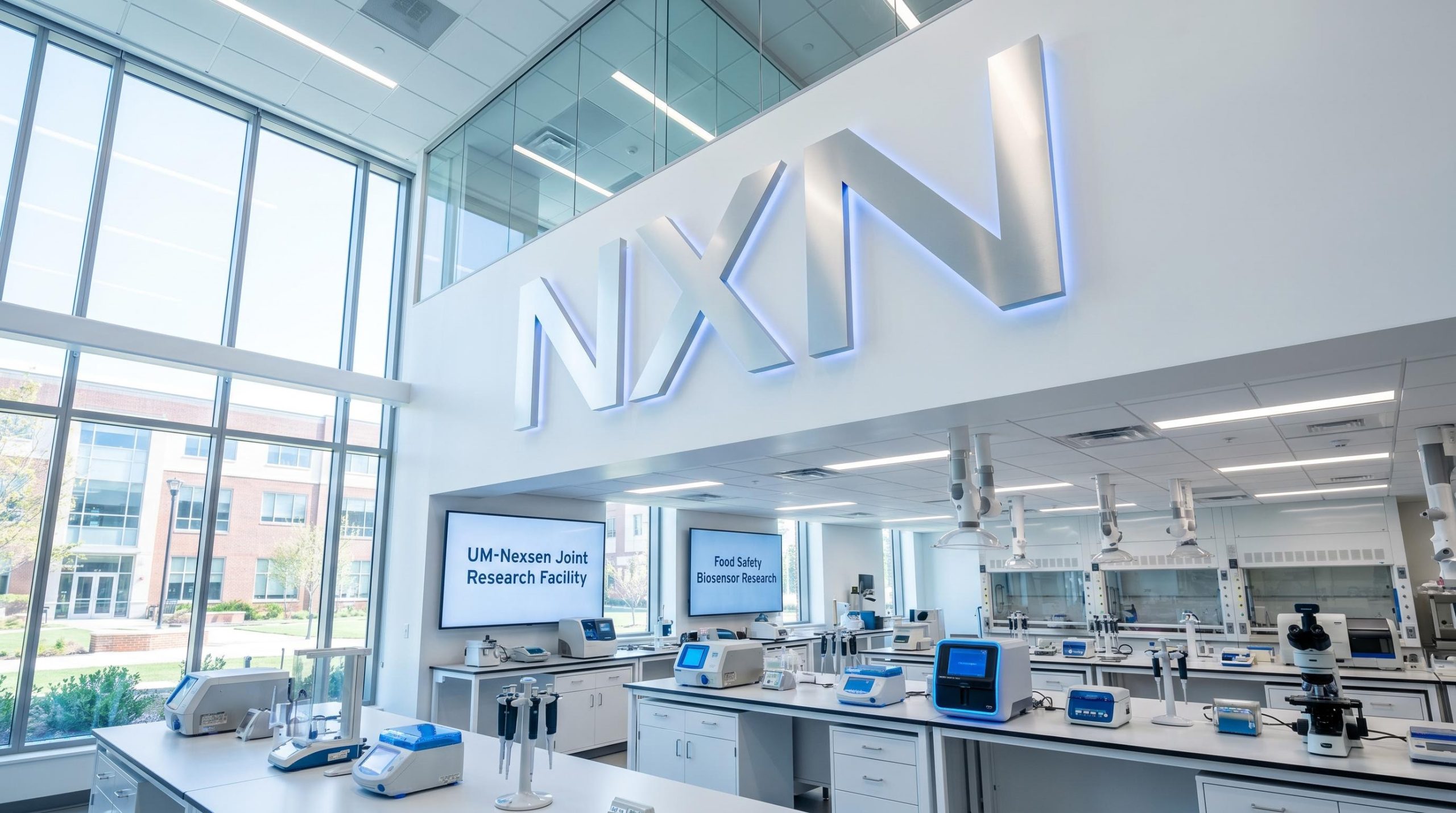
Nexsen partners with top-60 global university to build joint research facility in Malaysia
Nexsen has executed a Memorandum of Agreement with Universiti Malaya (UM) to establish the UM-Nexsen Joint Research Facility at the Universiti Malaya Innovative Medical Devices Centre of Excellence. The facility will serve as a dedicated hub for joint research and development, technology co-creation and commercialisation. UM is Malaysia’s oldest university, ranked 58th globally in the QS World University Rankings, and houses established biosensor research infrastructure and clinical networks. Under the terms of the agreement, both parties will contribute RM 1.0 million (~A$0.33 million each) to fund the establishment of the facility and initial development activities. The facility is targeted for establishment within two months.
Nexsen (ASX: NXN) gains physical R&D and commercialisation presence in Southeast Asia at half the cost, partnering with a world-ranked research institution. This leverages Nexsen’s capital whilst accessing established biosensor infrastructure and clinical networks through co-funding.
When big ASX news breaks, our subscribers know first
First project targets critical gap in food safety diagnostics
The first project for the facility is a rapid biosensor capable of simultaneously detecting E. coli O157:H7 and Salmonella spp. on a single device. No such rapid dual-sensor is commercially available today. The Malaysian Ministry of Health has identified this need through direct engagement with UM during field trials of UM’s existing prototype devices.
UM and Nexsen bring together complementary capabilities to address this gap. UM has established biosensor research infrastructure, laboratory facilities and clinical networks. Nexsen contributes its expertise in ultrasensitive sensor technology and its track record of translating university-developed research into commercial products. The commercial need is defined, the market is underserved, and the end users have been identified. Nexsen and UM are targeting a first commercially viable product within 24 months.
Nexsen is entering a defined market with identified end users and an underserved commercial need. The 24-month development timeline provides investors with a clear near-term catalyst.
Why rapid foodborne pathogen detection matters
Foodborne diseases caused by bacterial pathogens such as Salmonella and E. coli remain a major global public health and economic issue. The World Health Organisation estimates that nearly one in ten people worldwide fall ill from contaminated food each year, leading to approximately 420,000 deaths annually. In Southeast Asia, the challenge is growing as agri-food industries expand and supply chains become more complex.
Current detection methods remain reliant on culture-based microbiological testing that takes 24 to 72 hours, requires specialised laboratory infrastructure and depends on trained personnel. This limits rapid decision-making at the point where early intervention matters most. The need for rapid, field-deployable testing is critical.
Investors should understand the scale of the unmet need. Faster detection enables earlier intervention in food supply chains, creating commercial value for regulators, food producers and public health systems.
Development pathway and commercialisation rights
The development pathway includes three key phases. First, refinement and standardisation of the dual-mode biosensor system for manufacturing scale-up. Second, conversion of UM’s current laptop-dependent reader technology into a standalone, field-deployable device suitable for real-world operational settings. Third, field validation benchmarked against gold standard bacterial plating and PCR methods, conducted in collaboration with food producers, regulators and ISO-accredited laboratories in Australia and Malaysia.
| Phase | Activity | Target Outcome |
|---|---|---|
| 1 | Refinement and standardisation of dual-mode biosensor system | Manufacturing scale-up ready |
| 2 | Conversion of laptop-dependent reader into standalone device | Field-deployable device for operational settings |
| 3 | Field validation against gold standard bacterial plating and PCR | Validated product benchmarked with food producers, regulators and ISO-accredited labs (Australia and Malaysia) |
On completion of co-development, Nexsen will have the rights to commercialise the resulting product. Intellectual property arrangements under the agreement protect each party’s background IP and provide a framework for the ownership and commercialisation of IP developed through the collaboration.
Nexsen secures commercialisation rights upon project completion, meaning successful development translates directly to potential revenue. The IP framework protects Nexsen’s background technology whilst enabling joint creation of new IP.
Technology platform extension into food safety
This project extends the application of Nexsen’s underlying rapid diagnostics platform. The same lateral flow and bioreceptor technology that underpins StrepSure and the company’s kidney diagnostic suite is now being applied to food safety, joining existing programmes across human health, agricultural diagnostics and biosecurity. Food safety represents the newest application vertical for Nexsen’s core technology platform.
This announcement demonstrates the breadth of Nexsen’s core technology platform. Each new application vertical expands the company’s addressable market without requiring development of entirely new underlying science.
Expanding Asia-Pacific presence with leveraged funding
The UM-Nexsen Joint Research Facility is Nexsen’s second operational entry into Asia-Pacific. In March, the company was awarded a HK$6 million IGNITE Grant supporting clinical validation, access to the Asian healthcare system and establishment of manufacturing capability in Hong Kong. The Malaysia facility complements this, enabling the company to establish physical R&D and commercialisation presence in two key regional markets.
Both entries feature a significant non-dilutive or co-funded element. Malaysia is co-funded 50/50 with UM. Hong Kong is grant-funded. This provides further leverage on Nexsen’s research and development spend. The collaboration directly supports key Malaysian Government national priorities under Malaysia’s 13th Malaysia Plan (RMK-13) and its National Biotechnology Policy 2.0.
Asia-Pacific Expansion Summary:
- Hong Kong: HK$6 million IGNITE Grant (announced March 2026). Primary focus: clinical validation, healthcare system access, manufacturing capability.
- Malaysia: RM 1.0 million (~A$0.33 million) contribution from each party. Primary focus: joint R&D hub for biosensor development and commercialisation.
Nexsen is building regional presence through capital-efficient partnerships. Non-dilutive and co-funded arrangements reduce shareholder dilution whilst establishing physical R&D hubs in two strategic Asian markets.
Talent pipeline and long-term positioning
The collaboration will also support talent development through an Industry PhD Programme and student internships. This builds a sustainable pipeline of skilled professionals in biomedical innovation. UM’s clinical networks provide a base from which to engage regulators, food producers and distribution networks across Southeast Asia.
Beyond the immediate project, the partnership creates structural advantages for future product development and market access in the region.
Management perspective
Mark Muzzin, Managing Director
“The first project targets a critical gap in food safety diagnostics. The Malaysian Ministry of Health has identified the need for a rapid dual-sensor capable of detecting both E. coli and Salmonella on a single device. No such product is commercially available today. That is the problem we intend to solve, and we intend to do so within 24 months.”
Muzzin highlighted the strategic value of the partnership, noting that the facility gives Nexsen another physical R&D and commercialisation base in Asia with a research partner of world-leading standing. Through UM’s financial and research contributions, Nexsen achieves significant leverage on its spend.
He also emphasised the breadth of the company’s technology platform, stating that the same lateral flow and bioreceptor technology that underpins StrepSure and the kidney diagnostic suite is now being applied to food safety, joining existing programmes across human health, agricultural diagnostics and biosecurity.
Closing
Nexsen gains a co-funded R&D hub with a top-60 global university, targeting a defined market gap with a 24-month commercialisation pathway. The company’s financial exposure is limited to 50% of establishment costs, providing capital-efficient entry into Southeast Asia alongside its Hong Kong grant-funded presence. The collaboration addresses an identified commercial need where no rapid dual-sensor currently exists, with end users already engaged through the Malaysian Ministry of Health.
The company continues to advance other partnership and collaboration opportunities across Asia, including for StrepSure.
Want the Next Healthcare Breakthrough in Your Inbox?
Join 20,000+ investors getting FREE breaking ASX news delivered within minutes of release, complete with in-depth analysis. Click the “Free Alerts” button at Big News Blast to start receiving alerts the moment market-moving healthcare announcements hit the ASX.