

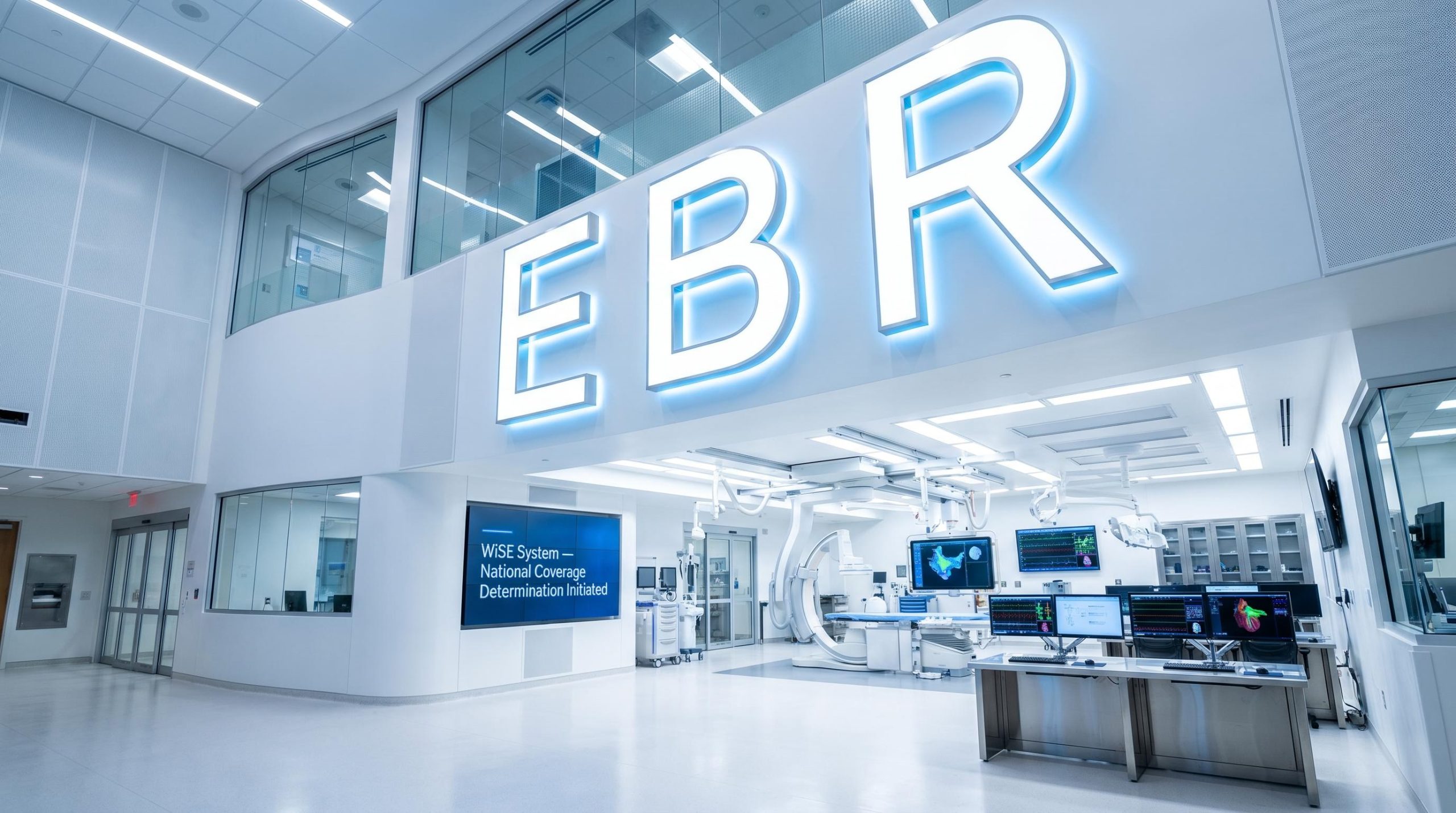
CMS initiates National Coverage Determination review for EBR Systems’ WiSE System
The U.S. Centers for Medicare & Medicaid Services (CMS) formally initiated a National Coverage Determination (NCD) review for EBR Systems (ASX: EBR) on 3 June 2026, marking the most tangible milestone to date toward broad national Medicare coverage for the WiSE System. The review evaluates Medicare coverage for leadless left ventricular endocardial pacing used in cardiac resynchronisation therapy, with a projected Final NCD expected by 3 March 2027.
EBR describes the WiSE System as the world’s only wireless cardiac pacing device for heart failure. A positive NCD outcome would establish a uniform national Medicare coverage framework, materially expanding patient access across the U.S. and supporting accelerated commercialisation.
EBR was the first company selected for CMS’s Transitional Coverage for Emerging Technologies (TCET) program, approximately 18 months ago, positioning it on a meaningfully faster track than the standard Medicare coverage pathway.
When big ASX news breaks, our subscribers know first
How the TCET pathway fast-tracks national Medicare coverage
What is TCET and why does it matter?
The Transitional Coverage for Emerging Technologies (TCET) program is a CMS initiative designed to expedite national Medicare coverage for devices that hold U.S. FDA Breakthrough Device designation. Without TCET, companies typically face a pathway of greater than five years to achieve national coverage. EBR’s participation in TCET places it on an accelerated timeline, with a Final NCD projected within approximately nine months of the review’s initiation.
EBR was the first company selected for the TCET program, a distinction the company says reflects the differentiated clinical significance of leadless left ventricular endocardial pacing. The WiSE System received FDA Breakthrough Device designation and FDA approval in April 2025, satisfying key prerequisites for TCET participation.
What happens during the NCD process?
Under the NCD process, CMS conducts a national coverage analysis (NCA) to evaluate whether a medical technology meets the statutory standard of being “reasonable and necessary” for Medicare beneficiaries. A positive determination would result in a national Medicare coverage policy for the WiSE System, applicable to eligible heart failure patients who were previously untreatable or considered high-risk for upgrade procedures.
CMS has published the following review timeline:
- Formal Request Accepted and Review Initiated: 3 June 2026
- Public Comment Period: 3 June 2026 – 3 July 2026
- Proposed Decision Memo Due Date: 3 December 2026
- Public Comment Period: 3 December 2026 – 2 January 2027
- Final NCD expected: 3 March 2027
WiSE’s commercial foundation heading into the NCD review
EBR enters the NCD review period with reimbursement infrastructure and hospital contracts already in place. CMS granted approval for two payment programmes effective 1 October 2025, both at a selling price of US$63,300:
| Programme | Setting | Selling Price | Effective Date |
|---|---|---|---|
| New Technology Add-on Payment (NTAP) | Inpatient | US$63,300 | 1 October 2025 |
| Transitional Pass-Through (TPT) | Outpatient | US$63,300 | 1 October 2025 |
Beyond these programmes, the company has established a growing commercial footprint ahead of NCD resolution:
- FDA Breakthrough Device designation and FDA approval received April 2025
- More than 39 contracts signed with individual hospitals
- Numerous regional and national contracts with major hospital systems, all at US$63,300
The NCD, if approved, would extend this reimbursement framework into a uniform national Medicare coverage policy. That would materially expand the eligible patient and provider pool beyond the current contract-by-contract coverage structure, reaching Medicare beneficiaries with heart failure indicated for cardiac resynchronisation therapy who were previously untreatable or considered high-risk for upgrade procedures. Medicare covers U.S. residents aged 65 and older, certain individuals under 65 with disabilities, and people of all ages with End-Stage Renal Disease.
What a positive NCD decision means for EBR investors
The initiation of the NCD process represents a regulatory inflection point for EBR’s U.S. commercial strategy. Key investor considerations include:
- National Medicare coverage would establish uniform access across the U.S. for eligible heart failure patients previously untreatable or considered high-risk for upgrade procedures, materially expanding the addressable patient population.
- The TCET pathway positions EBR to receive a Final NCD by 3 March 2027, significantly faster than the typical pathway of greater than five years without TCET participation.
- Existing NTAP and TPT approvals at US$63,300 and 39+ hospital contracts demonstrate commercial readiness ahead of NCD resolution.
- A positive NCD outcome is designed to support accelerated U.S. commercialisation for EBR, building on the reimbursement and contracting infrastructure already established.
It is important to note that the NCD outcome is not guaranteed, and the timeline reflects CMS’s projected schedule rather than a confirmed approval. Investors should treat forward-looking statements from management with appropriate consideration of the regulatory risks involved. EBR will continue working toward the CMS timeline as the national coverage analysis progresses through each review stage.
Don’t Miss the Next ASX Healthcare Breakthrough
Big News Blast delivers FREE breaking ASX healthcare news directly to your inbox within minutes of release, complete with in-depth analysis already done for you. Join 20,000+ investors who stay ahead of market-moving announcements the moment they drop. Click the “Free Alerts” button at StockWire X to start receiving alerts today.