

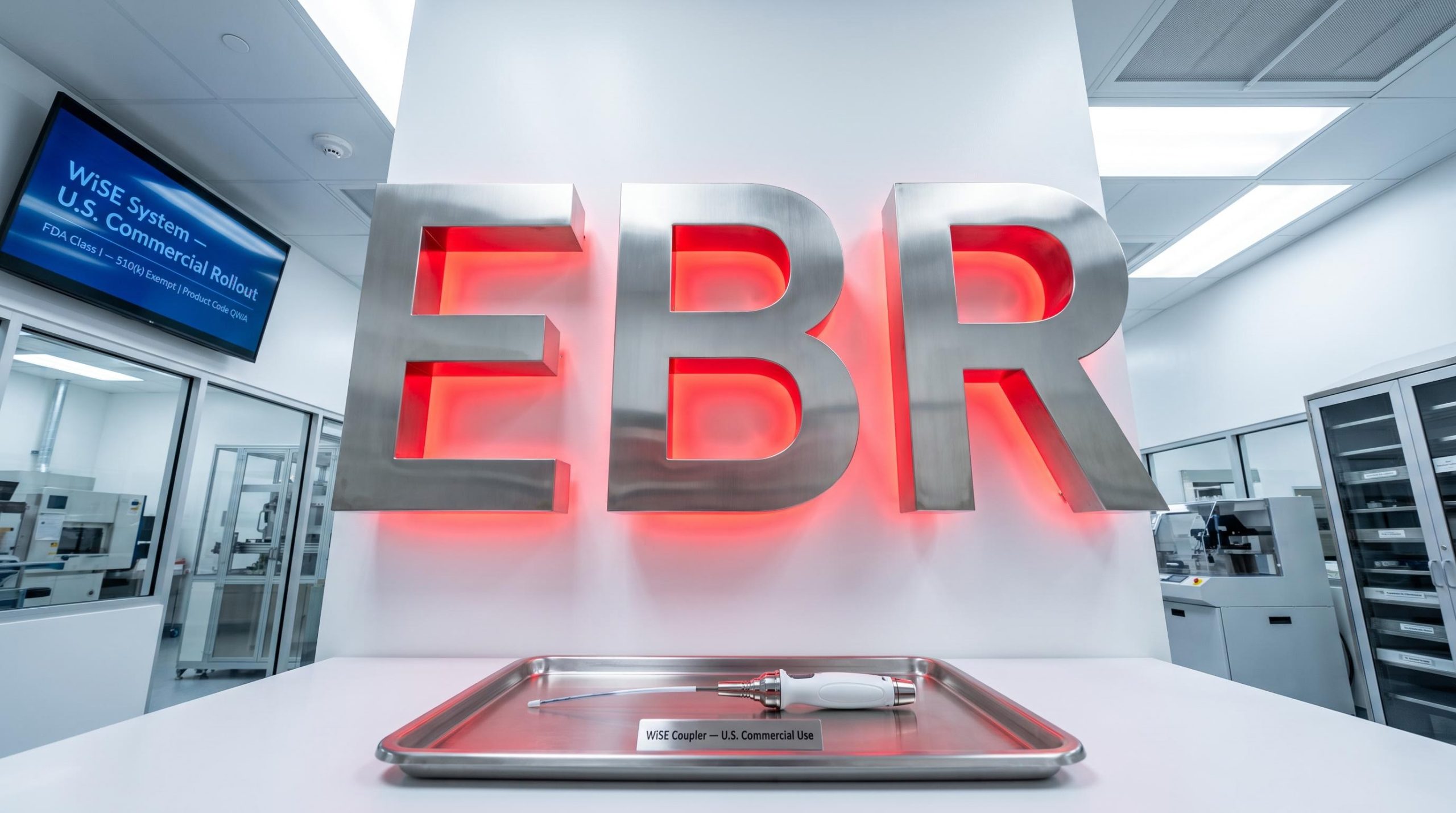
EBR Systems launches WiSE Coupler to support U.S. commercial rollout
EBR Systems has commercially launched the WiSE Coupler, an optional accessory designed to support implantation of the WiSE Electrode, now available for U.S. commercial use. The Sunnyvale-based company is the developer of the world’s only wireless cardiac pacing device for heart failure.
The Coupler complements EBR’s broader execution programme as it scales the WiSE System rollout across the United States. Investors will next receive detailed financials via the company’s Q2 2026 Quarterly Activity Report and Form 10-Q, scheduled for release on 12 August 2026 AEST.
When big ASX news breaks, our subscribers know first
What the WiSE Coupler is and how it works
The Coupler is an optional, single-use procedural accessory used with the WiSE Delivery Sheath and Electrode Catheter during implantation of the WiSE Electrode. It is not a standalone treatment device, but a tool intended to assist the implanting physician.
Its function is mechanical. By coupling the Delivery Sheath and Electrode Catheter handles into a single unit, the accessory aids positioning and stabilisation of the delivery catheter system during the procedure.
On the regulatory front, the device is listed with the U.S. Food and Drug Administration (FDA) as a Class I, 510(k)-exempt cardiovascular delivery catheter system positioning and stabilisation device (21 CFR 870.3955, product code QWA).
Dr Anne Kroman, Specialist in Electrophysiology Cardiology, Medical University of South Carolina
“The Coupler is a procedural aid used during the WiSE implant. By keeping the delivery components together and supporting slow, steady electrode advancement, it helps maintain stability and control during a technically important part of the procedure.”
Understanding WiSE technology: why wireless cardiac pacing matters
EBR’s core technology is Wireless Stimulation Endocardially, or WiSE. According to the company, it is the world’s only wireless, endocardial (inside the heart) pacing system in clinical use for stimulating the heart’s left ventricle. The implant itself is roughly the size of a large grain of rice.
The clinical problem it addresses is significant. WiSE was developed to eliminate the need for cardiac pacing leads, described by the company as historically the major source of complications, effectiveness and reliability issues in cardiac rhythm disease management.
The initial use case targets heart failure patients requiring Cardiac Resynchronisation Therapy (CRT). Rather than using a coronary sinus lead to stimulate the left ventricle, WiSE delivers pacing wirelessly.
For investors, the commercial context is important. WiSE is currently only available for sale in the United States and remains an investigational device in most other markets. The U.S. rollout is therefore the near-term commercial focus, and supporting tools such as the Coupler are positioned to aid that execution.
Beyond the U.S., EBR is pursuing a TGA Priority Review pathway in Australia that would cut the regulatory evaluation period from 225 to approximately 150 working days, positioning the WiSE System for a second major commercial market without requiring a full-length assessment timeline.
Pilot phase and where the Coupler fits in the rollout
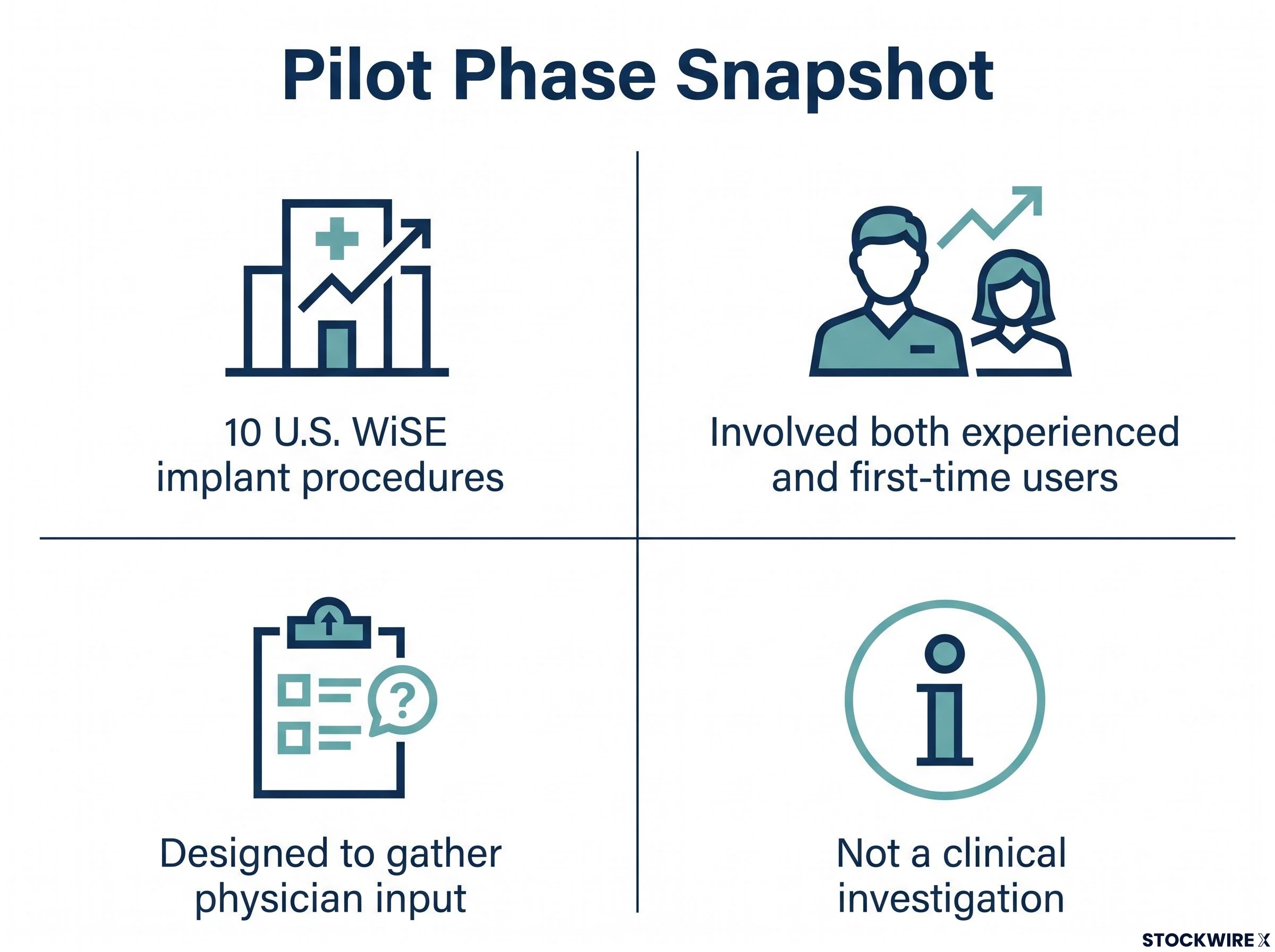
Ahead of commercial availability, the Coupler was assessed during a limited pilot release. Key facts from that phase include:
- Used in 10 U.S. WiSE implant procedures
- Involved both experienced and first-time users
- Designed to gather physician input to support the development of training and field support materials
- Not a clinical investigation, and not designed or powered to evaluate device performance, safety or effectiveness
That final caveat matters. The pilot was structured to inform training and field support, not to generate clinical evidence on the accessory’s efficacy.
Management has framed the launch within EBR’s wider commercialisation activity, which spans physician training, site activation, purchasing access, and procedural support.
John McCutcheon, President & Chief Executive Officer, EBR Systems
“The development of the WiSE Coupler reflects EBR’s comprehensive focus on execution as we scale the commercial rollout of WiSE. The availability of this new tool complements our existing program of physician training, site activation, purchasing access, and procedural support as we continue to expand the commercial rollout of the WiSE System in the United States.”
Fact vs. investor impact snapshot
The table below summarises the key features of the launch and their relevance to investors.
| Feature | Detail | Investor Relevance |
|---|---|---|
| Device type | Optional, single-use procedural accessory | Supports implantation; not a standalone product |
| FDA status | Class I, 510(k)-exempt (product code QWA) | Listed with U.S. FDA |
| Pilot use | 10 U.S. implant procedures | Non-clinical; informed training materials |
| Purpose | Positioning and stabilisation support | Aids procedural control during implant |
| Availability | U.S. commercial use | Aligned with existing U.S. rollout focus |
What comes next for EBR investors
The next key date on the investor calendar is the release of the Q2 2026 Quarterly Activity Report and Form 10-Q, due on 12 August 2026 AEST.
The Coupler launch does not carry disclosed revenue, adoption or approval implications. It does, however, signal a maturing, execution-focused phase for the WiSE commercialisation programme in the United States, with procedural tooling now sitting alongside training, site activation and support activities.
For investors tracking EBR, the upcoming quarterly and Form 10-Q will provide the clearer read on how that commercial rollout is progressing.
Investors exploring the funding runway behind the WiSE U.S. rollout can find our full explainer on EBR’s $150M capital raise, which details how the fully underwritten placement and entitlement offer are structured to fund sales expansion, manufacturing scale-up, and clinical activities.
Don’t Miss the Next ASX Healthcare Breakthrough
Big News Blast delivers FREE breaking ASX healthcare news directly to your inbox within minutes of release, complete with in-depth analysis already done for you. Join 20,000+ subscribers staying ahead of the market and click the “Free Alerts” button at StockWire X to receive real-time alerts the moment the next announcement drops.