Penguin Solutions shares have climbed 32.07% so far in October after the company beat earnings forecasts by $0.23 a share and raised its outlook. That fits the familiar story of AI hardware lifting the market. The same month, however, Wingstop and Cracker Barrel have also been rising, and neither sells a single server.
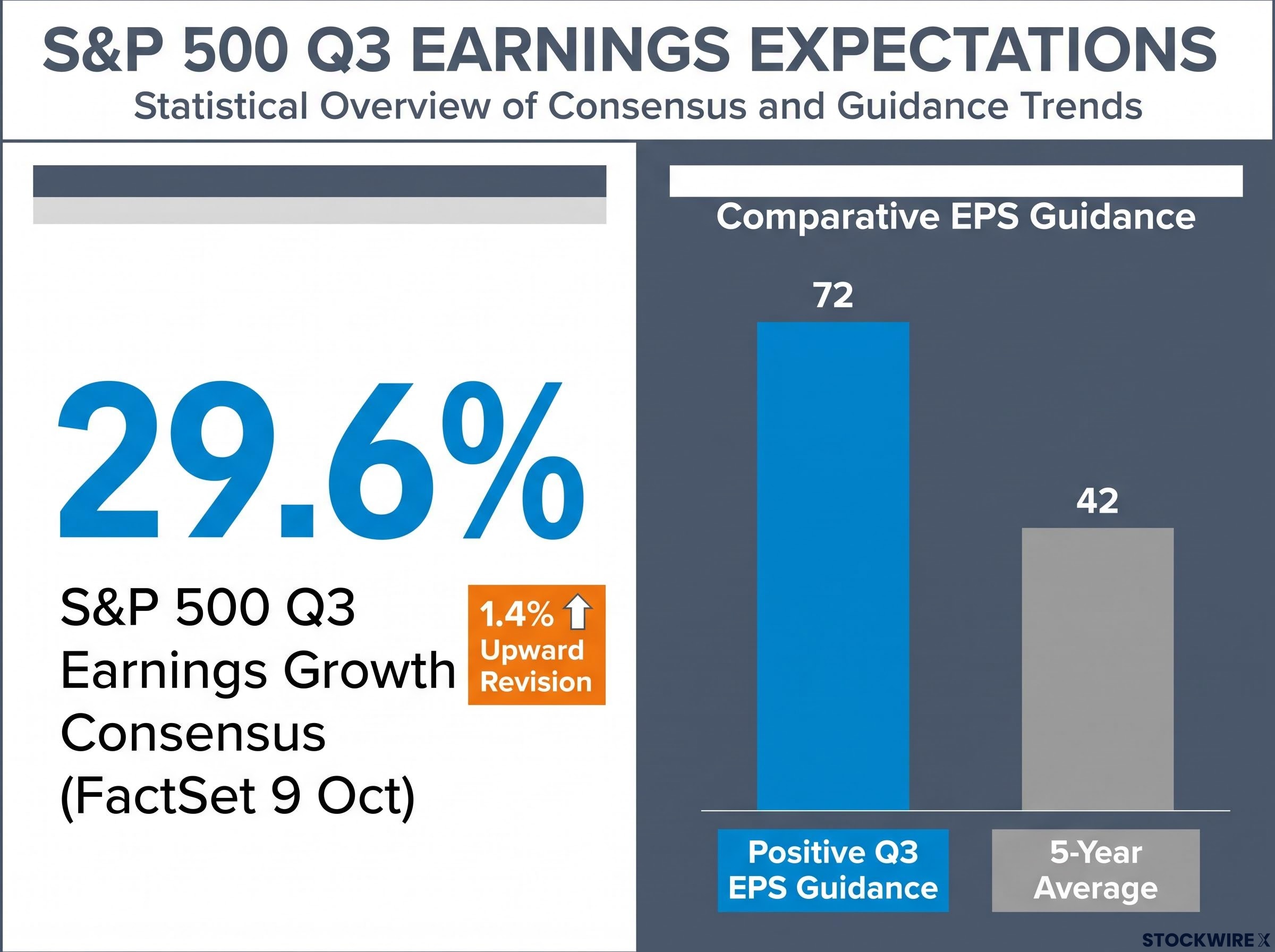
That mix matters because the third-quarter reporting period, Q3 earnings season, opens on Tuesday 13 October 2026 with banks and healthcare. It arrives against consensus S&P 500 earnings growth of roughly 29.6%, according to FactSet’s 9 October estimate.
Analysts have spent the quarter raising their forecasts rather than trimming them, which rarely happens. That leaves a trap for anyone who reads every “beat” as good news. When expectations climb this high, clearing them can be the minimum, not the win.
Here is a practical way to judge whether this earnings-driven momentum can last, and which signals deserve your attention once the first reports land.
Is the rally really broadening beyond AI, or just rotating?
The case for breadth is easiest to see when you line up the winners. Based on the Investing.com ProPicks AI coverage by Mark Garro, the gains below are month-to-date or since-pick figures, not reactions to single reports.
- AI infrastructure: Penguin Solutions up 32.07% in October
- Consumer discretionary: Wingstop up 11.81% in October
- Refining and services: Everforth up 104.61% since first picked
AI infrastructure: the original engine
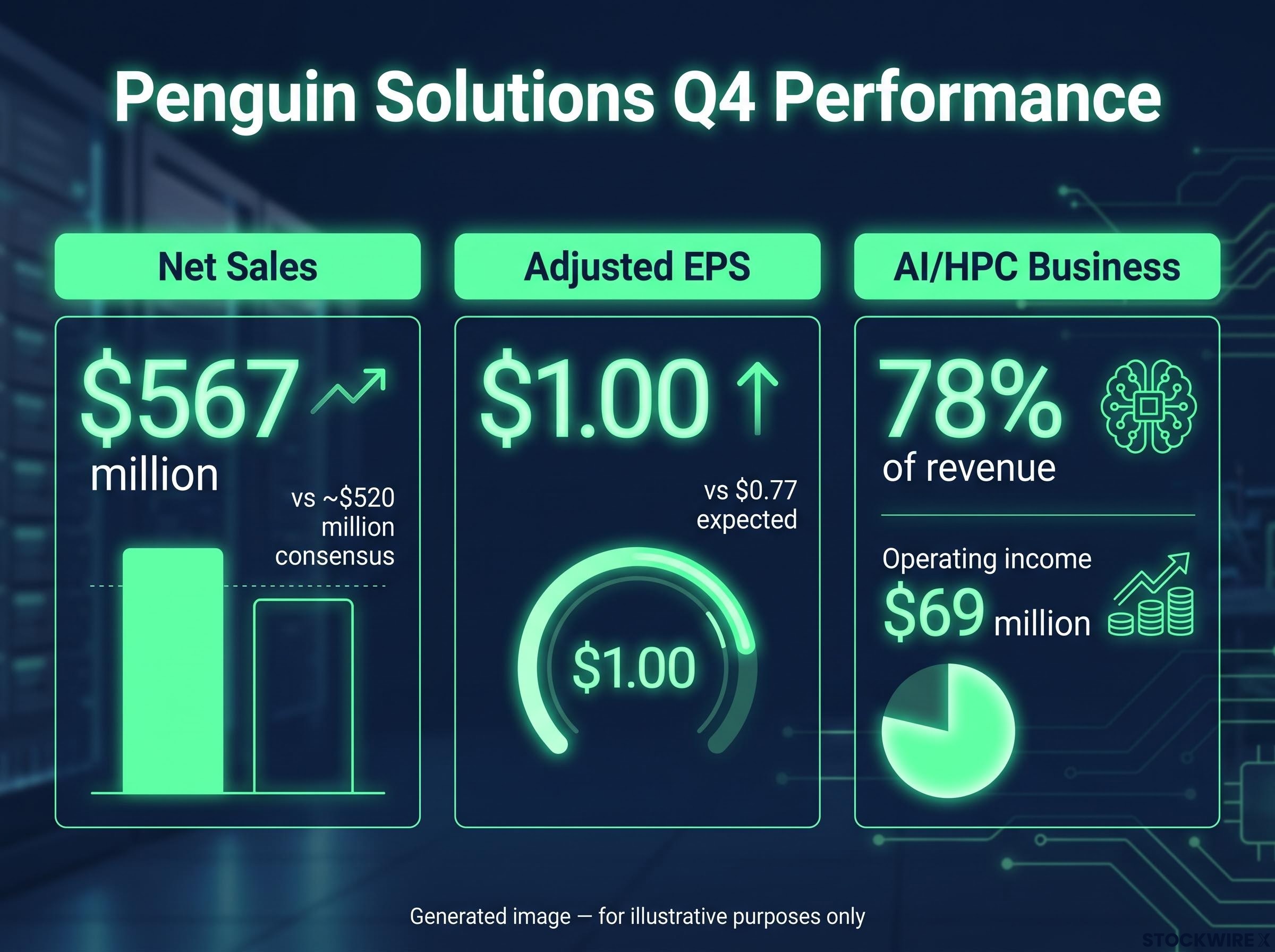
Penguin’s fiscal Q4 net sales reached $567 million, up 68% year on year and ahead of roughly $520 million consensus. Adjusted earnings per share (EPS), the profit attributed to each share, came in at $1.00 against $0.77 expected. Its AI and high-performance computing (HPC) business now makes up 78% of revenue and grew 141%.
Hyperscaler capex commitments of roughly $725 billion have already pulled AI hardware stocks sharply higher this year, and Morningstar projects demand will peak around 2028, which frames how durable the structural AI drivers really are.
Hewlett Packard Enterprise (HPE) lifted revenue 34% to $12.2 billion last quarter and posted a record $7.6 billion AI order backlog, meaning orders received but not yet delivered. Management raised guidance for both 2026 and 2027, and the stock’s return since its pick now exceeds 60%.
Consumer and refining names: the widening circle
Wingstop added 102 restaurants in a single quarter. Cracker Barrel, up 9.05% in October, reported Q4 adjusted EPS of $0.99 against $0.26 expected, a turnaround rather than a growth story.
The refiners pushed further. Delek has gained 104.23% since its pick after Q2 EPS of $5.48 crushed $2.21 consensus, while HF Sinclair (71.54%) and CVR Energy (67.69%) followed on improving refining conditions.
None of these companies shares a theme. What they share is rising earnings and upgraded outlooks, and that is no coincidence.
Record guidance A record 72 S&P 500 companies issued positive Q3 EPS guidance, against a 5-year average of 42 (FactSet, 5 October).
Add the 1.4% upward revision to estimates and the breadth looks structural. For you, the question is no longer whether you own AI. It is whether your holdings sit on the right side of the earnings-revision trend.
When big ASX news breaks, our subscribers know first
What does 29.6% growth actually mean, and why is the bar so high?
On its face, 29.6% is a spectacular number. FactSet’s 9 October estimate puts S&P 500 Q3 earnings at $801.6 billion, up from $783.5 billion, with growth expectations rising from 26.7% at the start of the quarter. Earlier readings were 29.5% on 2 October and 29.1% in late September.
Revenue is expected to grow 12.3%, up from 10.9% forecast on 30 June. FactSet notes the earnings figure sits well above its 5- and 10-year averages.
Now turn the number around. It is not a reward waiting to be collected; it is the hurdle.
Three terms explain why. Consensus is the average forecast of the analysts who cover a company. Guidance is management’s own forecast for future periods. A beat happens when reported results exceed consensus.
Before the first reports land, it helps to be clear on how earnings season works: companies report in a staggered sequence, banks usually lead, and each print resets the consensus that the next company is measured against.
Normally analysts cut estimates as a quarter progresses, which makes beats easier. This time they raised them 1.4%, so companies must clear a bar that has already moved up. Saxo Bank’s preview captures the shift:
Saxo Bank’s framing “When a beat is no longer enough.”
Not all of that growth carries the same staying power.
| Driver type | Example company | Evidence | Durability question |
|---|---|---|---|
| Structural | Penguin Solutions | AI/HPC at 78% of revenue | Does AI spending keep expanding? |
| Structural | HPE | $7.6B AI order backlog | Does the backlog convert to revenue? |
| Cyclical | Delek, HF Sinclair, CVR Energy | Favourable refining spreads | How long do margins stay elevated? |
| Cyclical | Cracker Barrel | Restructuring recovery | What drives growth once savings are banked? |
With the S&P 500 near 7,811.54 and trading at about 19.56 times forward earnings (the price-to-earnings, or P/E, ratio based on the next 12 months of expected profit), much of the good news is already priced. A company that merely meets the new consensus gives you little reason to expect further gains.
Beat, beat-and-raise, or beat-and-fall: how markets are judging results
If a beat is only the entry ticket, you need a way to sort results quickly. Penguin offers a clean worked example.
What a good print looks like
Start with the headline: $1.00 EPS against $0.77, and $567 million revenue against roughly $520 million. Then check guidance: Penguin raised its outlook for the new fiscal year. Finally, test quality: record operating income of $69 million, up 458%, shows profit coming from the core business.
All three boxes ticked, and the shares rose. Other winners strengthened their stories the same way:
- HPE raised guidance for 2026 and 2027
- Cracker Barrel lifted full-year EBITDA guidance (earnings before interest, tax, depreciation and amortisation)
- Delek swung adjusted EBITDA from -$15 million to nearly $375 million, backed by a cost programme targeting at least $200 million in annual savings
Use the same sequence on any report next week:
- The headline beat: did revenue and EPS clear consensus, and by how much?
- The guidance change: did management raise, hold or cut its outlook?
- The quality of earnings: did profit come from the core business, or from one-offs and a favourable margin mix?
How a beat can still disappoint
A company can clear step one and still fall. Cautious guidance tells the market the strong quarter may not repeat. Profit inflated by one-off gains suggests the beat says little about the business itself.
Early results look solid: of 19 S&P 500 companies reporting through 9 October, 84% beat mean EPS estimates. That sample is small, though, and no full-season beat rate is yet available.
A beat tells you the past quarter went well. Guidance and earnings quality tell you whether to expect more, so read them first.
What to watch when Q3 earnings season opens on October 13
The calendar puts four heavyweights first. All report before the market opens on Tuesday 13 October.
| Company | Report date | Consensus EPS | Consensus revenue | What it signals |
|---|---|---|---|---|
| JPMorgan | 13 Oct, pre-market | $5.90-$5.94 | $51.15B-$51.5B | Consumer strength, net interest margins |
| Goldman Sachs | 13 Oct, pre-market | ~$15.05-$15.18 | ~$17.5B | Investment banking activity |
| UnitedHealth | 13 Oct, pre-market | ~$4.12-$4.15 | ~$111.3B-$111.5B | Healthcare demand |
| Johnson & Johnson | 13 Oct, pre-market | ~$2.51-$2.59 | ~$25.37B-$25.38B | Healthcare demand |
JPMorgan carries the most weight. OANDA describes it as a “key bellwether for U.S. banking risk appetite”, and Investing.com’s 9 October figures imply roughly 16% EPS growth and 11% revenue growth, though estimates vary by source. Net interest margin, the gap between what a bank earns on loans and pays on deposits, will show how lending profitability is holding up.
Goldman’s investment banking fees will show whether deal activity is following the rally. UnitedHealth and Johnson & Johnson test whether healthcare demand supports the breadth argument.
Three risks could break the thesis:
- A weak JPMorgan print or cautious bank guidance could undercut the earnings narrative even if headline numbers meet consensus
- Stretched expectations and positioning could turn a modest disappointment into an outsized fall
- Growth near 30% sets a very high base, and the cyclical share of it may normalise
Because these four names set the tone, their guidance and commentary matter more to your read on the season than whether each clears consensus by a few cents.
Investors exploring what bank results signal about the economy will find our full explainer on big bank earnings, which examines loan growth and where consumer credit stress is concentrated.
Reading the first week of results without chasing the rally
The evidence points to a rally built on earnings and spread well beyond AI. The 29.6% growth expectation changes what counts as good news, though.
Breadth tells you leadership has widened. The bar tells you a beat is the minimum. The reaction test tells you to read guidance and earnings quality before the headline. The watchlist tells you where the first evidence arrives.
From 13 October, three signals deserve the closest attention: whether JPMorgan’s commentary on consumers and credit stays confident, whether more companies raise guidance rather than simply beat, and whether analysts keep revising estimates upward. Positive answers would support the momentum; cautious ones would suggest expectations have run ahead.
Past performance does not guarantee future results. Financial projections are subject to market conditions and various risk factors. This article is for informational purposes only and should not be considered financial advice. Investors should conduct their own research and consult with financial professionals before making investment decisions.