Rate hikes are supposed to be good news. When central banks raise interest rates, the textbook logic says the economy is running hot, demand is strong, and companies are earning more than they can spend. Higher rates are the brake pedal on a fast car.
That is not what is happening right now.
Oil is closing in on US$100 per barrel, and the U.S. 10-year Treasury yield has spiked past 4.8 percent to its highest level in nearly three years. Neither move is being driven by a booming economy. Both are being driven by a geopolitical supply shock that no central bank can control, colliding with debt markets that are already about as restrictive as they have been all cycle.
That combination breaks the models most equity investors quietly rely on. When the reason for higher rates is a war-driven energy squeeze rather than robust growth, the usual playbook stops working, and the valuation maths turns against you from two directions at once.
What follows gives you a clear framework for understanding why this specific environment is fundamentally different from a conventional rate cycle, so you can spot the valuation traps that a standard “rates up, growth strong” assumption would walk you straight into.
When oil and bond yields spike together
Two prices are moving in lockstep right now, and both are moving the wrong way for equity holders.
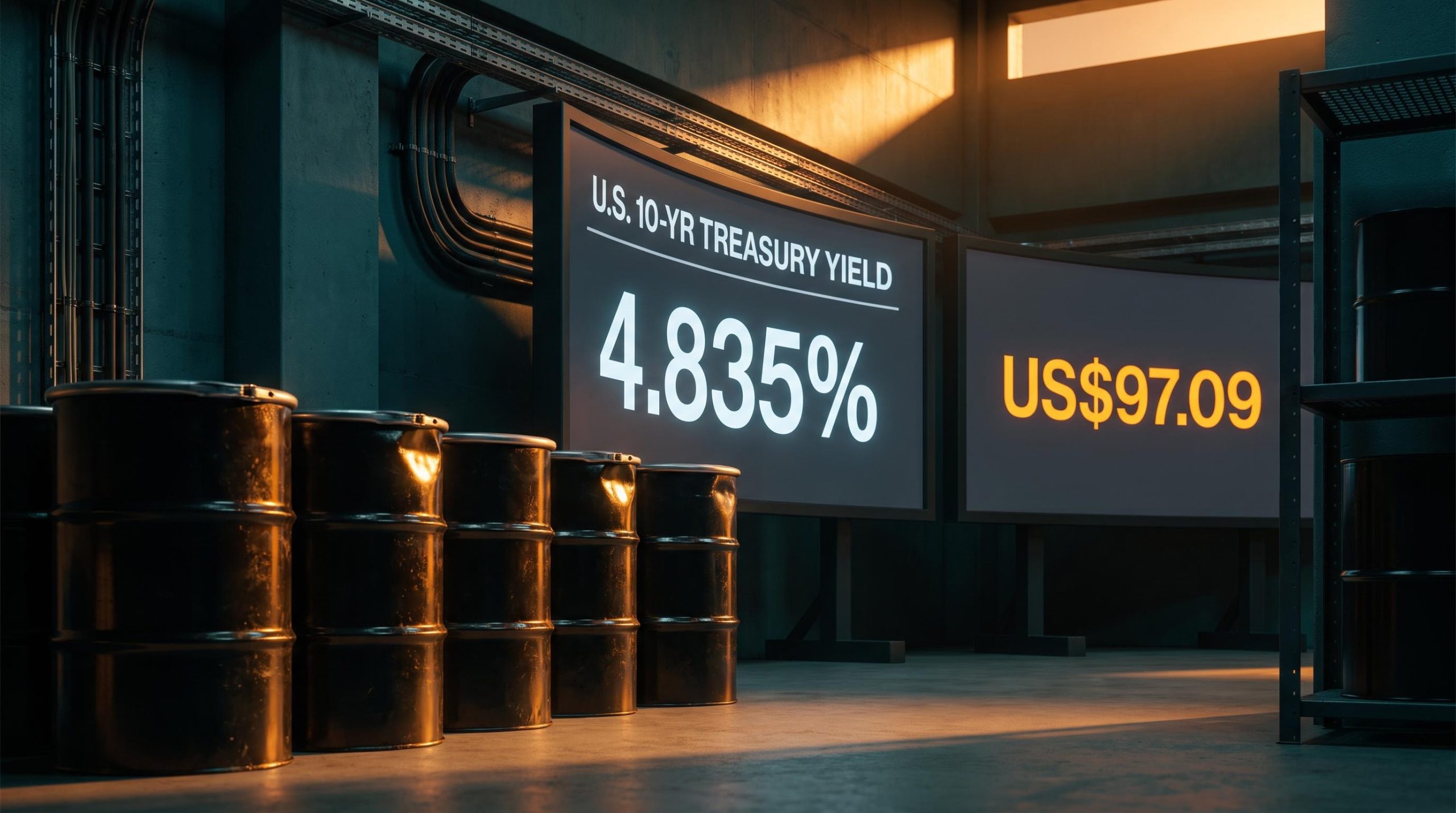
West Texas Intermediate crude was trading at US$97.09 per barrel as of 10 September 2026, according to Financial Times commodities data, sustaining a run near the US$100 mark. The pressure traces back to the ongoing Iran situation, a disruption that energy analysts once expected to last weeks. It has now persisted for months.
At the same time, the benchmark U.S. 10-year Treasury yield closed at 4.835 percent on 9 September 2026, after touching an intraday high of 4.8568 percent, its highest since November 2023, per a Reuters market report. The move followed a larger-than-expected Treasury buyback announcement and firmer producer price data.
These are not two separate stories. Higher oil feeds directly into higher inflation expectations, which push long-term borrowing costs higher, which is precisely what the 10-year yield is now showing.
The concurrent spike in energy costs and long-term borrowing rates tells you something uncomfortable about your equity exposure: discount models are being hit from both sides at once. Rising input costs squeeze corporate margins, while rising yields raise the rate at which future earnings get discounted back to today. Both push fair value lower, and they are doing it simultaneously.
What makes this episode harder to trade is the loss of a resolution date. Markets can price around a shock with a known endpoint. They struggle to price one that keeps rolling forward.
The four variables that matter most for tracking geopolitical risk transmission across asset classes are Hormuz throughput, central bank signals, diplomatic progress, and whether equity markets develop sectoral counterweights to risk-off sentiment, a framework built specifically around the current supply disruption.
Market participants have largely stopped believing the disruption will resolve on any near-term timeline. When you cannot price an ending, you cannot price the risk premium properly, which leaves equities exposed to an inflationary pressure that no forecasting model can pin down.
That is the core of the immediate problem. The Iran-driven component of oil pressure sits entirely outside policymakers’ control, and further increases in crude would generate additional upward pressure on rates. Futures markets reflected the anxiety directly, with the implied probability of a 25-basis-point Fed hike at the September meeting swinging between roughly 59 percent and 80 percent across a single trading session. The pain in portfolios is not a coincidence of two bad days. It is a structurally linked squeeze.
When big ASX news breaks, our subscribers know first
Why the traditional energy and equity relationship is failing
For years, a simple rule of thumb served investors well: when oil rises, equities often rise with it, because strong oil usually signalled strong demand. That relationship has now reversed, and understanding why is the difference between hedging correctly and hedging into a trap.
The key is the type of shock driving the oil price. A demand-driven rally, where oil climbs because the global economy is expanding and consuming more, tends to support broad equity valuations. A supply-driven geopolitical shock, where oil climbs because barrels are being taken off the market, does the opposite. It acts as a tax on growth rather than a signal of it.
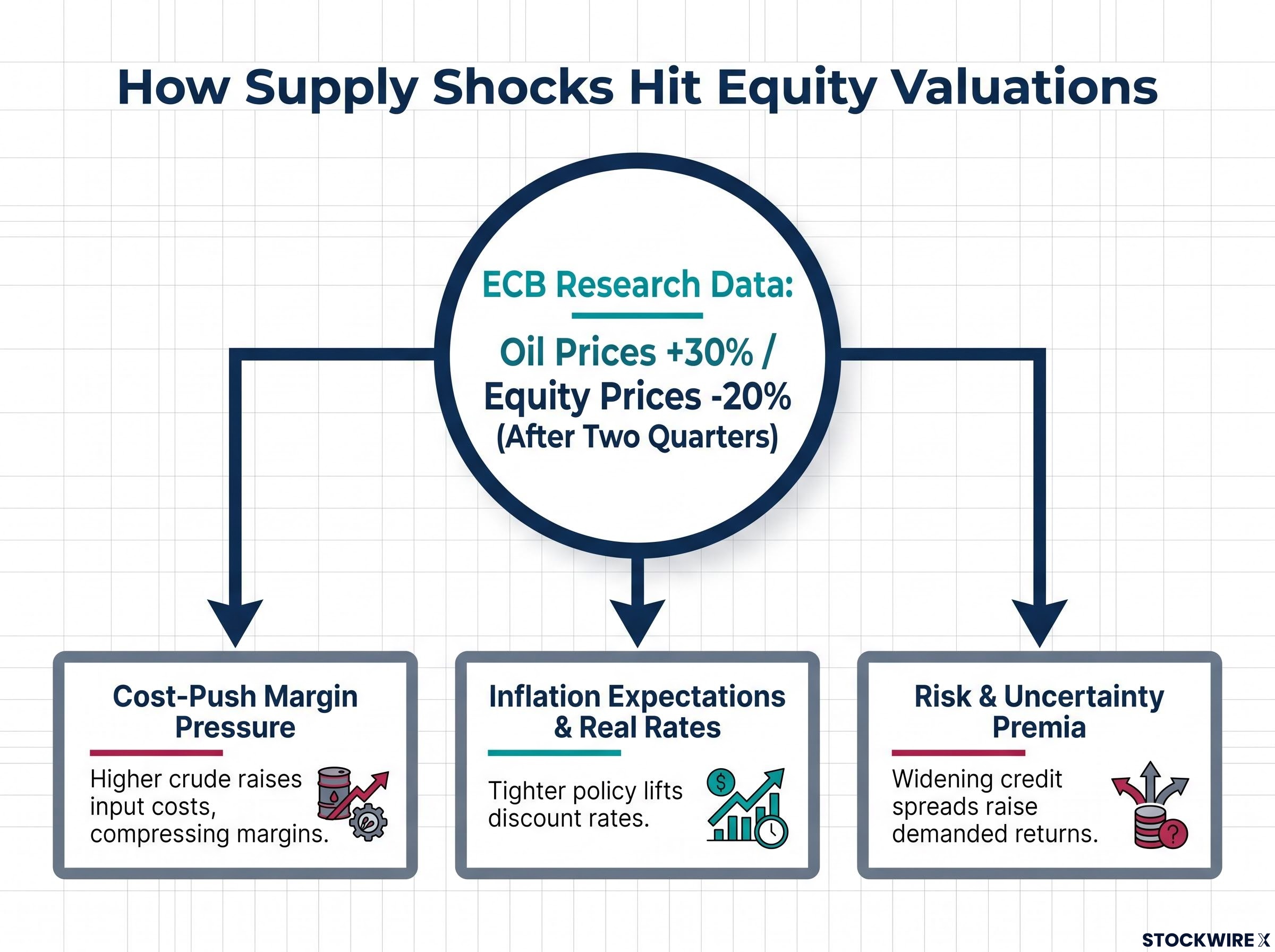
Research from the European Central Bank puts hard numbers on the divergence. Its Economic Bulletin analysis found that geopolitical shocks disrupting oil supply raise oil prices by roughly 30 percent while leaving equity prices roughly 20 percent below their pre-shock levels after two quarters, primarily through higher risk premia and weaker activity.
The International Monetary Fund identifies two main channels through which a commodity shock hits equity valuations: fundamentals, meaning profits and growth, and risk uncertainty. Crucially, equities can fall even when higher oil supports energy-sector profits, because the broader inflation and rate consequences raise the discount rate applied to every other stock in the market.
Three distinct mechanisms are causing the breakdown:
- Cost-push margin pressure. Higher crude raises input and transport costs, compressing margins for the many sectors that consume energy rather than produce it, an effect concentrated in net-importer economies.
- Inflation expectations and real rates. Higher oil lifts headline inflation, prompting markets to expect tighter policy and higher real rates, which lifts the discount rate applied to future equity cash flows.
- Risk and uncertainty premia. Geopolitical energy shocks heighten uncertainty and risk aversion, widening credit spreads and raising the return investors demand to hold equities at all.
Put those three together and the outcome is an oil-up, equities-down regime that looks nothing like the old positive correlation.
The IEA has characterised Middle East geopolitical tension as a structural inflation risk rather than a transient spike, meaning the risk premium embedded in current crude prices is likely to decompress slowly over months rather than unwind quickly, a distinction that changes how far out investors need to stress-test their earnings assumptions.
This is where the practical lesson for your portfolio sits. You can no longer assume energy stocks will blindly hedge you through an inflation scare, because the cause of the inflation dictates whether the broader market can sustain its earnings at all. If the inflation is coming from a supply squeeze that erodes growth, a long energy position may cushion one corner of your portfolio while the discount-rate effect quietly marks down everything else you own. The correlation has not simply broken. It has flipped, and false diversification is the trap that flip sets.
The synchronised tightening trap across global central banks
It would be easier to manage if this were purely an American problem. It is not. The Federal Reserve, the European Central Bank, and the Bank of Japan are all confronting the same geopolitical energy shock at the same time, which turns a local rate story into a global systemic constraint.
The Fed’s anticipated move is arguably the least consequential of the three. Having held the target range at 3.5 to 3.75 percent since early 2026, a further 25-basis-point increase would be, in the words of several macro commentators, largely symbolic: a demonstration of action rather than a meaningful shift in policy. The more important pressure on markets is the 10-year yield, which the Fed’s near-term decision does little to control.
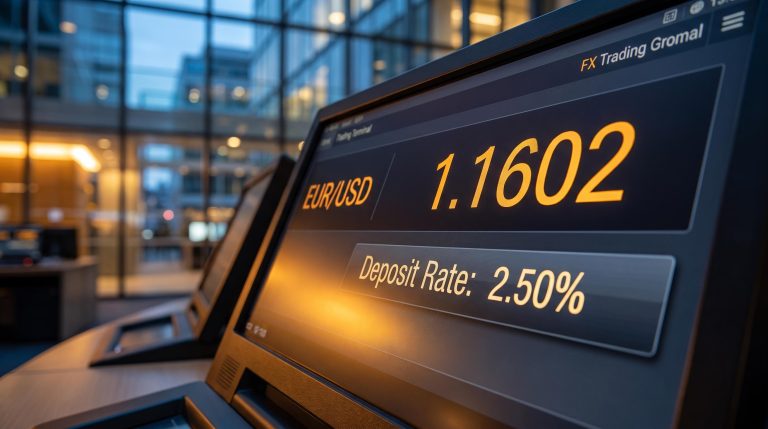
The genuine policy movement is happening elsewhere. On 10 September 2026, the ECB Governing Council raised its three key rates by 25 basis points, taking the deposit facility rate to 2.50 percent effective 16 September. And in a shift with far deeper historical significance, the Bank of Japan is holding its policy rate at around 1.0 percent, following a landmark hike in mid-2026 that lifted rates to a level not seen in three decades, described by Reuters as a response to an “Iran-war-induced energy shock.”
| Central Bank | Current Policy Rate | Recent Action | Next Meeting Focus |
|---|---|---|---|
| Federal Reserve | 3.5-3.75% target range | Held since early 2026; ~25bp hike anticipated | Symbolic hike vs. rising long-end yields |
| ECB | 2.50% deposit facility | Raised 25bp on 10 September 2026 | Guarding against second-round inflation |
| Bank of Japan | ~1.0% overnight call rate | Held in July after historic mid-2026 hike | Normalisation amid energy-driven inflation |
The IMF frames the shared dilemma bluntly: monetary policy cannot directly offset a supply-side energy shock. Central banks can “look through” a temporary price surge only as long as inflation expectations stay anchored. Once wages and medium-term expectations begin to drift, they must tighten decisively, choosing price stability over near-term output.
For your portfolio, the synchronised nature of this tightening removes a safety net you might otherwise expect. In a normal slowdown, you could reasonably assume that at least one major central bank would be easing, providing liquidity somewhere in the system. Here, all three are constrained by the same shock at once, which means international diversification offers less shelter from rate pressure than it usually would. That argues for prioritising companies with pristine balance sheets and low refinancing needs, wherever they happen to be listed.
The historical blueprint for policy error and recession risk
History offers two cautionary bookends for a moment like this, and neither is comfortable.
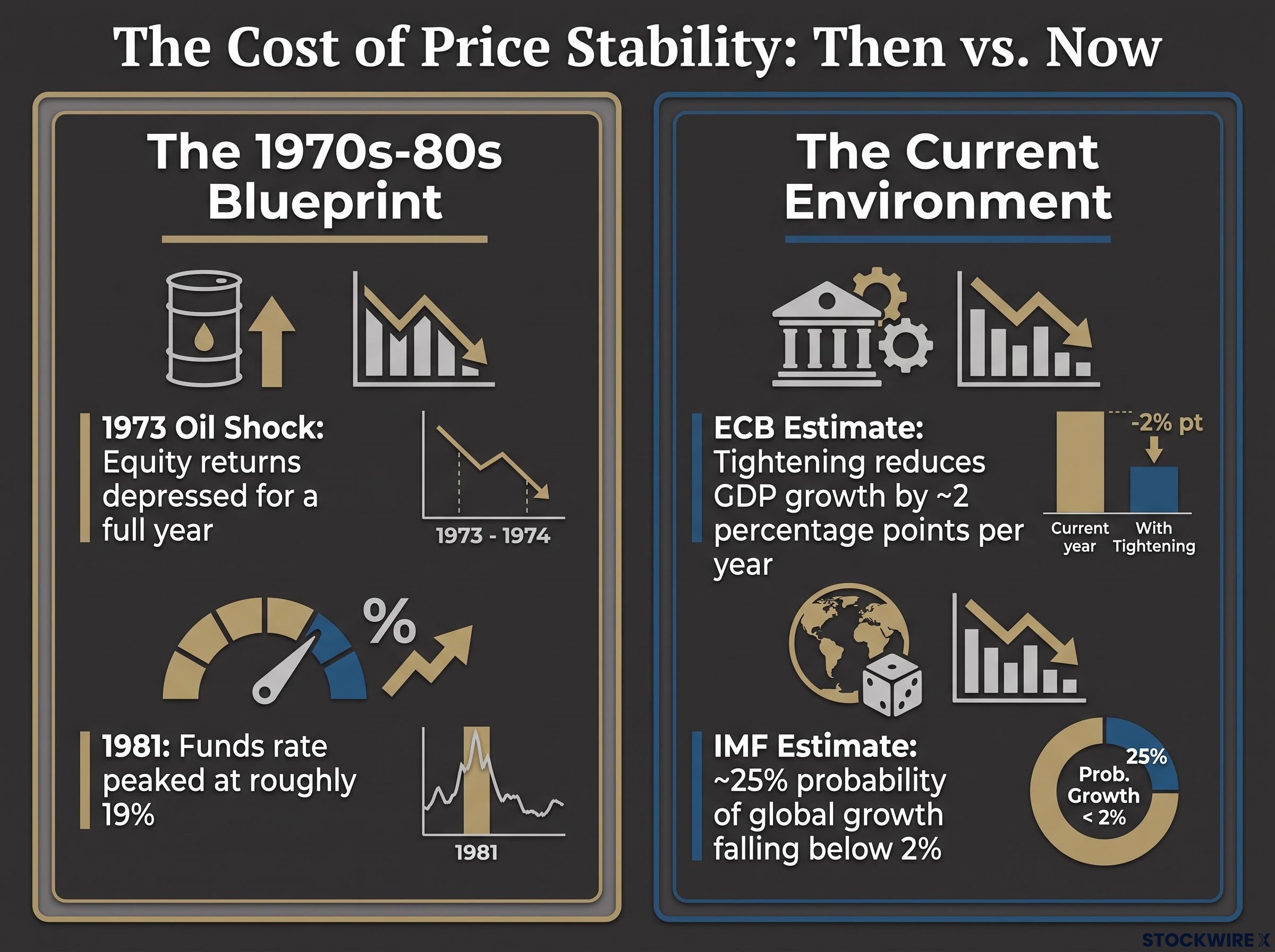
The first is the 1970s. When oil spiked during the 1973-74 embargo, the Fed initially accommodated the shock, keeping policy loose to protect output. Federal Reserve History essays and FRBSF research conclude that this accommodation, alongside price controls, magnified the inflationary damage and helped entrench the stagflation that followed. J.P. Morgan Private Bank singles out the 1973 oil shock as a rare case where equity returns stayed depressed for a full year afterward.
The correction that eventually broke that inflation was brutal. Under Paul Volcker, the Fed pushed the funds rate to a peak of roughly 19 percent by 1981, restoring price stability at the cost of a severe recession. That is the overtightening bookend: treat a supply shock as if it were a demand shock, and you can induce an unnecessary downturn while doing little to address the actual source of the inflation.
Julian Howard, chief multi-asset strategist at GAM Investments, has argued precisely this point, warning that raising rates far enough to materially curb energy use would be “recession-inducing,” making aggressive tightening a potential policy mistake in a supply-driven episode.
Barclays strategists have explicitly framed the current environment as a stagflation threat that is structurally different from demand-driven inflation episodes, identifying cyclical and financial sector holdings, the portfolios that led the April-to-July 2026 rally, as carrying the highest near-term repricing risk.
The numbers on downside risk are already elevated. The IMF estimates the probability of global growth falling below the 2 percent threshold, a level reached only five times since 1970, has risen to roughly 25 percent.
Navigating the real economy costs of restoring price stability
The danger is compounded by the fact that rate hikes do not bite immediately. Monetary policy works with a lag, filtering through borrowing costs, investment decisions, and hiring plans over many months, which means the full impact of hikes already delivered is still working its way through the economy.
ECB analytics estimate that cumulative tightening through 2026 is reducing both GDP growth and inflation by approximately 2 percentage points per year relative to a no-tightening scenario. That is the measurable real-economy cost of restoring price stability, and it accrues whether or not the energy shock resolves.
The Bank for International Settlements has warned specifically about the trap of compounding output losses. Tightening aggressively after an oil-price jump risks deepening the slowdown “without materially improving inflation outcomes,” because rates cannot manufacture more barrels. On top of that, shrinking central bank balance sheets can over-drain bank reserves, raising the tail risk of funding-market stress reminiscent of the 2019 U.S. repo turmoil.
For you as an investor, the takeaway is stark. Central banks are effectively choosing between tolerating entrenched inflation and forcing a recession, and there is no painless third option in a supply-shock regime. That means your time horizon needs to extend past the immediate volatility, toward companies that can survive a prolonged stretch of restricted capital rather than those relying on cheap refinancing to stay afloat.
This article is for informational purposes only and should not be considered financial advice. Investors should conduct their own research and consult with financial professionals before making investment decisions. Past performance does not guarantee future results, and these historical comparisons are speculative and subject to change based on market developments.
Adjusting valuation frameworks for a supply-shock regime
The convergence of US$100 oil and multi-year-high bond yields does more than dent sentiment. It changes the arithmetic underneath equity valuations, pressuring margins and lifting discount rates simultaneously, in a way a conventional growth-driven rate cycle never does.
So what would let the market find a floor? Two things, primarily. Either long-end bond yields need to stabilise, taking the upward pressure off discount rates, or the geopolitical energy constraint needs a credible path to resolution that lets markets finally price an ending. Until one of those arrives, the risk premium on equities stays stubbornly wide.
The uncomfortable reality is that central banks cannot rescue markets from supply-driven inflation. They can tighten into it or look through it, but they cannot create more oil. That structural limit is why defensive positioning, favouring strong balance sheets, low refinancing needs, and durable pricing power, is not caution for its own sake. In a regime where the usual monetary safety net does not apply, it is simply reading the environment for what it is.
Investors wanting to translate the framework above into specific allocation decisions will find our comprehensive walkthrough of defensive positioning in rate-hike environments, which covers sector selection criteria, the role of pricing power as a primary screen, and the case for maintaining liquid capital reserves in volatile markets.