Telix grew quarterly revenue 19% and its shares still fell 7.9% on the day. Vulcan Steel rose 10.6% on an update where management openly said it could not tell how fast the recovery would come. If you assume the biggest headline number wins the day, this week’s earnings season signals point the other way.
20-21 October 2026 delivered a dense run of ASX trading updates and annual general meeting (AGM) announcements. Revenue, guidance, capital spending, liquidity and acquisitions all appeared, often in the same document.
The same kind of disclosure can mean very different things depending on what sits underneath it. A revenue jump can hide a costly deal, and a dull “guidance unchanged” line can carry real weight.
This piece gives you a practical way to read what a trading update is really saying, using Vulcan Steel, Beach Energy, EBOS, Telix and 29Metals as worked examples. All figures are as at 21 October 2026.
Why did the market reward Vulcan Steel, Beach and EBOS?
Three companies rose for three different reasons. Look closely and they share one idea: each showed you evidence that the improvement was real, not just loud.
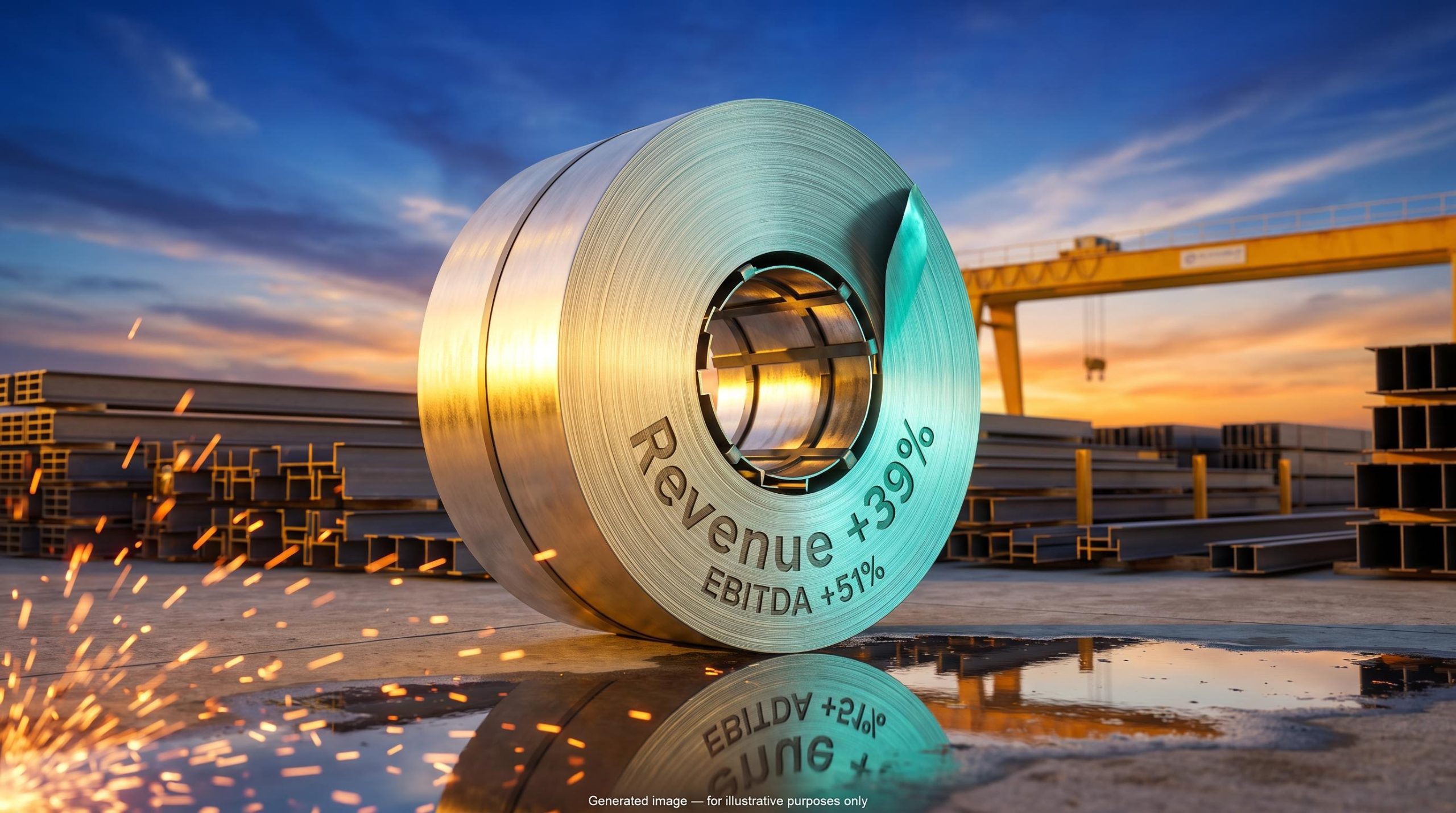
- Vulcan Steel: revenue up 39%, EBITDA up 51%, share price up 10.6%
- Beach Energy: record sales revenue of $565 million, guidance retained, share price up 5.8%
- EBOS Group: guidance reaffirmed, capex falling to about $100 million, share price up 5.0%
Vulcan Steel: operating leverage
Vulcan reported Q1 FY27 revenue of NZ$353.7 million, up 39%. EBITDA (earnings before interest, tax, depreciation and amortisation, a measure of operating profit) rose 51% to NZ$44.8 million. Sales volume reached 73,500 tonnes, up 25%, with tonnes per day up 27%.
The signal in the gap Revenue up 39%. EBITDA up 51%. Profit outran sales.
When profit grows faster than sales, you are watching fixed costs being absorbed across more volume. That is operating leverage, and it is usually a stronger signal than the revenue figure in the headline. Roofing Industries added NZ$9.1 million of EBITDA, and net debt sat at NZ$216 million.
You can see operating leverage in action whenever a disciplined cost base lets modest sales growth produce outsized profit expansion, which is the pattern behind Vulcan’s EBITDA outrunning its revenue.
The CEO described the industry as stabilising but said the pace of recovery remains uncertain, and no new numerical full-year guidance appeared. The New Zealand Herald reported a rise of about 5.2%, against 10.6% in market-movers data, a gap that likely reflects timing or intraday versus closing measurement.
Beach Energy: growth that backs itself up
Beach posted record September-quarter sales revenue, up 41% on the June quarter, with production up 9% to 5.4 MMboe (million barrels of oil equivalent). FY27 production guidance of 19.5-23.0 MMboe and capex guidance of $600-700 million were both retained.
That unchanged guidance matters. It suggests the record quarter came from operations, not from a forecast that needed rescuing. Beach also expects no further material offshore abandonment spending before the mid-2030s, and a $43.5 million class action was settled and covered by insurance.
EBOS: lower capex, more cash
EBOS reported FY26 revenue of $13.5 billion, up 9.9%, and underlying EBITDA of $614 million, up 5%. It reaffirmed FY27 EBITDA guidance of $635-655 million and flagged capex falling to about $100 million from about $145 million.
That step-down frees about $150 million for bolt-on acquisitions. For you, the lesson is that what stays unchanged, or what gets cheaper, can matter as much as what is new.
When big ASX news breaks, our subscribers know first
Why did Telix and 29Metals fall despite good news?
You would expect strong operating numbers to earn a reward. In both of these cases, a question about capital overrode the operating story.
Telix: growth versus the price of the deal
Telix reported Q3 revenue of US$245 million, up 19%, with precision medicine revenue up 30% to US$201 million. It expects full-year revenue and other income above US$1 billion, while reported revenue guidance stays at US$950-970 million; the gap is simply revenue alone versus revenue plus other income.
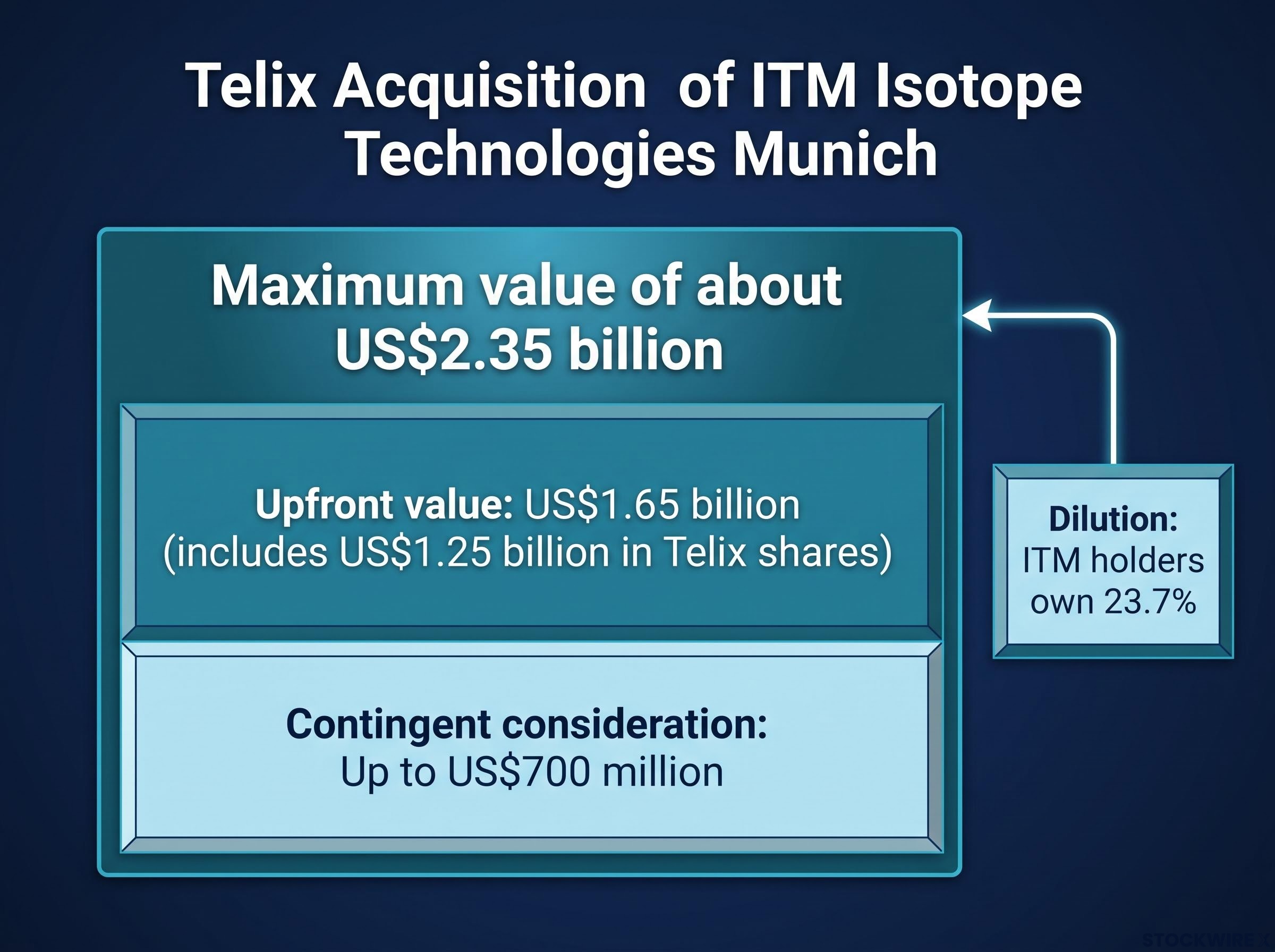
Then came the deal. Telix agreed to acquire ITM Isotope Technologies Munich, a German radiopharmaceutical company:
- Upfront value of US$1.65 billion, with about US$1.25 billion paid in Telix shares (ADRs, or American depositary receipts, which are US-traded certificates representing shares in a foreign company)
- Up to US$700 million in contingent consideration, meaning payments made only if ITM-11 hits regulatory and sales milestones
- Maximum value of about US$2.35 billion
- About 105.8 million new shares issued
- Shareholder vote expected in December 2026; pro-forma revenue about US$1.3 billion
The dilution figure ITM holders would own roughly 23.7% of the combined company.
Telix argues ITM strengthens isotope supply and vertical integration. The case against centres on the price, execution risk and nearly a quarter of the company changing hands. If you hold shares, you are being asked to accept dilution today for milestones that may not pay out, so weigh the price paid as heavily as the growth reported.
Share dilution compounds quietly, because a company can grow revenue 19% and still leave you with less per-share value if the issued share count rises faster than earnings.
Pharmaphorum reported shares down almost 12% as investors questioned the rationale. Motley Fool Australia argued the good operating news may already have been priced in.
29Metals: a $60 million liquidity drop
29Metals had no deal to blame. Liquidity fell to $142 million at 30 September from $202 million at 30 June, made up of $128 million cash plus about $14 million of undrawn offtake capacity, and the shares dropped 5.7%.
Outflows came from Golden Grove, $39 million of investing spend mainly on Gossan Valley, $9 million at Capricorn Copper and $6 million in corporate costs. Management says funding covers Xantho Extended, Gossan Valley and Oizon, but the Capricorn Copper restart will need more financing. That unfunded gap is what you were really being asked to price.
How do you read guidance, capex, M&A and liquidity?
Every one of these signals arrives looking neutral. Whether it is good or bad depends on what the company did with the money and what the number is being compared against.
| Signal | Constructive reading | Adverse reading | Example |
|---|---|---|---|
| Guidance reaffirmed | On plan; lowers downgrade risk | Not an upgrade; may contain no new information | EBOS, Beach |
| Falling capex | Turns EBITDA into free cash flow once a programme ends | Delayed projects or underinvestment | EBOS (about $45M lower) |
| Equity-funded acquisition | Avoids taking on immediate debt | Dilutes existing holders | Telix/ITM |
| Falling liquidity | Temporary if projects soon produce cash | Persistent burn narrows options | 29Metals |
Falling capex is a good test case. At EBOS, a major investment programme has finished, so the lower spend lets more of its operating profit reach shareholders as free cash flow, the cash left after running and investing in the business. At a company quietly shelving projects, the identical number would warn you about future growth.
Checking free cash flow versus EPS is a quick way to test whether lower capex is genuinely lifting cash generation or whether reported profit is simply not turning into cash.
Equity funding works the same way. Paying in shares keeps debt off the balance sheet, but it hands part of the future upside to the seller’s shareholders. Whether that trade works depends on the returns the acquisition actually delivers.
Falling liquidity, the cash and undrawn facilities a company can access, follows the same split. If spending is about to turn into production, the dip may be brief; if burn continues, the company may need to borrow, sell assets or raise equity at a discount.
Why ‘unchanged’ can be low-information
A reaffirmed forecast tells you only that the forecast has not moved. On its own, that is close to no news.
It gains meaning from context. Beach kept guidance steady alongside record sales, which suggests the quarter was not borrowed from future periods. Without that context, “guidance unchanged” deserves no more than a shrug from you.
Why do brokers read the same update differently?
It is comforting to think one broker holds the right answer. In practice, disagreement comes from assumptions you can see if you look for them.
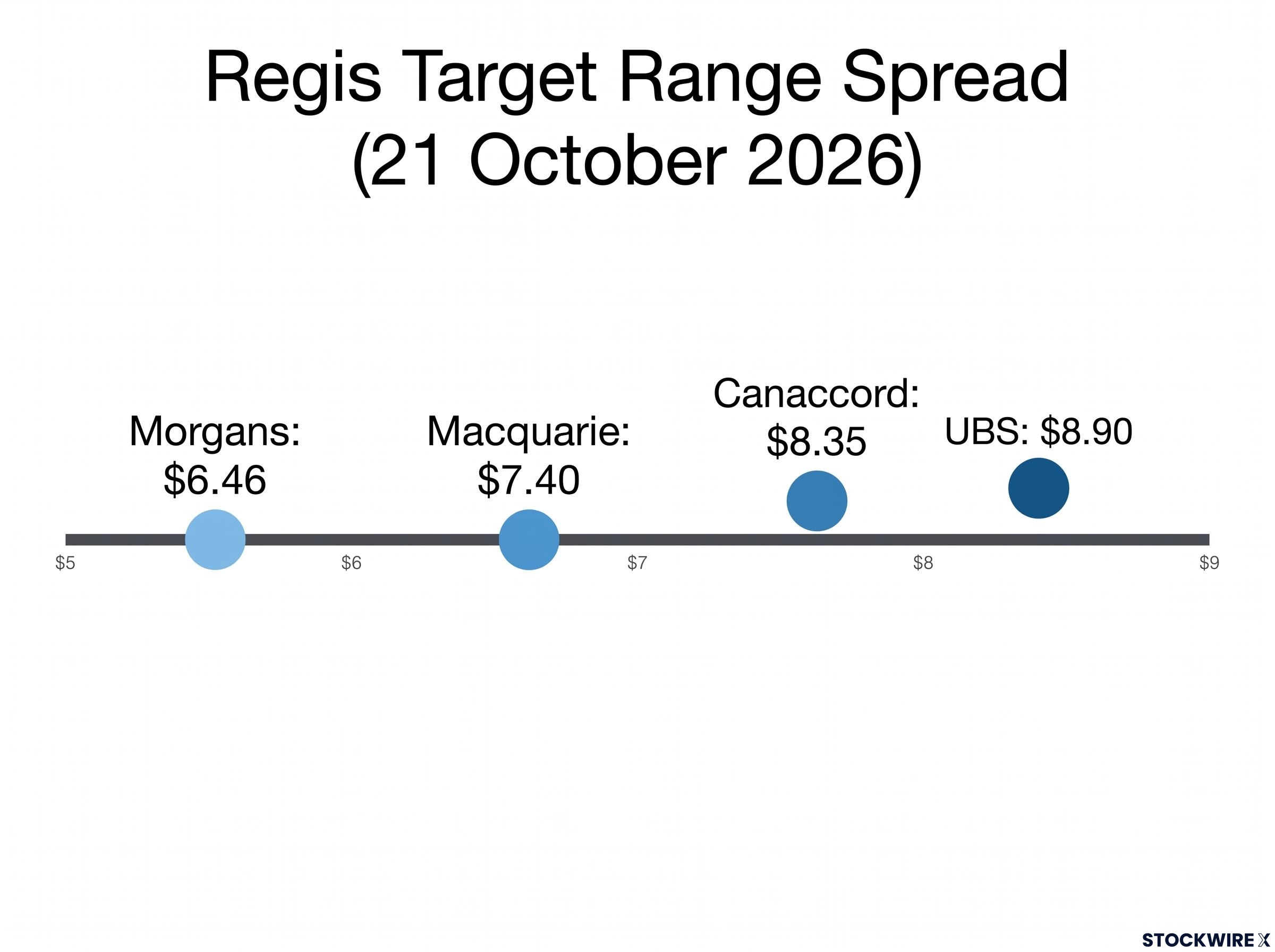
On 21 October, Ord Minnett upgraded BHP to Accumulate with a $63 target, and lifted HUB24 and South32 to Buy and New Hope to Accumulate. Shaw and Partners upgraded Metals X to Buy. Morgans downgraded Regis Resources and cut its target to $6.46 from $9.39.
Brokers diverge for six main reasons:
- Commodity price decks, such as long-term gold assumptions
- Forecast horizon: next year’s earnings versus long-run cash flow
- Risk premiums and the earnings multiples applied
- How they probability-weight M&A milestones
- Whether they think good news was already priced in
- Balance-sheet preferences: cash flow versus growth spending
Regis shows how wide the spread can run on the same day.
| Broker | Regis target (21 October 2026) |
|---|---|
| Morgans | $6.46 |
| Macquarie | $7.40 |
| Canaccord | $8.35 |
| UBS | $8.90 |
BHP targets ranged from $57 at Macquarie to $69 at Morgan Stanley, with UBS at $62. HUB24 targets stretched from $75 at Bell Potter to $121 at Morgan Stanley. Earlier published figures for several of these stocks have been superseded, so check dates before you rely on any target.
A wide range tells you the stock rests on assumptions you can inspect. Find the one a broker leans on before treating a rating as a verdict.
Wide analyst spreads like the one on Regis are a risk signal rather than a buy signal, since they show how much of the valuation rests on terminal value and discount rate assumptions you can inspect.
Where one quarter can mislead you
Beach’s revenue benefited from production, pricing and shipment timing, not all of which repeats. Vulcan’s own management cannot say how durable its momentum is, and a cyclical rebound is not a structural change.
Telix shows revenue growth is not automatically value creation. And first-day reactions can fade or reverse as prices, volumes and integration play out.
Past performance does not guarantee future results, and broker targets are projections subject to market conditions and risk.
What to check before you react to the next trading update
When the next announcement lands, run through five questions:
- What is this number being compared against?
- What did the result cost to achieve?
- How is the next stage funded?
- What stayed unchanged, and does that tell you anything?
- Which assumptions are brokers leaning on?
This week’s moves came down less to headline numbers than to expectations, durability and the capital needed for what comes next. The Telix shareholder vote in December 2026 and the next round of quarterly updates will test whether those first reactions hold.
This article is for informational purposes only and should not be considered financial advice. Investors should conduct their own research and consult with financial professionals before making investment decisions. Use these questions to form your own view before you act.