The most popular product around SpaceX’s float was not the one betting on it. When GraniteShares launched paired leveraged funds on the rocket company, the 2x short drew more interest than the 2x long. That raises an awkward question for anyone watching the coming Anthropic IPO and the ETFs being lined up around it: does short demand say anything about sentiment at all?
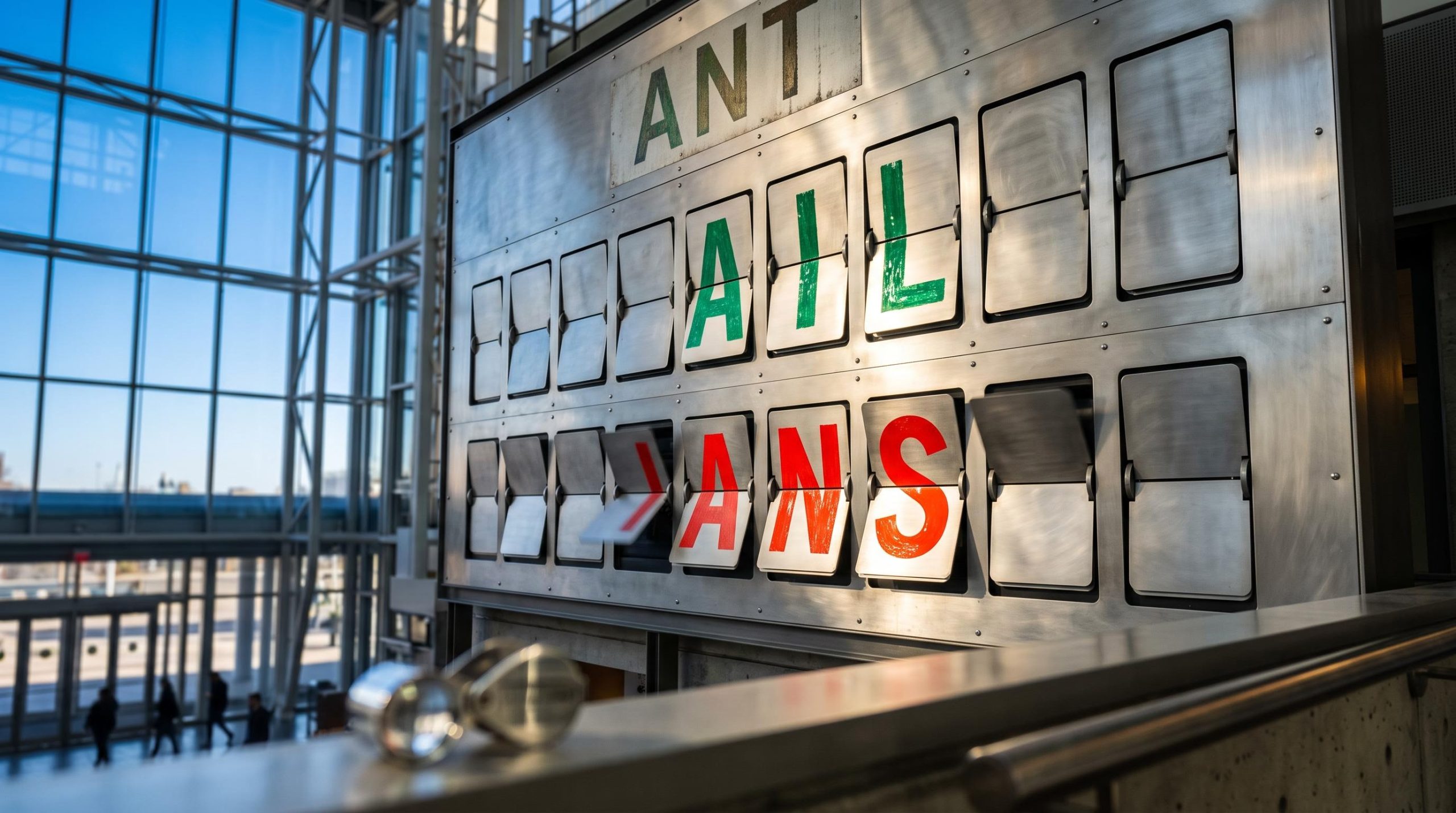
GraniteShares has filed for a 2x long Anthropic fund (AIL) and a 2x short one (ANS). Anthropic would be the first pure-play AI lab to list publicly. Chief executive Will Rhind says early interest already exceeds what the firm saw for SpaceX.
As of 3 November 2026, both funds are pending and not yet trading.
This piece covers what short-side demand reveals and what it hides. It also compares the rival products crowding into the same trade, and sets out what to check before you treat any of them as a signal or a trading tool.
What do early AIL and ANS demand tell us compared with SpaceX?
The headline is striking. Demand for a pair of funds that do not yet trade, tied to a company that has not yet listed, reportedly beats demand for products on the largest IPO GraniteShares has worked on.
The mechanics are simple. AIL seeks 200% of Anthropic’s one-day move and ANS seeks -200%, both before fees and expenses, with the target resetting daily. GraniteShares’ materials indicate the registration is not yet effective and no launch date has been announced. The funds are reportedly meant to launch only after Anthropic lists, though that has not been independently confirmed.
The listing itself is still taking shape. Reuters reported that Anthropic filed its proposed US prospectus on 26 October 2026, with an expected Nasdaq ticker of ANT. Reuters put investor valuation indications at roughly US$1.5-$2 trillion, and Bloomberg reported a possible November listing. None of this is confirmed.
Reported valuation indications of US$1.5-$2 trillion sit well above the private round, and the realistic route to Anthropic IPO exposure is open-market buying on day one, since no retail allocation or direct share purchase is available today.
The SpaceX comparison carries its own fog. One Reuters report described a US$75 billion offering at about US$1.75 trillion, while a separate Reuters market summary put it near US$86 billion raised at close to US$2 trillion.
| Fund | Exposure | Status | Reported demand |
|---|---|---|---|
| AIL (Anthropic) | 2x daily long | Filed, pending | Above SpaceX products, per GraniteShares |
| ANS (Anthropic) | -2x daily short | Filed, pending | Above SpaceX products, per GraniteShares |
| SPAL (SpaceX) | 2x daily long | Launched 15 June 2026 | Below SNK |
| SNK (SpaceX) | -2x daily short | Launched 15 June 2026 | Highest of the SpaceX pair |
In a June interview with Yahoo Finance, Rhind explained the SpaceX skew.
Will Rhind, GraniteShares Short-side interest outran long-side interest, which Rhind put down to heavy lockups and the absence of other practical ways to hedge SpaceX exposure.
Here is the catch. Every demand claim traces back to one executive describing his own firm’s internal data, and no asset or volume figures for SPAL or SNK were found. Treat the “beats SpaceX” line as a hint about interest, not a measured market reading.
When big ASX news breaks, our subscribers know first
Why does short demand dominate around mega-IPOs?
If short demand is not obviously bearish, something else has to explain it. Several structural forces push in the same direction.
- The lockup hedging gap. A lockup is a period after an IPO when early shareholders cannot sell. Holders sitting on large paper gains have few ways to protect them, and an inverse fund offers one.
- Scarce borrow. Shorting a stock directly means borrowing shares first, and freshly listed stocks are often hard to borrow. An inverse ETF delivers short exposure through derivatives, which ETF.com describes as a way to bet against or hedge a stock without short-selling it.
- Protection while keeping upside. CNBC reported in August that investors were using puts and inverse ETFs to guard against falls while holding tech stocks, citing Vanda Research and Charles Schwab data. The same report noted these products also serve directional bets.
- Volatility trading. Big, attention-heavy stocks swing hard within a day, which suits daily-reset products. Reuters framed the single-stock leverage boom as traders trying to double gains in volatile, popular names.
The lockup point carries real weight with SpaceX. Bloomberg reported the tradable float was expected to grow from about 639 million shares to 5.33 billion by year-end as lockups expire in stages. That is a large pool of holders who may want insurance before they can sell.
Research on lockup expirations finds an average abnormal return of only about -1.5%, largely priced in beforehand, which suggests the insurance demand from holders may be larger than the actual selling pressure it anticipates.
Not everyone reads the boom as healthy. Morningstar analyst Daniel Sotiroff told Reuters the market was getting saturated and only so much money exists to chase these products.
What short-side flows cannot prove
Short ETF flows can reflect hedging, borrow constraints, market making or simple preference for a liquid wrapper. None of those is a forecast.
If you see a short Anthropic fund gathering assets after listing, the likeliest reading is holders protecting positions. Treating it as a prediction that the company’s value will fall is likely to mislead you.
How do the competing Anthropic products and AI precedents stack up?
GraniteShares is not alone. A crowd of issuers has reportedly filed products on the same unlisted stock.
| Issuer | Long product | Short product | Status (reported) |
|---|---|---|---|
| GraniteShares | AIL (2x) | ANS (-2x) | Filed, awaiting listing |
| Leverage Shares by Themes | ANUU (2x) | ANDD (2x short), ANSS (1x short) | Filed, awaiting listing |
| ProShares | ANTU (2x) | ANTY (-2x) | Product page published |
| Tradr | 2x long, ticker unconfirmed | 2x short, ticker unconfirmed | Filed, per MarketWatch |
| Direxion, Defiance | Not confirmed | Leveraged or bearish products, tickers not found | Filed or planned, per MarketWatch |
The crowding follows a familiar route. Tesla set the template for daily leveraged and inverse single-stock funds. Newly listed names such as Coinbase (ProShares COIA), Circle (ProShares CRCA) and CoreWeave (Corgi Invest CRWX) followed. SpaceX drew ProShares SPCF and Direxion LOFD alongside GraniteShares’ pair.
Products arrive first around liquid, attention-heavy stocks, and bullish and bearish versions follow quickly. Anthropic is the latest name on that list.
For a commercial decision, the useful filters are the reset mechanics, the issuer’s track record, fees, trading liquidity and, most basically, whether the fund is actually live.
Risks that apply to every 2x single-stock fund
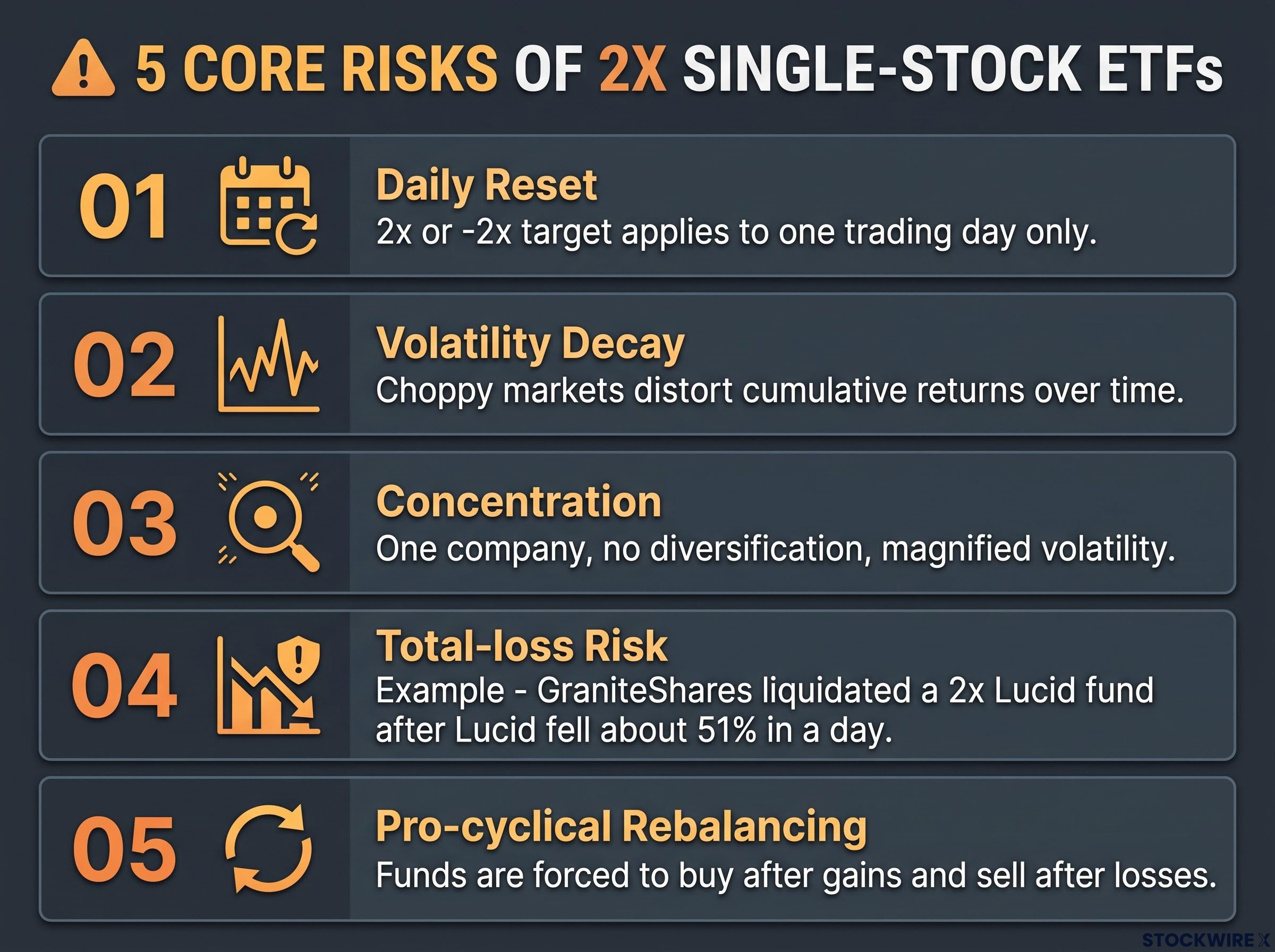
- Daily reset. The 2x or -2x target applies to one trading day, not to your return over weeks, as an updated SEC investor bulletin stresses.
- Volatility decay. In choppy markets, repeated ups and downs can leave cumulative returns far from twice the stock’s move, according to ETF.com and the SEC.
- Concentration. One company, no diversification, and its volatility is magnified.
- Total-loss risk. A big one-day move can push a fund’s value towards zero. Reuters cited GraniteShares liquidating a 2x Lucid fund after Lucid fell about 51% in a day.
- Pro-cyclical rebalancing. Daily rebalancing can force funds to buy after gains and sell after losses, a concern raised in an SEC comment by Jim Huynh.
These funds are generally built for active, knowledgeable traders. With more issuers in the race, which fund you pick matters less than how long you hold it. Daily-reset products suit short tactical use, not buy-and-hold.
Where is AI-linked ETF product development heading next?
If the field is already crowded, the next question is what comes after the single-stock pairs. Rhind’s answer is that demand will set the agenda: upcoming AI IPOs, trending stocks, downside protection and thematic exposure. He gave no dates.
The evidence points three ways.
- More single-stock long and short pairs. Six issuers are associated with Anthropic products aiming to trade as soon as the stock does.
- Thematic baskets. Leverage Shares’ MGOL (MANGOS) covers Anthropic, OpenAI, Nvidia, Meta, Alphabet and SpaceX using derivatives. Morningstar has described 2026 as a year of rapid AI-driven thematic launches.
- Buffered protection. A buffer ETF limits losses within a set range in exchange for capping gains. A FlexTrade industry discussion reported rising interest, especially among advisers serving retirees, as a gentler alternative to inverse funds.
Behind all of this sits a harder question: who pays for AI? Bloomberg reported Anthropic’s prospectus showed US$16.3 billion of first-half 2026 revenue and about US$417 billion of future minimum computing commitments. Reuters reported an US$80.7 billion first-half net loss, largely tied to convertible-bond accounting. These figures are reported and not independently confirmed.
The question of who pays for AI is the heart of the AI spending gap, where BCA Research argues the revenue required to justify infrastructure outlays remains far above what current forecasts imply.
Jim Lebenthal, Cerity Partners Lebenthal questioned whether valuations of US$1.5-$2 trillion can be justified by the company’s projected economics.
As products multiply, your tools for hedging or trading AI exposure will widen. Whether the underlying valuations make sense remains your call, and no ETF wrapper answers it for you.
What two-sided demand means for the Anthropic listing
The Anthropic ETF market is forming as a two-sided arena for trading and hedging, not a one-way bet on the IPO. Long funds serve appetite for instant AI exposure; short funds serve lockup holders, scarce borrow and volatility traders.
Three things are worth watching: whether registrations become effective and funds actually launch, how Anthropic’s lockup expiries are structured, and whether any real asset or volume data emerges to test the demand claims.
These are short-term tools. Read each prospectus and the current SEC filings before acting, as this information reflects conditions at 3 November 2026. Statements about future products and listings are speculative and subject to change.
This article is for informational purposes only and should not be considered financial advice. Investors should conduct their own research and consult with financial professionals before making investment decisions.