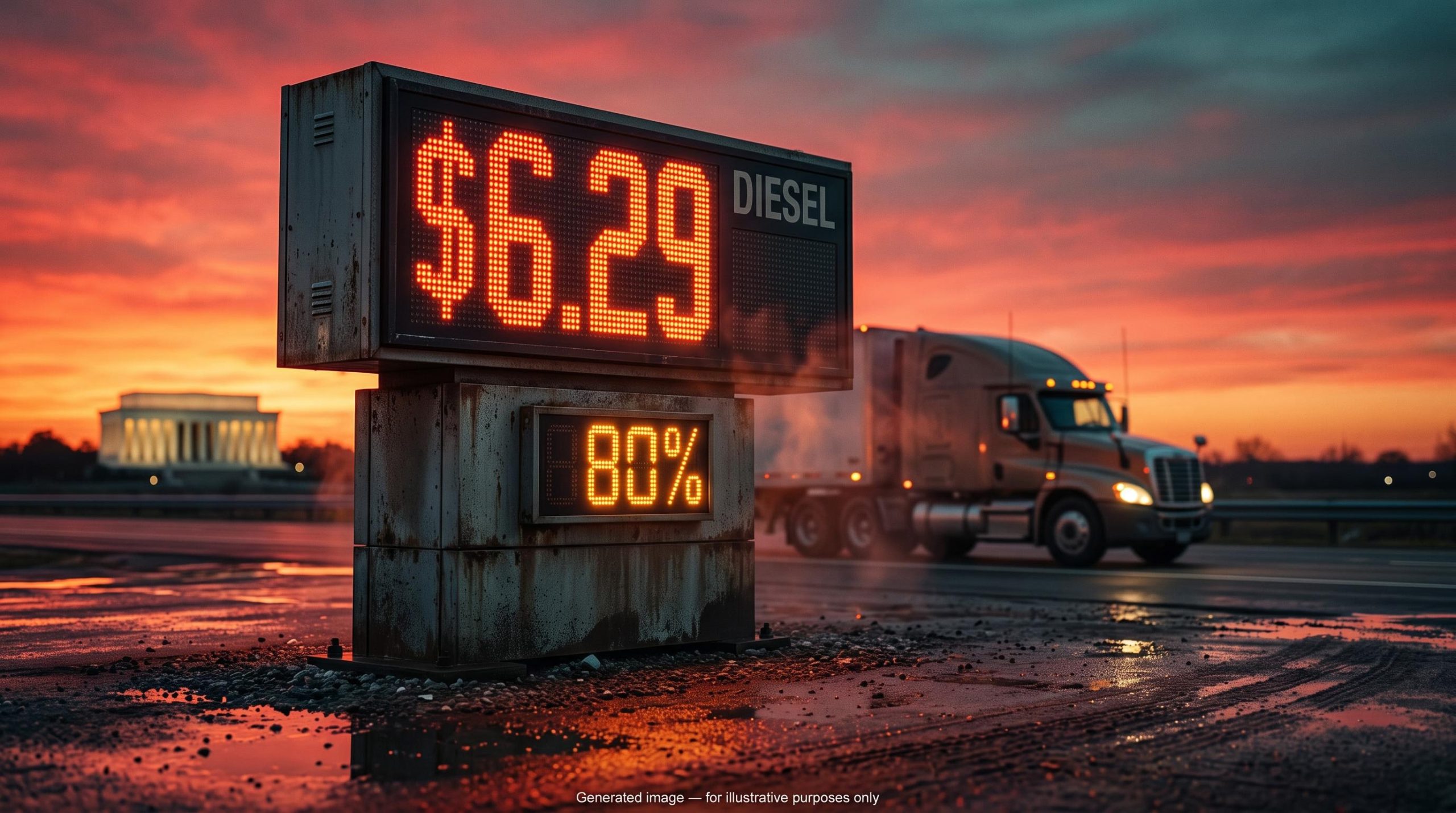
The October jobs report beat expectations by 100,000 positions. Payrolls rose 165,000 against a 65,000 consensus, and unemployment slipped to 4.1%. Yet nine days earlier, on 28 October 2026, the Federal Reserve chose to hold rates steady, and markets still price roughly an 80% chance of a Fed rate hike in December. The obvious question is why a Fed that just declined to act leaves traders so convinced it will act next time.
The answer sits in a crowded week. The Fed’s September minutes landed on 3 November, Democrats took both chambers of Congress the next day, and the jobs data arrived yesterday, 6 November. Each thread pulls on the others.
Together they set the terms for the December meeting under Chair Kevin Warsh, and for the policy fight that follows it into 2028.
This analysis separates what markets have already priced from what remains open. It also shows how politics, energy-driven inflation and monetary policy interact, and where that interaction touches your portfolio.
Why markets expect a December hike, and why it is not a promise
The case for a hike
The federal funds rate is the overnight lending rate the Fed uses to steer borrowing costs, and its target range sits at 3.75%-4.00% after a September increase. The September minutes showed every participant backed that move.
The jobs data has since strengthened the hawks. September payrolls were revised up to 60,000 from 29,000, and October’s beat followed. At the October meeting, the vote to hold was 10-2, with Governors Lisa Cook and Beth Hammack dissenting in favour of a quarter-point hike.
When inflation and employment both drift from target, the Fed’s dual mandate forces a choice about which gap to close first, and with prices running well above 2% the weight currently falls on price stability, which helps explain why dissent skews hawkish.
Warsh himself said inflation had been above the Fed’s objective for close to six years. CME FedWatch, a tool that converts futures prices into meeting probabilities, showed hike odds at about 67% before the October inflation report and about 80% on 6 November.
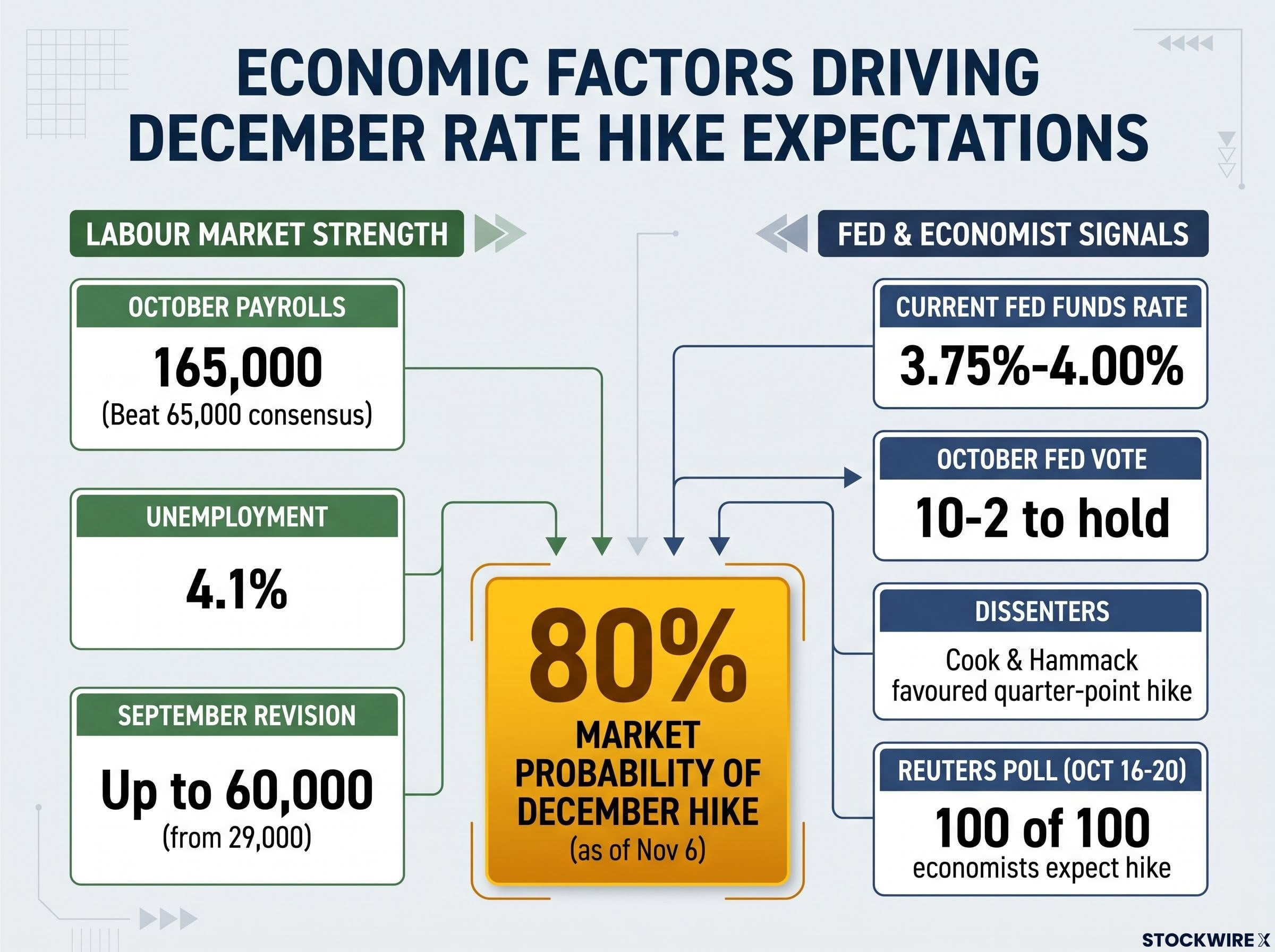
October payrolls of 165,000 and unanimous economist consensus contribute to an 80% market probability of a December rate hike.
Why the Fed could still wait
The Fed has promised nothing. The October statement said more information would guide the appropriate stance, and Warsh declined to offer forward guidance, which is the Fed’s practice of signalling future moves in advance. Morningstar reported that the press conference set no clear December bias.
The voices around the decision agree on the problem but differ on the pace.
| Voice | Stated view | Timing stance |
|---|---|---|
| Reuters poll (16-20 October) | All 100 economists expected a December hike | December |
| Lorie Logan, Dallas Fed | “At least” two more quarter-point hikes needed | Multiple moves ahead |
| Christopher Hodge, Natixis | Another hike “warranted” on sticky inflation | Near term |
| Chris Whalen, Whalen Global Advisors | Probably one quarter-point hike, not enough to truly slow growth | December |
| Alex Pelle, Mizuho | Hold was information-gathering; financial conditions already tighter | Flexible |
| Kevin Warsh, Fed Chair | Inflation above objective for close to six years | No commitment |
The September revision is itself a warning about how volatile hiring data can be, and pre-release suggestions of cooling wage growth remain unconfirmed. A hold, or eventually a cut if growth weakens, stays possible.
What an 80% probability tells you is that a hike is the base case, not a certainty. Because it is already largely priced in, the bigger market surprise may be a December hold.
When big ASX news breaks, our subscribers know first
Where the inflation is coming from: energy, diesel and food
Follow the inflation back to its source and you find oil. September’s consumer price index (CPI), the government’s main measure of household prices, rose 0.60% for the month on the headline measure and 0.3% on core, which strips out food and energy.
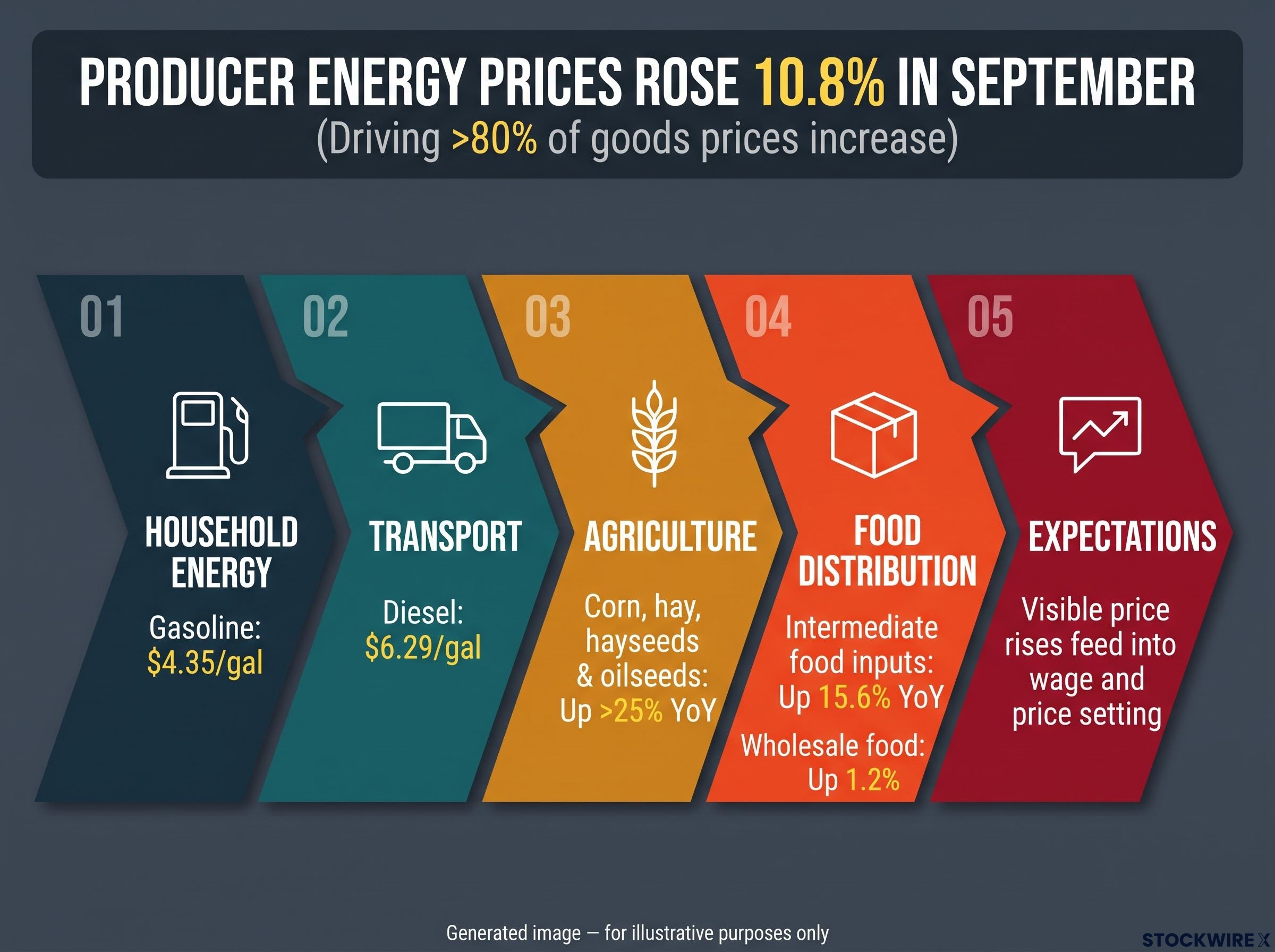
The pressure moves through the economy in five steps:
- Household energy: gasoline, heating and electricity bills.
- Transport: diesel for trucking, rail, construction and delivery.
- Agriculture: diesel, fertiliser, chemicals and machinery.
- Food distribution: freight costs passed through wholesalers, retailers and restaurants.
- Expectations: visible price rises feeding into wage and price setting.
The numbers at each stage are steep:
- US Energy Information Administration (EIA) September averages: gasoline $4.35/gal, diesel $6.29/gal
- Distillate inventories expected below the 2021-2025 average, with diesel easing toward about $4.50/gal on average in 2027
- Intermediate food inputs up 15.6% year on year; wholesale food up 1.2%
- Corn, hay, hayseeds and oilseeds each up more than 25% year on year
Producer energy prices rose 10.8% in September, accounting for more than 80% of the increase in goods prices.
Oil sits above $100 with the Iran conflict unresolved, and Reuters reported on 6 November that extreme weather and shipping disruptions are adding to food costs. That makes this inflation supply-driven rather than wage-driven.
US oil dominance changes who absorbs the shock: with domestic output far above Saudi Arabia’s, higher prices recirculate income through producers and pension funds, though lower-income households still bear a regressive fuel burden.
 real yields, since a hike that fails to outpace inflation expectations may do little to firm the dollar or cool borrowing.
Gridlock complicates the long end. Less stimulus can pull expected growth and long yields lower, while deficits, the Iran war and sticky inflation can keep the term premium high, which is the extra return investors demand for holding longer bonds.
Reuters reported markets weighing inflation against growth fears, with energy and food costs raising stagflation concerns (high inflation alongside slowing growth) and feeding a technology selloff. The sector tendencies below are general patterns, not forecasts.
| Sector | Likely effect of hike | Why |
|---|---|---|
| Long-duration tech and growth | Pressure | Future earnings are worth less at higher rates |
| Real estate | Pressure | Higher borrowing costs and rate sensitivity |
| Small caps and leveraged firms | Pressure | Refinancing needs become more expensive |
| Banks | Relative support | Curve shape and net interest margin |
| Energy | Relative support | Elevated oil and diesel prices |
| Healthcare and staples | Relative support | Defensive, steadier demand |
| Utilities | Pressure | Compete with higher bond yields |
The 2028 affordability squeeze
A hike lets Warsh argue he is protecting purchasing power. It also lands on households through mortgages, credit cards and business loans.
If growth slows, Democrats could call policy too tight. If prices persist, both parties own the problem, and Whalen argues Democrats now share responsibility for affordability.
Check how much of your portfolio is rate-sensitive or energy-exposed. A single modest hike matters less than a long stretch of high prices with no relief, and with PCE not expected at target until at least 2028, the real test arrives then, not in December.
The signals that will settle the December question
A December hike is the probable outcome, not a guaranteed one. Markets have priced about 80% odds, the data leans hawkish, and the Fed has kept its options open.
Politics shapes how much room Warsh has to act and how loudly he is questioned, more than which direction he moves. The inflation itself is coming from oil, diesel and food, which a rate hike can only partly address.
Four signals will narrow the question before the meeting:
- The October CPI release, forecast at +0.24% headline and +0.2% core (Morningstar, 6 November)
- The next jobs report, and whether hiring strength holds after recent revisions
- Energy and diesel prices, with the Iran conflict as the swing factor
- Warsh’s public communication ahead of the meeting
If those signals soften, the bigger surprise becomes a hold. If they stay firm, the hike that markets already expect is likely to matter less than how long elevated prices persist.
Investors exploring how one soft print can shift rate expectations will find our detailed coverage of June’s core CPI miss shows how quickly pricing can swing.
Past performance does not guarantee future results. Financial projections are subject to market conditions and various risk factors.
This article is for informational purposes only and should not be considered financial advice. Investors should conduct their own research and consult with financial professionals before making investment decisions.