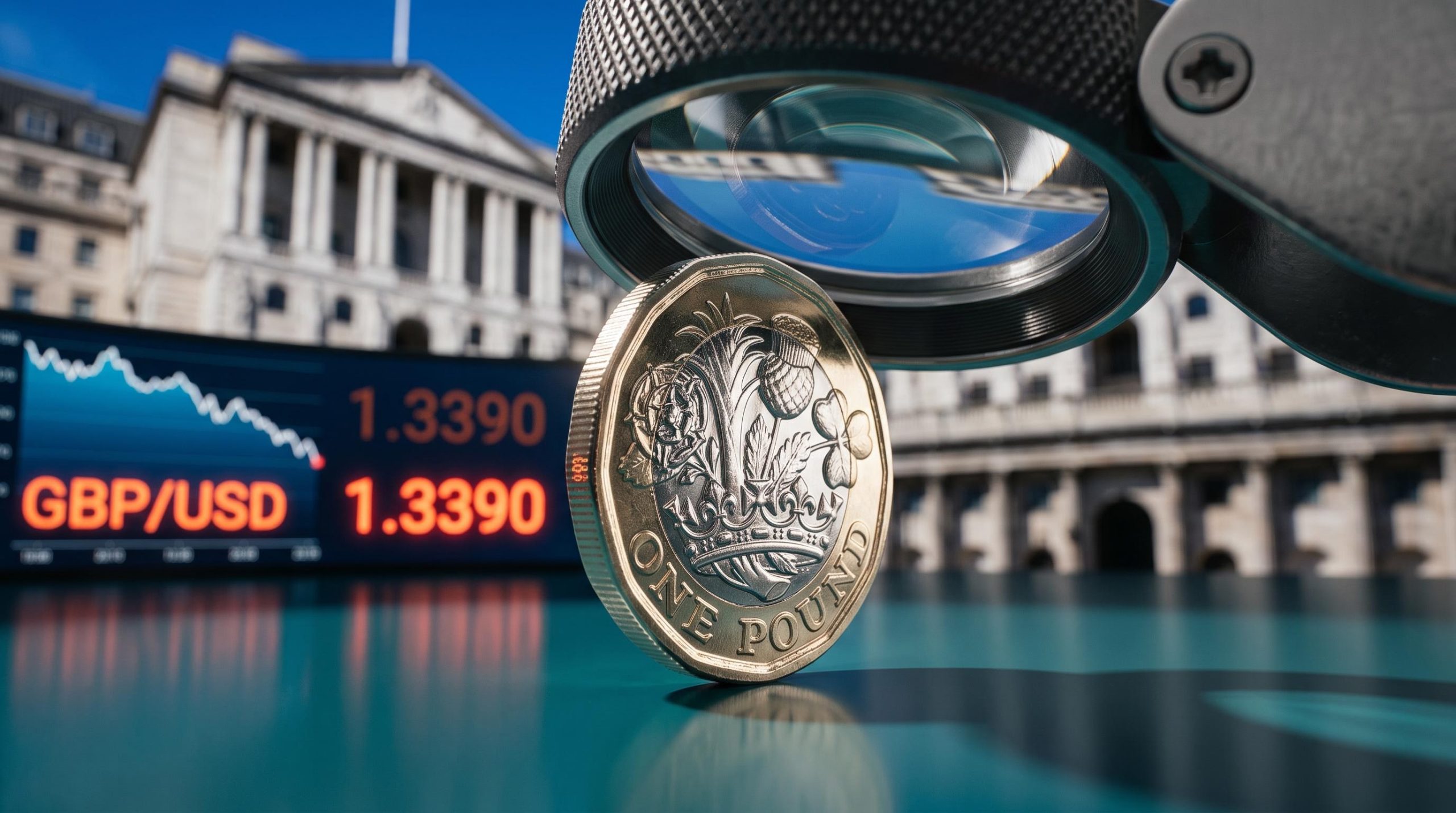
Oil fell about 9% in a single session this week, and US 10-year Treasury yields dropped as low as 4.82%. Both moves usually help Asian currencies. Yet the Taiwan dollar slid to its weakest level since April 2025, and the Korean won fell with it.
If you assume cheaper oil and lower US yields reliably lift the region’s currencies, this week’s tech selloff is a useful correction.
On Friday, 6 November 2026, a tech-led equity rout collided with the US October jobs report. The payrolls result is now known, and it added a second force to the first.
Here is how to tell which force wins when equities, rates and oil pull in different directions, and why Taiwan and Korea took the heaviest hit.
What actually moved on November 6, and why the usual supports failed
On paper, your screen showed two supports for Asian currencies on Friday. Both were outweighed by something else.
| Market | Move or level | Normal effect on Asian FX | Actual effect on 6 November |
|---|---|---|---|
| Brent crude | Down about 9% on Wednesday to around US$94; roughly 15% lower for the week | Supportive for oil importers | Overridden by risk-off flows |
| US 10-year yield | As low as 4.82% | Supportive, narrows the rate gap with the US | Overridden by haven demand |
| Nasdaq Composite | Down 5.5% | Negative through risk appetite | Dominant driver |
| Taiwan dollar | Weakened as much as 0.5% to NT$33.040 | n/a | Weakest since April 2025 |
| Korean won | About ₩1,357.9, touching ₩1,360.36 | n/a | Weaker on equity outflows |
Figures are drawn from Reuters, Investing.com and MUFG commentary dated 6 November 2026.
The supports that were supposed to help
Most Asian economies import a large share of their energy. When oil falls, they spend fewer dollars on fuel, which eases pressure on their currencies.
Lower US yields work in a similar direction. A yield is the return an investor earns on a bond. When US yields fall, holding dollars becomes less rewarding, and capital tends to drift towards higher-returning markets, including Asia.
The shock that outweighed them
The Nasdaq Composite fell 5.5%, its largest one-day drop since the April 2025 “Liberation Day” selloff, and US semiconductor stocks lost 12%. Asia followed: the KOSPI fell about 6% (more than 10% on the week), the TAIEX dropped 4.5% for its largest weekly decline in more than two decades, and the Nikkei lost about 6%.
Investors ran for safety. The US Dollar Index (DXY), which tracks the dollar against major currencies, rose towards 101.6, and the yen strengthened as much as 0.6% to ¥157.54.
The result was split, not uniform. MUFG analysts Khang Sek Lee and Lin Li described the equity shock as the main driver, more than offsetting the help from oil and yields.
That tells you a currency’s reaction depends on which driver the market is pricing at that moment. Cheaper oil and lower yields are not a guaranteed tailwind once risk appetite breaks.
When big ASX news breaks, our subscribers know first
How a chip-stock rout becomes a Taiwan dollar and Korean won problem
Why would a fall in US chip shares hit the Taiwan dollar harder than, say, the Indian rupee? The answer runs through a chain of cause and effect, and each link builds on the one before.
- Concentrated exposure. Taiwan and South Korea are heavily weighted towards chipmakers, electronics and AI infrastructure, so a global tech selloff lands squarely on their markets.
- Foreign outflows create dollar demand. When foreign investors sell TAIEX or KOSPI holdings, they convert the proceeds out of local currency, which pushes the Taiwan dollar and won lower.
- A high-beta flow currency. Beta measures how strongly an asset moves relative to a wider market, and MUFG argues the Taiwan dollar now swings more with equity flows than with trade.
- Hedging and positioning. Falling chip shares give investors a reason to hedge or cut Taiwan- and Korea-linked positions, adding further demand for spot dollars.
- Index concentration. A slump in a handful of large chip and AI names drags headline indices, sentiment and benchmark-tracking money all at once.
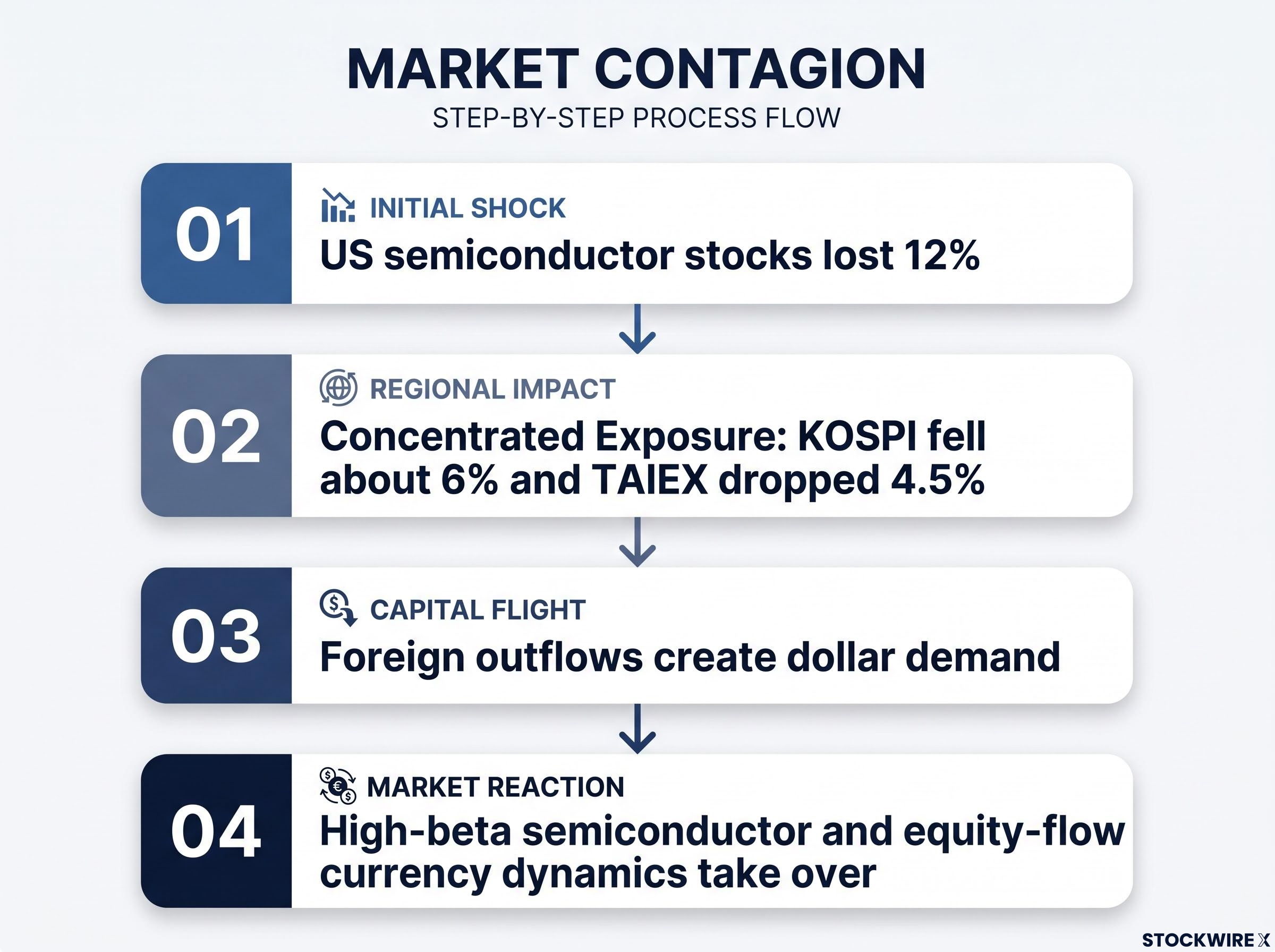
A 12% loss in US semiconductor stocks triggered foreign outflows, causing the KOSPI to fall about 6% and the TAIEX to drop 4.5%.
Step three is the one that changes how you should read these currencies.
MUFG on the Taiwan dollar The currency has recently behaved less like a conventional current-account currency and more like a high-beta semiconductor and equity-flow currency.
A current-account currency is one whose value mainly follows a country’s trade and income balance with the rest of the world. Taiwan has strong exports and large external surpluses. They did not stop the slide.
Why the won and Taiwan dollar are different from other Asian currencies
The scale of the equity damage explains a lot. Taiwan’s index posted its worst weekly performance since 2001, and MUFG warned the 12% fall in US chip stocks could set off another wave of foreign selling in both Taiwan and South Korea.
Korea’s chip concentration risk is visible in the numbers: Samsung and SK Hynix accounted for roughly 70% of the market value lost between June and mid-October, which is why your read of the won should start with these two stocks.
Claudio Piron, head of Asia FX and rates strategy at Bank of America, said the Taiwan dollar is the Asian currency most correlated with AI exchange-traded funds. In his view, the decline looks more like a positioning squeeze than a deterioration in fundamentals. He pointed to large current-account surpluses as a reason to buy the won and Taiwan dollar after the selloff.
For you, the practical takeaway is simple. In a risk-off session, the chip-equity tape and foreign flow data say more about where these two currencies are heading than trade balances do.
Why strong US jobs data pushed the dollar higher and outweighed lower yields
The equity shock was only half the story. A second force, the market’s view of the US Federal Reserve, arrived on top of it and pushed in the same direction.
The jobs data stack
Pressure built through the week. September job openings in the Job Openings and Labor Turnover Survey (JOLTS) came in at 7.523 million, up 333,000 from August, and ADP private payrolls rose in October. Both pointed to firm labour demand and raised the odds of further Fed tightening before the main report even landed.
| Data point | Figure | Source and date |
|---|---|---|
| September JOLTS openings | 7.523 million, up 333,000 | Reuters, 3 November, citing BLS |
| October ADP private payrolls | Rose (headline figure not reported) | Reuters, 4 November |
| October payrolls consensus | 65,000 | FactSet, via ABC News, 3 November |
| Revised September payrolls | 60,000 | Reuters, 6 November |
| Actual October payrolls | 165,000; unemployment 4.1% | Reuters, 6 November |
Estimates did not line up perfectly. MUFG framed expectations as 70,000 for October against 29,000 for September, while FactSet put consensus at 65,000 and Reuters later reported September revised to 60,000.
Either way, the actual nonfarm payrolls (NFP) figure of 165,000 cleared every pre-release estimate by a wide margin.
The rate market reacted at once. CME FedWatch showed roughly an 80% chance of a December rate hike, up from 66.9% the previous day, with the Fed’s policy rate held at 3.75%-4.00% the week before.
The FOMC October statement is the policy baseline against which your hike-pricing signals should be read, because it shows the committee’s stance before the payrolls surprise forced markets to reprice December.
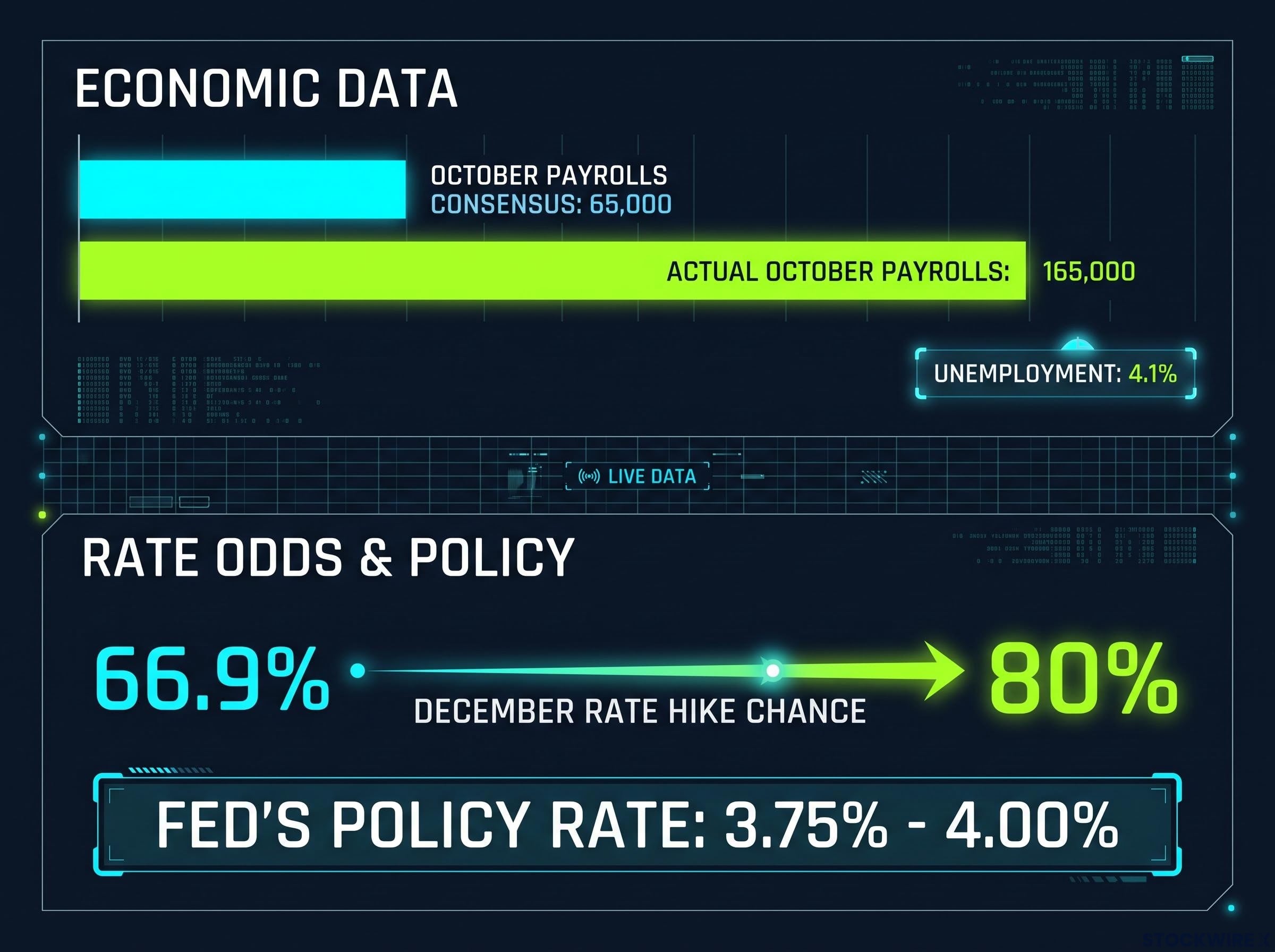
Actual October payrolls of 165,000 crushed the 65,000 consensus, driving the CME FedWatch December rate hike chance from 66.9% to 80%.
Three channels, one direction
MUFG’s Lee and Li describe three forces that combined to override cheaper oil and lower yields:
- Rate expectations: Strong labour data lifted the odds of Fed tightening, which supports the dollar and makes Asian currencies less attractive by comparison.
- Safe haven: The equity shock drove buying of the dollar and yen, swamping the usual help from lower Treasury yields.
- Portfolio flows: Foreign selling of Taiwanese and Korean chip shares created dollar demand that had nothing to do with oil or yields.
That is why a hot jobs print can be good for the dollar and bad for Asian currencies even on a day when US yields are lower. Rate expectations and risk appetite can count for more than the level of yields.
What could change the picture: feedback loops, interventions and reversal risks
The dominant story is clear. It is also conditional, and several forces could blunt or reverse it.
Start with the loop already in motion. Higher hike pricing supports the dollar, but it also raises the discount rate used to value future tech earnings, which can push chip stocks lower and drag the Taiwan dollar and won with them.
A competing reading points the other way. Reuters reported that the selloff made traders question whether central banks would have room to hike if tighter financial conditions weaken demand, and December Fed and European Central Bank hike bets looked less confident during the risk-off phase before payrolls.
| Risk or interpretation | What it implies for Asian FX |
|---|---|
| Selloff turns disinflationary | Less room for Fed hikes could ease dollar strength |
| Positioning-squeeze reversal (BofA) | Surpluses and export flows could support a rebound in the won and Taiwan dollar |
| Official support measures | May calm disorderly selling, but foreign outflows can continue |
| Split haven flows | Yen strength is not guaranteed near ¥157.54 |
Officials have already stepped in. South Korea temporarily eased rules on leveraged retail investment, and Taiwan’s Ministry of Finance reportedly instructed state-owned banks to support the market.
The haven trade is also messier than it looks. Japan’s policy stance and yield gaps complicate the yen’s role, and the dollar rose against some major currencies in later trading.
History offers one guide. The April 2025 “Liberation Day” selloff is the closest recent case of a US-born shock spreading quickly into Asian equities and currencies.
MUFG had flagged a material payrolls miss as the key event risk that could have triggered an Asian FX relief rally. It did not happen, so the current pattern rests on tech sentiment and Fed pricing, and you should watch both rather than assume it lasts.
Not every analyst reads chip weakness as lasting, and some point to a structural demand floor under AI semiconductors, built on hyperscaler spending that could keep rising through the decade.
What this episode teaches about reading Asian FX when signals conflict
Cheaper oil and lower yields were real supports, but secondary ones. The tech shock and foreign selling drove the Taiwan dollar and won lower, and the 165,000 payrolls print added a separate, hawkish boost to the dollar.
Next time oil and yields fall while equities slide, check these first:
- The direction of US and Asian chip stocks
- Foreign flows in and out of Taiwan and Korea
- December Fed hike pricing on CME FedWatch
- Any further official support from Seoul or Taipei
If chip shares and flows are still deteriorating, macro supports are unlikely to hold these currencies up on their own.
This article is for informational purposes only and should not be considered financial advice. Investors should conduct their own research and consult with financial professionals before making investment decisions.