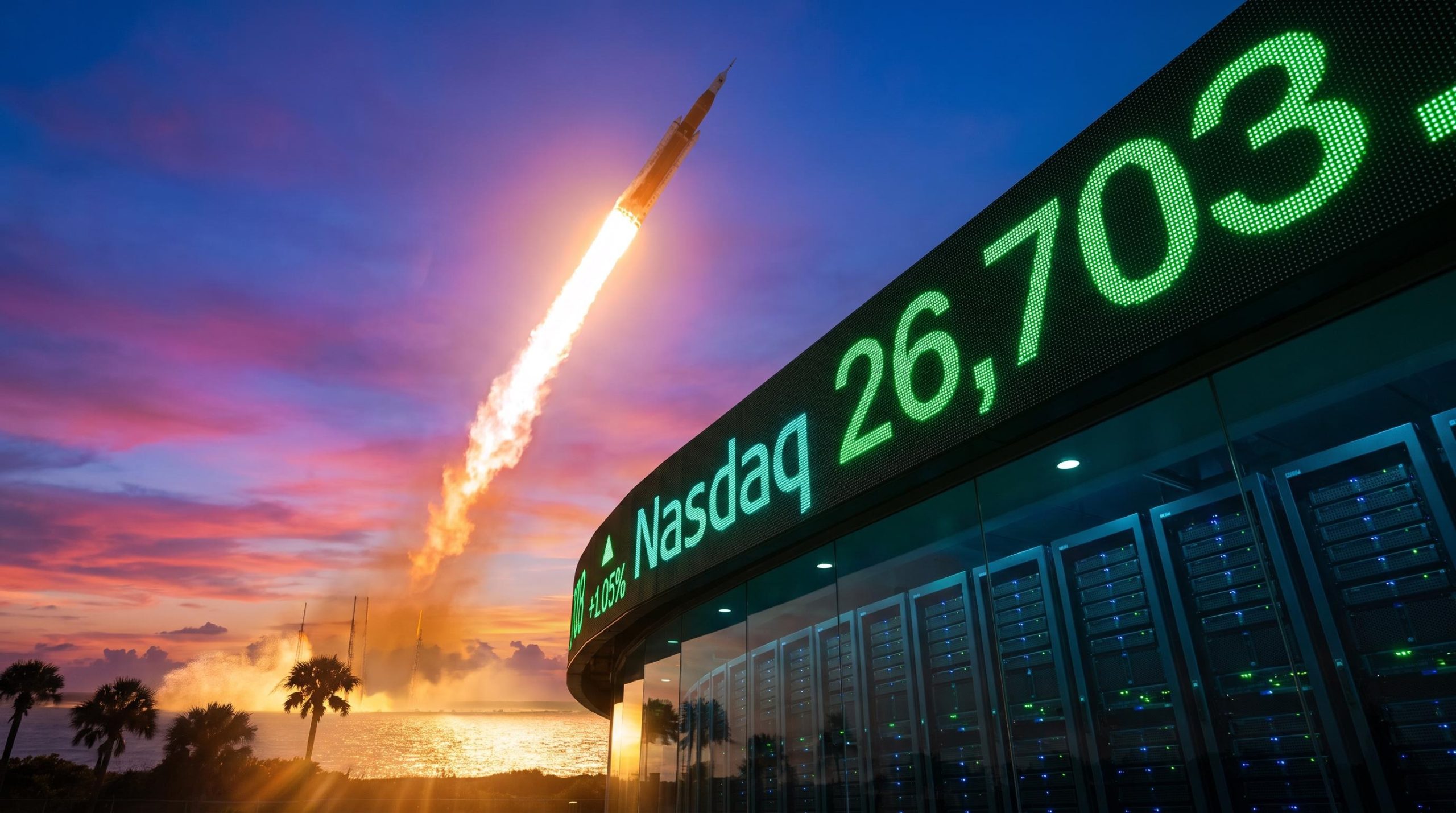
US stocks closed near their session highs on Wednesday, 21 October 2026, as an AI stocks rally lifted the Nasdaq 1.05% to 26,703 and pushed the Philadelphia Semiconductor index up 2%. SpaceX’s third-quarter earnings beat set off the move and revived trades tied to artificial intelligence (AI).
The rebound followed a weak October for space stocks. It also came while the 10-year Treasury yield stayed above 5.1%, a level that makes future tech earnings worth less in today’s money and raises the cost of building data centres.
That backdrop raises a practical question for anyone holding tech. Is this a lasting repricing of AI, or a narrow bounce that lasts one session?
Here is what drove the session, where the rally was broad and where it was not, and which dates matter next for your tech exposure.
How far did the AI and space rally actually spread across Wall Street?
Where the gains concentrated
Every major index finished higher. Buying picked up late in the session as worries about escalation in the Middle East eased, and the Nasdaq led the pack.
| Index | Close | Daily move |
|---|---|---|
| S&P 500 | 7,757 | +0.58% |
| Dow Jones | 52,856 | +0.69% |
| Nasdaq Composite | 26,703 | +1.05% |
| Russell 2000 | 2,781 | +0.27% |
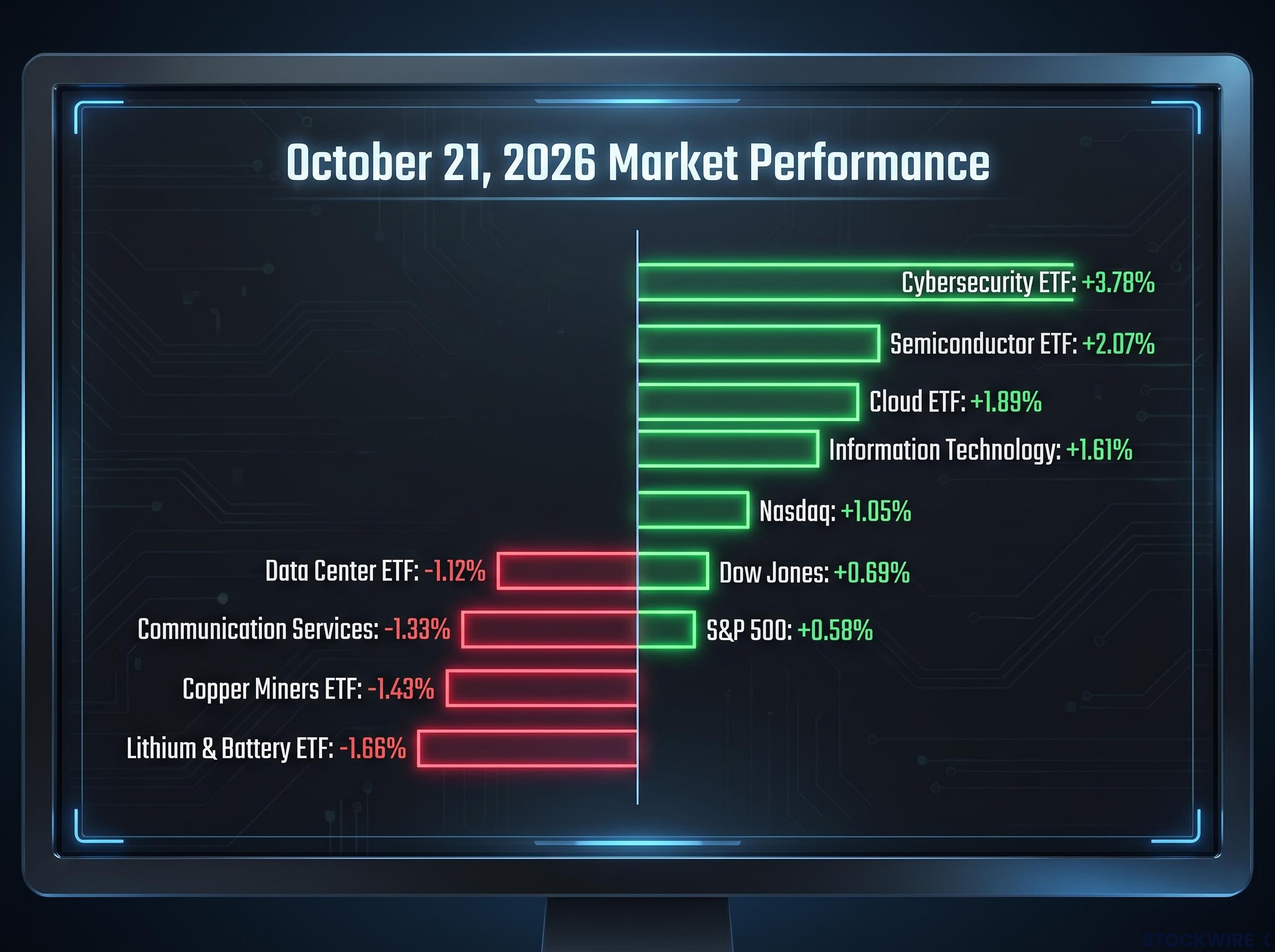
Information technology was the best sector, up 1.61%. Communication Services went the other way and fell 1.33%. The VIX, a measure of how much volatility traders expect, dropped 3.64% to 16.68, while the 10-year yield edged up to 5.146%.
The discount-rate channel explains why a 10-year yield above 5.1% trims tech valuations even when earnings hold: each dollar of future profit is simply worth less today, and the longest-dated growth stories feel it most.
Where the rally did not reach
The industry ETF moves show how selective the buying was:
- Gainers: Cybersecurity +3.78%, Semiconductor +2.07%, Cloud +1.89%
- Decliners: Lithium & Battery -1.66%, Copper Miners -1.43%, Data Center -1.12%
The day before, the picture was even messier. On 20 October, the SOXX semiconductor ETF slipped 0.4% and the Roundhill Memory ETF (DRAM) lost 1.3%, even as some AI names climbed.
Chips and cloud rose while data-centre stocks fell. The market is paying for specific links in the AI chain, not for the whole theme, so check where your holdings actually sit before assuming you shared in the gains.
What did SpaceX and Super Micro really prove about AI demand?
SpaceX gave the market hard numbers to work with. It beat the LSEG consensus on every headline line, and its shares rose about 8% in extended trading.
| Q3 metric | Actual | Expected |
|---|---|---|
| Revenue | $14.58B (+161% y/y) | $12.72B |
| Net income | $4.4B | $1.57B |
| Adjusted EPS | $0.45 | $0.13 |
| AI revenue | $7.56B | About $6.47B |
The standout figure SpaceX’s AI division generated $7.56 billion in revenue in a single quarter. According to Fortune, that business includes computing capacity leased to Anthropic, Google, Grok and X.
S&P Global said analysts expect total operating margin to climb from 13.6% in 2026 to 28.6% in 2027. CNBC reported one analyst lifted his price target to $300 from $254, and Mizuho’s Brett Linzey kept an outperform rating with a $200 target.
Super Micro Computer added fuel. It raised its preliminary fiscal Q1 2027 outlook on AI platform demand:
- Revenue: $18.5-$19.5 billion, up from $14.5-$15.5 billion
- Gross margin: 12.0%-12.5%, up from 10.4%-10.8%
Reports of the share reaction varied. One source put the gain at 9.5%, while other snapshots showed 10.87% and about 16%, likely reflecting different trading windows.
Then come the caveats. A gross margin of 12% is thin for hardware, and Super Micro said the improvement came mostly from customer and product mix, which can reverse quickly. A surge in AI-capacity purchases may also be flattering near-term comparisons for both companies.
The margin improvement follows a pattern from July, when Super Micro also pointed to a favourable mix of higher-value AI server configurations, leaving open whether the gain is structural or a one-quarter effect.
At SpaceX, AI demand is turning into real profit. Super Micro’s numbers suggest the hardware layer keeps far less of that value than its headline revenue implies, so two stocks with similar sales growth may carry very different earnings quality.
Anthropic’s possible IPO and the Tesla merger question: what to watch next
Anthropic: a test for the IPO window
Anthropic has not announced a filing date. Reporting points to a possible November listing, and Renaissance Capital strategist Matt Kennedy said a filing could land as soon as Friday.
The timing reflects an earlier IPO delay from October, as advisors wanted strong Q3 financial results in front of prospective investors before any listing.
“A good debut would be a huge win for the rest of the market,” in the assessment of Matt Kennedy, Renaissance Capital.
The numbers will be tested hard. Fortune, citing a Wall Street Journal account of a draft prospectus, reported an $80.7 billion net loss for the first half of 2026. Reuters reported on 15 October that investors were already tempering valuation expectations as revenue growth slowed.
A strong debut would back the premium AI valuations behind this rally. A discounted one would show investors pricing AI economics more selectively, so treat the filing as a read on your own AI exposure.
SpaceX and Tesla: committees, not a deal
Elon Musk said Tesla and SpaceX have each formed special committees of independent directors, at shareholders’ request, to discuss a possible merger. Musk is excluded as a conflicted party, and no terms have been agreed.
The voting maths cuts both ways. Fortune said Musk controls about 82% of SpaceX’s voting power, but Tesla would need approval from 50% of all outstanding shares, a bar Musk called a “quite high hurdle.”
Key dates ahead:
- 23 October: Possible Anthropic IPO filing
- 3 November, 5:00 p.m. ET: Super Micro full fiscal Q1 2027 results
- November: Possible Anthropic listing
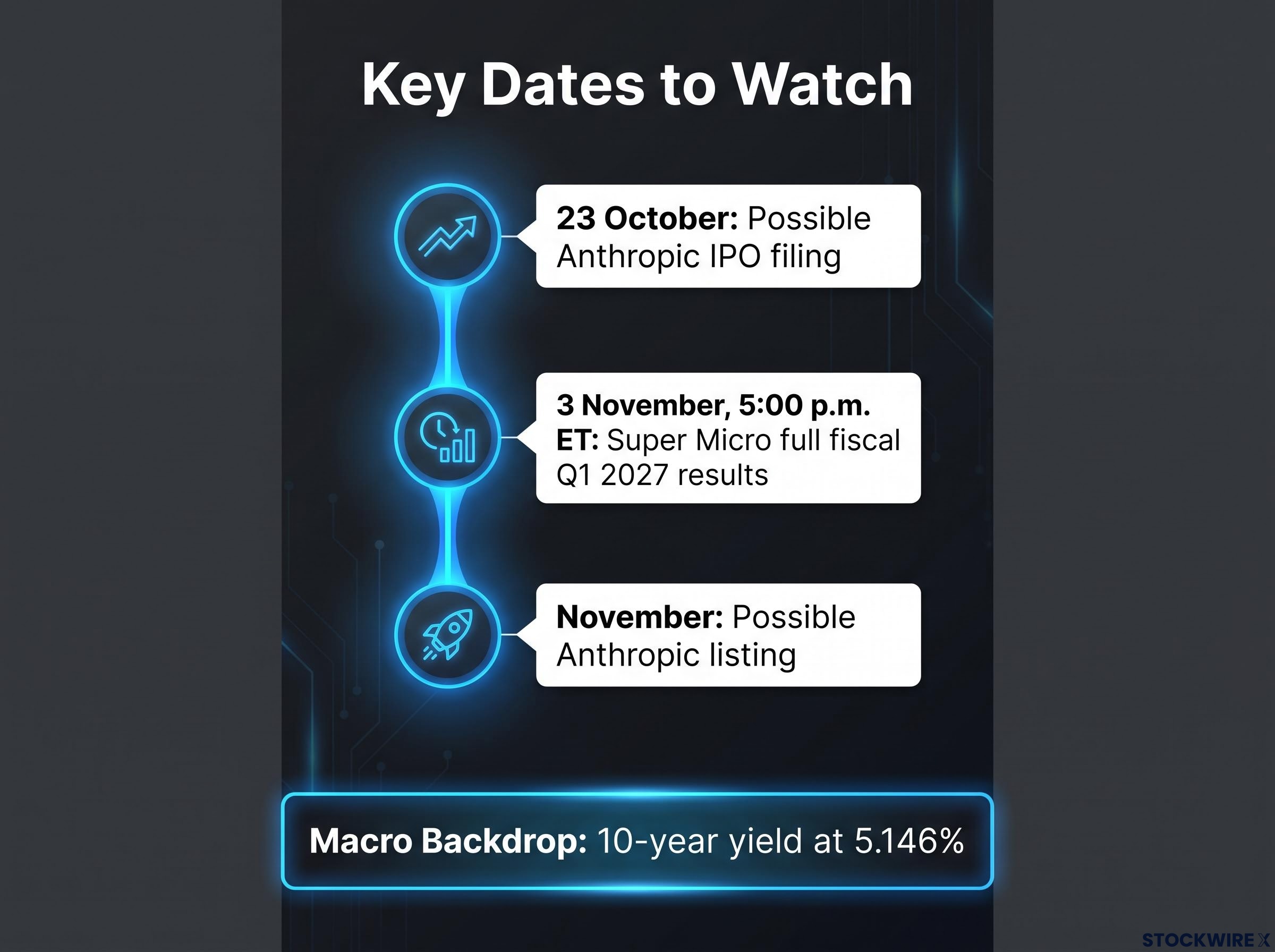
All of it plays out with the 10-year yield at 5.146% and oil and Middle East risk still unresolved.
These statements are speculative and subject to change based on market developments and company performance.
Reading the next move: what this session settles and what it leaves open
The session settled one point. SpaceX showed AI can generate large profits, and Super Micro confirmed server demand is running hot.
It left more open. Breadth was uneven, hardware margins remain thin and yields above 5% keep pressure on long-dated tech valuations. Anthropic’s reception and Super Micro’s 3 November results are the next real checkpoints.
For your portfolio, the useful split is between exposures backed by reported earnings and those that depend on valuations holding up. The coming weeks should show which group this rally actually belongs to.
This article is for informational purposes only and should not be considered financial advice. Investors should conduct their own research and consult with financial professionals before making investment decisions. Past performance does not guarantee future results. Financial projections are subject to market conditions and various risk factors.