SpaceX has moved its second-ever earnings report forward to after the close tonight, 20 October, at 4:30 p.m. Eastern. Many traders had expected the report in early November. Options that were supposed to expire before the report now carry earnings risk, and SpaceX earnings options are being repriced as a result.
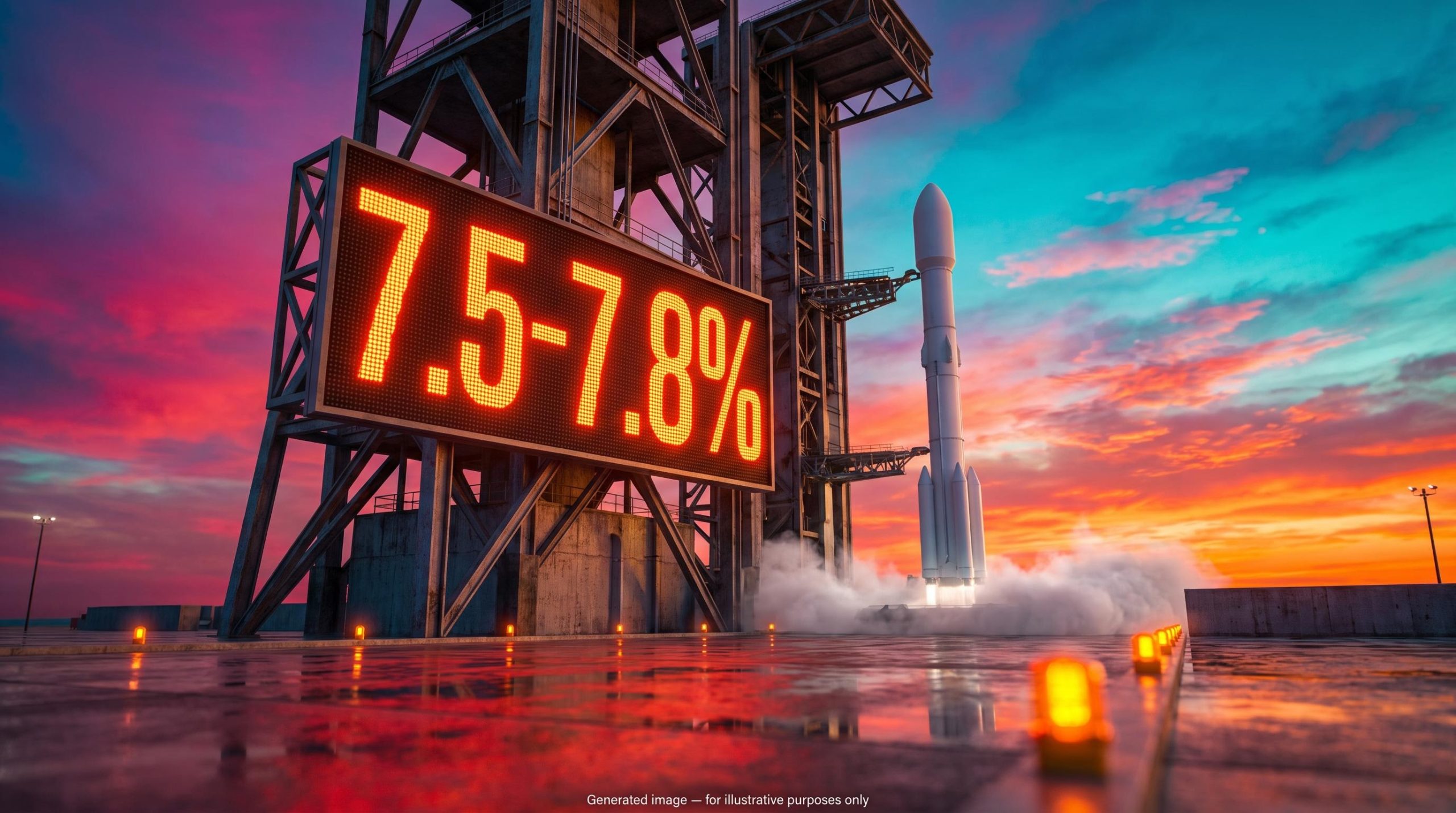
The options market is pricing an implied move of about 7.5-7.8% in either direction. An implied move is the price swing that options premiums suggest traders expect, up or down. Tesla reports the following day, and that back-to-back timing has added merger speculation to the discussion.
Here is how to read what the options market is saying and what it is not. You will also see how to tell a hedge from a directional bet, and how to judge the gap between bullish analyst targets and heavy put activity before the numbers land.
Why did the earlier date shift so much volatility into this week’s options?
Until last week, the calendar pointed to November. CNBC reported on 16 October that results were expected in early November, and a Barchart page still showed 3 November. Then SpaceX Investor Relations listed 20 October. No source documents exactly how or when the company announced the change.
The effect on contracts was mechanical. The 21 October expiry became the first one after the report. Contracts expiring 23, 28 and 30 October, which were priced as pre-earnings trades, are now earnings trades.
According to an options-flow presenter on Tasty Life‘s Signal Versus Noise, volatility drained out of early-November expiries and pooled in the 21 and 23 October contracts. Heavy volume landed on thin open interest, meaning the number of contracts already outstanding was small. That explanation rests on this single presenter.
Implied-move readings by source:
- Investopedia (19 October): about 7.5%
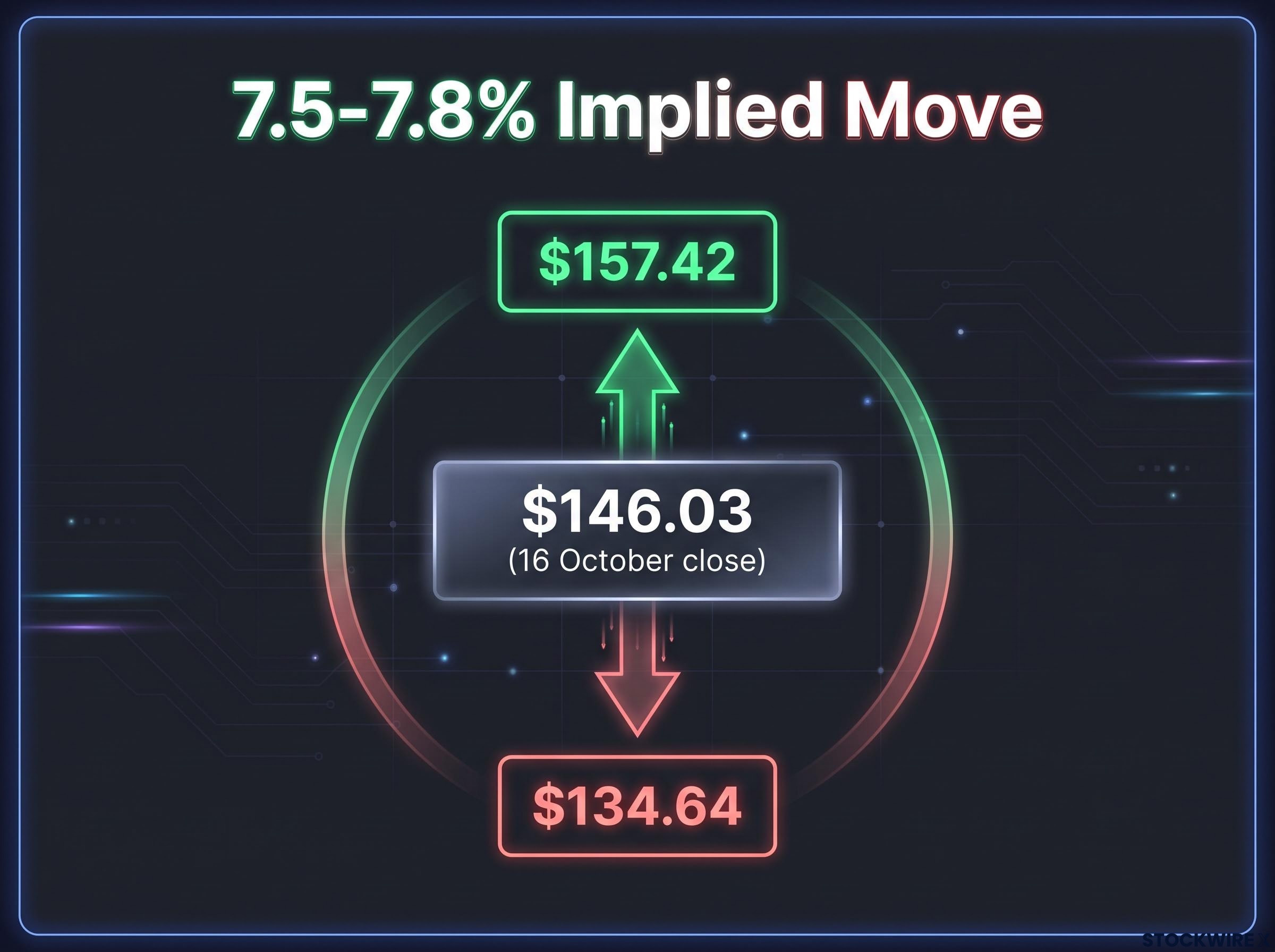
- TipRanks: 7.80%, off a $146.03 close on 16 October
- Presenter: $10.35, about 7-8%, on a stock near $150
Priced range: 7.5-7.8% implied move, equal to roughly $134.64-$157.42 (TipRanks)
Implied volatility (IV), the annualised swing priced into an option, is harder to pin down.
Because implied volatility is backed out of live option prices rather than past data, the annualised swing priced into each strike shifts with every trade, which is why readings differ so widely by expiry and timestamp.
| Source | Expiry or basis | IV reading | Timestamp |
|---|---|---|---|
| Presenter | Expiry two days out | 120.5% | Pre-report |
| Presenter | 2 and 6 November | 67-69% | Pre-report |
| Market Chameleon | Nearest expiry (19 October), after the event window | 23.8% | 20 October |
| Barchart | 19 October ATM | 48.94% | 17 October |
| iTiger | Overall | 75.75% | 14 October |
No single IV number is reliable. If you hold or are considering short-dated SpaceX contracts, check which side of tonight’s report your expiry falls on. The premium you pay or collect now includes an earnings event you may not have planned for.
When big ASX news breaks, our subscribers know first
What are the put traders actually doing, and is it bearish?
A put is a contract that gains value if the stock falls below a set strike price. At first glance, three positions flagged by the presenter look like a clear bet against the stock.
| Position | Size | Expiry | Break-even |
|---|---|---|---|
| 23 October $135 put (about 8% below stock) | $2.7M | 4 days | About 9.4% decline |
| 6 November put | $1.2M | 18 days | About 6.3% decline |
| $146 put | Not disclosed | Morning after earnings | 4.1% decline |
The $146 put is effectively a one-night bet. The presenter counted about 8,400 contracts of the $135 put trading in a day, and iTiger called the overall flow “cautiously bearish.”
The picture gets murkier from there. iTiger also described the sale of 8,261 October $135 puts, worth about $9.18 million in premium, as a possible bullish income trade. Yahoo Finance data from 19 October showed 794 contracts of volume against 10,308 open interest at $135, 832 against 17,559 at $140, and 170 against 6,743 at $145.
Block trades on thin open interest do not add up to a consensus.
Options-implied probabilities are risk-neutral figures that embed an insurance premium, so a heavily bought put strike can overstate the real odds of a fall back to the IPO price.
How to read the $135 strike
$135 is the IPO price, and the presenter said it accounts for about 60% of original put premium. A fall back to that level would signal the kind of post-IPO weak patch that can last six months or more. A buyer of that put is hedging against that risk. A seller collects income and profits if the stock holds above it. YieldCove noted the 30 October $135 put offered a 10.98% downside cushion as an income-oriented hedge.
Ask three questions of any large options print:
- Was it bought or sold?
- Which strike and expiry, and do they sit near a meaningful level?
- How does the volume compare with open interest?
Treat any single large put print as ambiguous until you know which side it came from. The same headline volume can mean opposite things for your read of sentiment.
Analysts see $279, so why are traders buying protection?
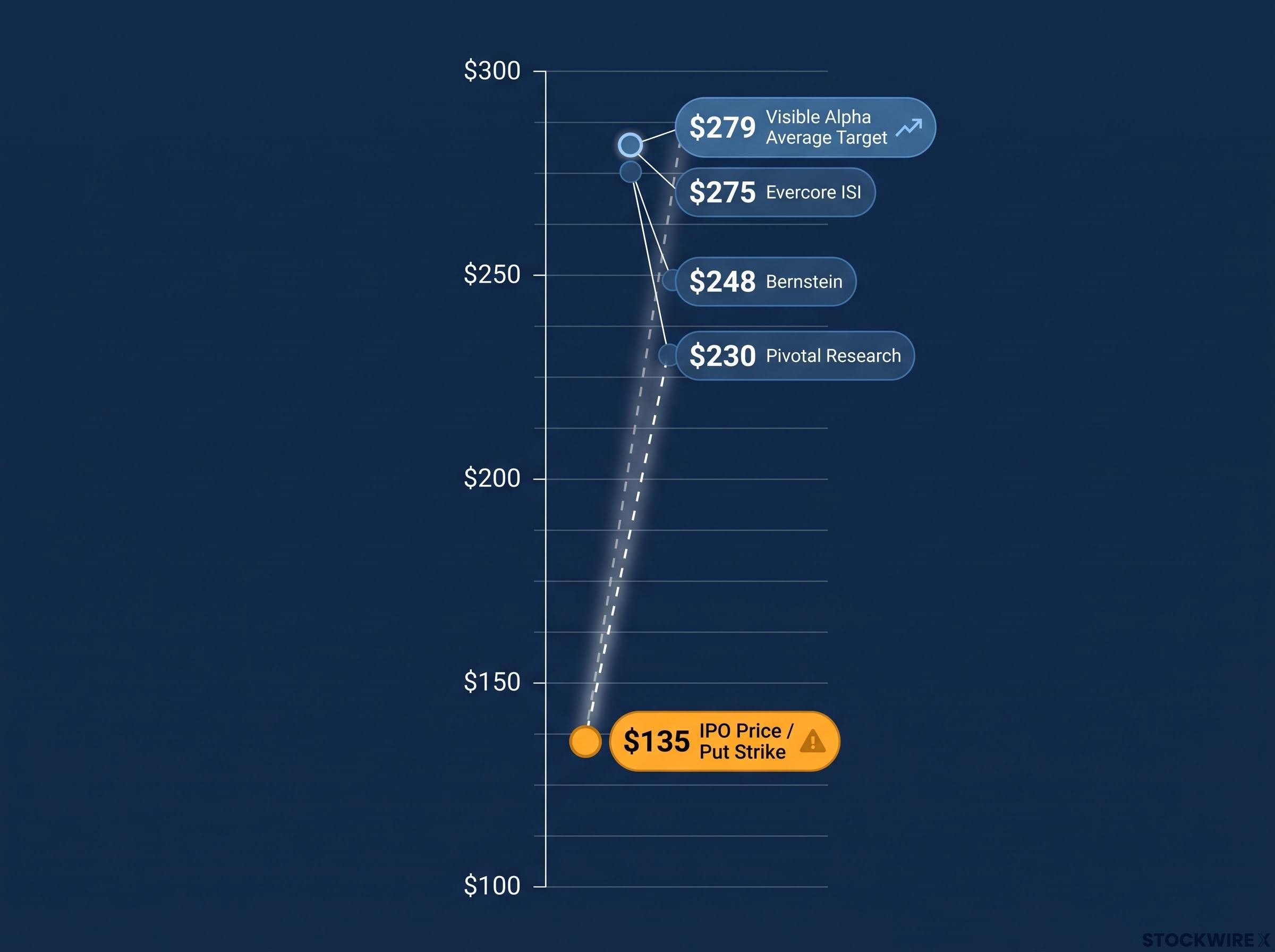
The gap is stark. Visible Alpha counts nine Buys, two Neutrals and no Sells, with an average target of $279.
| Analyst or source | Rating | Target |
|---|---|---|
| Evercore ISI (Kutgun Maral) | Outperform | $275 (up from $230, per CNBC; TipRanks and Yahoo show $270) |
| Pivotal Research (Jeffrey Wlodarczak) | Not stated | $230 (up from $220) |
| Bernstein | Buy | $248 |
| Visible Alpha consensus | 9 Buy, 2 Neutral | $279 average |
The gap: a $279 average target against puts clustered at the $135 IPO price
Consensus calls for revenue of about $12.84B and EPS of $0.16, with other previews at $0.14-$0.15. Last quarter’s revenue was roughly $7.8B. Wlodarczak forecasts $13.2B and $0.21.
The contradiction eases once you see the two groups are answering different questions:
- Horizon: targets are multi-month views, while the puts are short-dated event hedges
- Exposure: a fund can be bullish and still protect against an earnings gap
- Lockup: Morgan Stanley warned that lockup expiry and technical forces could weigh on shares
- Capex: AI spending could overshadow revenue growth
A lockup expiry is when insiders become free to sell shares they were barred from selling after the IPO.
The 4 August report offers limited guidance. EPS of -$0.09 beat the -$0.26 consensus, yet ABC News and CNN reported shares down more than 6% after hours and more than 8% in late trading. CNN partly blamed the cost of AI expansion. The presenter cites a 13.6% next-day fall and a 14.4% rebound over two weeks. These figures conflict and were measured at different times.
Compare the 7.5-7.8% implied move with August, but remember that reaction was tangled up with lockup worries. It is a weak guide to tonight, and one observation supports no statistical conclusion. Even a correct directional call can lose money through volatility crush, the sharp drop in option premiums once the event passes. Analyst targets are projections, and past performance does not guarantee future results.
Does back-to-back reporting with Tesla signal a merger?
Tesla reports Wednesday, 21 October, one day after SpaceX. Investopedia described the consecutive reports as occurring amid merger speculation, and the timing invites a story.
Barclays‘ Dan Levy, who rates Tesla Equal Weight with a $370 target, has said a merger could be announced before Tesla’s December annual meeting, within a broader six-to-12-month window. He views SpaceX as the likelier buyer in an all-stock deal, according to Yahoo Finance and Benzinga coverage from 14-16 October. The presenter says the lack of a gap between reports leaves room for an announcement, and claims a November announcement would be needed for a deal to proceed next year. That conflicts with the December framing in published coverage.
Speculation draws on a documented Musk consolidation playbook, from SolarCity in 2016 to xAI in 2026, though analyst odds range from near-certain by 2027 to plausible but not near-term.
The obstacles are substantial:
- Relative valuations
- Shareholder approval
- Control
- Related-party conflicts
- Whether Tesla investors would accept SpaceX shares
Status: no deal, agreement or timetable has been announced
If you trade around either report, treat merger chatter as an unpriced tail risk rather than a base case. Back-to-back results let you compare growth and capital needs. They are not evidence of a deal, and these statements are speculative and subject to change.
What the options market can and cannot tell you before the print
The 7.5-7.8% implied move is a priced range, not a forecast. Put flow is ambiguous, and analyst targets and short-dated hedges are measuring different risks on different timelines. The merger remains speculation.
Options signals around earnings describe risk economics rather than price targets, and past implied moves have missed in both directions, so the 7.5-7.8% range is best read as a cost of insurance, not a prediction.
Once results land, watch four things:
- The actual move against the $134.64-$157.42 range
- How IV resets in the 21 and 23 October expiries
- Management commentary on AI capex
- Tesla’s report on Wednesday
Before you act, decide whether you are hedging the event or betting on direction. The answer determines which expiry and which side of the trade fits your position.
This article is for informational purposes only and should not be considered financial advice. Investors should conduct their own research and consult with financial professionals before making investment decisions.