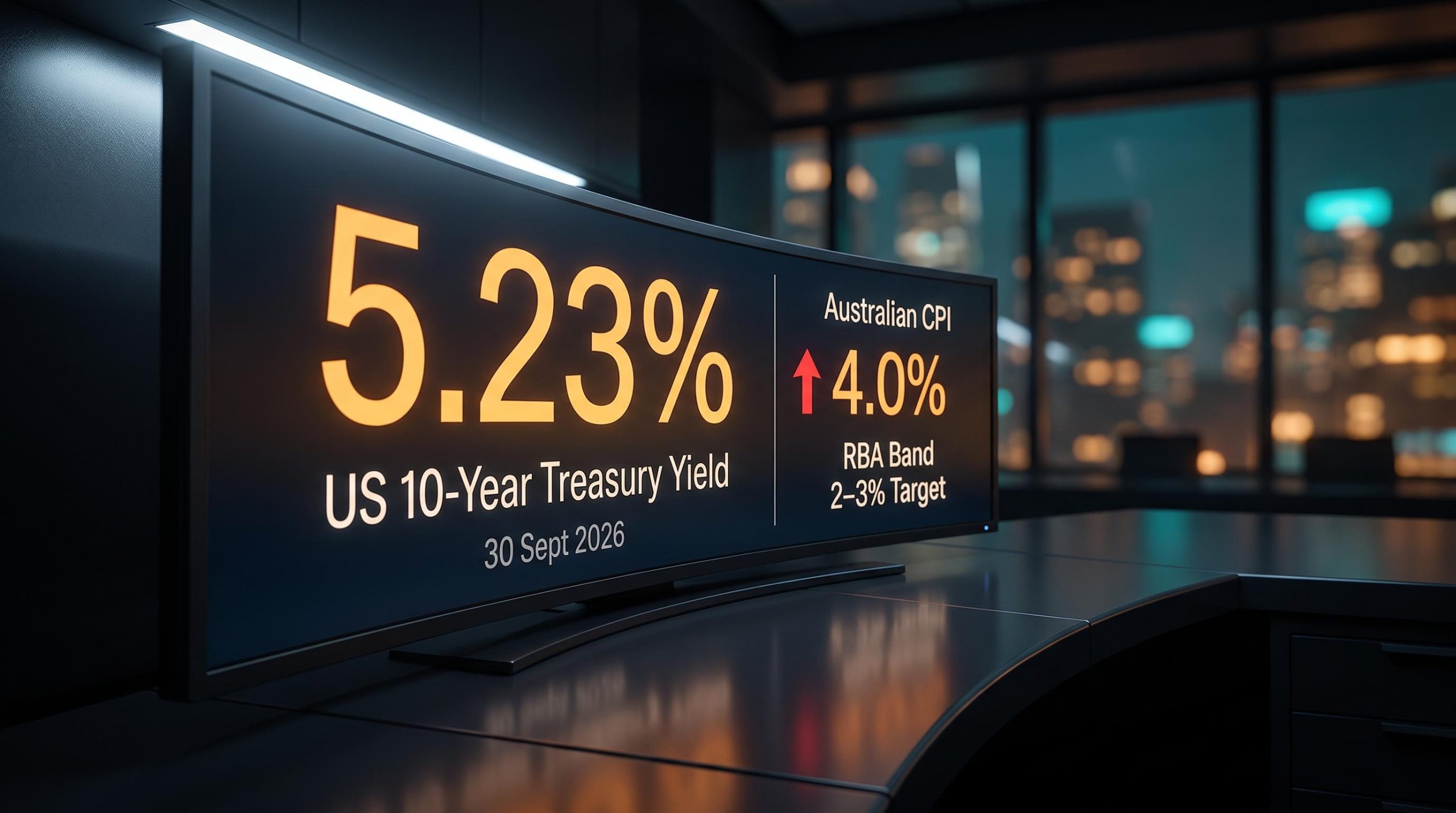
US 10-year Treasury yields above 5% and Australian inflation running above the Reserve Bank’s target band do not usually arrive at the same moment a global asset manager is telling clients to buy more equities. On the last day of September 2026, that is exactly the contradiction on the table.
BlackRock Australia equities strategist Lydia Vitalis set out the case at the close of Q3 2026, speaking as the firm’s Q4 Global Investment Outlook was published the same day. The timing is the point. Australian investors are reassessing positioning heading into a quarter shaped by elevated rates, sticky inflation, and an AI investment cycle that is visibly changing shape.
Here is what the data actually tells you about where the AI opportunity sits now, why your portfolio may be less diversified than it looks, and which macro readings deserve your attention before Q4 begins. The BlackRock Australia investment outlook for 2026 is bullish, but the reasoning behind that bullishness matters more than the headline.
Why the AI investment story changed shape in 2026
BlackRock’s Q4 Global Investment Outlook, published 30 September 2026, describes equities as “resilient, supported by solid AI-led earnings growth.” That is the constructive part. The interesting part is where the firm now says the earnings growth comes from.
The AI buildout is described as accelerating, and the firm’s own framing is that this acceleration pulls bottlenecks forward. Investors are directed explicitly toward AI bottleneck opportunities in power, chips, and data centres, rather than the mega-cap software names that defined the theme’s first phase.
The clearest signal of the repositioning is a single line.
“The path to abundance runs through scarcity in capital, materials and labor.”
Read plainly, that formulation moves the thesis away from a narrow cohort of platform winners and toward the physical infrastructure and supply chains that make the AI buildout possible.
BlackRock’s complementary thematic paper, dated 24 August 2026, extends the argument. It calls AI “the key theme of 2026, reshaping industries and influencing nearly every corner of the global economy,” and recommends seeking exposure to the full AI value chain, from infrastructure to applications.
The breadth of that value chain is the substance. According to the thematic document, AI’s impact now spans:
The rotation is confirmed in performance data: the equal-weight S&P 500 outpaced the Magnificent Seven by more than 4.5 percentage points through September 2026, reflecting how capital has followed the AI value chain from platform software into the utilities, grid equipment, and fibre infrastructure that make the buildout physically possible.
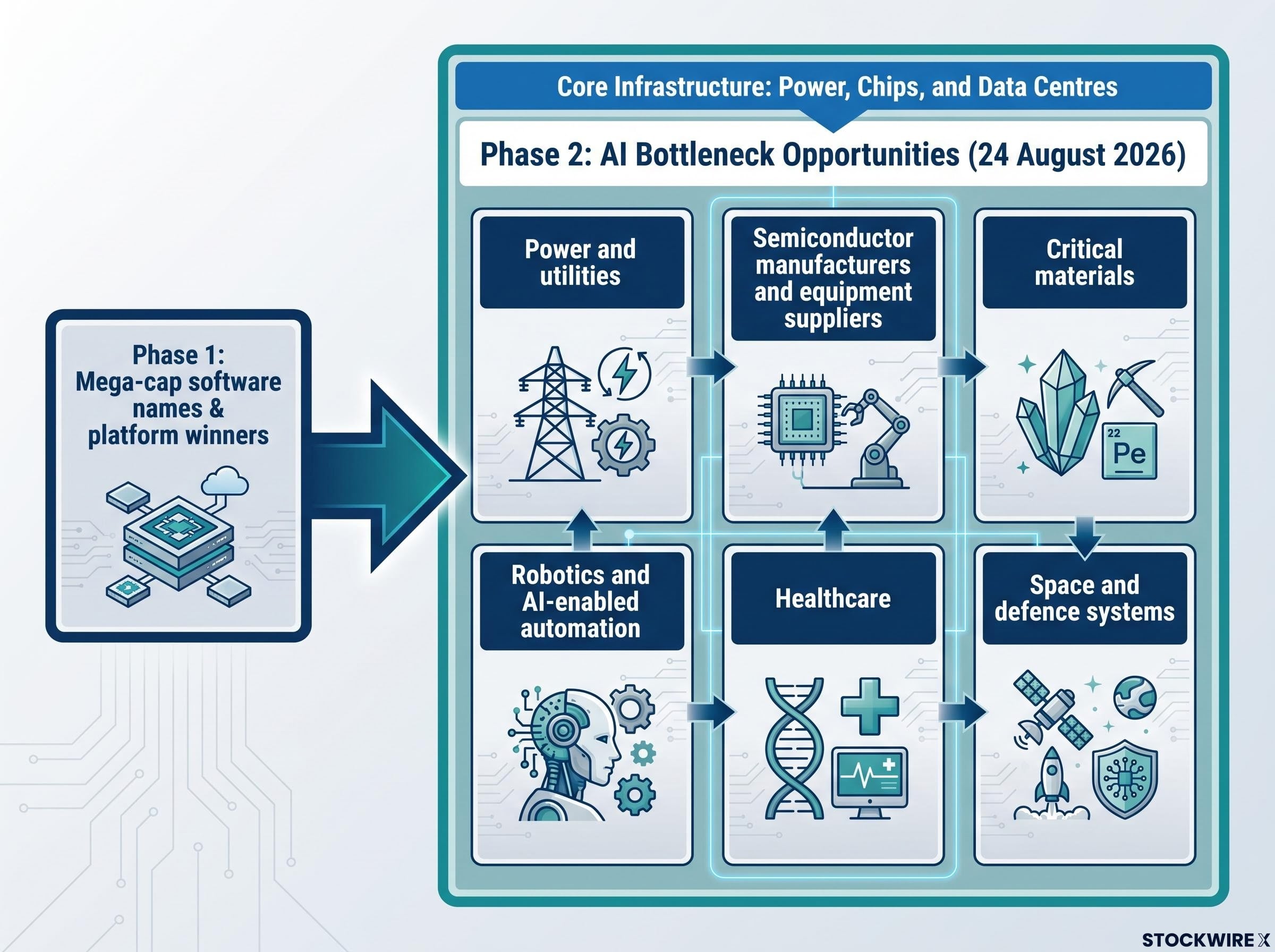
- Power and utilities, driven by data centre energy demand
- Semiconductor manufacturers and equipment suppliers, not just chip designers
- Critical materials required for AI hardware and data centre construction
- Robotics and AI-enabled automation
- Healthcare, including diagnostics and drug discovery
- Space and defence systems
Here is the practical read. If your AI exposure currently sits in a small group of platform and software leaders, BlackRock’s own language suggests you may be positioned for the phase that has already passed. The opportunity the firm is now describing lives further down the value chain, in the enabling sectors rather than the original winners.
When big ASX news breaks, our subscribers know first
The macro backdrop Australian investors cannot afford to ignore
Two readings define the environment, and they compound rather than sit side by side. The first is offshore. The US 10-year Treasury yield stood at 5.23% on 30 September 2026, down just 0.02 points on the day but up 0.48 points over the prior month and 1.13 points higher than a year earlier.
US 10-year Treasury yield: 5.23% (30 September 2026), up 1.13 percentage points year-on-year
That level matters because the 10-year yield anchors global discount rates. When it sits above 5%, the future earnings of growth equities are discounted more heavily, which compresses valuations for exactly the long-duration AI names investors have crowded into.
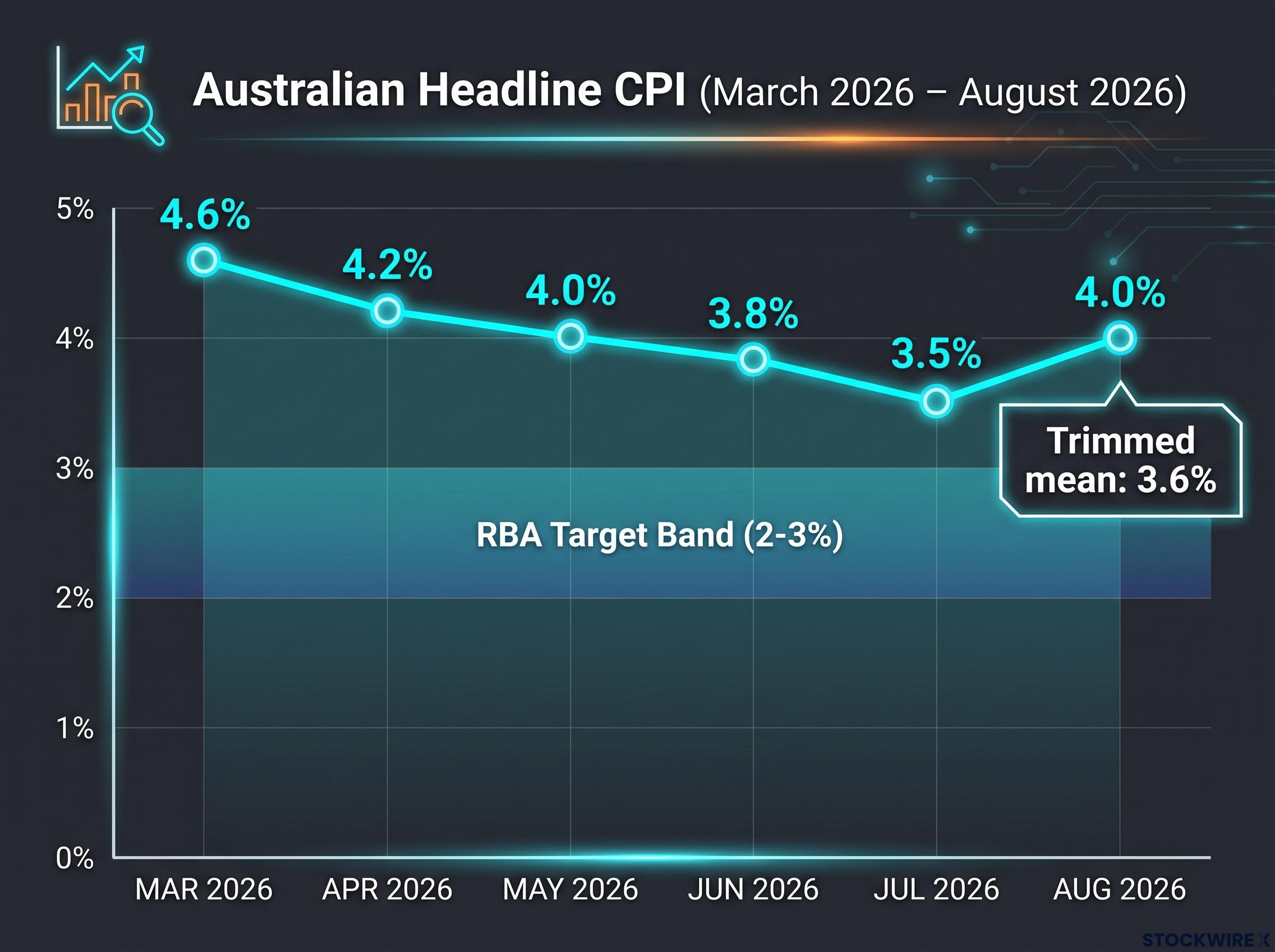
The second reading is domestic, and it turned the wrong way late in the year. Australian headline inflation peaked at 4.6% in March 2026, moderated steadily to 3.5% by July, then re-accelerated to 4.0% in August according to Australian Bureau of Statistics data.
| Period | Annual headline CPI | Trimmed mean | Directional signal |
|---|---|---|---|
| March 2026 | 4.6% | Mid-3% range | Peak |
| April 2026 | 4.2% | Mid-3% range | Moderating |
| May 2026 | 4.0% | Mid-3% range | Moderating |
| June 2026 | 3.8% | Mid-3% range | Moderating |
| July 2026 | 3.5% | 3.6% | Low point |
| August 2026 | 4.0% | 3.6% | Re-acceleration |
The August detail sharpens the concern. Monthly CPI rose 0.4% in original terms and 0.7% in seasonally adjusted terms, and headline inflation has sat above the RBA’s 2-3% target band for the entirety of 2026. That keeps domestic rate policy risk firmly on the table.
The RBA rate-hold probability dropped from above 80% to just over 60% within hours of the July CPI release, and the trimmed mean holding at 3.6% against a 3.5% forecast confirmed that underlying inflation had barely moved despite the improving headline, leaving the rate environment genuinely two-sided rather than a clean easing path.
Now put the two together. US yields above 5% raise the discount rate applied to growth equities from offshore, while Australian CPI above the target band sustains rate uncertainty at home. If your portfolio leans heavily toward long-duration AI growth assets, you are carrying two discount-rate risks at once, not one. BlackRock’s own preference for shorter-term bonds alongside its equity positions reads as an acknowledgement of exactly that sensitivity.
Why your portfolio may be less diversified than it looks
You probably hold several funds. You may reasonably assume that makes you diversified. The correlation argument says otherwise.
When index performance is driven by a small group of mega-cap AI or growth leaders, multiple funds can each be top-weighted to the same names. The result is the appearance of diversification while the actual return drivers stay narrow. You have not spread your risk. You have replicated it across different wrappers.
AI portfolio concentration risk runs deeper than most multi-asset investors realise: Microsoft, Alphabet, Amazon, and Meta can appear simultaneously as equity index weights, data-centre REIT tenants, infrastructure power customers, and investment-grade bond issuers, meaning the same thematic bet runs through every sleeve of a supposedly diversified portfolio.
This is precisely the problem BlackRock’s institutional positioning speaks to. The Q4 outlook upgrades emerging-market equities alongside US equities, and highlights bottleneck sectors, because these represent genuinely different return drivers rather than more of the same.
The firm’s “opportunities beyond asset class labels” framing carries the same message. Diversification that matters is diversification of what actually drives returns, not the number of tickers on your statement.
Here is a diagnostic you can run on your own holdings.
- Do the same five to ten names appear in the top weightings of multiple funds you own?
- What proportion of your equity exposure sits in US mega-cap growth specifically?
- Are you exposed to sectors with meaningfully different demand drivers from your core AI positions?
- Would a sharp repricing of the crowded AI names take down several of your funds at once?
If the answers point toward heavy overlap, then the BlackRock upgrade of emerging markets and bottleneck sectors is pointing at what genuine diversification of return drivers actually looks like.
How quickly should you act on concentration risk?
Pace is its own risk. Move too abruptly away from structural growth themes and you may miss continued compounding if the AI theme keeps delivering. Stay overly concentrated and you carry meaningful drawdown exposure if valuations or regulation turn against the crowded names.
That tension makes how you diversify, and how quickly, as important as whether you do it at all. There is no clean answer that applies to every portfolio, which is why the diagnostic questions above matter more than any single rebalancing rule.
Read carefully, BlackRock’s language is selective rather than rotational. The message is not to exit AI. It is to expand the definition of AI-related opportunity to include the enabling infrastructure and supply chain, so that adding exposure genuinely broadens your return drivers instead of doubling down on the same ones.
What Lydia Vitalis and the Q4 outlook are actually signalling for Australian investors
Pull the threads together and a single question emerges. What does it mean when a global asset manager simultaneously says buy equities, broaden AI exposure, manage concentration, and stay selective on duration?
These three forces are what BlackRock is asking Australian investors to hold in mind at once:
- AI opportunity broadening into bottleneck and infrastructure sectors, requiring active selection over passive mega-cap accumulation
- A dual macro risk of US 10-year yields above 5% and Australian CPI above the RBA target band
- A concentration problem where portfolios heavily weighted to a narrow group of leaders may warrant deliberate diversification
“Constructive on risk, but selective, favouring AI bottlenecks, shorter-term bonds, and opportunities beyond asset class labels.”
That selectivity is the whole message. Vitalis and BlackRock Australia reach investors here through financial advisers, platforms including nabtrade, and the wider institutional commentary ecosystem, which makes this one of the benchmark perspectives against which Australian investors assess their positioning.
It is not the only one. Vanguard typically emphasises low-cost, broad-market passive exposure. Morningstar leans on valuation discipline. Major Australian bank research desks may weight domestic macro risks differently again. The point of naming them is to let you triangulate rather than treat any single house view as the answer.
The practical signal is this. BlackRock’s bullishness comes attached to a specific structural argument about where within equities the opportunity now sits. Understanding that distinction determines whether acting on the outlook meaningfully changes your positioning, or simply adds more of what has already been well rewarded. That is the difference between using institutional research as a compass and using it as a permission slip.
What to watch before Q4 2026 is over
The value of this outlook is not a list of buy calls. It is a set of conditions you can monitor over the next three months to judge whether the thesis holds.
Four variables will do most of the work.
| Variable to watch | Directional signal to monitor | Implication for portfolio |
|---|---|---|
| US 10-year Treasury yield | Movement further above the 5% reference level | Higher yields intensify discount-rate pressure on growth equities |
| Australian CPI (September and October ABS releases) | Whether headline stays above the 2-3% RBA band; trimmed mean holding at 3.6% | Persistence keeps domestic rate risk live into Q4 |
| AI infrastructure earnings | Delivery from power, chips and data centre names | Strong results validate the broadening thesis; weak results sharpen concentration risk |
| Mega-cap AI regulation | Any regulatory developments affecting the crowded leaders | Adverse moves raise drawdown risk in concentrated positions |
The trimmed mean, steady at 3.6% across both July and August, is likely the RBA’s key focus metric, since it strips out the most volatile price movements to show the underlying trend. If headline inflation keeps ticking up while the trimmed mean holds, the policy debate stays unresolved.
The timing of Vitalis’s commentary is itself context worth reading. Delivered on the final day of Q3 2026, with specific and dated macro figures attached, this is a time-bounded analysis rather than evergreen advice. If these four variables move in the directions above, the BlackRock thesis stays intact. If they diverge, the diversification argument becomes more urgent, not less.
This article is for informational purposes only and should not be considered financial advice. Investors should conduct their own research and consult with financial professionals before making investment decisions. Past performance does not guarantee future results, and financial projections are subject to market conditions and various risk factors.
The case for active selection, not passive accumulation, in late 2026
Three different starting points lead to the same conclusion. A broadening AI opportunity set, a dual domestic-and-global macro risk environment, and a portfolio concentration problem all point toward selection over accumulation.
That convergence sets up one question worth sitting with. Does your current positioning reflect where the opportunity is moving, or where it was concentrated eighteen months ago?
For investors evaluating how to implement the selective, bottleneck-focused positioning BlackRock describes, our full explainer on active ETFs on the ASX examines whether the surge in active fund listings on the exchange represents a genuine portfolio tool or a distribution-driven trend that the performance evidence does not yet support.
Informed positioning in this environment has a recognisable shape. It means selective exposure across the full AI value chain rather than the original mega-cap cohort, a deliberate audit of whether your diversification is genuine or merely cosmetic, and active attention to the specific macro variables that will validate or challenge the thesis through Q4 2026. The outlook is a compass for that work, not a substitute for it.