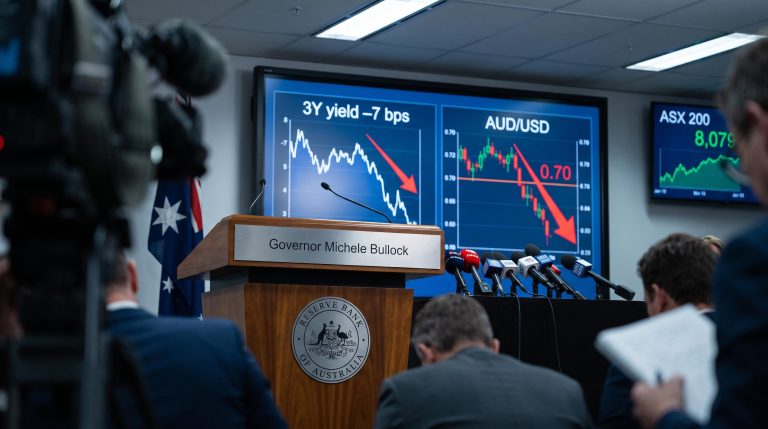
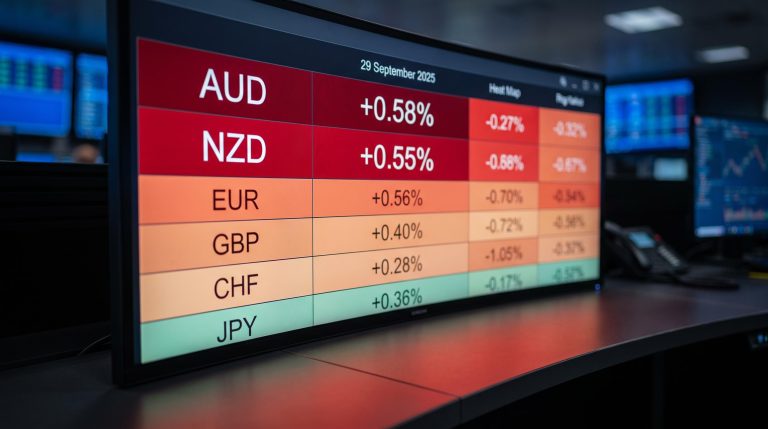
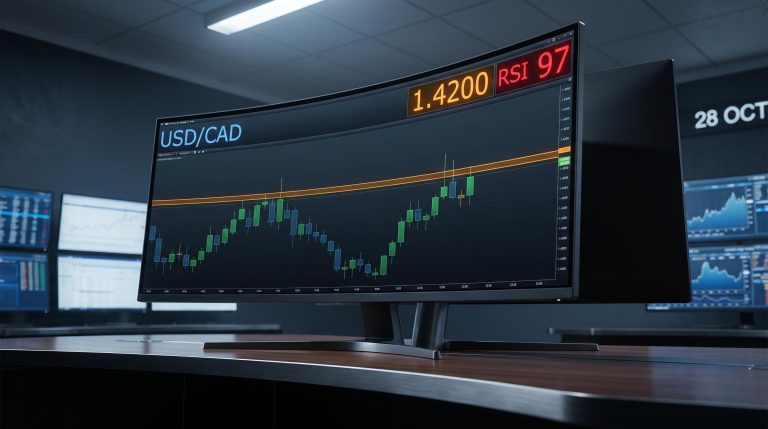
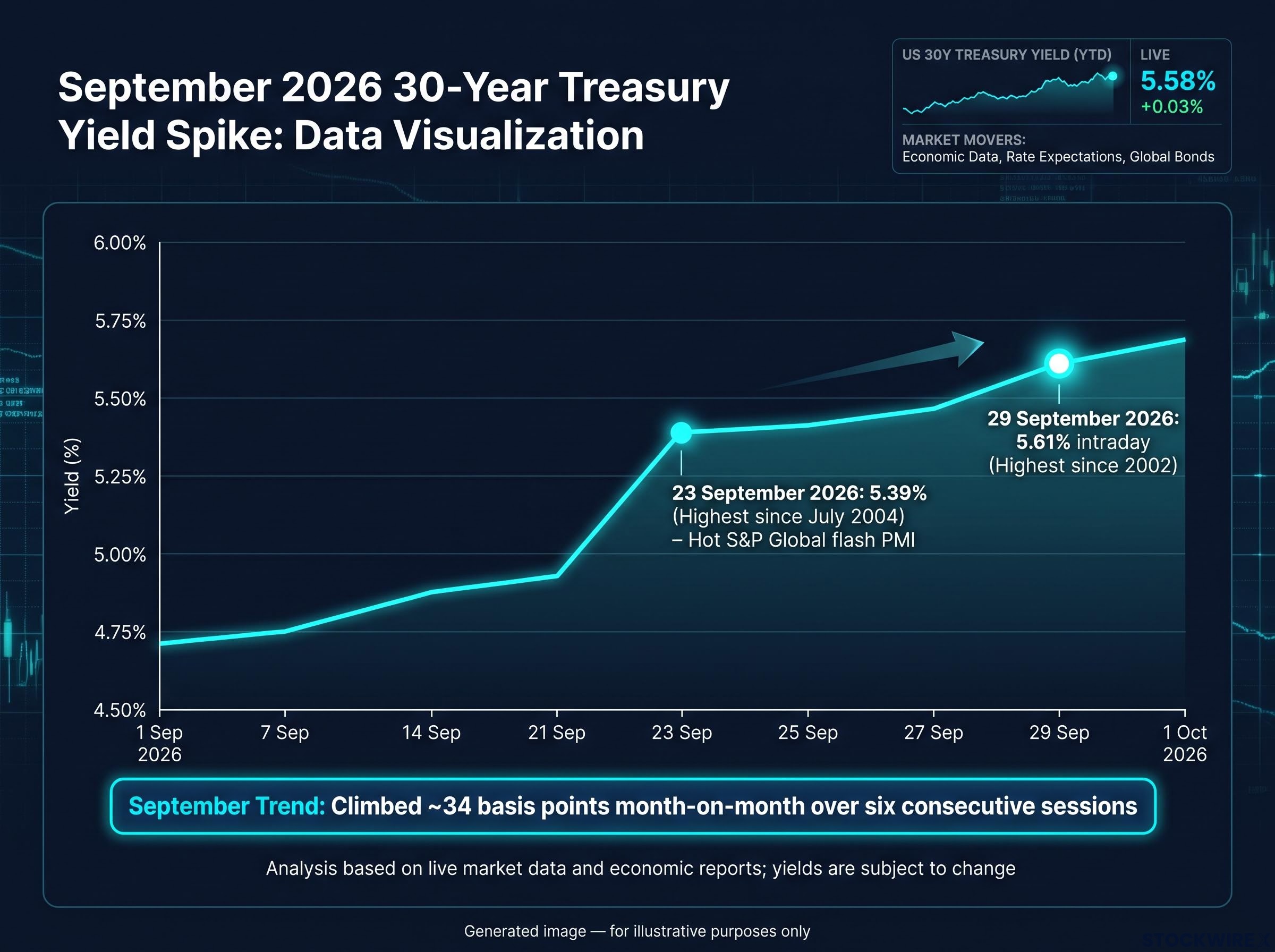
On 29 September 2026, the 30-year Treasury yield touched 5.61% intraday, a level the world’s most important debt market had not seen since 2002. This is not a routine rate statistic buried in a market wrap. It is a signal that something structural has shifted, and most people are not equipped to read what it means.
For two years, the working assumption across markets was simple: long-term yields would drift lower as inflation cooled. That assumption is now being openly challenged, and the investors doing the challenging carry a label that has been dormant for a generation. They are called bond vigilantes, and their return changes the story.
By the time you finish reading, you will be able to look at a 30-year yield headline and understand not just the number but the forces behind it, the historical episodes it echoes, and the specific corners of your financial life it is most likely to reach. This is practical fluency, not academic theory.
What bond vigilantes are, and why that name has come back
The phrase itself carries a political charge before you even understand the mechanism. “Bond vigilantes” describes investors who sell government debt, or demand higher yields to hold it, when they lose faith in a government’s fiscal discipline or its willingness to control inflation.
Economist Ed Yardeni popularised the term in the 1980s. His framing cast long-term bondholders as a kind of market sheriff: when deficits balloon or inflation fears rise, they dump bonds, push yields up, and force policymakers to change course.
Yardeni’s original bond vigilante framework, first articulated in a 1983 commentary, defined the mechanism precisely: long-term bondholders would impose fiscal discipline by selling government debt and pushing yields higher when policymakers failed to act, effectively setting the price of long-term money without waiting for official permission.
The mechanism is precise and worth understanding. When vigilantes sell long-dated bonds, yields rise. Higher yields increase the government’s cost of borrowing and feed directly into mortgage rates and corporate loan costs. Financial conditions tighten even if the central bank never touches its policy rate.
When bondholders lose confidence, they do not wait for permission. They set the price of long-term money themselves, and governments feel it in every future dollar they borrow.
The term went quiet during the quantitative easing era for one reason: the Federal Reserve was itself an enormous, price-insensitive buyer of bonds, soaking up supply and keeping a lid on yields. With QE over and the Fed now shrinking its balance sheet, that ceiling has been removed, and the vigilantes have room to operate again.
The Federal Reserve, ECB, and Bank of England collectively accumulated balance sheets multiple times their pre-2008 size during the quantitative easing era, and the capital displaced from suppressed yields flooded into equities, housing, and private credit in ways that are now partially reversing as those balance sheets shrink.
Analysts including Mohamed El-Erian of Allianz and Jeffrey Gundlach of DoubleLine argue that vigilante dynamics activate when three conditions line up:
- Large and rising fiscal deficits and debt-to-GDP ratios
- Waning central-bank support, meaning the end of QE or active balance-sheet runoff
- Elevated or unanchored inflation expectations, particularly when real yields climb alongside nominal ones
Not everyone agrees on how much power these investors truly wield. Paul Krugman has been sceptical, arguing that a government issuing debt in its own currency cannot be easily forced into austerity unless genuine inflation or default fears take hold. Institutions including BlackRock and Bank of America Global Research counter that even a modest jump in the term premium materially reshapes a government’s budget arithmetic.
Here is what the return of this framing tells you. The market has stopped trusting central banks and governments to self-correct on inflation and deficits. Professional investors have decided to impose that discipline themselves, through the price of money, and everyone who borrows pays for it.
When big ASX news breaks, our subscribers know first
Five forces pushing the 30-year yield to a 24-year high
The immediate trigger arrived on 23 September 2026. S&P Global’s flash purchasing managers’ index (PMI) data, a monthly survey measuring activity across manufacturing and services, ran far hotter than expected, with inflation embedded in both sectors. The 30-year yield jumped to 5.39% that day, its highest since July 2004.
But a single hot data point does not push yields to a 24-year high. It landed on a market already primed by structural pressure, and the yield then rose for six consecutive sessions into 29 September, climbing roughly 34 basis points month-on-month. Understanding why requires separating five distinct forces.
- Inflation and growth expectations
- Fiscal deficits and a rising term premium
- Corporate debt supply flooding the long end
- The unwinding of the yen-carry trade
- Market-structure amplifiers
The first two are the intuitive ones. Strong nominal growth and sticky inflation push investors to demand higher yields as compensation for holding money for 30 years, especially when they expect the Fed to keep rates elevated for longer.
The structural and technical amplifiers
The fiscal story is where professionals diverge most sharply. Strategists at Goldman Sachs, JPMorgan, Bank of America, and BlackRock have argued for years that rising US deficits, heavier Treasury issuance, and the Fed’s balance-sheet runoff together lift the term premium, the extra yield investors require to hold long bonds rather than roll short-term bills. In this reading, the spike reflects long-run fiscal risk, not just next quarter’s inflation print. A heavy pipeline of new corporate debt, as companies pre-fund and refinance, adds still more duration for the market to absorb.
BlackRock, JPMorgan, Goldman Sachs, and Bridgewater have independently reached convergent conclusions on long-duration Treasury exposure, all rotating away from nominal long bonds and toward real assets and inflation-linked strategies, a positioning shift that itself reinforces the structural selling pressure behind the current yield spike.
Then there is the yen-carry trade, a quieter but potentially powerful amplifier. Investors had borrowed cheaply in Japanese yen and parked the money in higher-yielding dollar bonds. Nomura and UBS have flagged that as the Bank of Japan drifts away from ultra-easy policy, those positions get unwound, meaning long-dated Treasuries get sold, which drains demand and pushes yields higher.
Market structure does the rest. Reduced dealer balance-sheet capacity and concentrated positioning mean that once selling starts, the moves at the long end amplify.
Here is why the multi-driver nature matters to you. If one cause dominated, a single policy shift could address it. When inflation, fiscal risk, and market technicals all push in the same direction at once, the pressure on long-end yields becomes far stickier, and far harder for anyone to declare a peak.
Three historical episodes that put this moment in context
A 24-year high sounds unprecedented. It is not. Three past episodes each illuminate a different dimension of what is happening now, and reading them together shows why this one may be harder to resolve.
The first is 1994, when an unexpectedly aggressive Fed tightening cycle triggered a violent repricing and heavy losses for leveraged bond investors. PIMCO and major bank research desks treat it as the warning about what happens when markets underestimate how persistent tight policy will be, particularly when positioning is crowded on one side.
The second is the 2013 taper tantrum. When then-Fed Chair Ben Bernanke merely hinted at slowing asset purchases, long-end yields spiked sharply. BlackRock and JPMorgan point to it as proof that communication about balance-sheet policy can move long yields as much as the policy rate itself, a lesson that lands squarely in today’s balance-sheet runoff environment.
The third is the 2022-2023 post-COVID surge, when rapid inflation and global tightening drove yields from near-zero to multi-percent levels. Goldman Sachs and Bank of America read this as the end of the “low-for-long” era and the start of a regime of structurally higher real rates.
| Episode | Year | Primary driver | Impact | Resolution mechanism |
|---|---|---|---|---|
| Bond market rout | 1994 | Surprise Fed tightening pace | Violent yield surge, leveraged losses | Policy expectations settled |
| Taper tantrum | 2013 | QE tapering signal | Sharp long-end spike | Fed communication clarity |
| Post-COVID surge | 2022-2023 | Inflation, global tightening | Structural repricing higher | New higher baseline, no full reversal |
The current surge combines all three: surprise about policy persistence from 1994, sensitivity to balance-sheet dynamics from 2013, and the embedded higher-rate regime from 2022-2023.
That combination is what makes it unusually complex. In each past episode, yields eventually found a ceiling, but the mechanism varied: sometimes a Fed pivot, sometimes a growth slowdown, sometimes a grudging fiscal adjustment. For you, the takeaway is uncomfortable but honest. There is no reliable script for how this one ends, and none of those past resolution catalysts is clearly on the table right now.
What a 5.61% 30-year yield actually does to your financial life
This number does not live only on bond trading desks. It is the rate environment inside which every mortgage, every corporate refinancing, and every equity valuation is now being calculated. For most of the past two decades, financial models were not built for this level.
The impact reaches you through four channels:
- Equities, especially long-duration growth stocks
- Housing and mortgage affordability
- Corporate debt refinancing and credit conditions
- The US dollar
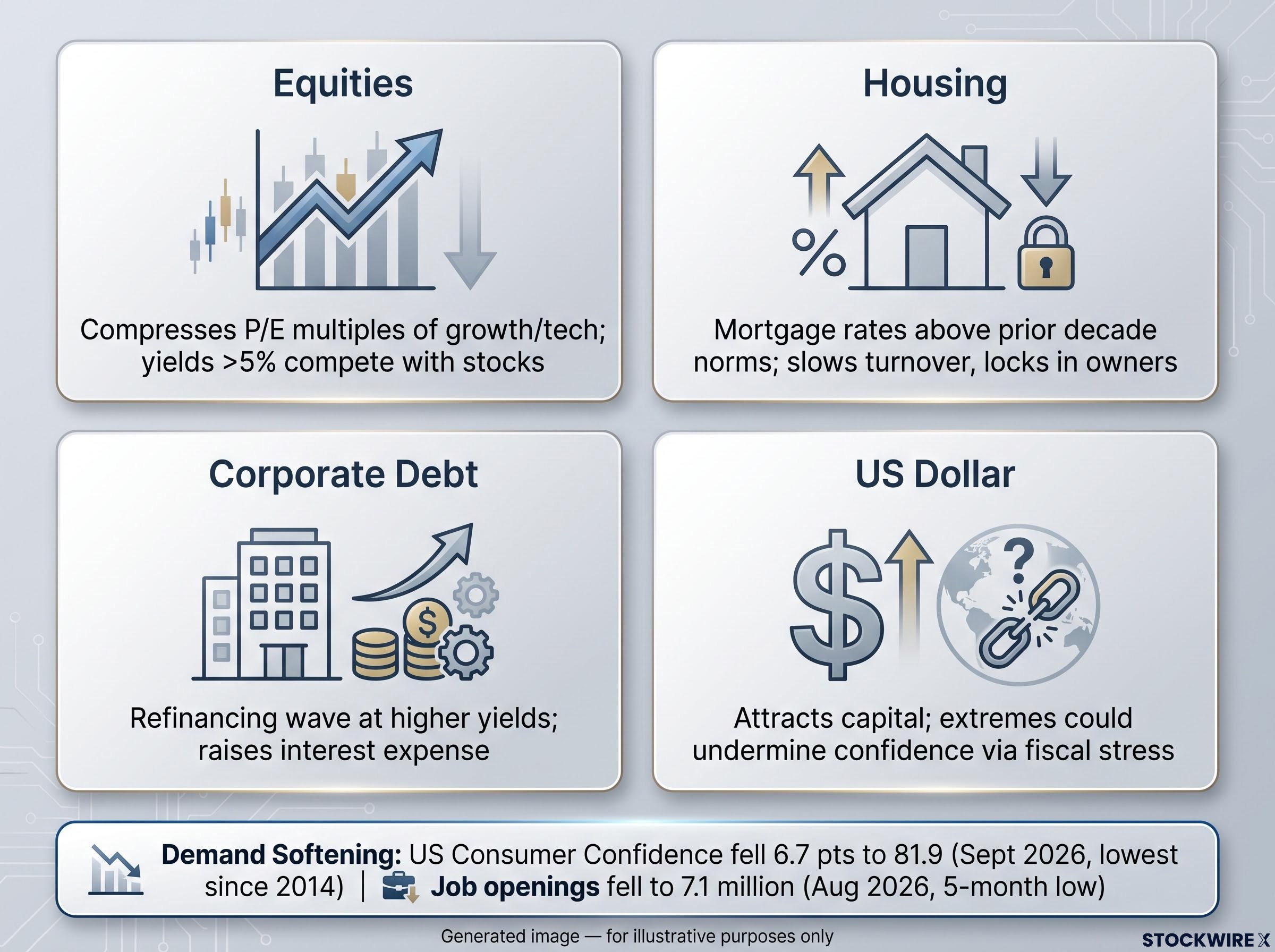
Start with equities. A discount rate is the rate used to convert future company earnings into a value today, and higher yields raise it. That compresses the price-to-earnings multiples of growth and technology stocks most, because their value depends heavily on cash flows far in the future. At the same time, a yield above 5% makes risk-free bonds a genuine competitor to stocks for the first time in years.
Housing is the channel most people feel directly. Mortgage rates are typically benchmarked to long-term Treasury yields plus a spread, so a 30-year yield in the mid-to-upper 5% range implies mortgage rates well above the norms of the prior decade. That weighs on affordability, slows housing turnover, and can lock existing owners into their cheaper loans, choking supply.
The connection between mortgage rates and housing turnover runs through a transmission mechanism that bypasses the Fed entirely: housing starts fell 13.5% year-over-year in July 2026, while Home Depot’s CFO described conditions as ‘frozen,’ confirming that long-end yield levels shape real economic activity well before any policy response.
US Conference Board Consumer Confidence fell 6.7 points to 81.9 in September 2026, its lowest reading since 2014, undershooting every estimate in a Bloomberg survey.
Corporate debt and credit market stress
A large wave of corporate bond maturities must be refinanced over the next several years, now at substantially higher yields. That raises interest expense and pressures leverage ratios. Lower-rated and leveraged borrowers are the most exposed, and a prolonged stretch of high yields could widen credit spreads and lift default risk, creating a self-reinforcing tightening of financial conditions.
The dollar is the fourth channel, and it comes with a caveat. Higher real yields usually attract capital and support the currency. But some analysts warn that if the yield rise is read as fiscal stress rather than economic strength, at extremes it could undermine confidence in US assets rather than bolster them.
The demand side is already softening. Job openings fell to 7.1 million in August 2026, a five-month low that undershot all estimates. If you understand these transmission channels, you can think more clearly about when to lock in borrowing rates, how to weight the growth component of your portfolio, and what credit conditions might look like heading into 2027.
Where the Fed stands, and what could shift this trajectory
The Fed has already hiked in September 2026, and its posture now reads as “higher for longer” without immediate urgency for another move. Officials have not closed the door on further tightening if inflation stays sticky.
The public record is thin but pointed. New York Fed President John Williams indicated one more increase could be appropriate later in the year to speed inflation’s return to the 2% target, while stressing no immediate rush. Fed Governor Michael Barr reiterated that further tightening would likely be needed, arguing a resilient economy makes inflation control the priority. St. Louis Fed President Alberto Musalem, speaking in London, focused on how transparent communication improves policy transmission.
“One further rate increase could be appropriate later in the year,” New York Fed President John Williams indicated, while noting no immediate urgency after the September hike.
So what would actually shift the trajectory? Three variables are worth watching closely:
- Fed communication, particularly any pivot toward a pause
- Growth and labour-market data, especially further softening in job openings
- The fiscal trajectory, meaning any signal from Congress that meaningfully narrows the deficit outlook
The ripple effects are already global. Australia’s 3-year government bond yield dropped 11 basis points to 4.94% on 29 September, its second-largest single-day fall of the year, showing how US pressure transmits across markets. US Treasuries, meanwhile, are on course for their worst September since 2023.
Here is the honest read. The Fed has not given long-term investors the clarity that would tempt them back into buying duration. Until it does, pressure on long-end yields is likely to stay asymmetric to the upside, which means you should plan for this level rather than assume an imminent reversal.
Reading the bond market’s warning and acting on it
Step back and the message is clear. A 30-year yield at 5.61% is the bond market’s collective verdict that the era of artificially suppressed long-term rates is over, and the adjustment to that verdict is still incomplete.
This level was reached through a combination of inflation persistence, fiscal risk pricing, and structural supply shifts, not a single triggering event. That matters, because there is no obvious catalyst, no clean policy fix, no growth collapse, no fiscal correction, waiting to pull yields back toward the levels of the past decade. Markets can overshoot, and vigilante episodes can retrace once clarity arrives or growth slows enough to cap yields naturally. But on current evidence, a swift return to prior levels looks unlikely.
Fiscal risk pricing in the long end is not abstract: federal net interest payments hit $659 billion in FY 2024, consuming roughly 13% of the federal budget, and the CBO projects they will surpass defence spending as a share of GDP by 2034, giving bond investors concrete arithmetic to price into term premium.
Separate what you can control from what you cannot. You cannot steer Fed decisions, fiscal policy, or carry-trade flows. You can decide how you time borrowing, how much duration risk your portfolio carries, and how you interpret what is already priced in. Any financial plan built on an assumption of 3-4% long-term rates now needs recalibrating for a world where 5% or more may persist far longer than most forecasters expected.
This article is for informational purposes only and should not be considered financial advice. Investors should conduct their own research and consult with financial professionals before making investment decisions. Past performance does not guarantee future results, and forward-looking statements are speculative and subject to change based on market developments.