
FDA Fast Track designation signals new frontier for prostate cancer diagnosis
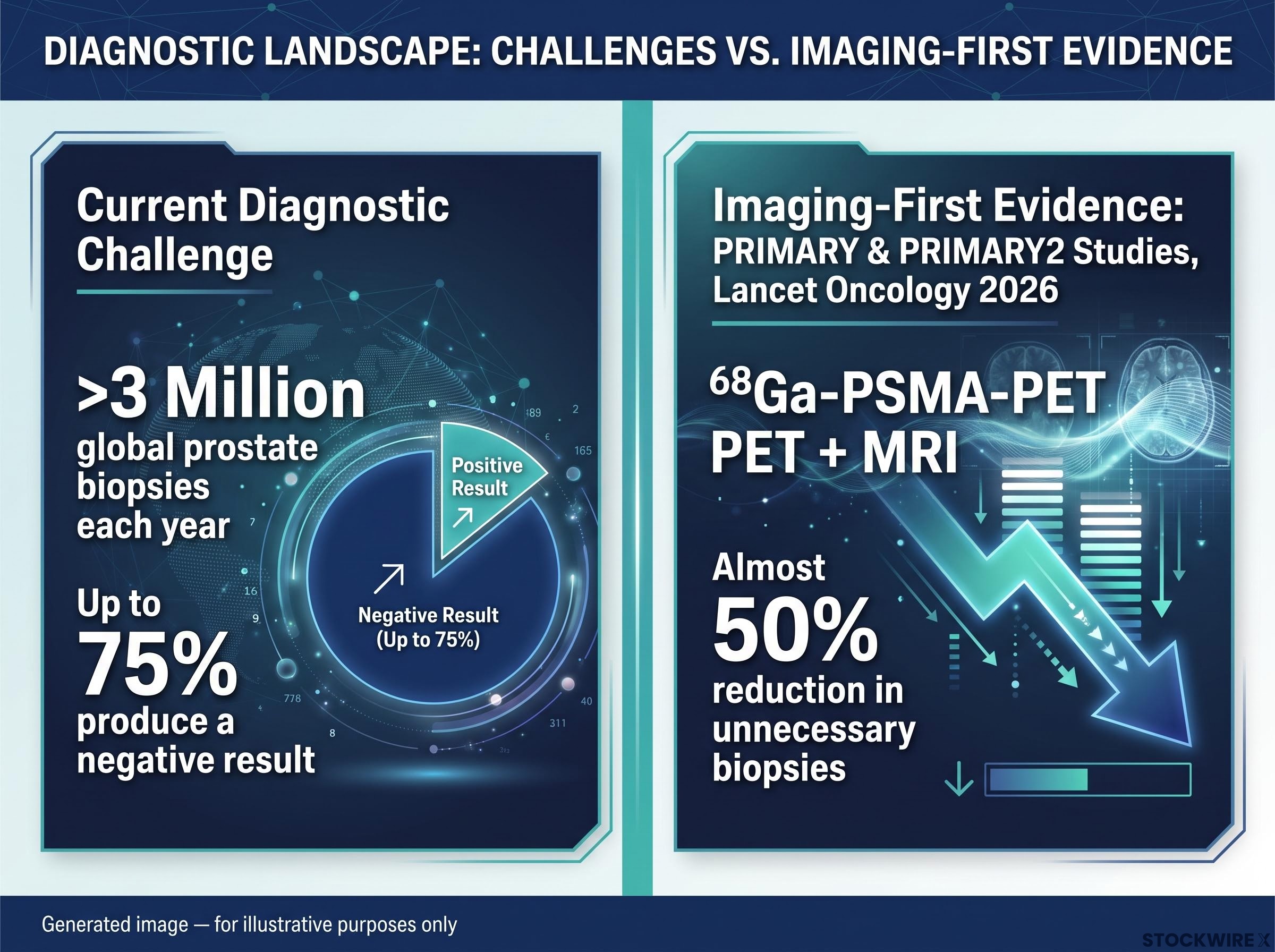
The United States Food and Drug Administration (FDA) has granted Fast Track designation to Telix Pharmaceuticals Limited‘s BiPASS program, which is evaluating 68Ga-PSMA-PET imaging in combination with MRI in the pre-biopsy prostate cancer setting. The designation represents regulatory validation of a clinically significant unmet need: more than 3 million prostate biopsies are performed globally each year, yet up to 75% produce a negative result.
That scale of unnecessary invasive procedures underscores why an imaging-first approach to initial prostate cancer diagnosis has attracted FDA attention. BiPASS is not an early-stage concept; it is a program with completed Phase 3 enrollment and an active NDA pathway under development.
When big ASX news breaks, our subscribers know first
What Fast Track means and why it matters for BiPASS
FDA Fast Track is a process designed to facilitate the development and expedite the review of drugs and diagnostics that address serious conditions and fill an unmet medical need. For Telix, the practical benefit is twofold: more frequent engagement with the FDA during development, and the potential for expedited review of the planned New Drug Application (NDA).
Critically, Phase 3 enrollment in BiPASS has already been completed. Telix has also positively engaged with the FDA on an NDA pathway and is planning its submission, though no specific timing has been disclosed. The NDA pathway supports registration as a new product.
BiPASS Phase 3 enrollment reached 350 patients across the U.S. and Australia, with Telix simultaneously securing FDA alignment on the NDA pathway that underpins the planned submission and potential reimbursement as a new product.
The BiPASS study evaluates Telix’s proprietary 68Ga-PSMA-PET agents, Illuccix and Gozellix. Both are currently approved for PET imaging of PSMA-positive lesions in patients with prostate cancer with suspected metastasis who are candidates for initial definitive therapy, and in patients with suspected recurrence based on elevated serum prostate-specific antigen (PSA) level. Illuccix is additionally approved for the selection of patients indicated for PSMA-directed therapy, and is commercially available in 22 countries. The use of either agent in the pre-biopsy setting remains investigational and has not been approved by the FDA or any other regulatory authority.
Dr. David N. Cade, Group Chief Medical Officer, Telix Pharmaceuticals
“Fast Track designation reflects the FDA’s recognition of the potential for BiPASS to address an important unmet need in the prostate cancer diagnostic pathway. We believe gallium-68 PSMA-PET, used alongside MRI, could help physicians make more informed decisions before biopsy, improve diagnostic confidence and potentially reduce unnecessary invasive procedures for patients. This designation supports continued close engagement with the FDA as we advance BiPASS toward an NDA submission.”
The clinical case: reducing unnecessary biopsies with an imaging-first approach
Biopsy is an invasive procedure that can be stressful and painful for patients. In the majority of cases, it produces no meaningful diagnostic result. The BiPASS program aims to change when and how biopsy decisions are made, by inserting an imaging assessment into the diagnostic pathway before a biopsy is ordered.
Key elements of the BiPASS program include:
- What BiPASS evaluates: 68Ga-PSMA-PET imaging combined with MRI, assessed in the pre-biopsy prostate cancer setting, before a decision to proceed to biopsy is made.
- Clinical precedent: The PRIMARY and PRIMARY2 studies demonstrated that combining 68Ga-PSMA-PET imaging with MRI can significantly improve detection of clinically significant prostate cancer while reducing unnecessary biopsies by almost 50%. PRIMARY2 was published in Lancet Oncology in 2026.
- Program intent: BiPASS is not designed to replace biopsy where it benefits the patient. Its aim is to help clinicians determine which patients would benefit from biopsy and where biopsy should be targeted.
- Patient benefit: For patients who do not require a biopsy, an imaging-first approach could avoid an invasive procedure that carries physical discomfort and no diagnostic value.
The clinical rationale is straightforward. If imaging can identify which patients harbour clinically significant cancer with sufficient confidence, physicians can proceed to biopsy selectively and with greater precision. The almost 50% reduction in unnecessary biopsies demonstrated in predecessor studies provides the evidence base underpinning BiPASS’s design and its reception by the FDA.
Investment implications: a larger addressable market and a de-risked NDA pathway
The commercial significance of the BiPASS program extends well beyond its clinical objectives. The current approved indications for Illuccix and Gozellix address patients in the metastasis and recurrence settings, which represent a later-stage, smaller patient cohort. A successful pre-biopsy approval, if granted, would open 68Ga-PSMA-PET imaging to a substantially larger patient population: those presenting with initial symptoms or elevated PSA who have not yet been biopsied.
Fast Track designation materially supports this pathway. By enabling more frequent FDA engagement and positioning the planned NDA for potential expedited review, it reduces process friction at a stage where the clinical data from BiPASS is being assembled and the submission is being prepared.
The ITM Isotope Technologies acquisition, announced at US$1.65 billion upfront plus up to US$700 million in milestones, adds the world’s largest lutetium-177 supply chain to Telix’s platform and positions the combined group with more than US$1 billion in annual revenue ahead of the BiPASS NDA submission.
Telix’s broader pipeline reinforces the company’s clinical depth. Three investigational assets are currently in pivotal-stage trials, none of which have received marketing authorisation in any jurisdiction.
| Asset | Indication | Stage | Regulatory Status | Key Milestone |
|---|---|---|---|---|
| BiPASS (Illuccix / Gozellix) | Pre-biopsy prostate cancer diagnosis | Phase 3 (enrollment completed) | Investigational; FDA Fast Track designated | NDA submission planned |
| TLX591-Tx (lutetium-177 rosopatamab tetraxetan) | Prostate cancer | Pivotal-stage trial | No marketing authorisation in any jurisdiction | Pivotal trial ongoing |
| TLX101-Tx (iodofalan 131I) | Recurrent glioblastoma | Pivotal-stage trial | No marketing authorisation in any jurisdiction | Pivotal trial ongoing |
| TLX250-Tx (lutetium-177 girentuximab tetraxetan) | Kidney cancer | Pivotal-stage trial | No marketing authorisation in any jurisdiction | Pivotal trial ongoing |
The NDA submission remains the next concrete catalyst for the BiPASS program. Fast Track designation positions Telix for ongoing structured dialogue with the FDA as that submission is finalised, with a pre-biopsy approval representing a potentially significant expansion of the addressable market for its 68Ga-PSMA-PET franchise.
Don’t Miss the Next ASX Healthcare Breakthrough
Big News Blast delivers FREE breaking ASX healthcare news directly to your inbox within minutes of release, complete with in-depth analysis already done. Join 20,000+ investors who stay ahead of the market the moment announcements drop. Click the “Free Alerts” button at StockWire X to start receiving alerts today.