
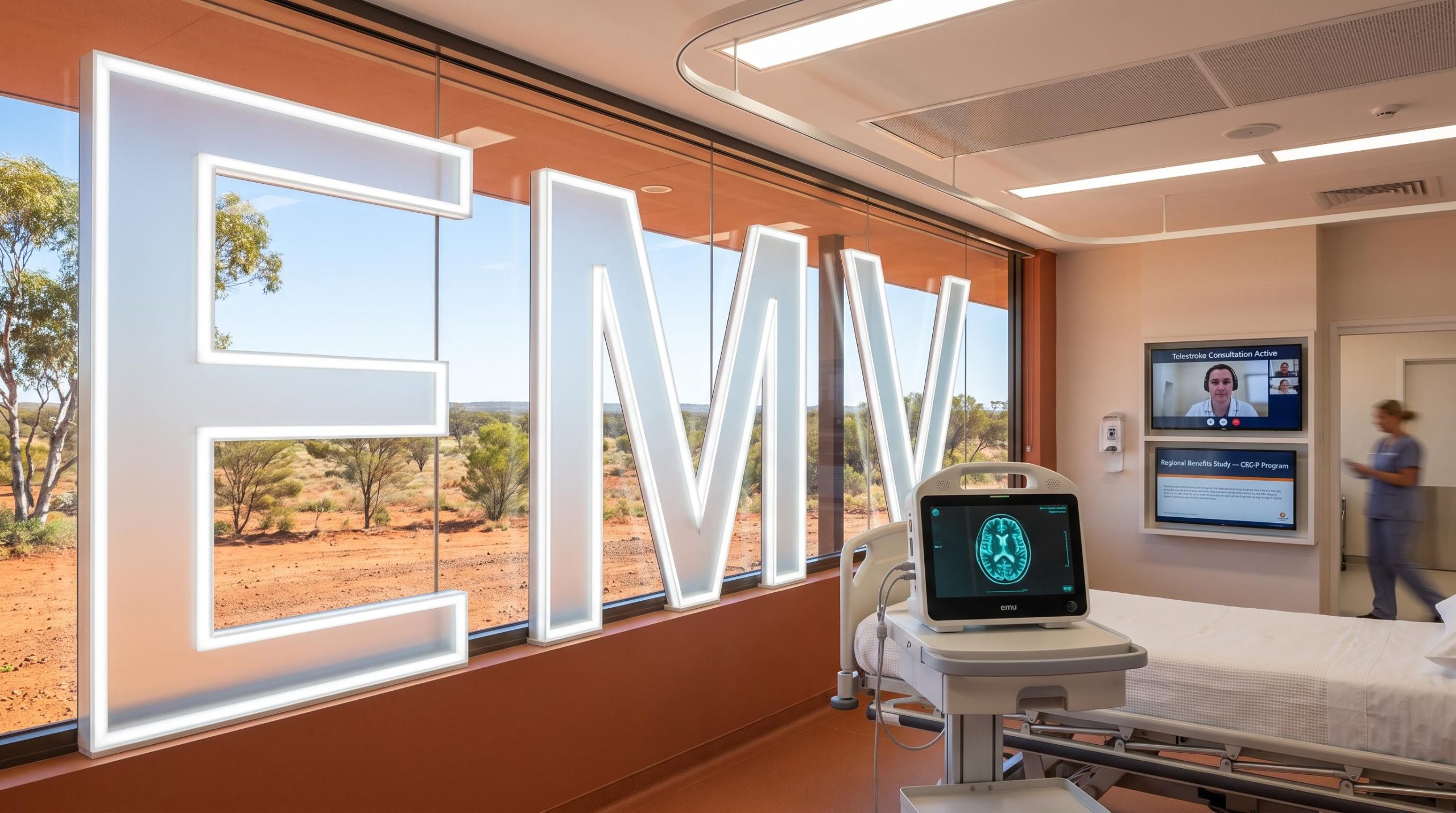
Study preparation advances as EMVision banks $337,425 CRC-P payment
Preparations for the EMVision emu™ Regional Benefits Study are advancing, with site visits completed and the study protocol under development. EMVision Medical Devices also confirmed it received a $337,425 progress payment under the Australian Government’s Cooperative Research Centres Projects (CRC-P) program in August 2026.
The study is designed to generate clinical benefits evidence for the regional and remote use case of the emu™ bedside brain scanner, targeting settings where timely access to CT imaging is limited or unavailable. Described as the first study to evaluate the benefit of the emu™ in clinical use, it addresses a genuine gap in regions where suspected stroke patients must typically be transferred before diagnosis is possible.
When big ASX news breaks, our subscribers know first
Inside the study: bringing stroke diagnosis to remote hospitals
The clinical study will be conducted in South Australian regional hospitals, deploying the emu™ alongside telehealth support and specifically trained nurses to demonstrate more timely stroke diagnosis. CRC-P project partners include the Australian Stroke Alliance, Titan Pre-Hospital Innovation and South Australia’s Rural Support Service.
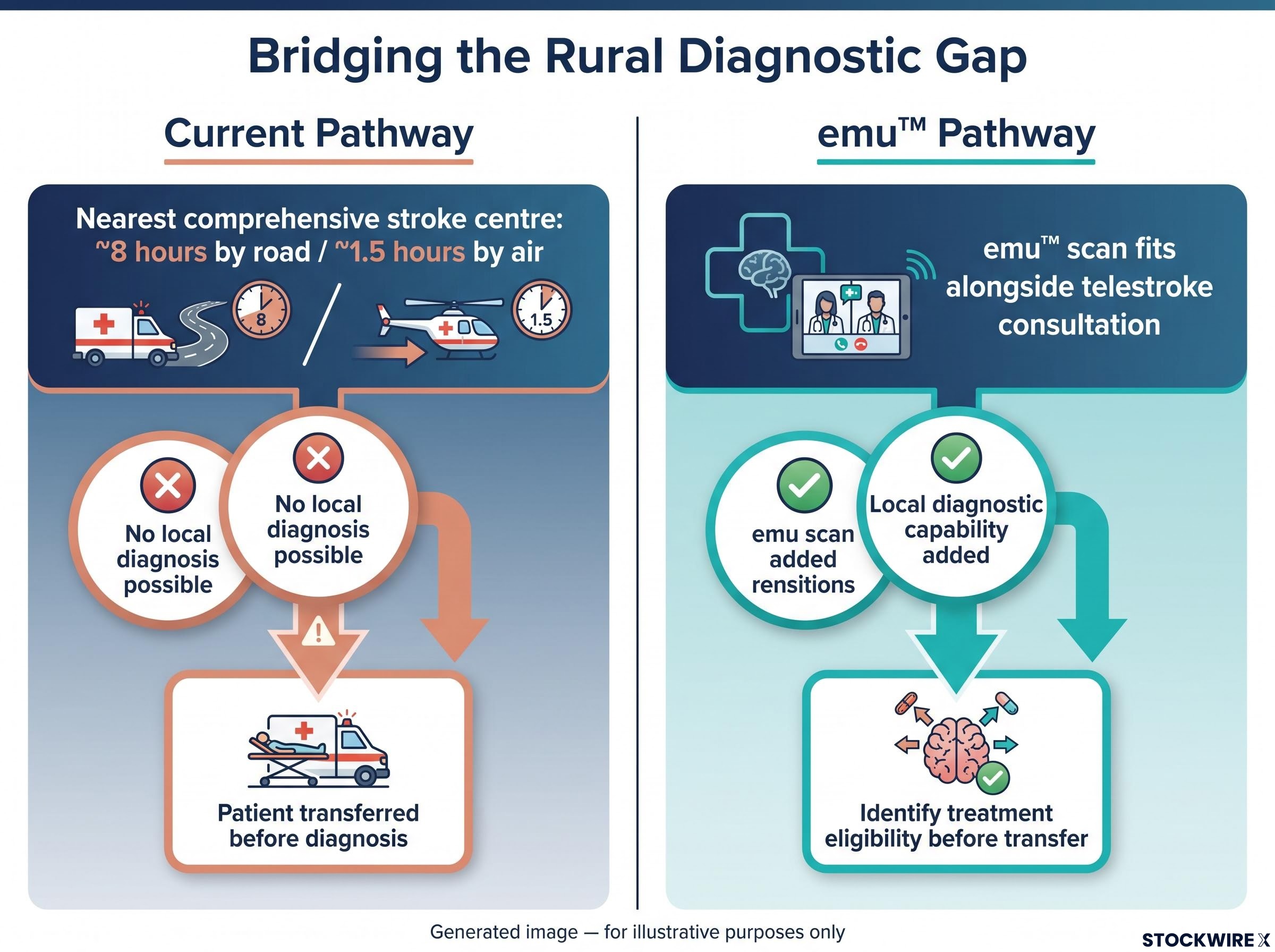
The EMVision team completed site visits at two remote emergency departments in regional South Australia. One of the sites ranks among the most isolated hospitals in the state, with the nearest comprehensive stroke centre approximately 8 hours away by road, or around 1.5 hours by air.
A parallel evidence-building effort is also progressing in the pre-hospital space: EMVision’s aeromedical feasibility study with the Royal Flying Doctor Service confirmed scan data quality is unaffected by flight conditions, a finding directly relevant to retrieval workflows in regions where air transport is the primary patient transfer option.
Key observations and workflow considerations from the site visits included:
-
Nurse-led emergency assessment models operating without on-site CT and varying degrees of supporting medical coverage
-
Patients currently cannot be diagnosed locally and must be transferred to a larger hospital before diagnosis is confirmed
-
Workflow mapping of how a suspected stroke patient enters the emergency department and how an emu™ scan would fit alongside existing telestroke consultation and retrieval processes
The study represents what the Company describes as a potential paradigm shift for participating hospitals, moving from refining workflows focused on identifying transfer candidates to adding diagnostic capability that can identify patients eligible for treatment before transfer.
Why timely stroke diagnosis matters
Stroke is a medical emergency that occurs when blood flow to part of the brain is interrupted, either by a blocked vessel (ischaemic stroke) or bleeding into the brain (hemorrhagic stroke). Because different stroke types require different care, accurate and early diagnosis is essential.
Early recognition and fast diagnosis can significantly improve patient outcomes. In remote settings, the time lost transferring patients to a larger facility before diagnosis can be critical. If the emu™ can move diagnosis to the bedside, it addresses an unmet clinical need, forming the foundation of the potential adoption case.
A global addressable market anchored in rural care
The regional use case addresses a global need, beginning with an estimated 400 rural, regional and remote hospitals in Australia and over 1,300 US Critical Access Hospitals. Similar models of care and comparable diagnostic challenges exist across rural communities worldwide. The figures below reflect addressable use case scale rather than revenue.
| Market | Facility Type | Scale | Diagnostic Gap |
|---|---|---|---|
| Australia | Rural/regional/remote hospitals | ~400 | Limited/no ready CT access |
| US | Critical Access Hospitals (CAHs) | 1,300+ | Only 56% of states have CT at every CAH |
| US ‘Stroke Belt’ | High-priority initial targets | ~330 CAHs | Initial US launch focus |
CAHs are federally designated rural hospitals of no more than 25 beds, located more than 35 miles from another hospital and required to provide 24-hour emergency care. According to the announcement, stroke mortality in the most rural US counties is approximately 30% higher than in large metropolitan areas.
Commercially, CAHs are reimbursed by Medicare at 101% of reasonable costs, described as a cost-based model that may lower the barrier to adopting capital equipment where clinical and operational benefit is demonstrated. EMVision has previously identified approximately 330 CAHs within the US ‘Stroke Belt’ as high-priority targets for initial US launch.
Next steps and study roadmap
Study protocol drafting is in progress, with EMVision liaising with South Australia’s telestroke service to establish appropriate practices for an emu™ enabled workflow. The remaining steps ahead include:
-
Protocol finalisation
-
Ethics approval
-
Site contracting
-
Research governance approvals
-
Potential inclusion of additional sites (under consideration)
Following protocol finalisation, the Company intends to integrate the emu™ via telehealth so that scan results are available to the consulting stroke neurologist as part of the standard consultation. EMVision expects the experience and evidence generated in the study to be highly relevant to the US regional opportunity and to inform the design of subsequent US-based benefits work with US clinical collaborators.
CEO perspective
Scott Kirkland, CEO and Managing Director
“Stroke outcomes for people in rural, regional and remote Australia are significantly worse than for those in our cities. This is an inequity that is mirrored in many rural communities worldwide. This study is designed to show the benefit of moving the diagnosis to the patient, speeding up time-sensitive clinical decisions, starting in some of the most remote hospitals in Australia, with clear relevance to rural America.”
For investors, the Regional Benefits Study represents an early step in building the clinical evidence base intended to underpin future adoption of the EMVision stroke scanner across regional Australian and US markets. Evidence that the emu™ can support timelier triage, transfer or treatment decisions is positioned as critical to hospital procurement and broader health system adoption.
Recruitment momentum in the regulatory-facing programme is building in parallel, with 200 patients enrolled in the emu Pivotal Trial as of August 2026 and full enrolment of 300 participants targeted for early CY2027.
Don’t Miss the Next Healthcare Breakthrough in Your Inbox
Get FREE breaking ASX healthcare news delivered within minutes of release, complete with in-depth analysis, straight to your inbox. Over 20,000+ investors are already staying ahead of market-moving announcements. Click the “Free Alerts” button at StockWire X to make sure you never miss the next major healthcare development the moment it breaks.