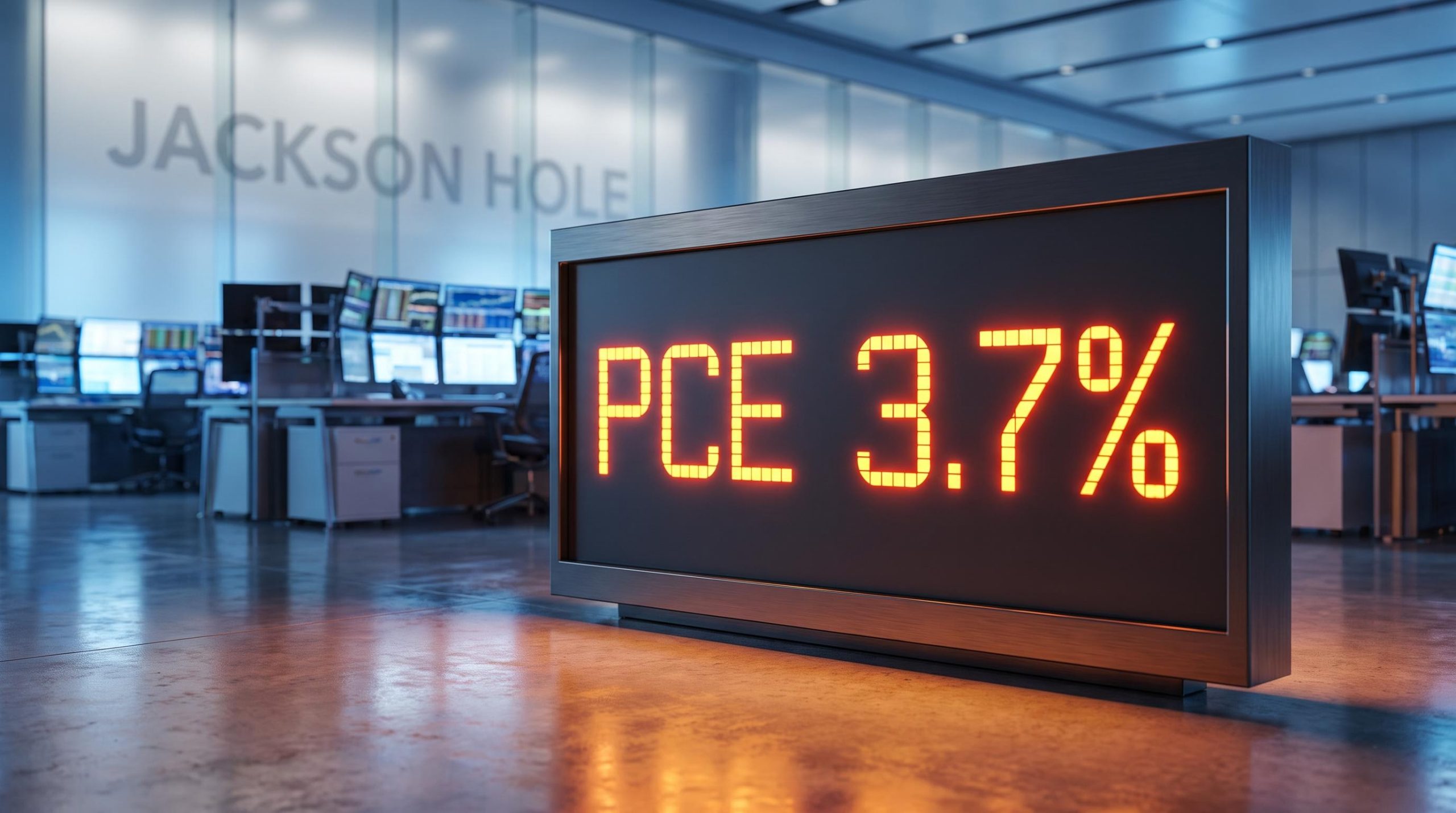
Three US economic data releases hit the wires on Wednesday morning and together delivered a clear verdict: the American economy is running too hot for the Federal Reserve to stand down on rates. July Personal Consumption Expenditures (PCE) inflation printed above the market estimate, Q2 GDP held firmly in expansion territory, and durable goods orders came in ahead of forecasts, sending the US Dollar higher and money markets scrambling to reprice the probability of further Fed tightening.
The timing is not incidental. Fed Chair Kevin Warsh, barely three months into his tenure, is scheduled to address the Jackson Hole Symposium on Friday. In a different environment, the speech might have been a scene-setter. With Wednesday’s data as the backdrop, markets are now treating it as a policy decision point in all but name.
Here is what the numbers told markets today, what the combined reaction means for interest rate expectations, and what signals to listen for when Warsh takes the podium Friday morning.
What the inflation print actually said, and why it matters more than the headline
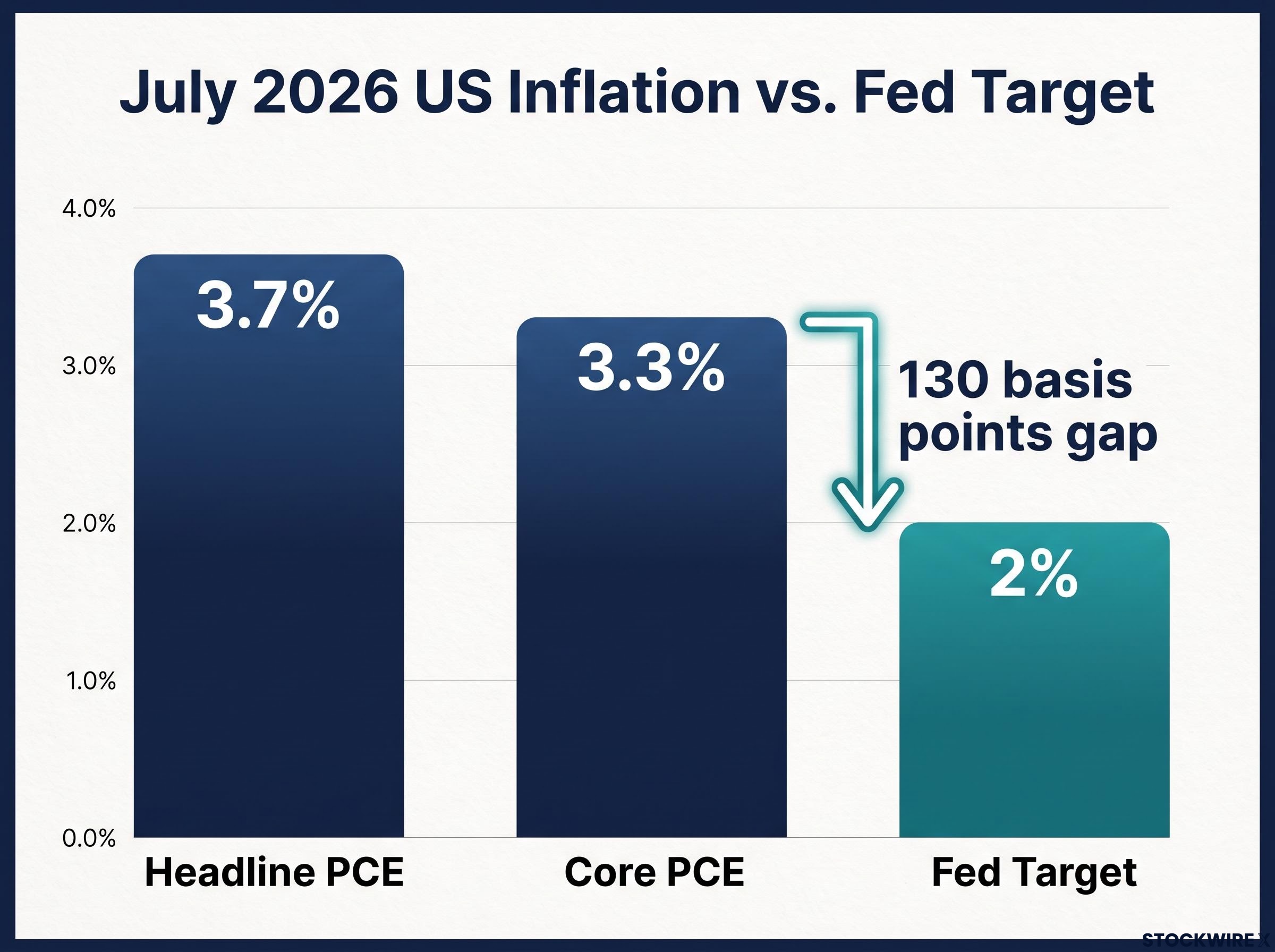
The number that moved markets was 3.7%. That was the headline PCE price index for July 2026, reported year-over-year, and it came in above the 3.6% consensus estimate. An upside surprise on the Fed’s own preferred inflation gauge carries direct policy weight, because the PCE is the measure the Federal Reserve uses to define its 2% inflation target, not the Consumer Price Index (CPI) that dominates most news coverage.
The distinction matters. CPI measures price changes from the consumer’s perspective using a fixed basket of goods. The PCE price index, published by the Bureau of Economic Analysis (BEA), captures a broader range of spending and adjusts for substitution effects, meaning it accounts for consumers switching to cheaper alternatives when prices rise. That flexibility is why the Fed chose it as the benchmark for its inflation objective.
July’s core PCE reading, which excludes volatile food and energy components, came in at 3.3% year-over-year, holding flat relative to June and landing precisely where analysts had expected, per FXStreet data. A match to consensus sounds benign until you measure the distance from target.
The Dallas Fed trimmed mean and Cleveland Fed median gauges are the breadth-of-disinflation measures that sit alongside PCE inflation data in the Fed’s internal convergence test, and both were tracking near 2% as of June, approaching target faster than core PCE itself.
Core PCE at 3.3% sits 130 basis points above the Fed’s 2% objective. On the Fed’s own chosen measure, inflation is not a resolved problem.
The three July PCE readings in summary:
- Core PCE: 3.3% year-over-year (matching prior month and consensus)
- Headline PCE: 3.7% year-over-year
- Headline versus consensus: above the 3.6% estimate
That 130-basis-point gap between reported core PCE and target tells you that anyone pricing in rate cuts this year is working against the data. The Fed cannot credibly pivot toward easier policy while its own preferred measure runs this far above the threshold it set for itself.
When big ASX news breaks, our subscribers know first
GDP and durable goods close the door on a growth-based excuse for rate cuts
Inflation persistence alone does not guarantee further tightening. Markets sometimes build a counter-argument: the economy is too fragile for more hikes, so the Fed will have to ease regardless of where prices sit. Wednesday’s second and third data releases dismantled that case.
Second-quarter 2026 GDP growth came in at an annualised 1.5%, meeting analyst projections. Growth at that pace is modest, but it is unambiguously positive. It removes the principal argument available to those positioning for a dovish pivot: that the economy cannot absorb further monetary tightening without tipping into contraction.
The 1.5% headline masks a more consequential figure: real final sales to private domestic demand surged to 3.9% annualised in Q2, its strongest reading since Q1 2023, which is the number that matters most for assessing whether the Fed faces an economy that can genuinely absorb further tightening.
| Data Release | Reported Figure | Prior Reading | Consensus Estimate |
|---|---|---|---|
| Core PCE (YoY) | 3.3% | 3.3% | 3.3% |
| Headline PCE (YoY) | 3.7% | N/A | 3.6% |
| Q2 GDP (annualised) | 1.5% | N/A | 1.5% |
| Durable Goods Orders (MoM) | Reported +1.1% | +0.5% | Below reported figure |
Durable goods: firm signal, imprecise figure
Durable goods orders, which track new orders for manufactured goods expected to last three or more years, were reported by FXStreet at plus 1.1% month-over-month, representing a figure that was more than twice the prior month’s 0.5% result and ahead of forecasts. However, the most recent official Census Bureau release for June 2026 showed a 0.3% month-over-month increase alongside a $1.1 billion dollar-value rise, suggesting the reported percentage may conflate the dollar-amount figure with a percentage change. The directional signal is clear regardless: business investment held up, and orders were firm.
For the reader, the GDP and durable goods combination means the Fed has no macroeconomic alibi for standing down. If you have been waiting for a growth-driven policy pivot, Wednesday’s data should prompt an update to that expectation.
How markets reacted, and what the rate pricing shift means for investors
The data landed, and markets delivered their own interpretation within minutes. The reaction followed the pattern you would expect when inflation surprises to the upside and growth confirms: the dollar strengthened, Treasury yields climbed, and money markets repriced the probability of further tightening.
The specifics, based on market-derived data from FXStreet and Prime Terminal:
The June 2026 dot plot hike signal, which revised the Fed’s own year-end rate projection from 3.4% to 3.8%, was the first formal confirmation under Warsh that inflation credibility would take precedence over market comfort, providing essential context for reading Wednesday’s repricing in rate futures.
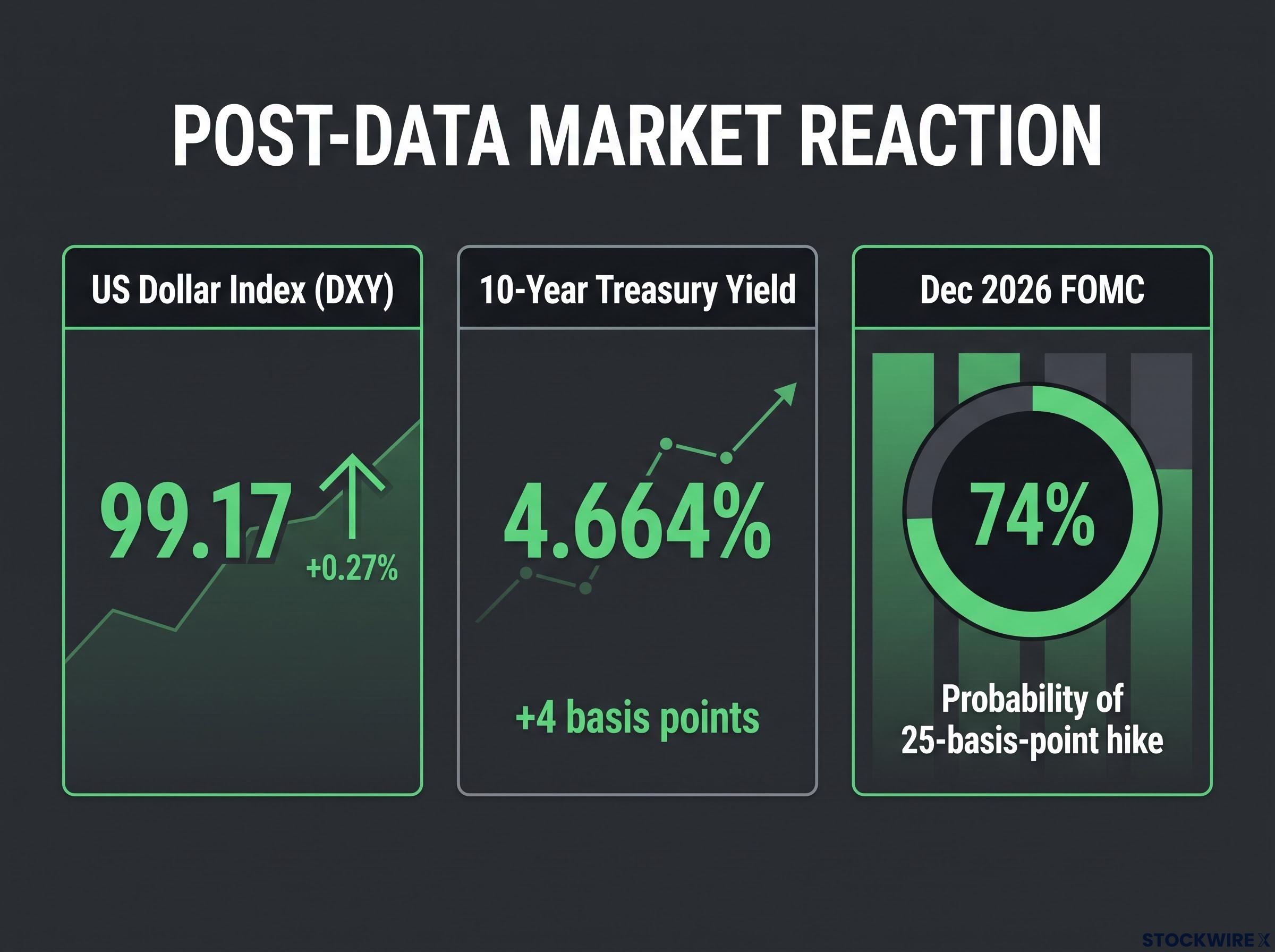
- US Dollar Index (DXY): gained 0.27% on the session to reach 99.17. The DXY tracks the greenback’s performance relative to a basket of six major currencies.
- 10-year US Treasury yield: added four basis points, settling at 4.664%
- September 2026 FOMC meeting: money markets had assigned roughly 39% odds to a rate hike at this meeting ahead of the data release
- December 2026 FOMC meeting: roughly 74% probability of a 25-basis-point hike, with around 27 basis points of cumulative tightening reflected in market pricing
Futures markets are assigning roughly 74% odds to a further 25-basis-point rate increase by year-end. Professional traders are not waiting for the Fed to confirm its intentions; they are already pricing in a more aggressive path.
That shift in rate pricing matters because futures pricing feeds directly into the rates that affect your borrowing costs, equity valuations, and currency returns before any formal Fed announcement. Mortgage rates, corporate debt issuance, and the discount rates applied to future earnings all adjust in response to where money markets position themselves. Understanding how traders are positioned gives you a forward-looking lens that official Fed statements lag by weeks.
This article is for informational purposes only and should not be considered financial advice. Investors should conduct their own research and consult with financial professionals before making investment decisions.
What Warsh says Friday will either validate or complicate Wednesday’s data story
Wednesday’s data told one story. Friday’s speech from Kevin Warsh will determine whether the Fed’s new chair agrees with the market’s reading of it, or introduces a competing interpretation.
Warsh was sworn in as Federal Reserve Chair on 22 May 2026, with his term running to 21 May 2030. His confirmation was recent and contentious, which means markets have had almost no opportunity to calibrate how he communicates, what he emphasises, and how he processes conflicting signals. That absence of a track record gives Friday’s address at the Jackson Hole Symposium, the annual late-August gathering where Fed chairs have historically used the platform to signal major policy shifts, outsized interpretive weight.
TD Securities strategists have identified a specific Jackson Hole repricing risk for investors who arrive expecting explicit rate guidance: Warsh has already stripped forward guidance from the June FOMC statement, and a repeat of that move from the symposium podium would hit long-duration Treasuries and rate-sensitive equities hardest.
Two further data releases are due on Thursday before Warsh steps up to the podium: Initial Jobless Claims and the University of Michigan Consumer Sentiment Index. Either could shade the setup heading into the address.
What to listen for in Friday’s address
Three things will tell you whether Warsh validates or complicates the hawkish repricing that Wednesday’s data triggered:
- Explicit rate guidance: Does he endorse the market’s tightening expectations or push back on them?
- Inflation characterisation: Does he describe current above-target inflation as persistent, or does he frame it as transitional?
- Communication framework: Does he signal any intent to change how the Fed delivers forward guidance under his leadership?
Any divergence from the hawkish data signal markets built on Wednesday should be treated as a market-moving development in its own right.
The data has spoken. Now the Fed chair must answer.
Wednesday’s three releases told a coherent story. The economy is growing, inflation remains sticky above target, and business investment is holding up. That is the combination that most constrains a central bank’s ability to ease. Specific figures in this report, particularly the durable goods percentage, the DXY level, and the rate probabilities, are market-derived and carry verification caveats, but the directional narrative is well-supported across sources.
The next material information arrives Friday. Watch Warsh’s Jackson Hole address with the three questions outlined above, and treat any surprise as a signal to reassess positioning. The relevant question is no longer whether the Fed sounds hawkish. It is whether Warsh gives markets a framework for understanding where the tightening cycle ends.
Past performance does not guarantee future results. Financial projections are subject to market conditions and various risk factors.