The Reserve Bank of Australia did not change interest rates at its most recent meeting. The Australian dollar moved anyway. That contradiction holds the key to understanding what actually drives the currency at each policy announcement, and why the press conference matters more than the rate print.
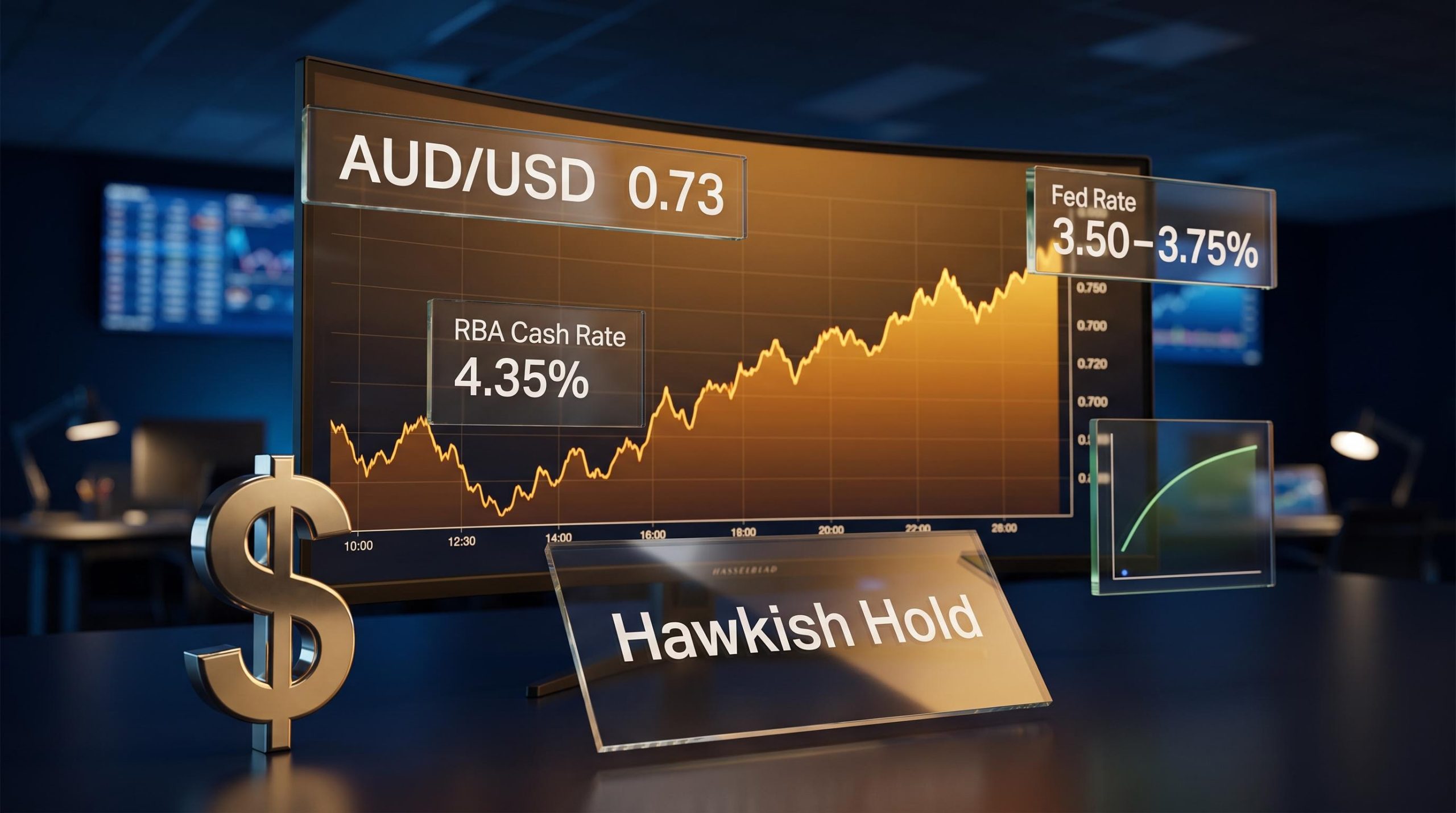
This analysis, published in August 2026 with the RBA’s cash rate sitting at 4.35% and ING forecasting AUD/USD at approximately 0.73 by year-end, examines how monetary policy communication, independent of rate changes, moves currency markets. The RBA’s recent hawkish hold serves as the primary case study.
Here is the framework for reading every future RBA meeting: what to watch, why the language matters more than the number, and how to tell whether the market actually believed what the Governor said.
When holding steady is its own kind of signal
The rate decision itself was unremarkable. The RBA held the cash rate at 4.35%, exactly where markets expected it. No surprise, no movement on the headline number.
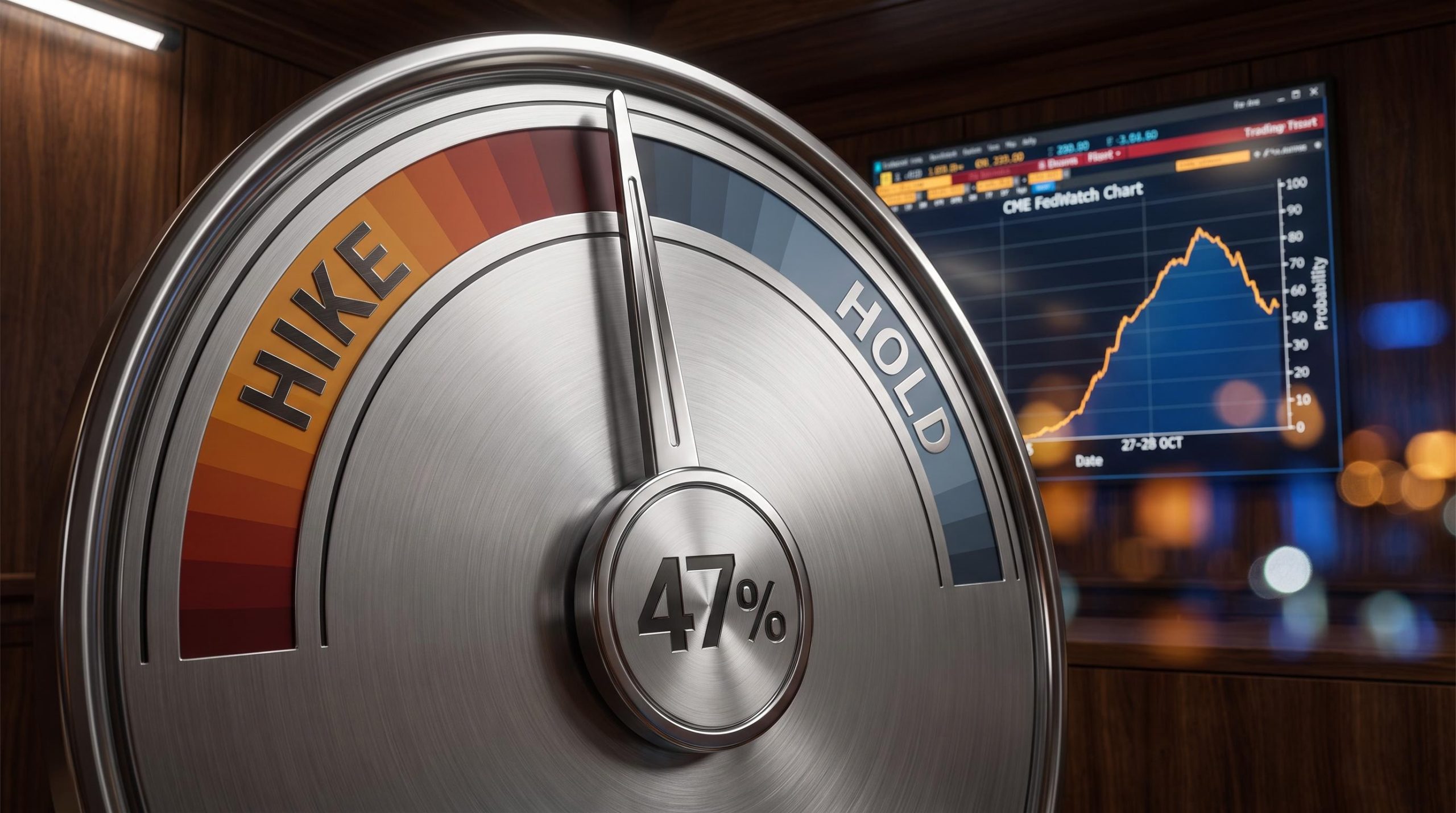
What followed was anything but neutral. The statement pointed to inflation risks as skewed toward the upside rather than balanced. Governor Michele Bullock explicitly acknowledged that a rate increase had been actively considered during the Board’s deliberations. And the language kept the door to further tightening firmly open, refusing to steer markets toward a near-term easing narrative.
At the press conference, Governor Michele Bullock took a notably hawkish stance, disclosing that the Board had debated raising rates at the meeting itself and framing inflation risks as tilted to the upside rather than evenly balanced.
That combination produced something categorically different from a standard “no change” outcome. A neutral hold pairs an unchanged rate with balanced language. A hawkish hold pairs the same unchanged rate with a very different set of signals:
- No cuts in sight: the RBA pushed back against near-term easing expectations
- Hikes remain live: further tightening was not ruled out and was actively discussed
- Inflation risk is asymmetric: characterised as “tilted to the upside” rather than balanced
Australian bond yields at the shorter end of the curve climbed after the announcement, unwinding their earlier move in the opposite direction. That yield reaction tells you that markets read this as a tightening of the overall policy stance, even though the rate itself did not move. That distinction is the key to understanding what happened to AUD.
When big ASX news breaks, our subscribers know first
What central bank tone actually does to a currency
Most investors assume the mechanism is simple: rates go up, the currency strengthens; rates stay flat, the currency stays flat. That assumption misses how modern central banks actually move FX markets. Language alone does the work through two distinct channels.
The carry channel: why yield matters even when rates stand still
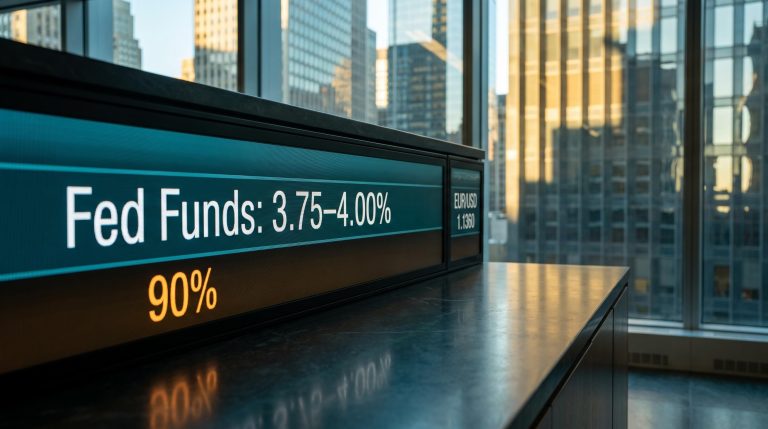
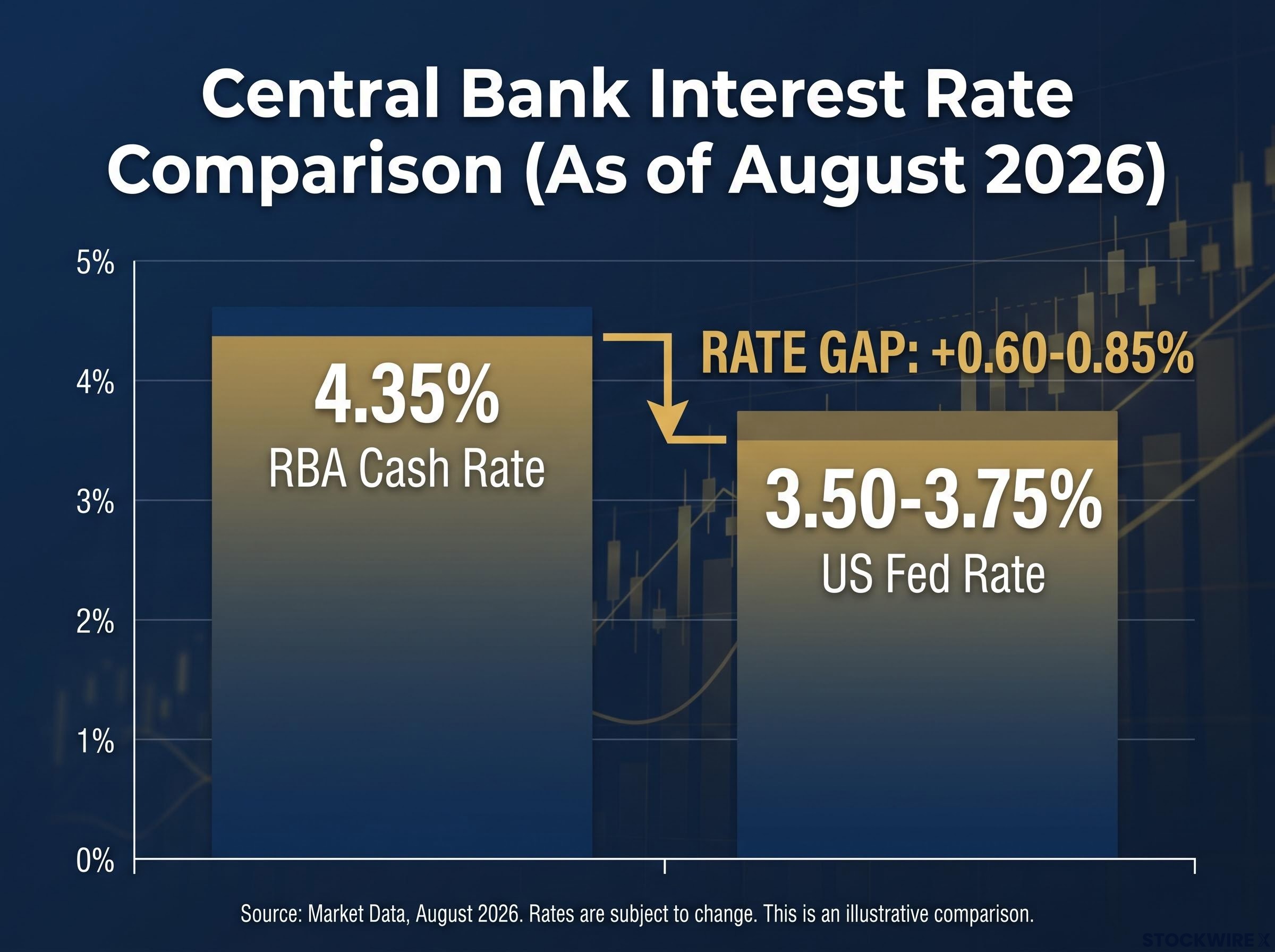
Carry refers to the return an investor earns simply by holding a currency with a higher interest rate relative to another. Australia’s cash rate of 4.35% sits above the Federal Reserve’s rate in the 3.50-3.75% range as of August 2026, making AUD-denominated assets relatively attractive to global capital.
When the RBA signals higher-for-longer policy, it preserves that attractiveness even without an actual hike. Analysts characterise AUD as offering relatively attractive carry within G10, a group of the ten most traded global currencies. That carry appeal sustains demand for the Australian dollar from yield-seeking investors worldwide.
Bearish dollar positioning from major banks including UBS, which formally backed AUD as one of five preferred non-dollar currencies in June 2026, represents a structural tailwind that amplifies AUD’s sensitivity to RBA carry signals during periods when the Fed is on hold.
The expectations channel: how language reprices the curve
What traders anticipate about Australian rates over the next 12-24 months matters as much as the current spot rate. A shift from “balanced risks” to “upside risks” in RBA language can reprice the yield curve, the set of expected interest rates across different time horizons, meaningfully.
The 2-3 year Australian bond yield is the real-time gauge of whether hawkish tone is being taken seriously. When those yields firm after a meeting, it signals that traders have pushed back the expected timing of rate cuts or added probability to further hikes. That repricing is the mechanism through which words become currency movements.
| Channel | What it is | RBA example | AUD impact |
|---|---|---|---|
| Carry and rate differential | Return earned from holding a higher-yielding currency | 4.35% cash rate vs Fed’s 3.50-3.75% | Sustains demand for AUD from global yield seekers |
| Expectations and curve repricing | Market pricing of where rates will be in 1-2 years | Shift from “balanced” to “upside” inflation risk language | Firms 2-3 year yields, reinforcing AUD support |
For Australian dollar watchers, the practical instruction is to treat the post-meeting yield curve reaction, particularly 2-3 year bonds, as the true verdict on whether the RBA’s message landed, not the rate print itself.
Why the same RBA message can produce different AUD outcomes
If hawkish language reliably strengthened the Australian dollar, currency trading would be straightforward. It is not. Market reactions to RBA hawkish holds have produced AUD appreciation in some cycles and flat-to-lower outcomes in others.
Part of the explanation lies in how the same words get parsed differently. The RBA’s characterisation of policy as “somewhat restrictive” is a case in point. Some market participants read it as reducing the likelihood of future rate increases, interpreting “somewhat” as a softener. Others read the same phrase as confirmation that the Board views current settings as genuinely tight, supporting the hawkish framing. Identical language, divergent conclusions.
The June 2026 meeting produced precisely this ambiguity, with terminal rate pricing shifting by up to 25 basis points on the futures curve in response to Bullock’s language alone, even as the cash rate sat unmoved at 4.35%.
The variable that resolves the ambiguity is not the tone itself but whether the incoming data environment makes the tone credible. Three conditions determine whether a hawkish hold translates into AUD appreciation:
- Inflation data trending higher, reinforcing the RBA’s stated concern about upside risks
- Bond market repricing upward, confirming traders are taking the hawkish signal at face value
- Global risk appetite supportive, meaning investors are not retreating from commodity-linked currencies on broader growth fears
When growth headwinds are the dominant concern, the market reads an unchanged rate as a pause rather than a standing threat, and AUD does not benefit from the hawkish tone. A hawkish hold is not an unconditional positive for the Australian dollar. Readers watching the next meeting should track whether domestic data has made the RBA’s vigilance sound credible or merely performative.
External headwinds on AUD, including geopolitical risk and safe-haven USD demand from Strait of Hormuz escalation, demonstrate precisely this dynamic: when global risk-off conditions dominate, even a credibly hawkish RBA fails to translate carry advantage into currency appreciation.
Inside ING’s 0.73 AUD/USD forecast: the three bets embedded in one number
ING’s FX research team, as reported by analyst Chris Turner, maintains a year-end AUD/USD target of approximately 0.73. That number is best understood not as a prediction to accept or reject but as a structured argument with three distinct assumptions baked in.
ING’s constructive AUD view, targeting approximately 0.73 by year-end, is built on the communication posture sustaining carry appeal rather than on actual additional rate hikes.
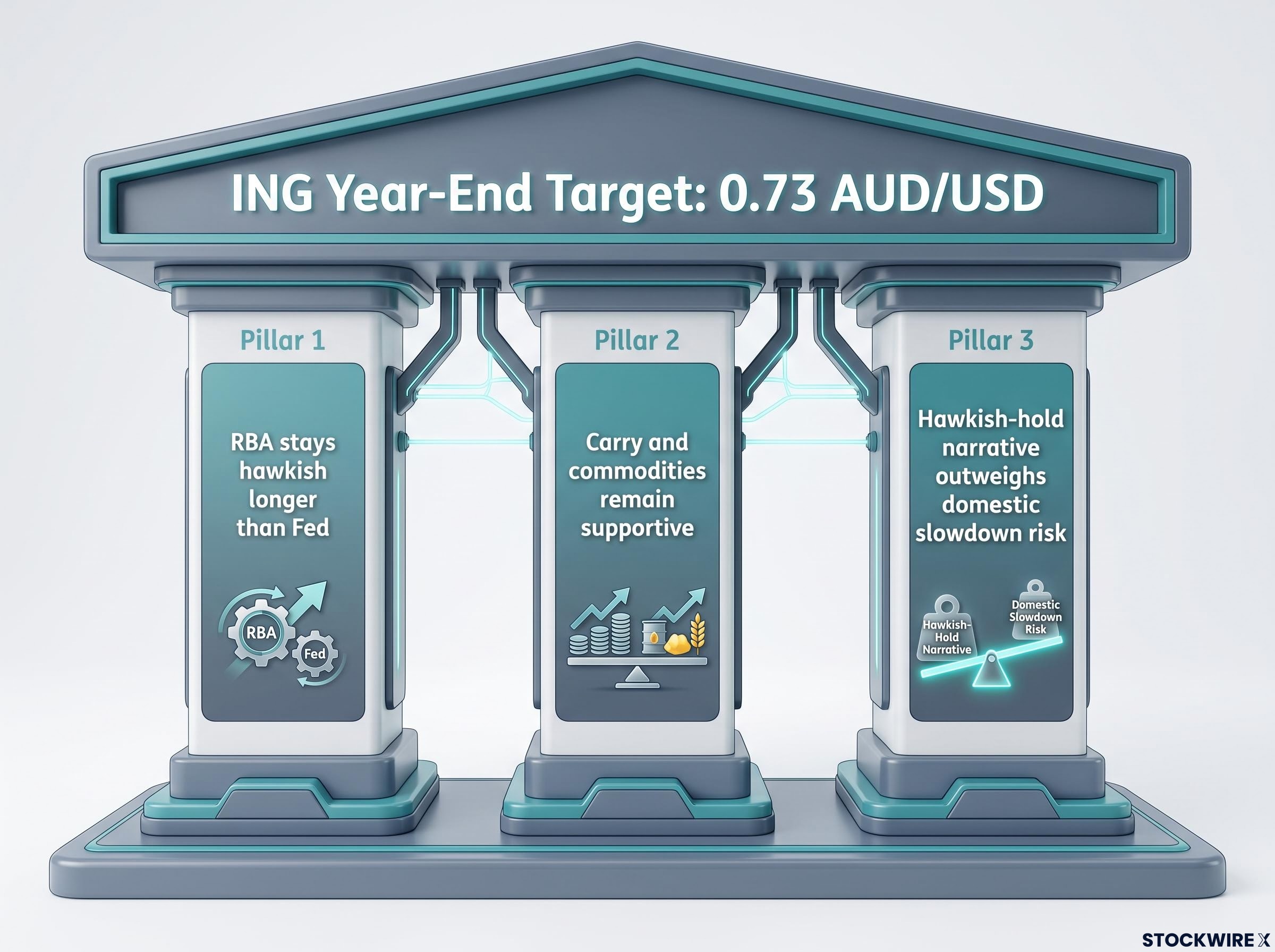
The 0.73 target requires three conditions to hold simultaneously:
- The RBA stays hawkish longer than the Fed. Australia at 4.35% versus the Fed at 3.50-3.75% provides the rate differential foundation. ING’s view is that no further RBA hike is needed because the hawkish communication alone sustains carry appeal. If the Fed pivots toward easing before the RBA softens, the gap widens in AUD’s favour.
- Carry and commodities remain supportive. AUD is a commodity-linked currency, with iron ore and coal exports making it sensitive to Chinese demand and global risk appetite. A constructive global growth and commodity price environment is baked into the target rather than explicitly flagged as a risk.
- The hawkish-hold narrative outweighs domestic slowdown risk. If Australian economic data deteriorate sharply enough to make the RBA’s vigilance look misplaced, the currency loses its communication-driven support regardless of the rate differential.
If you are evaluating whether to align with ING’s 0.73 target, check your own view on all three conditions simultaneously. The forecast requires all three to hold, not just one. The pillar you most disagree with is where the forecast is most vulnerable.
How the RBA communicates: a practical guide for AUD watchers
Everything this analysis has covered points to a single discipline: watch the story, not the rate print. Here is the monitoring framework that makes that discipline concrete at every future RBA meeting.
Four specific signals carry the most FX-relevant information:
- Inflation risk language. Watch for the shift between “balanced risks” and “upside risks.” A move from balanced to upside is hawkish repricing. A move back is the first sign of softening.
- Optionality language for further hikes. The presence or absence of “further tightening” phrasing tells you whether the Board views additional hikes as a live option or a closed chapter.
- Press conference tone versus written statement. Governor Bullock’s pattern has been explicitly data-dependent, with a refusal to pre-commit to an easing path. When the press conference tone diverges from the statement’s language (softer or harder), the press conference wins as the market-moving signal.
- 2-3 year bond yield reaction. This is the market’s real-time verdict. Firming yields in the minutes following the decision confirm hawkish repricing. Flat or falling yields mean the market did not take the tone seriously, regardless of how hawkish the language sounded.
Readers who build this checklist into their pre-meeting preparation will have a structural edge over those who wait for the headline rate decision and then try to interpret a currency move after the fact.
What the RBA’s posture means for the Australian dollar from here
The rate differential picture remains constructive for AUD. Australia at 4.35%, the Fed at 3.50-3.75%, and the RBA’s hawkish communication sustaining carry appeal even without additional hikes provides a structural floor for the currency.
ING’s 0.73 year-end target serves as a useful directional anchor. But the forecast’s credibility depends on ongoing data flow, and single-meeting communication shifts can reprice the trajectory quickly.
Three scenarios could disrupt the constructive AUD story:
- RBA tone shift to neutral or dovish. Watch for language that downgrades inflation risk from “upside” to “balanced” or removes the optionality for further hikes.
- Chinese demand and commodity deterioration. A sustained decline in iron ore prices or a material slowdown in Chinese industrial activity would weaken AUD’s commodity-linked support.
- Fed pivot narrowing the differential. If the Fed unexpectedly holds or raises rates rather than easing, the yield gap that supports AUD carry compresses.
Much of the RBA’s hawkish story is already reflected in market pricing. Future AUD moves depend on changes in expectations, not confirmation of the existing narrative.
The Australian dollar’s near-term path is less about whether the RBA hikes again and more about whether each subsequent meeting sustains the hawkish bias. That makes the next press conference at least as important as any rate change.
For investors wanting to translate the AUD/USD directional outlook into portfolio action, our dedicated guide to AUD currency hedging decisions examines how a rising Australian dollar affects unhedged international ETF returns, with worked comparisons between hedged and unhedged structures.
This article is for informational purposes only and should not be considered financial advice. Investors should conduct their own research and consult with financial professionals before making investment decisions. Past performance does not guarantee future results. Financial projections are subject to market conditions and various risk factors.
—